Floor plan

Style galleriesDrawings of the 19th century
Drawings of the 19th century
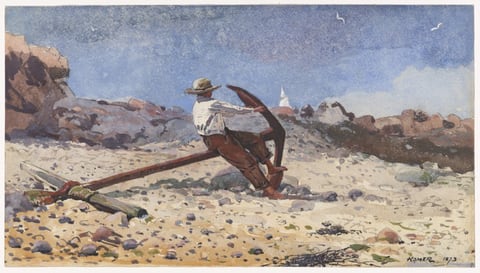
Boy with Anchor, by Winslow Homer, 1873
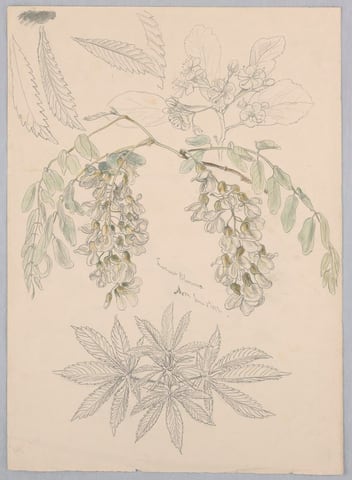
LOCUST BLOSSOMS
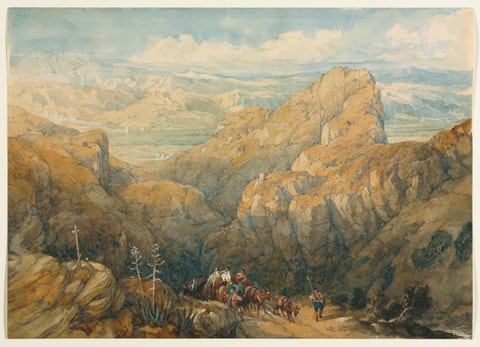
Descent into the Plain of Granada, by David Roberts, 1834
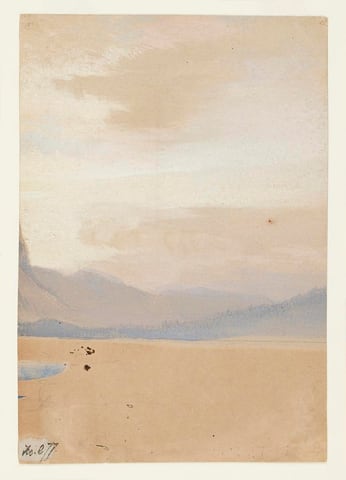
AMERICAN PLAINS WITH MOUNTAIN RANGE IN THE DISTANCE
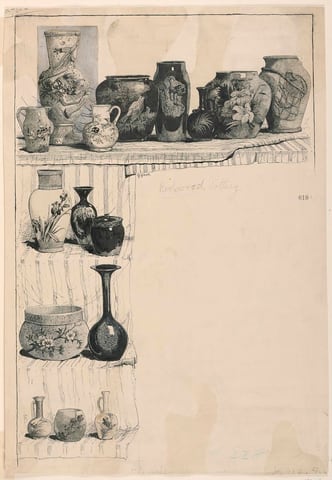
ROOKWOOD POTTERY
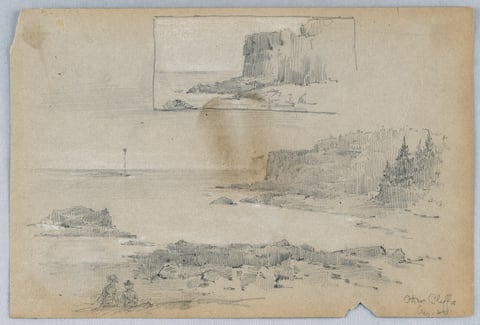
OTTER CLIFFS

The works in this room are listed below.

Works in this room

Drawings made in the 19th century, from every museum.

Section 1, north wall

  1. Boy with Anchor, by Winslow Homer, 1873
    Boy with AnchorWinslow Homer, 1873Courtesy of the Cleveland Museum of Art
  2. LOCUST BLOSSOMS
    Locust BlossomsSamuel Colman, June 6, 1877Courtesy of Cooper Hewitt, Smithsonian Design Museum
  3. Descent into the Plain of Granada, by David Roberts, 1834
    Descent into the Plain of GranadaDavid Roberts, 1834Courtesy of the Cleveland Museum of Art

Section 1, south wall

  1. AMERICAN PLAINS WITH MOUNTAIN RANGE IN THE DISTANCE
    American Plains with Mountain Range in the DistanceThomas Moran, before 1872Courtesy of Cooper Hewitt, Smithsonian Design Museum
  2. ROOKWOOD POTTERY
    Rookwood PotteryGeorge Gibson, 1886Courtesy of Cooper Hewitt, Smithsonian Design Museum
  3. OTTER CLIFFS
    Otter CliffsArnold William Brunner, 1879–80Courtesy of Cooper Hewitt, Smithsonian Design Museum

Section 2, south wall
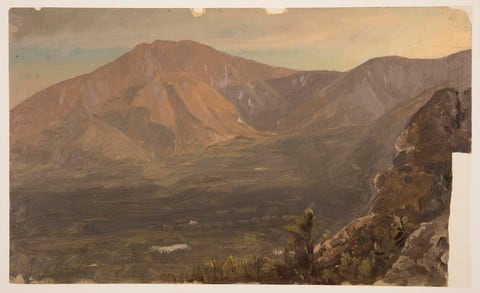
  1. MT. KATAHDIN FROM SOUTH TURNER MOUNTAIN, MAINE
    Mt. Katahdin from South Turner Mountain, MaineFrederic Edwin Church, 1877–78Courtesy of Cooper Hewitt, Smithsonian Design Museum
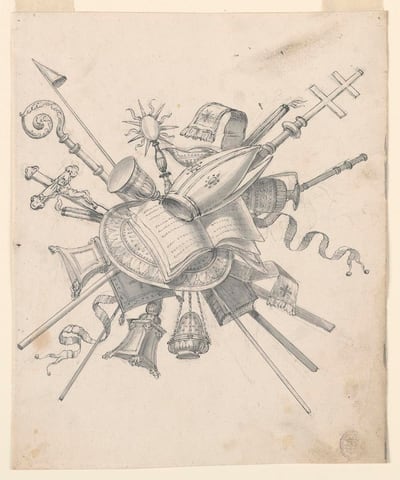
  2. TROPHY WITH ECCLESIASTICAL OBJECTS
    Trophy with Ecclesiastical ObjectsRomolo Achille Liverani, 1830–1850Courtesy of Cooper Hewitt, Smithsonian Design Museum

Section 2, north wall
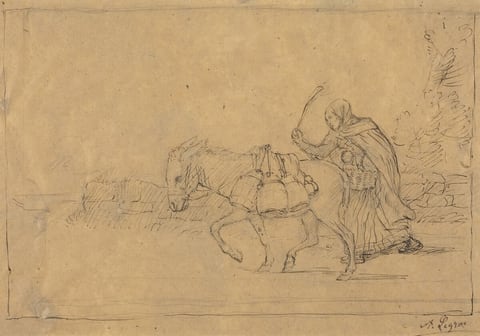
  1. This is a drawing of a person leading a donkey laden with goods. The image depicts a scene with a donkey walking to the left side while being guided by an individual dressed in layered clothing. The donkey is burdened with sacks or baskets that are strapped to its back. The lines and shading are subtle and detailed, capturing the texture of the clothing and fur. The figure and the donkey are positioned on a lightly sketched landscape with a few hints of foliage to the right, suggesting a rural setting. The drawing's simplicity and detail suggest a narrative moment, with a sense of movement and purpose conveyed through the lines.
    The Milkmaid of BoulogneAlphonse LegrosCourtesy National Gallery of Art, Washington
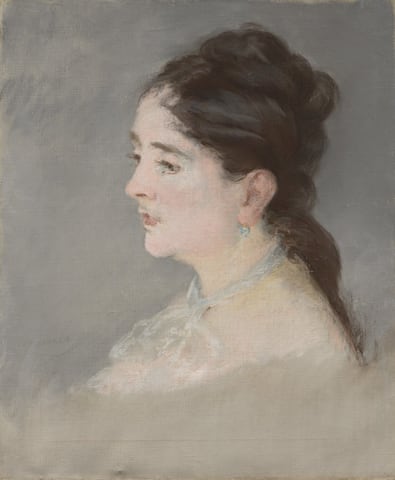
  2. Claire Campbell, by Édouard Manet, 1876
    Claire CampbellÉdouard Manet, 1876Courtesy of the Cleveland Museum of Art

Section 3, north wall
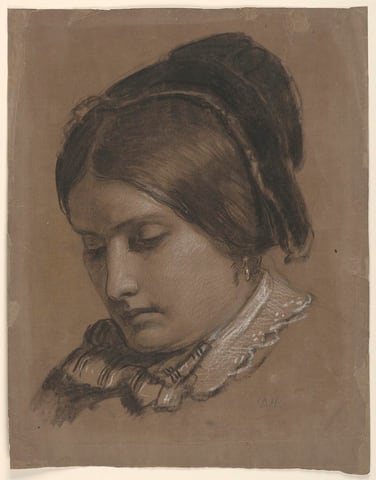
  1. THE ARTIST'S WIFE SOPHIE
    The Artist's Wife SophieDaniel Huntington, 1853Courtesy of Cooper Hewitt, Smithsonian Design Museum
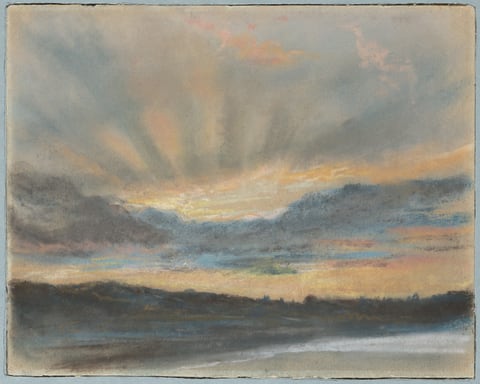
  2. Sunset, by Eugène Delacroix, ca. 1850
    SunsetEugène Delacroix, ca. 1850Courtesy of The Metropolitan Museum of Art

Section 3, south wall
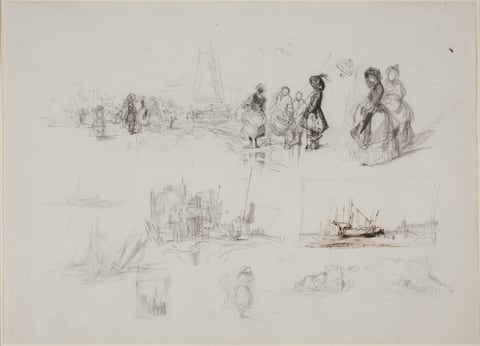
  1. This image is a pencil sketch on paper with a monochrome palette of graphite gray. The viewer sees various scenes without a defined horizon line. The upper section shows figures in period clothing, possibly mid-19th century women's fashion. The middle area has abstract architectural forms. In the lower right corner, a sailing ship or boat is sketched with more detail than the rest. The drawing style consists of quick, expressive strokes. The image conveys multiple narrative or compositional ideas on a single sheet.
    Seaside StudiesEugène Isabey, 1830sCourtesy National Gallery of Art, Washington
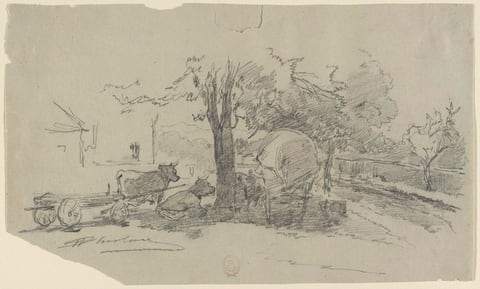
  2. A VILLAGE SQUARE
    A Village SquareWalter Shirlaw, 1875–80Courtesy of Cooper Hewitt, Smithsonian Design Museum

Section 4, south wall
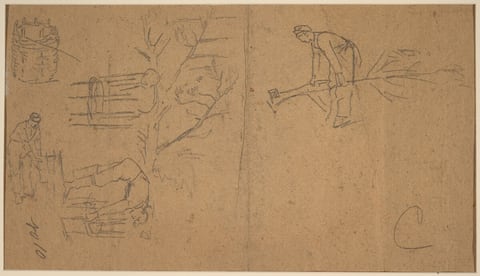
  1. This is a drawing of various sketches related to woodcutting or carpentry. The drawing features several pencil sketches on tan paper. On the left side, there are depictions of a barrel or basket, and beneath it, several outline sketches of figures engaged in activities involving woodwork. The right side of the drawing shows a figure bent over a large beam or branch. The sketches are simple, with minimal detail, capturing the basic form and movement of the figures and objects involved in woodwork-related activities.
    Soldiers felling sapling, and weaving saplings into baskets [verso]Winslow Homer, 1862Courtesy National Gallery of Art, Washington
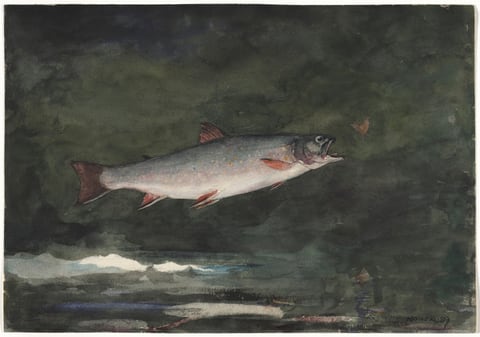
  2. Leaping Trout, by Winslow Homer, 1889
    Leaping TroutWinslow Homer, 1889Courtesy of the Cleveland Museum of Art