Floor plan

Style galleriesThe American Gilded Age, room 2
The American Gilded Age, room 2
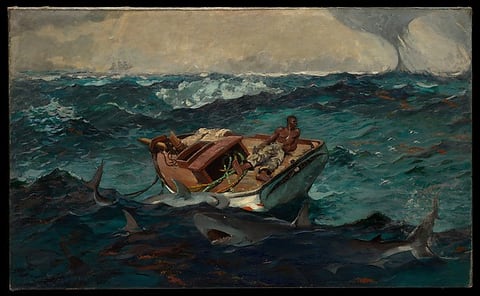
The Gulf Stream, by Winslow Homer, 1899; reworked by 1906
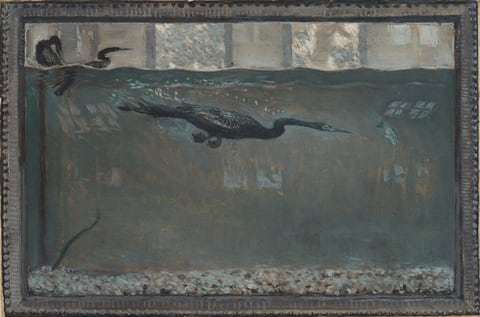
Diving Cormorant, by Otto H. Bacher, 1900
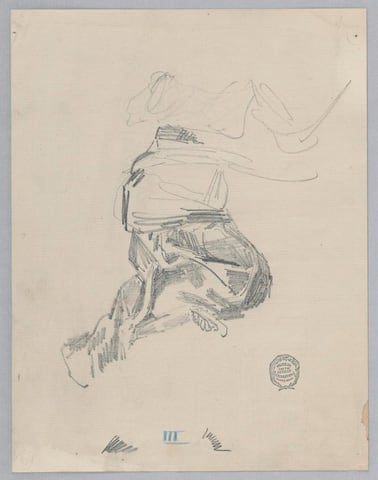
STUDY OF DRAPERY
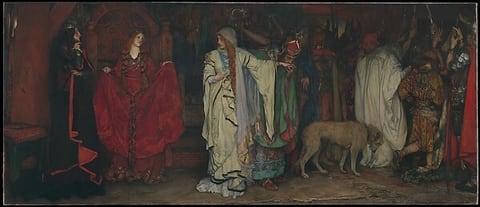
"King Lear," Act I, Scene I, by Edwin Austin Abbey, 1898
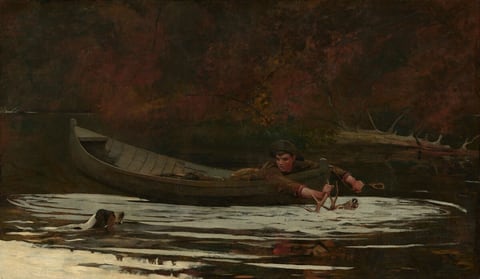
A young man with a peachy, ruddy complexion lies on his stomach in a wooden rowboat on a river, reaching forward to grasp the horn of a stag almost completely submerged in the rippling water with one hand. On the opposite riverbank, gold, rust, and scarlet-red trees span the width of this horizontal painting. The boy’s arms straddle the stern of the boat so one holds the antler with his right hand, closer to us, while the other clutches a rope with a loop at the end. He turns his face, mouth agape and cheeks flushed, over his right shoulder to look to our left, at a dog swimming toward the boat. The dog has white and caramel-brown markings, with dark brown ears. The boy wears earth-brown clothing and the front of his wide-brimmed hat is pushed up to reveal dark eyes and sable-brown bangs and brows. The stag and dog are between us and the boat, and are surrounded by thick brushstrokes of parchment white to create ripples in the forest-green water. Only the open muzzle, part of the eye, and the tips of the stag’s antlers are above the water’s surface. To our right, a bare, fallen tree lies along the far riverbank parallel to the boat. The boat and water fill the lower half of the scene and the autumn trees fill the upper half. The artist has signed and dated the painting in the lower right, “Winslow Homer 1892.”

The works in this room are listed below.

Works in this room

Painting and design in the United States from the Civil War to 1910.

First room, north wall

  1. The Gulf Stream, by Winslow Homer, 1899; reworked by 1906
    The Gulf StreamWinslow Homer, 1899; reworked by 1906Courtesy of The Metropolitan Museum of Art
  2. Diving Cormorant, by Otto H. Bacher, 1900
    Diving CormorantOtto H. Bacher, 1900Courtesy of the Cleveland Museum of Art
  3. STUDY OF DRAPERY
    Study of DraperyFrancis Augustus Lathrop, ca. 1895Courtesy of Cooper Hewitt, Smithsonian Design Museum

First room, south wall

  1. "King Lear," Act I, Scene I, by Edwin Austin Abbey, 1898
    "King Lear," Act I, Scene IEdwin Austin Abbey, 1898Courtesy of The Metropolitan Museum of Art
  2. A young man with a peachy, ruddy complexion lies on his stomach in a wooden rowboat on a river, reaching forward to grasp the horn of a stag almost completely submerged in the rippling water with one hand. On the opposite riverbank, gold, rust, and scarlet-red trees span the width of this horizontal painting. The boy’s arms straddle the stern of the boat so one holds the antler with his right hand, closer to us, while the other clutches a rope with a loop at the end. He turns his face, mouth agape and cheeks flushed, over his right shoulder to look to our left, at a dog swimming toward the boat. The dog has white and caramel-brown markings, with dark brown ears. The boy wears earth-brown clothing and the front of his wide-brimmed hat is pushed up to reveal dark eyes and sable-brown bangs and brows. The stag and dog are between us and the boat, and are surrounded by thick brushstrokes of parchment white to create ripples in the forest-green water. Only the open muzzle, part of the eye, and the tips of the stag’s antlers are above the water’s surface. To our right, a bare, fallen tree lies along the far riverbank parallel to the boat. The boat and water fill the lower half of the scene and the autumn trees fill the upper half. The artist has signed and dated the painting in the lower right, “Winslow Homer 1892.”
    Hound and HunterWinslow Homer, 1892Courtesy National Gallery of Art, Washington

Second room, south wall
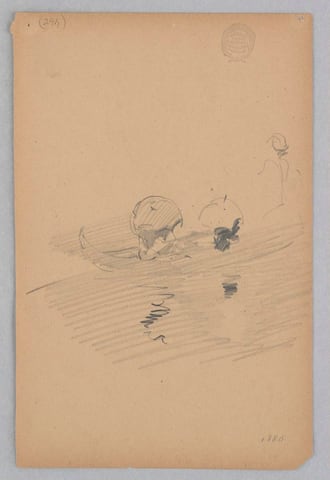
  1. VIEW OF VENICE, ITALY
    View of Venice, ItalyRobert Frederick Blum, 1880Courtesy of Cooper Hewitt, Smithsonian Design Museum
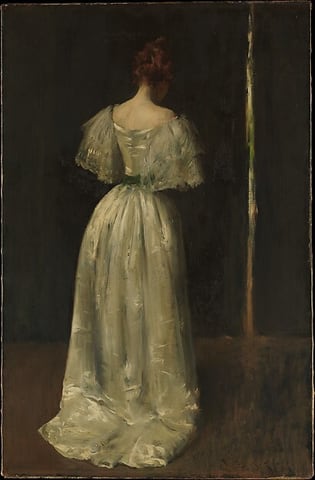
  2. Seventeenth Century Lady, by William Merritt Chase, ca. 1895
    Seventeenth Century LadyWilliam Merritt Chase, ca. 1895Courtesy of The Metropolitan Museum of Art
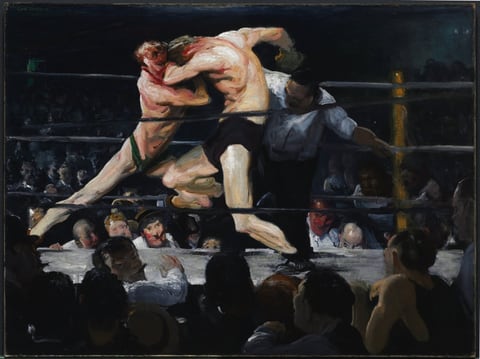
  3. Stag at Sharkey's, by George Bellows, 1909
    Stag at Sharkey'sGeorge Bellows, 1909Courtesy of the Cleveland Museum of Art
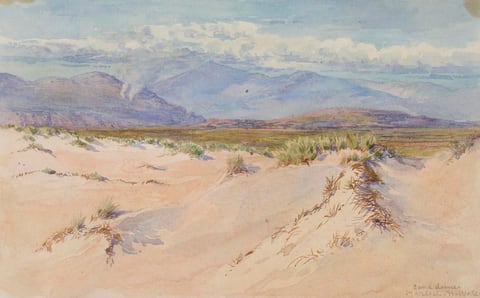
  4. Sand Dunes, Harlech, North Wales, by George Elbert Burr, 1899
    Sand Dunes, Harlech, North WalesGeorge Elbert Burr, 1899Courtesy of the Smithsonian American Art Museum

Second room, north wall
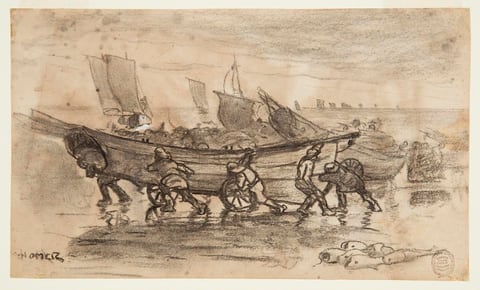
  1. FISHERMEN BEACHING A DORY, CULLERCOATS, ENGLAND
    Fishermen Beaching a Dory, Cullercoats, EnglandWinslow Homer, 1881Courtesy of Cooper Hewitt, Smithsonian Design Museum
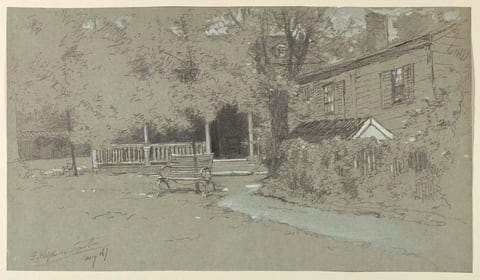
  2. THE OLD HOPKINSON HOUSE, BORDENTOWN, NJ
    The Old Hopkinson House, Bordentown, NJFrancis Hopkinson Smith, ca. 1880Courtesy of Cooper Hewitt, Smithsonian Design Museum
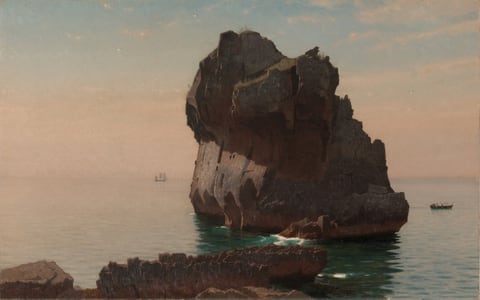
  3. Capri, by William Stanley Haseltine, 1869
    CapriWilliam Stanley Haseltine, 1869Courtesy of the Cleveland Museum of Art
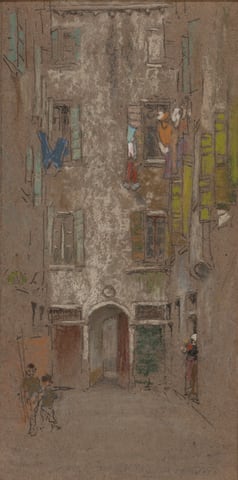
  4. A work made of pastel and black chalk on brown wove paper with fibrous inclusions.
    Corte del ParadisoJames McNeill Whistler, 1880Courtesy of the Art Institute of Chicago

Third room, north wall
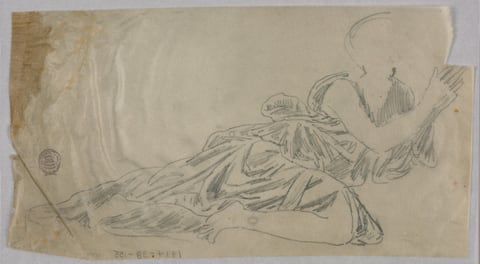
  1. DRAPERY STUDY
    Drapery StudyFrancis Augustus Lathrop, ca. 1895Courtesy of Cooper Hewitt, Smithsonian Design Museum
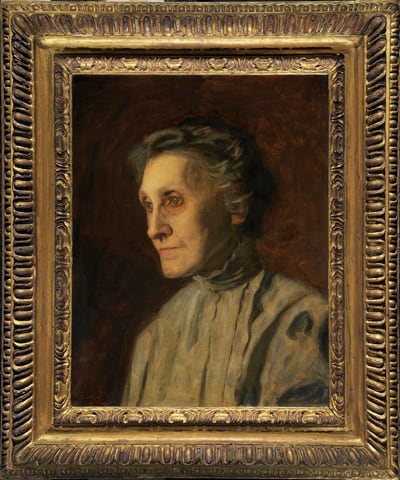
  2. Thomas Eakins
    Portrait of Mrs. Helen Mac Knight (Portrait of a Mother)Thomas Eakins, (c. 1903)Courtesy of the Hirshhorn Museum and Sculpture Garden, Smithsonian Institution
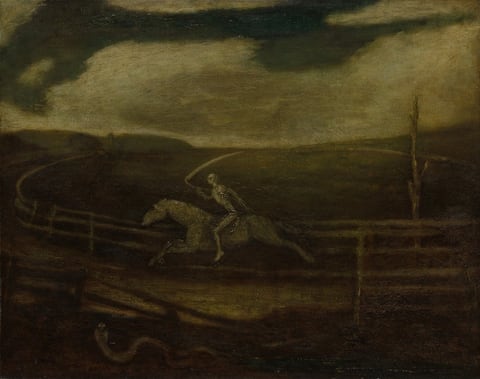
  3. The Race Track (Death on a Pale Horse), by Albert Pinkham Ryder, c. 1896–1908
    The Race Track (Death on a Pale Horse)Albert Pinkham Ryder, c. 1896–1908Courtesy of the Cleveland Museum of Art