Floor plan

Time and placeThe Netherlands

The Netherlands

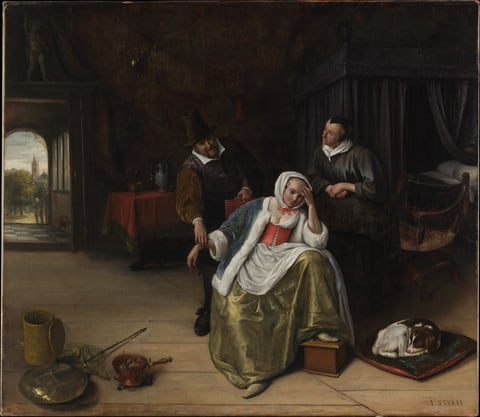
The Lovesick Maiden, by Jan Steen, ca. 1660
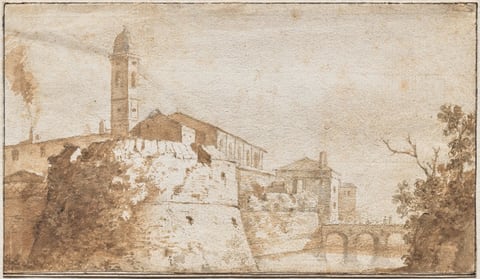
A View of Bracciano with the Church of S. Maria Assunta, by Bartholomeus Breenberg, c. 1619–33
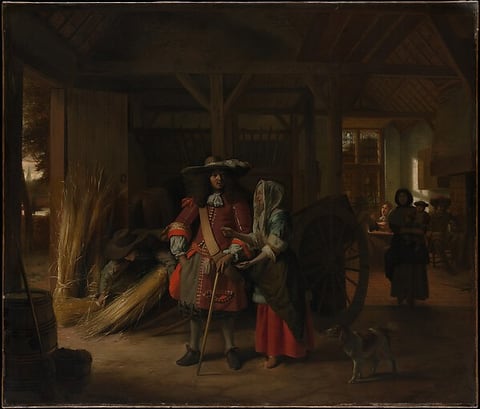
Paying the Hostess, by Pieter de Hooch, ca. 1670
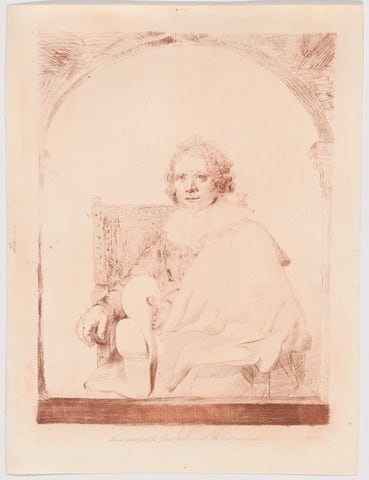
A work made of soft ground etching, with roulette, printed in red on white wove paper.
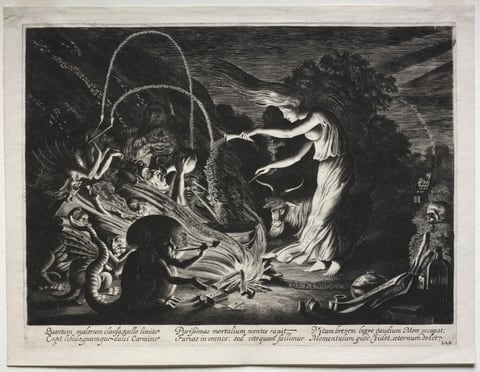
The Witch (Night Piece), by Jan van de Velde II, 1626
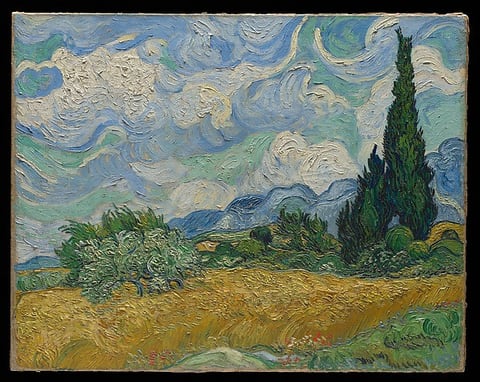
Wheat Field with Cypresses, by Vincent van Gogh, 1889
A work made of oil on canvas.

The works in this room are listed below.

Works in this room

Works made in the Netherlands, from every century in the collection.

First room, north wall

  1. The Lovesick Maiden, by Jan Steen, ca. 1660
    The Lovesick MaidenJan Steen, ca. 1660Courtesy of The Metropolitan Museum of Art
  2. A View of Bracciano with the Church of S. Maria Assunta, by Bartholomeus Breenberg, c. 1619–33
    A View of Bracciano with the Church of S. Maria AssuntaBartholomeus Breenberg, c. 1619–33Courtesy of the Cleveland Museum of Art
  3. Paying the Hostess, by Pieter de Hooch, ca. 1670
    Paying the HostessPieter de Hooch, ca. 1670Courtesy of The Metropolitan Museum of Art

First room, south wall

  1. A work made of soft ground etching, with roulette, printed in red on white wove paper.
    Portrait of a Man in an Armchair, from Collection d'imitations de Dessins d'après les Principaux Maîtres Hollandais et FlamandsChristian Josi, 1826Courtesy of the Art Institute of Chicago
  2. The Witch (Night Piece), by Jan van de Velde II, 1626
    The Witch (Night Piece)Jan van de Velde II, 1626Courtesy of the Cleveland Museum of Art
  3. Wheat Field with Cypresses, by Vincent van Gogh, 1889
    Wheat Field with CypressesVincent van Gogh, 1889Courtesy of The Metropolitan Museum of Art
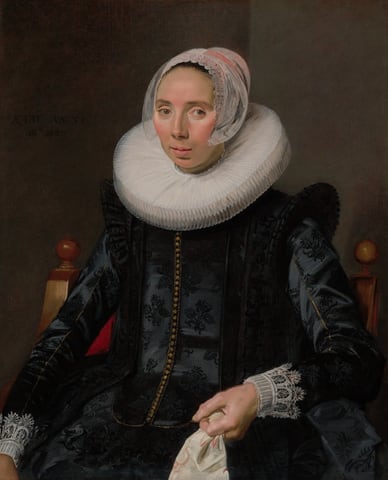
  4. A work made of oil on canvas.
    Portrait of a LadyFrans Hals, 1627Courtesy of the Art Institute of Chicago

Second room, south wall
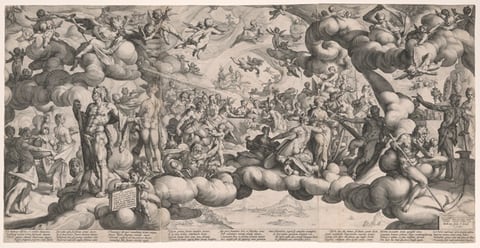
  1. A work made of engraving on three joined sheets of ivory laid paper.
    The Wedding of Cupid and PsycheHendrick Goltzius, 1587Courtesy of the Art Institute of Chicago
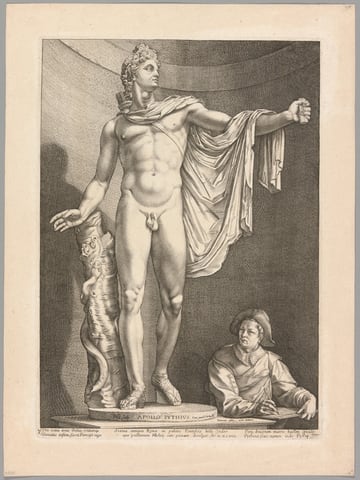
  2. A work made of engraving in black on cream laid paper.
    The Apollo Belvedere, plate 3 from Three Famous Antique SculpturesHendrick Goltzius, c. 1592, printed c. 1617Courtesy of the Art Institute of Chicago
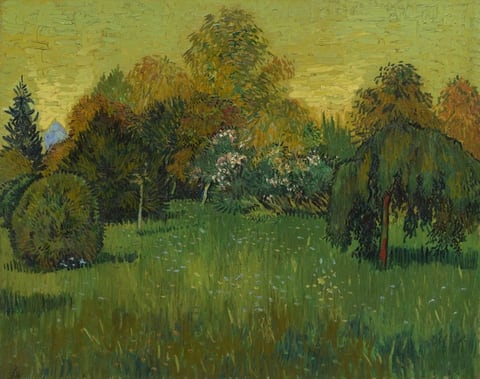
  3. Lush tall grasses with small white flowers foreground a grove of bushy trees of varying types and heights, their leaves ranging from deep green to golden. Beneath a dense and heavy yellow sky, a small blue triangle suggesting a mountain peak crests above the treeline at far left.
    The Poet's GardenVincent van Gogh, 1888Courtesy of the Art Institute of Chicago
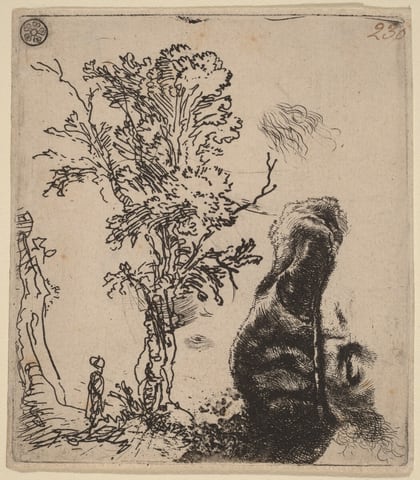
  4. The image displays intricate, swirling lines and textured shading to create an abstract scene. On the left side are fine lines resembling branches and leaves, with a small figure nearby. On the right side is a large, densely shaded form reminiscent of mountains or a rock formation. The elements come together to suggest landscapes and nature through imaginative shapes and line work.
    Sheet with Two Studies: a Tree, and the Upper Part of a Head of the Artist Wearing a Velvet CapRembrandt van Rijn, c. 1642Courtesy National Gallery of Art, Washington

Second room, north wall
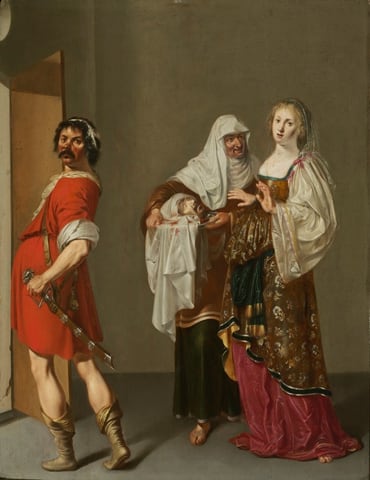
  1. Salome with the Head of Saint John the Baptist, by Jacob Duck, mid-1600s
    Salome with the Head of Saint John the BaptistJacob Duck, mid-1600sCourtesy of the Cleveland Museum of Art
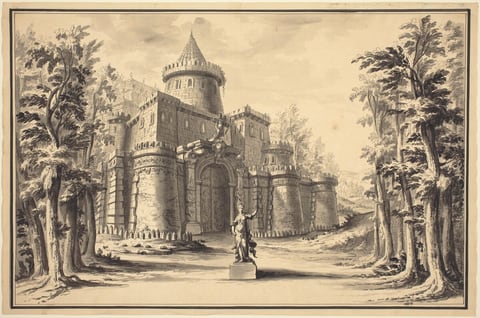
  2. The image shows a castle with a circular tower, a statue positioned on a pedestal on a path leading to the castle entrance. Tall trees flank the path, forming a natural archway. The castle walls have fortified turrets and an ornate gateway with intricate stonework and carvings. In the background, there are more trees and faint outlines of hills. The scene is in a monochromatic sepia tone, emphasizing depth and detail with subtle shading variations.
    A Stage Set with a Statue and a PalaceDaniel Marot the Younger, 1730s (?)Courtesy National Gallery of Art, Washington
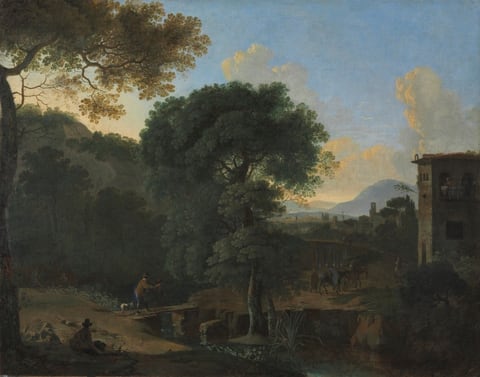
  3. Landscape with Travelers, by Herman van Swanevelt, 1630s
    Landscape with TravelersHerman van Swanevelt, 1630sCourtesy of the Cleveland Museum of Art

Third room, north wall
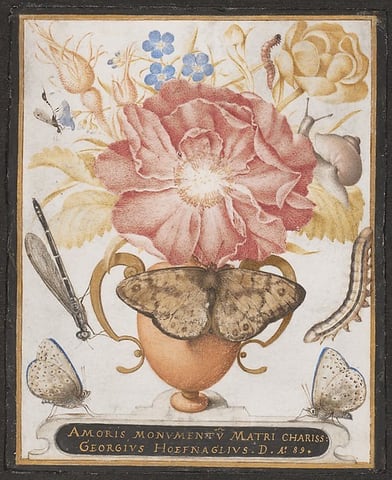
  1. Still Life with Flowers, a Snail and Insects, by Joris Hoefnagel, 1589
    Still Life with Flowers, a Snail and InsectsJoris Hoefnagel, 1589Courtesy of The Metropolitan Museum of Art
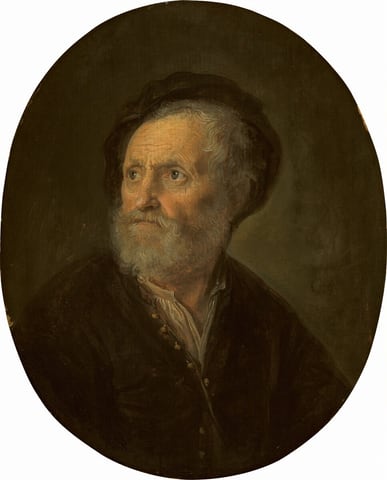
  2. Shown from the chest up, a light-skinned man with a wrinkled face and a silvery gray beard and hair gazes into the distance in this oval portrait painting. His chest is angled to our right but he turns his head to look off over his other shoulder, to our left. His slate-blue eyes are a little sunken and lined with wrinkles. Shading marks the hollows of the temple and cheek we can see. His thin lips are closed and framed by his curly mustache and beard. A dark, mahogany-brown cap is pushed back on his head, and his brown jacket has gold-colored buttons down the front. The collar of a cream-colored shirt shows through at the neckline. The background is dark olive green. The artist signed the work near the man’s shoulder, to our right: “GDOV.”
    Bust of a Bearded ManGerrit Dou, c. 1642/1645Courtesy National Gallery of Art, Washington