Floor plan

Time and placeThe 17th century, room 2
The 17th century, room 2
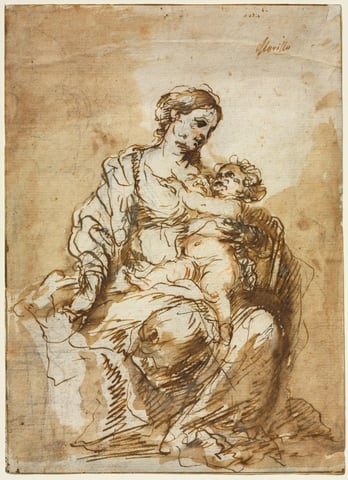
Madonna Nursing the Christ Child, by Bartolomé Esteban Murillo, c. 1670–72
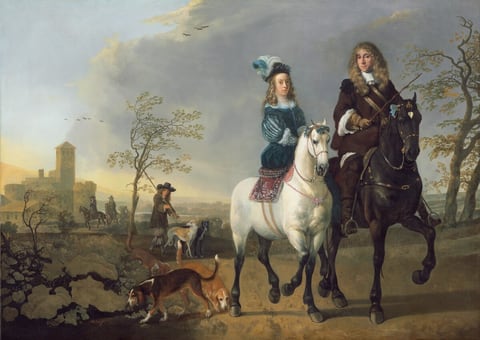
An elegantly dressed man and woman ride horses toward us and to our right in a landscape with low, rolling hills, stone buildings, and trees in this horizontal painting. The two horses and riders take up the right half of the composition. Both people have pale skin and look at us. The woman has a high forehead, a straight nose, a round face, and curly blond hair falling to her shoulders. She wears a sapphire-blue dress with slashed sleeves to reveal a white garment beneath. Her hat is adorned with blue and white feathers, and she wears a string of pearls around her neck. The legs of her white horse darken to black below the knees, and the bridle is tied with blue bows near the horse’s ears. The sidesaddle sits on a woven, rug-like blanket. Next to her, to our right, the man rides a larger chestnut-brown horse with a white triangle between its eyes. The man looks at us out of the corners of his dark eyes under gathered brows. He has a long, straight nose and is cleanshaven, though a hint of a five o’clock shadow slightly darkens his cleft chin. His light brown hair falls in curls down past his shoulders, and he wears a dark brown coat with voluminous white fabric rippling out above tan-colored gloves. He holds a riding crop in his right hand, on our left, resting against his hip. Near the white horse’s feet, to our left, a dark brown dog with a white nose sniffs at a plant. Behind it, another reddish-brown dog sniffs the ground near the horse’s back hoof. A third dog stands beyond, partially obscured by bushes and plants growing in the lower left corner of the canvas. A man wearing a tall black, wide-brimmed hat and carrying a long staff leads two slender dogs resembling grayhounds on leashes along the path, a little behind the riders. Two more elegantly dressed men ride horses toward us father back on the path. Sand-colored stone buildings, hazy in the distance, are clustered around a squared tower, possibly a bell tower, to our left. The land dips gently to the horizon line in the deep distance. The riders are silhouetted against a swirling slate-blue cloud that fills most of the sky in the top two-thirds of the painting. The sky clears to pale blue to our left and then warms to golden yellow along the horizon, beyond the buildings. The artist signed the painting near the lower left corner: “A. Cuijp.”
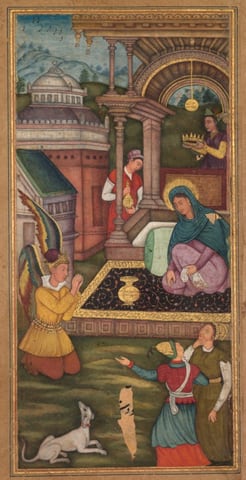
The Annunciation (folio 15 recto), from a Mirror of Holiness (Mir’at al-quds) of Father Jerome Xavier, 1602–4
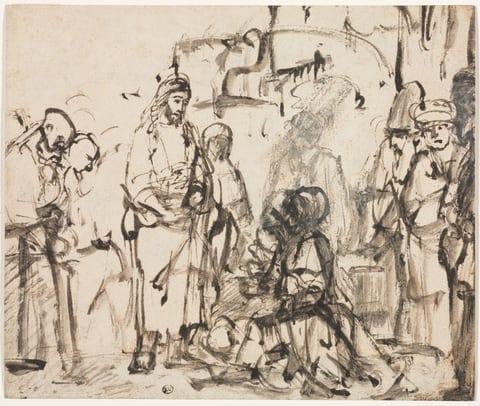
The Meeting of Christ with Martha and Mary after the Death of Lazarus, by Rembrandt van Rijn, c. 1662–65
A work made of oil on canvas.
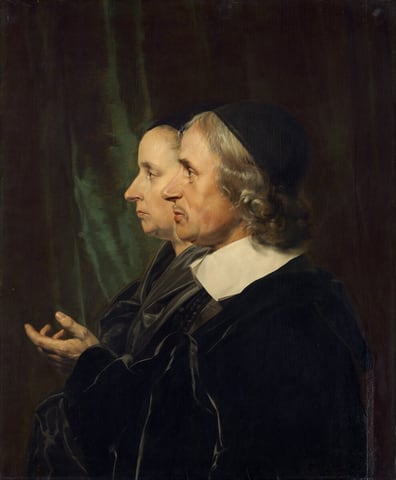
Shown from the shoulders up, a man and woman face our left in profile against a shadowy, dark green curtain in this vertical portrait painting. They both look steadily to our left, they and have pale skin and wear black. The man is closer to us so he overlaps the woman, whose profile is shifted to our left. A black cap sits on the man's curly, silver, shoulder-length hair. He has a slight double chin and soft jowls. A thin mustache curves over his upper lip, and a line of hair runs down his chin as a narrow beard. A broad, flat, white collar lies across his shoulders over a velvety black coat. He lifts his left hand, closer to us, in front of his chest with the fingers curled gently inward. The woman also has a double chin and soft jowls. Her thin lips are closed and downturned. Her hair is pulled back under a black covering, and her black garment has a sheen, suggesting satin.
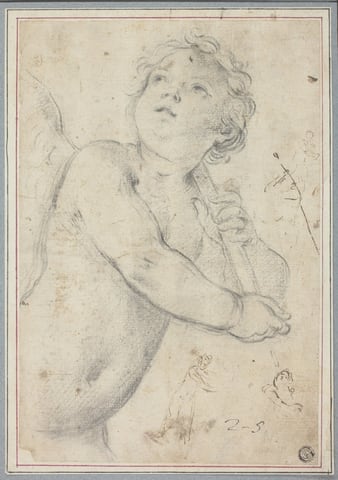
A work made of black chalk with pen and brown ink on cream laid paper.
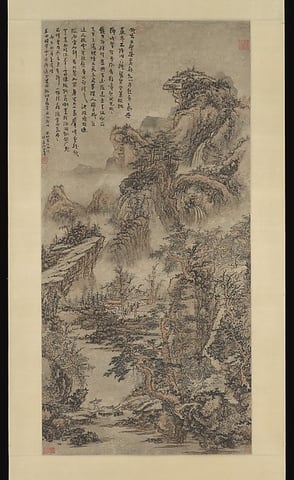
Wooded Mountains at Dusk, by Kuncan, dated 1666

The works in this room are listed below.

Works in this room

Works made in the 17th century, anywhere in the world.

Section 1, north wall

  1. Madonna Nursing the Christ Child, by Bartolomé Esteban Murillo, c. 1670–72
    Madonna Nursing the Christ ChildBartolomé Esteban Murillo, c. 1670–72Courtesy of the Cleveland Museum of Art
  2. An elegantly dressed man and woman ride horses toward us and to our right in a landscape with low, rolling hills, stone buildings, and trees in this horizontal painting. The two horses and riders take up the right half of the composition. Both people have pale skin and look at us. The woman has a high forehead, a straight nose, a round face, and curly blond hair falling to her shoulders. She wears a sapphire-blue dress with slashed sleeves to reveal a white garment beneath. Her hat is adorned with blue and white feathers, and she wears a string of pearls around her neck. The legs of her white horse darken to black below the knees, and the bridle is tied with blue bows near the horse’s ears. The sidesaddle sits on a woven, rug-like blanket. Next to her, to our right, the man rides a larger chestnut-brown horse with a white triangle between its eyes. The man looks at us out of the corners of his dark eyes under gathered brows. He has a long, straight nose and is cleanshaven, though a hint of a five o’clock shadow slightly darkens his cleft chin. His light brown hair falls in curls down past his shoulders, and he wears a dark brown coat with voluminous white fabric rippling out above tan-colored gloves. He holds a riding crop in his right hand, on our left, resting against his hip. Near the white horse’s feet, to our left, a dark brown dog with a white nose sniffs at a plant. Behind it, another reddish-brown dog sniffs the ground near the horse’s back hoof. A third dog stands beyond, partially obscured by bushes and plants growing in the lower left corner of the canvas. A man wearing a tall black, wide-brimmed hat and carrying a long staff leads two slender dogs resembling grayhounds on leashes along the path, a little behind the riders. Two more elegantly dressed men ride horses toward us father back on the path. Sand-colored stone buildings, hazy in the distance, are clustered around a squared tower, possibly a bell tower, to our left. The land dips gently to the horizon line in the deep distance. The riders are silhouetted against a swirling slate-blue cloud that fills most of the sky in the top two-thirds of the painting. The sky clears to pale blue to our left and then warms to golden yellow along the horizon, beyond the buildings. The artist signed the painting near the lower left corner: “A. Cuijp.”
    Lady and Gentleman on HorsebackAelbert Cuyp, c. 1655, reworked 1660/1665Courtesy National Gallery of Art, Washington
  3. The Annunciation (folio 15 recto), from a Mirror of Holiness (Mir’at al-quds) of Father Jerome Xavier, 1602–4
    The Annunciation (folio 15 recto), from a Mirror of Holiness (Mir’at al-quds) of Father Jerome XavierUnrecorded Indian maker, 1602–4Courtesy of the Cleveland Museum of Art
  4. The Meeting of Christ with Martha and Mary after the Death of Lazarus, by Rembrandt van Rijn, c. 1662–65
    The Meeting of Christ with Martha and Mary after the Death of LazarusRembrandt van Rijn, c. 1662–65Courtesy of the Cleveland Museum of Art

Section 1, south wall

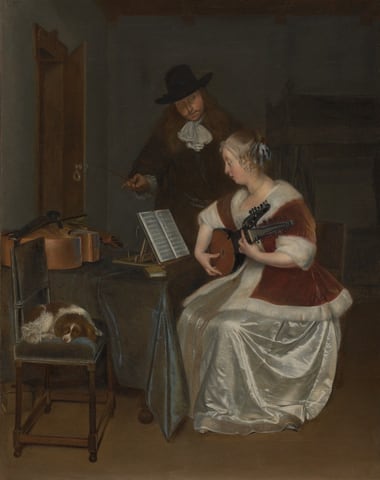
  1. A work made of oil on canvas.
    The Music LessonGerard ter Borch the Younger, c. 1670Courtesy of the Art Institute of Chicago
  2. Shown from the shoulders up, a man and woman face our left in profile against a shadowy, dark green curtain in this vertical portrait painting. They both look steadily to our left, they and have pale skin and wear black. The man is closer to us so he overlaps the woman, whose profile is shifted to our left. A black cap sits on the man's curly, silver, shoulder-length hair. He has a slight double chin and soft jowls. A thin mustache curves over his upper lip, and a line of hair runs down his chin as a narrow beard. A broad, flat, white collar lies across his shoulders over a velvety black coat. He lifts his left hand, closer to us, in front of his chest with the fingers curled gently inward. The woman also has a double chin and soft jowls. Her thin lips are closed and downturned. Her hair is pulled back under a black covering, and her black garment has a sheen, suggesting satin.
    Portrait of the Artist's Parents, Salomon de Bray and Anna WesterbaenJan de Bray, 1664Courtesy National Gallery of Art, Washington
  3. A work made of black chalk with pen and brown ink on cream laid paper.
    Putto Holding StaffGuido Reni, n.d.Courtesy of the Art Institute of Chicago
  4. Wooded Mountains at Dusk, by Kuncan, dated 1666
    Wooded Mountains at DuskKuncan, dated 1666Courtesy of The Metropolitan Museum of Art

Section 2, south wall
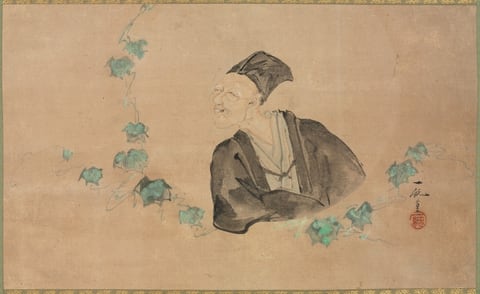
  1. Portrait of Basho, by Ichijun, 1700s
    Portrait of BashoIchijun, 1700sCourtesy of the Cleveland Museum of Art
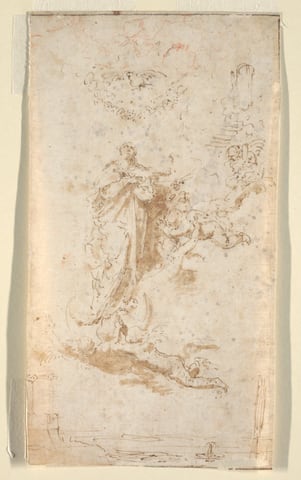
  2. THE IMMACULATE CONCEPTION
    The Immaculate ConceptionJusepe de Ribera (called Lo Spagnoletto), ca. 1640Courtesy of Cooper Hewitt, Smithsonian Design Museum
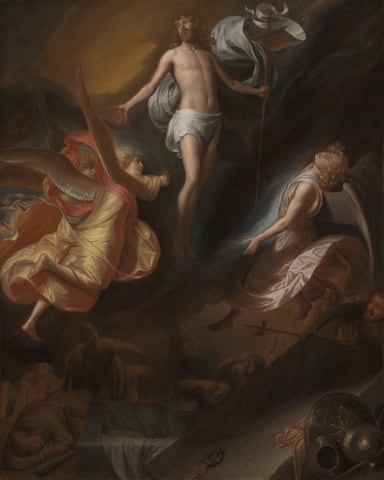
  3. A work made of oil on canvas.
    Resurrection of ChristSamuel van Hoogstraten, c. 1665Courtesy of the Art Institute of Chicago
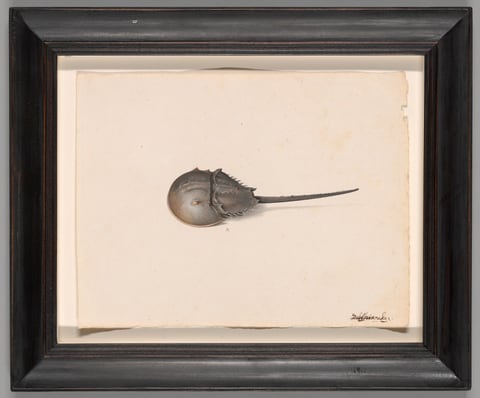
  4. A work made of watercolor and opaque watercolor on cream laid paper.
    A Horseshoe CrabPieter Holsteyn, the younger, 1640/80Courtesy of the Art Institute of Chicago

Section 2, north wall
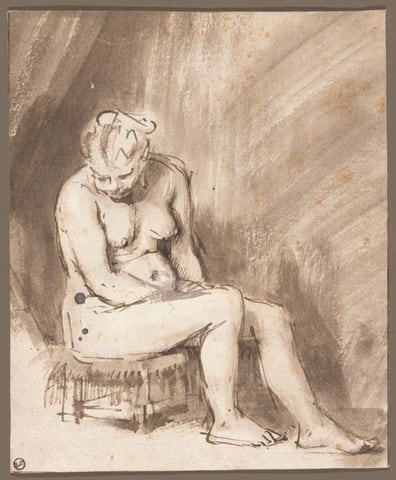
  1. Brown-tone drawing of a nude woman seated on a small stool, looking downward.
    Seated Female NudeRembrandt van Rijn, 1660/62Courtesy of the Art Institute of Chicago
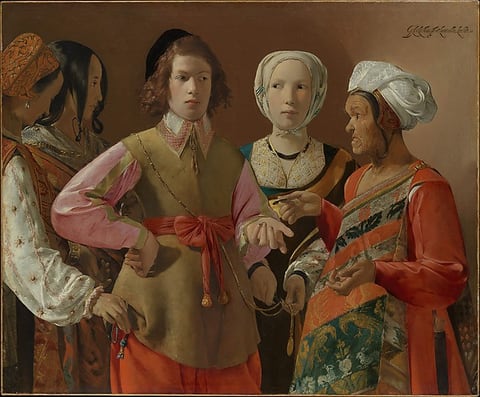
  2. The Fortune-Teller, by Georges de La Tour, probably 1630s
    The Fortune-TellerGeorges de La Tour, probably 1630sCourtesy of The Metropolitan Museum of Art

Section 3, north wall
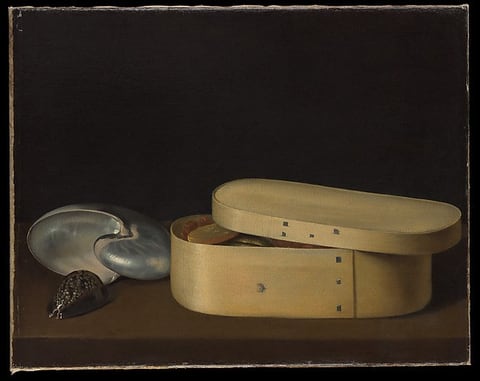
  1. Still Life with Shells and a Chip-Wood Box, by Sebastian Stoskopff, late 1620s
    Still Life with Shells and a Chip-Wood BoxSebastian Stoskopff, late 1620sCourtesy of The Metropolitan Museum of Art
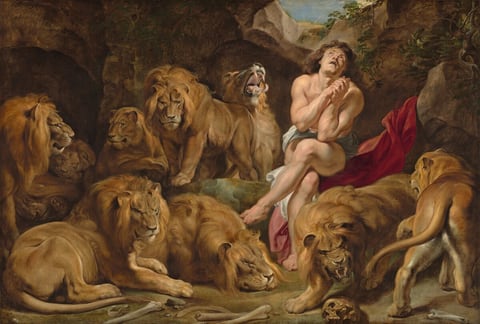
  2. A nearly nude, muscular man with pale, peachy skin sits in an underground cave among seven male and two female lions in this horizontal painting. The man sits to our right of center with his legs crossed, elbows close to his body with hands clasped by his chest. His head tips back to look up through a small opening above. He has long, wavy, chestnut-brown hair and dark eyes. A white cloth wraps across his hips, and he sits on a scarlet-red swath of fabric draped up over a rock next to him. The nine lions stalk, sit, or lie down around the man. One male lion next to the man, to our left, opens his mouth with his head thrown back, curling tongue extended beyond long fangs. A human skull and other bones are strewn on the dirt ground close to us. The rocky cave curves up around the animals and man to a narrow, round opening showing blue sky above.
    Daniel in the Lions' DenPeter Paul Rubens, c. 1614/1616Courtesy National Gallery of Art, Washington