Floor plan

Style galleriesDrawings of the 19th century
Drawings of the 19th century
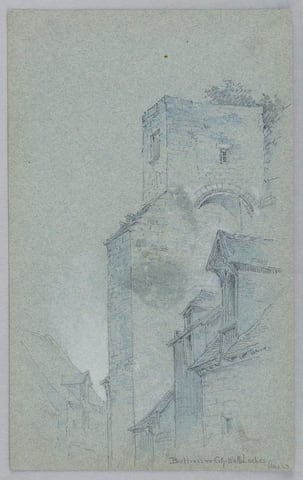
BUTTRESSES ON CITY WALLS; LOCHES
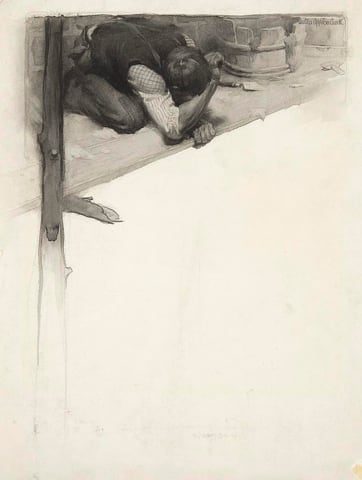
VIGNETTE: MAN CROUCHING ON A SCAFFOLDING
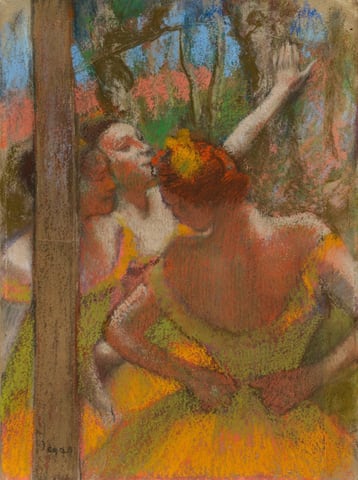
Dancers, by Edgar Degas, c. 1896
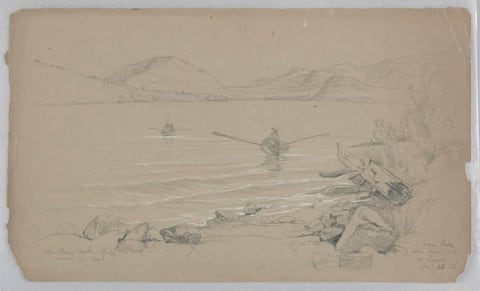
EAGLE LAKE, MT. DESERT
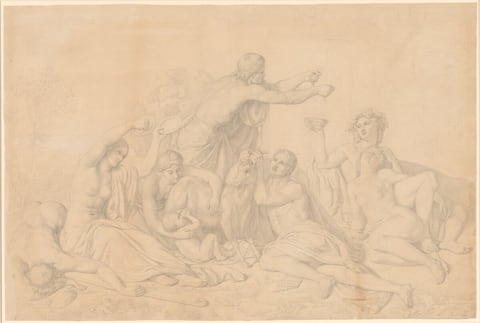
This is a drawing of a group of mythological figures in a ceremonial scene. The composition features multiple figures in various poses, centered around a symbolic gathering. The drawing is detailed, providing a classical representation of human forms, draped fabrics, and an animal. A plateau with trees is subtly depicted in the background. The figures display expressions ranging from serene to contemplative.

The works in this room are listed below.

Works in this room

Drawings made in the 19th century, from every museum.

Section 1, north wall

  1. BUTTRESSES ON CITY WALLS; LOCHES
    Buttresses on City Walls; LochesArnold William Brunner, 1883Courtesy of Cooper Hewitt, Smithsonian Design Museum
  2. VIGNETTE: MAN CROUCHING ON A SCAFFOLDING
    Vignette: Man Crouching on a ScaffoldingWalter Appleton Clark, 1899Courtesy of Cooper Hewitt, Smithsonian Design Museum
  3. Dancers, by Edgar Degas, c. 1896
    DancersEdgar Degas, c. 1896Courtesy of the Cleveland Museum of Art

Section 1, south wall

  1. EAGLE LAKE, MT. DESERT
    Eagle Lake, Mt. DesertDaniel Huntington, August 23, 1856Courtesy of Cooper Hewitt, Smithsonian Design Museum
  2. This is a drawing of a group of mythological figures in a ceremonial scene. The composition features multiple figures in various poses, centered around a symbolic gathering. The drawing is detailed, providing a classical representation of human forms, draped fabrics, and an animal. A plateau with trees is subtly depicted in the background. The figures display expressions ranging from serene to contemplative.
    The Nursing of JupiterThéodore ChassériauCourtesy National Gallery of Art, Washington

Section 2, south wall
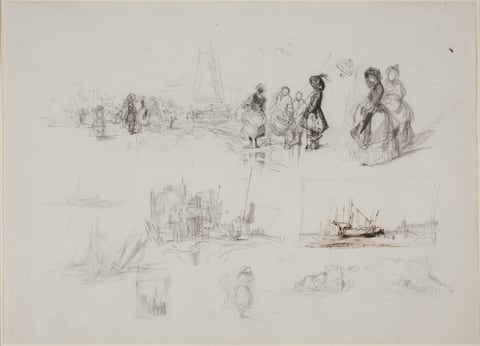
  1. This image is a pencil sketch on paper with a monochrome palette of graphite gray. The viewer sees various scenes without a defined horizon line. The upper section shows figures in period clothing, possibly mid-19th century women's fashion. The middle area has abstract architectural forms. In the lower right corner, a sailing ship or boat is sketched with more detail than the rest. The drawing style consists of quick, expressive strokes. The image conveys multiple narrative or compositional ideas on a single sheet.
    Seaside StudiesEugène Isabey, 1830sCourtesy National Gallery of Art, Washington
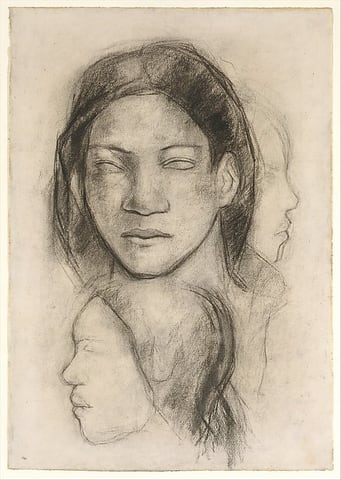
  2. Tahitian Faces (Frontal View and Profiles), by Paul Gauguin, ca. 1899
    Tahitian Faces (Frontal View and Profiles)Paul Gauguin, ca. 1899Courtesy of The Metropolitan Museum of Art

Section 2, north wall
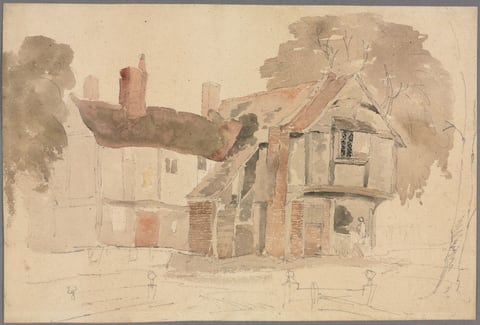
  1. Bray Church Yard, by John Varley, 1807
    Bray Church YardJohn Varley, 1807Courtesy of the Cleveland Museum of Art
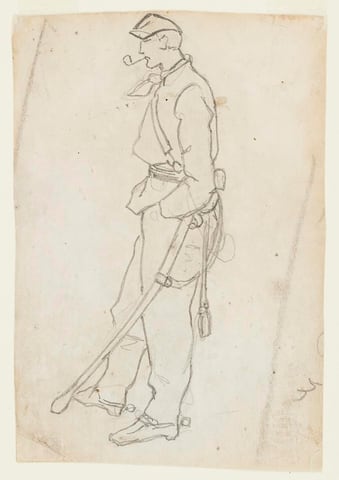
  2. SOLDIER WITH SWORD AND PIPE
    Soldier with Sword and PipeWinslow Homer, 1862Courtesy of Cooper Hewitt, Smithsonian Design Museum

Section 3, north wall
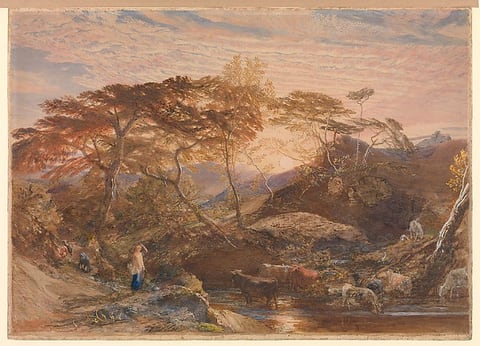
  1. Sabrina, by Samuel Palmer, 1856
    SabrinaSamuel Palmer, 1856Courtesy of The Metropolitan Museum of Art
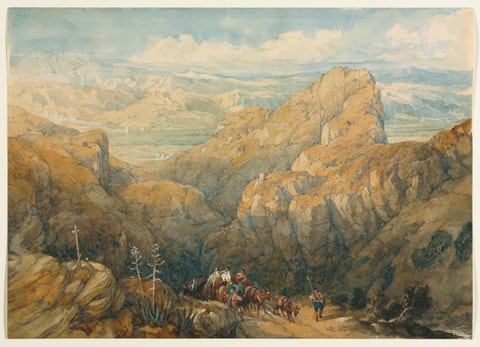
  2. Descent into the Plain of Granada, by David Roberts, 1834
    Descent into the Plain of GranadaDavid Roberts, 1834Courtesy of the Cleveland Museum of Art

Section 3, south wall
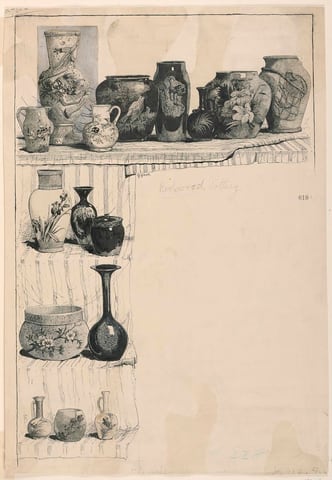
  1. ROOKWOOD POTTERY
    Rookwood PotteryGeorge Gibson, 1886Courtesy of Cooper Hewitt, Smithsonian Design Museum
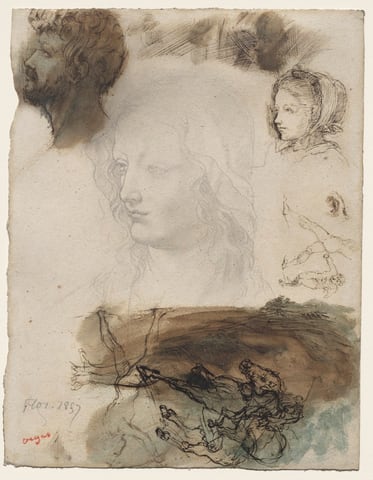
  2. Sheet of Studies and Sketches, by Edgar Degas, 1858
    Sheet of Studies and SketchesEdgar Degas, 1858Courtesy of the Cleveland Museum of Art
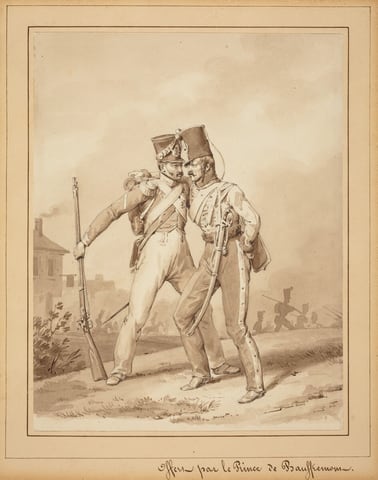
  3. The image features two men in military uniform engaging closely with each other. Both are shown from head to toe. The man on the left stands with his left leg forward, holding a rifle, and has his right arm around the shoulder of the other man. The man on the right has his right leg slightly bent, supporting his weight, and is holding a sword in his left hand. Each man has distinctive facial features. Both wear tall, elaborate military hats and detailed uniforms. The man on the left displays a strap over his shoulder, while the man on the right has intricate decorations on his jacket and trousers. In the background, there are a few more soldiers and part of a building to the left. The setting is monochromatic.
    Two GrenadiersVictor AdamCourtesy National Gallery of Art, Washington

Section 4, south wall
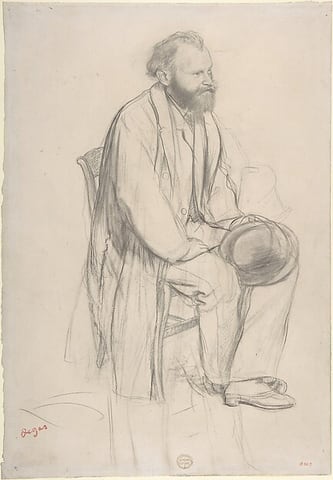
  1. Édouard Manet, Seated, Holding His Hat, by Edgar Degas, ca. 1868
    Édouard Manet, Seated, Holding His HatEdgar Degas, ca. 1868Courtesy of The Metropolitan Museum of Art
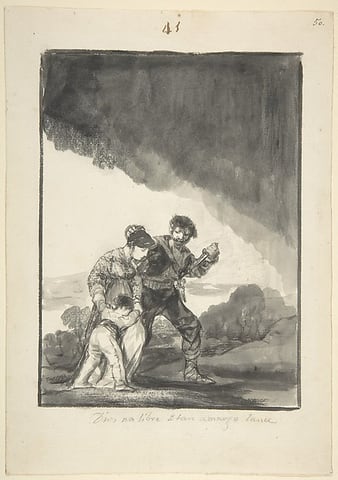
  2. God save us from such a bitter fate; a bandit threatening a woman and a child with a knife, page 41 from the "Black Border Album" (E), by Francisco Goya, ca. 1816–20
    God save us from such a bitter fate; a bandit threatening a woman and a child with a knife, page 41 from the "Black Border Album" (E)Francisco Goya, ca. 1816–20Courtesy of The Metropolitan Museum of Art