Floor plan

Style galleriesDrawings of the 19th century
Drawings of the 19th century
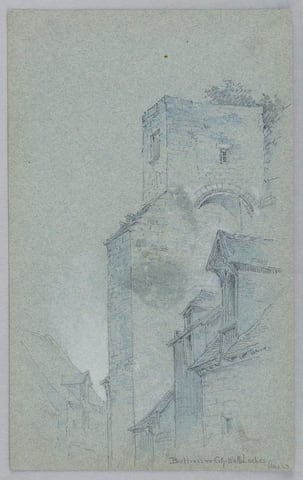
BUTTRESSES ON CITY WALLS; LOCHES
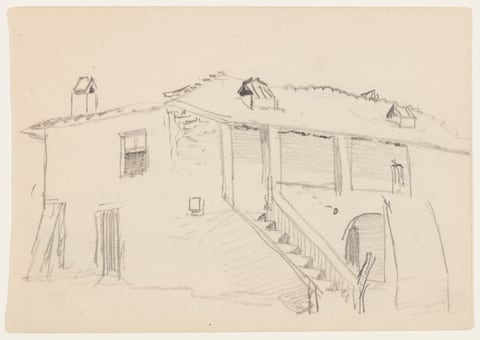
ITALIAN FARMHOUSE
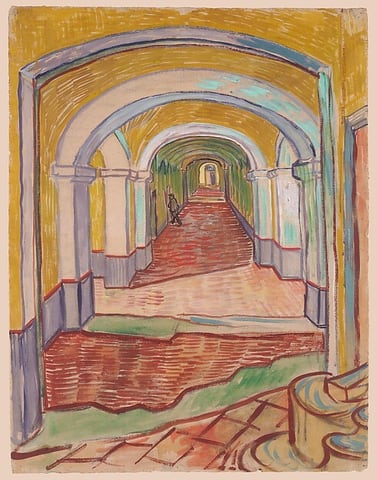
Corridor in the Asylum, by Vincent van Gogh, September 1889
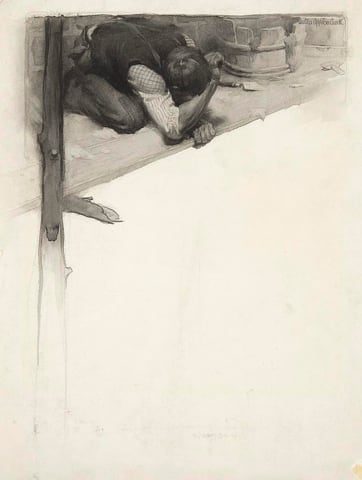
VIGNETTE: MAN CROUCHING ON A SCAFFOLDING
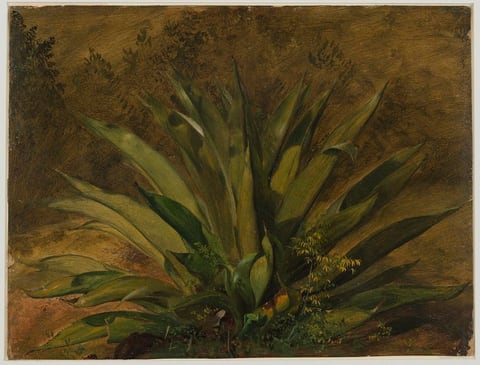
CENTURY PLANT, JAMAICA

The works in this room are listed below.

Works in this room

Drawings made in the 19th century, from every museum.

Section 1, north wall

  1. BUTTRESSES ON CITY WALLS; LOCHES
    Buttresses on City Walls; LochesArnold William Brunner, 1883Courtesy of Cooper Hewitt, Smithsonian Design Museum
  2. ITALIAN FARMHOUSE
    Italian FarmhouseFrederic Edwin Church, September 1868 - April 1869Courtesy of Cooper Hewitt, Smithsonian Design Museum
  3. Corridor in the Asylum, by Vincent van Gogh, September 1889
    Corridor in the AsylumVincent van Gogh, September 1889Courtesy of The Metropolitan Museum of Art

Section 1, south wall

  1. VIGNETTE: MAN CROUCHING ON A SCAFFOLDING
    Vignette: Man Crouching on a ScaffoldingWalter Appleton Clark, 1899Courtesy of Cooper Hewitt, Smithsonian Design Museum
  2. CENTURY PLANT, JAMAICA
    Century Plant, JamaicaFrederic Edwin Church, May–September 1865Courtesy of Cooper Hewitt, Smithsonian Design Museum

Section 2, south wall
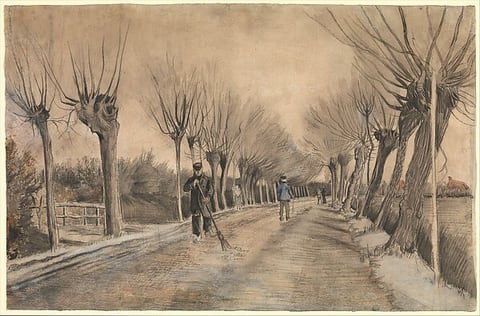
  1. Road in Etten, by Vincent van Gogh, 1881
    Road in EttenVincent van Gogh, 1881Courtesy of The Metropolitan Museum of Art
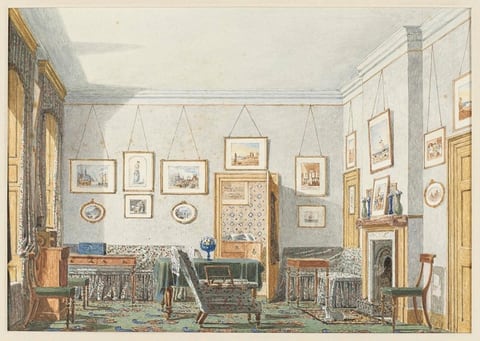
  2. GEORGE JAMES DRUMMOND'S ROOM AT OXFORD, 1853
    George James Drummond's Room at Oxford, 1853George Pyne, 1853Courtesy of Cooper Hewitt, Smithsonian Design Museum

Section 2, north wall
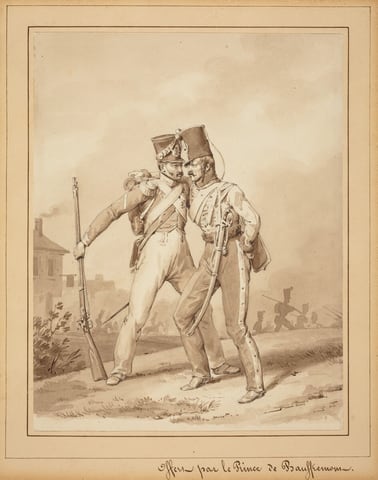
  1. The image features two men in military uniform engaging closely with each other. Both are shown from head to toe. The man on the left stands with his left leg forward, holding a rifle, and has his right arm around the shoulder of the other man. The man on the right has his right leg slightly bent, supporting his weight, and is holding a sword in his left hand. Each man has distinctive facial features. Both wear tall, elaborate military hats and detailed uniforms. The man on the left displays a strap over his shoulder, while the man on the right has intricate decorations on his jacket and trousers. In the background, there are a few more soldiers and part of a building to the left. The setting is monochromatic.
    Two GrenadiersVictor AdamCourtesy National Gallery of Art, Washington
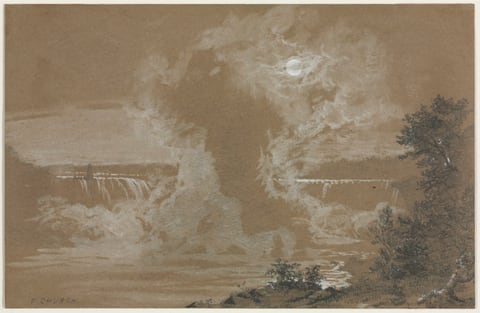
  2. Niagara Falls by Moonlight, by Frederic Edwin Church, probably 1856
    Niagara Falls by MoonlightFrederic Edwin Church, probably 1856Courtesy of the Cleveland Museum of Art
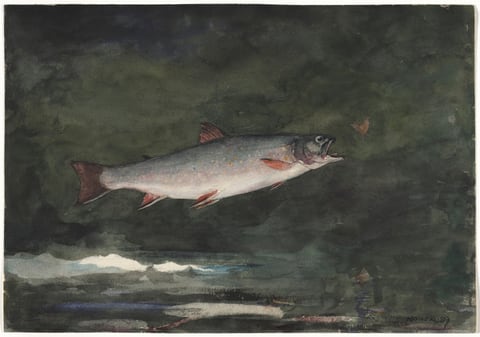
  3. Leaping Trout, by Winslow Homer, 1889
    Leaping TroutWinslow Homer, 1889Courtesy of the Cleveland Museum of Art

Section 3, north wall
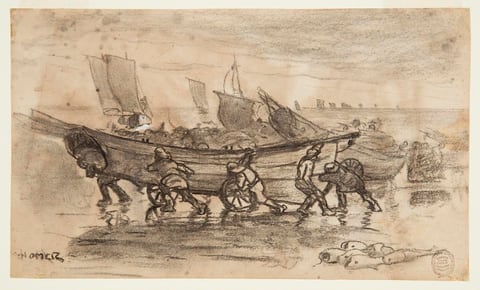
  1. FISHERMEN BEACHING A DORY, CULLERCOATS, ENGLAND
    Fishermen Beaching a Dory, Cullercoats, EnglandWinslow Homer, 1881Courtesy of Cooper Hewitt, Smithsonian Design Museum
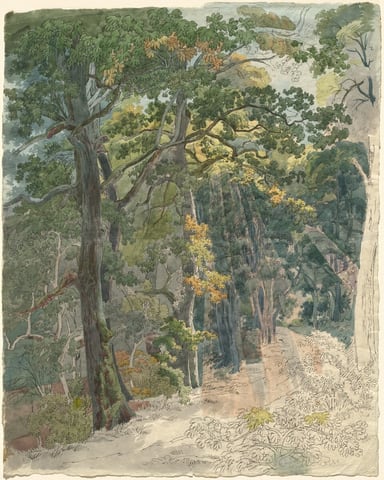
  2. The image shows a dense, forested area with towering trees. The composition leads the eye along a pathway into the distance, without a distinct horizon line. The intricate brushstrokes depict the texture and foliage of the trees, suggesting movement and light filtering through the leaves. The color palette is rich and earthy, with shades of green, brown, yellow, and orange, creating a vibrant yet tranquil atmosphere emphasizing light and shadow.
    Rays of Sunlight Striking a Woodland PathFriedrich Salathé, c. 1815Courtesy National Gallery of Art, Washington

Section 3, south wall
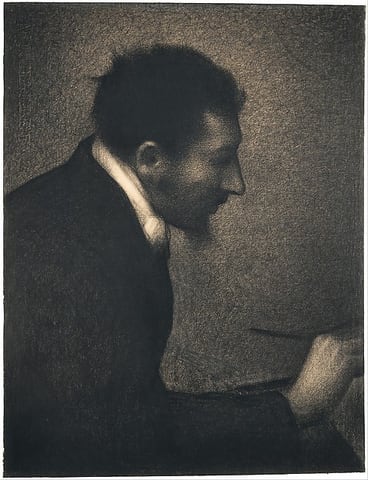
  1. Aman-Jean (Portrait of Edmond François Aman-Jean), by Georges Seurat, 1882–83
    Aman-Jean (Portrait of Edmond François Aman-Jean)Georges Seurat, 1882–83Courtesy of The Metropolitan Museum of Art
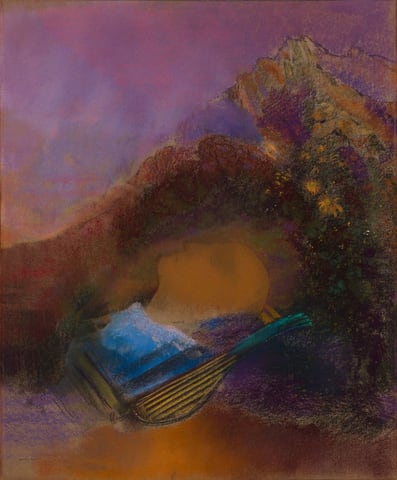
  2. Orpheus, by Odilon Redon, c. 1903–10
    OrpheusOdilon Redon, c. 1903–10Courtesy of the Cleveland Museum of Art

Section 4, south wall
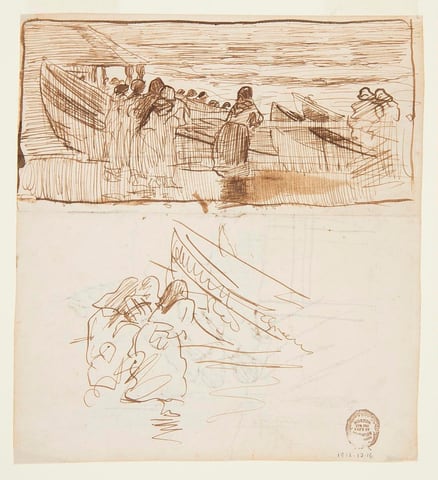
  1. TWO STUDIES OF WOMEN STANDING BEHIND RAILING, LOOKING AT THE LAUNCHING OF DORIES, CULLERCOATS, ENGLAND
    Two Studies of Women Standing behind Railing, Looking at the Launching of Dories, Cullercoats, EnglandWinslow Homer, 1881Courtesy of Cooper Hewitt, Smithsonian Design Museum
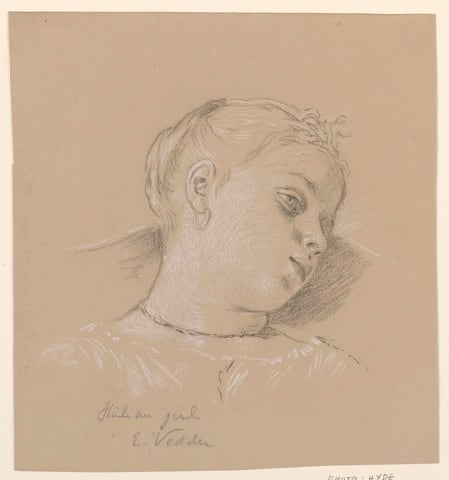
  2. ITALIAN GIRL
    Italian girlElihu Vedder, ca. 1885Courtesy of Cooper Hewitt, Smithsonian Design Museum