Floor plan

West wing: Old MastersRenaissance

Renaissance

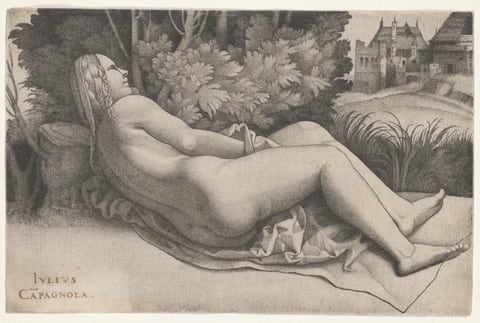
Venus Reclining in a Landscape, by Giulio Campagnola, c. 1508–9
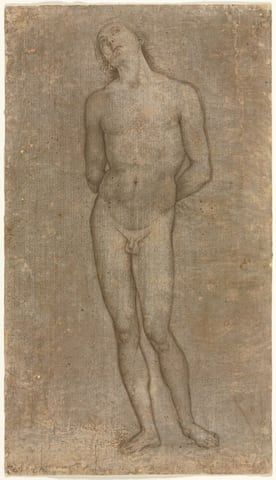
Saint Sebastian, by Perugino, c. 1493
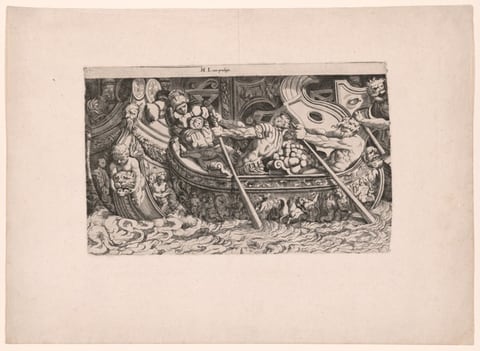
A work made of engraving and etching in black on cream laid paper.
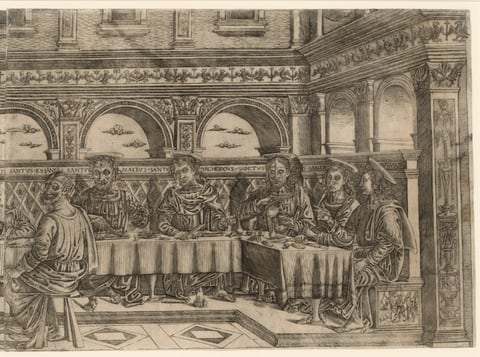
The Last Supper, by Lucantonio degli Uberti, c. 1500
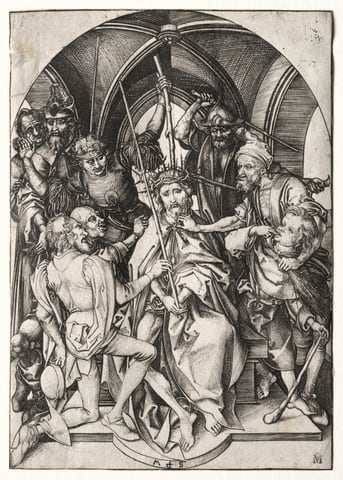
Christ Crowned with Thorns, by Martin Schongauer, 1470–82
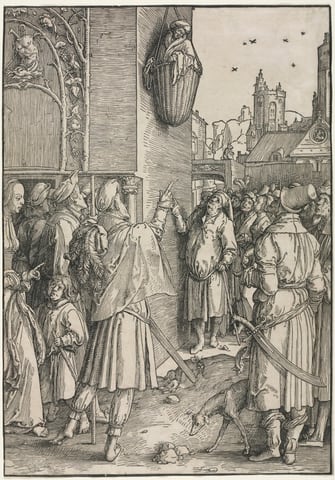
The Power of Women: The Poet Virgil Suspended in a Basket, by Lucas van Leyden, c. 1512
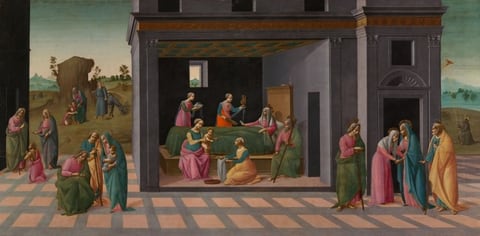
Outdoors, distinct groupings of adult men and women, some with halos, gather near a building. The front-facing wall of the building is not depicted, allowing for a view inside, where a woman sits in bed with two women nearby and two other women dress a baby. A bearded man sits near the bed.
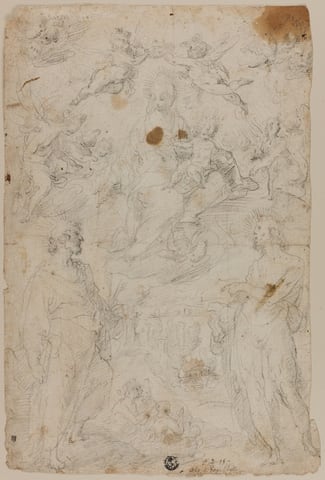
A work made of black chalk (recto), and black chalk and pen and black ink (verso), on ivory laid paper.

The works in this room are listed below.

Works in this room

European art from about 1400 to 1600, when painters rediscovered perspective and the classical past.

Section 1, north wall

  1. Venus Reclining in a Landscape, by Giulio Campagnola, c. 1508–9
    Venus Reclining in a LandscapeGiulio Campagnola, c. 1508–9Courtesy of the Cleveland Museum of Art
  2. Saint Sebastian, by Perugino, c. 1493
    Saint SebastianPerugino, c. 1493Courtesy of the Cleveland Museum of Art
  3. A work made of engraving and etching in black on cream laid paper.
    A Naval BattleMichele Lucchese, c. 1550Courtesy of the Art Institute of Chicago
  4. The Last Supper, by Lucantonio degli Uberti, c. 1500
    The Last SupperLucantonio degli Uberti, c. 1500Courtesy of the Cleveland Museum of Art

Section 1, south wall

  1. Christ Crowned with Thorns, by Martin Schongauer, 1470–82
    Christ Crowned with ThornsMartin Schongauer, 1470–82Courtesy of the Cleveland Museum of Art
  2. The Power of Women: The Poet Virgil Suspended in a Basket, by Lucas van Leyden, c. 1512
    The Power of Women: The Poet Virgil Suspended in a BasketLucas van Leyden, c. 1512Courtesy of the Cleveland Museum of Art
  3. Outdoors, distinct groupings of adult men and women, some with halos, gather near a building. The front-facing wall of the building is not depicted, allowing for a view inside, where a woman sits in bed with two women nearby and two other women dress a baby. A bearded man sits near the bed.
    Scenes from the Life of Saint John the BaptistBartolomeo di Giovanni, 1490/95Courtesy of the Art Institute of Chicago
  4. A work made of black chalk (recto), and black chalk and pen and black ink (verso), on ivory laid paper.
    Virgin and Child with Saints Peter and John the Baptist (recto); Saint John the Baptist (verso)Pietro d' Asaro, n.d.Courtesy of the Art Institute of Chicago

Section 2, south wall
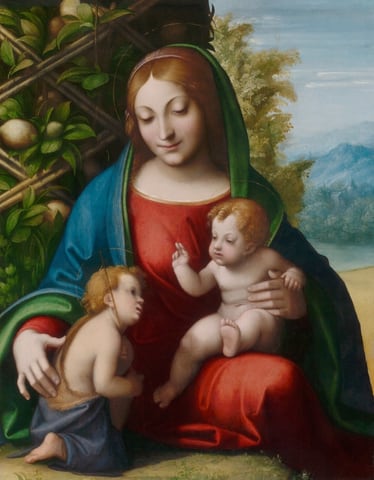
  1. Vividly colored painting of Virgin Mary with baby Jesus and baby John the Baptist.
    Virgin and Child with the Young Saint John the BaptistAntonio da Correggio, c. 1515Courtesy of the Art Institute of Chicago
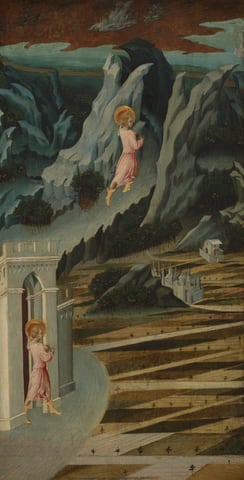
  2. A work made of tempera on panel.
    Saint John the Baptist Entering the WildernessGiovanni di Paolo, 1455–60Courtesy of the Art Institute of Chicago
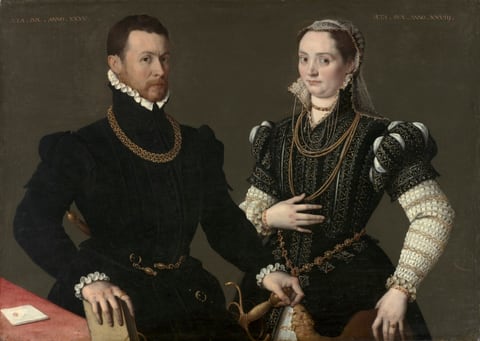
  3. Portrait of a Couple, c. 1580–88
    Portrait of a CoupleUnrecorded Italian maker, c. 1580–88Courtesy of the Cleveland Museum of Art
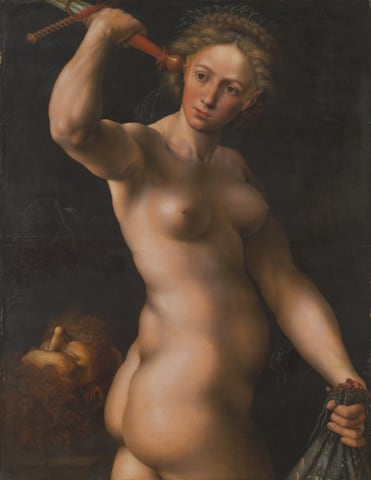
  4. Painting of Judith, naked, holding sword, with head of Holophernes.
    JudithJan Sanders van Hemessen, c. 1540Courtesy of the Art Institute of Chicago

Section 2, north wall
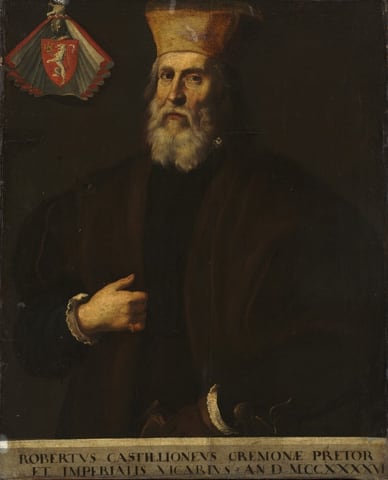
  1. Portrait of Roberto Castiglione, early 1600s
    Portrait of Roberto CastiglioneUnrecorded Italian maker, early 1600sCourtesy of the Cleveland Museum of Art
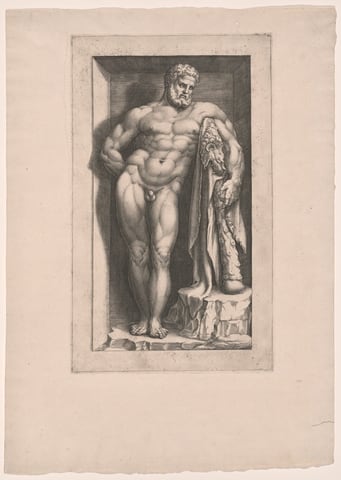
  2. A work made of engraving in black on cream laid paper.
    The Farnese HerculesGiorgio Ghisi, c. 1577Courtesy of the Art Institute of Chicago
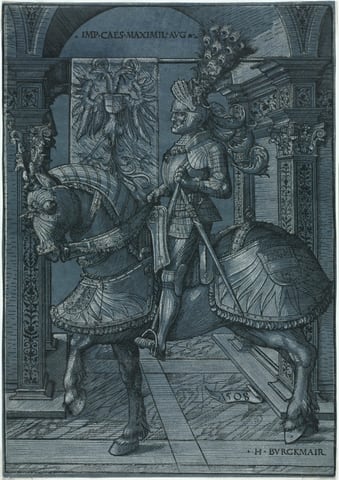
  3. Equestrian Portrait of the Emperor Maximilian, by Hans Burgkmair, 1508
    Equestrian Portrait of the Emperor MaximilianHans Burgkmair, 1508Courtesy of the Cleveland Museum of Art
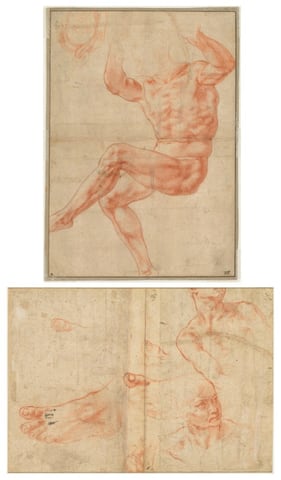
  4. Study for the Nude Youth over the Prophet Daniel (recto); Figure Studies for the Sistine Ceiling (verso), by Michelangelo Buonarroti, 1510–11
    Study for the Nude Youth over the Prophet Daniel (recto); Figure Studies for the Sistine Ceiling (verso)Michelangelo Buonarroti, 1510–11Courtesy of the Cleveland Museum of Art