Floor plan

Time and placeFlanders

Flanders

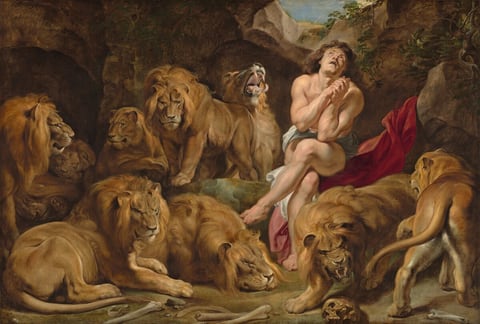
A nearly nude, muscular man with pale, peachy skin sits in an underground cave among seven male and two female lions in this horizontal painting. The man sits to our right of center with his legs crossed, elbows close to his body with hands clasped by his chest. His head tips back to look up through a small opening above. He has long, wavy, chestnut-brown hair and dark eyes. A white cloth wraps across his hips, and he sits on a scarlet-red swath of fabric draped up over a rock next to him. The nine lions stalk, sit, or lie down around the man. One male lion next to the man, to our left, opens his mouth with his head thrown back, curling tongue extended beyond long fangs. A human skull and other bones are strewn on the dirt ground close to us. The rocky cave curves up around the animals and man to a narrow, round opening showing blue sky above.
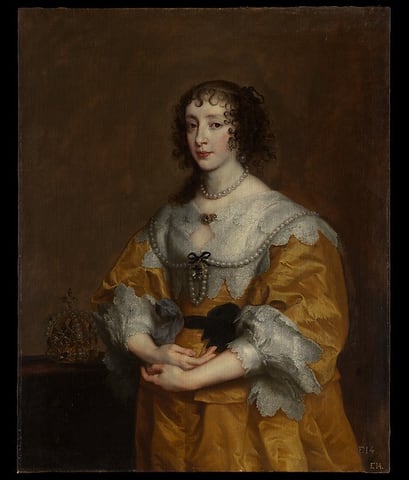
Queen Henrietta Maria, by Anthony van Dyck, 1636
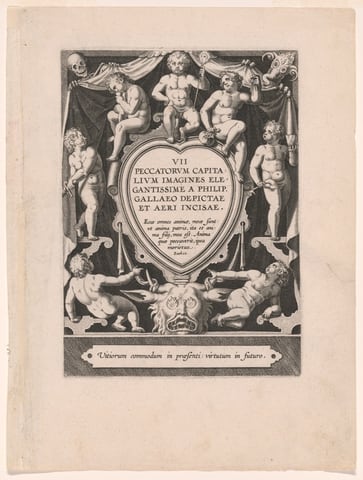
A work made of engraving on paper.
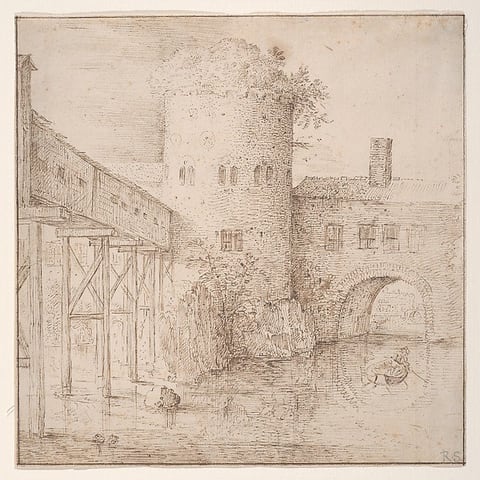
A Mill with a Fortified Bridge, a Rowing Boat in the Foreground, by Roelandt Savery, 1596–1639
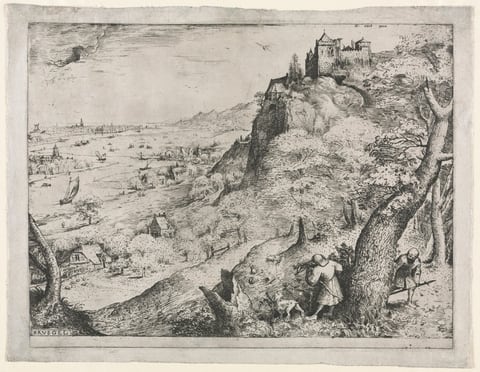
The Rabbit Hunt, by Pieter Bruegel, 1560
A work made of oil on panel.

The works in this room are listed below.

Works in this room

Works made in Flanders, from every century in the collection.

First room, north wall

  1. A nearly nude, muscular man with pale, peachy skin sits in an underground cave among seven male and two female lions in this horizontal painting. The man sits to our right of center with his legs crossed, elbows close to his body with hands clasped by his chest. His head tips back to look up through a small opening above. He has long, wavy, chestnut-brown hair and dark eyes. A white cloth wraps across his hips, and he sits on a scarlet-red swath of fabric draped up over a rock next to him. The nine lions stalk, sit, or lie down around the man. One male lion next to the man, to our left, opens his mouth with his head thrown back, curling tongue extended beyond long fangs. A human skull and other bones are strewn on the dirt ground close to us. The rocky cave curves up around the animals and man to a narrow, round opening showing blue sky above.
    Daniel in the Lions' DenPeter Paul Rubens, c. 1614/1616Courtesy National Gallery of Art, Washington
  2. Queen Henrietta Maria, by Anthony van Dyck, 1636
    Queen Henrietta MariaAnthony van Dyck, 1636Courtesy of The Metropolitan Museum of Art

First room, south wall

  1. A work made of engraving on paper.
    Title page, from The Seven VicesHieronymous Wierix, c. 1598Courtesy of the Art Institute of Chicago
  2. A Mill with a Fortified Bridge, a Rowing Boat in the Foreground, by Roelandt Savery, 1596–1639
    A Mill with a Fortified Bridge, a Rowing Boat in the ForegroundRoelandt Savery, 1596–1639Courtesy of The Metropolitan Museum of Art
  3. The Rabbit Hunt, by Pieter Bruegel, 1560
    The Rabbit HuntPieter Bruegel, 1560Courtesy of the Cleveland Museum of Art
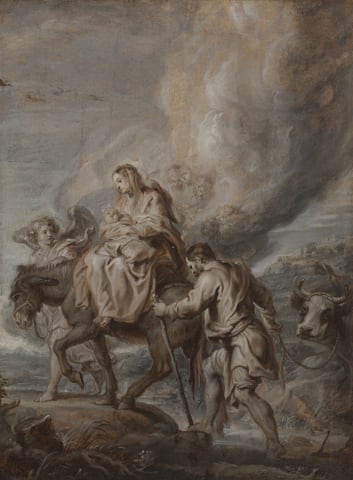
  4. A work made of oil on panel.
    The Flight into EgyptAbraham Jansz. van Diepenbeeck, c. 1650Courtesy of the Art Institute of Chicago

Second room, south wall
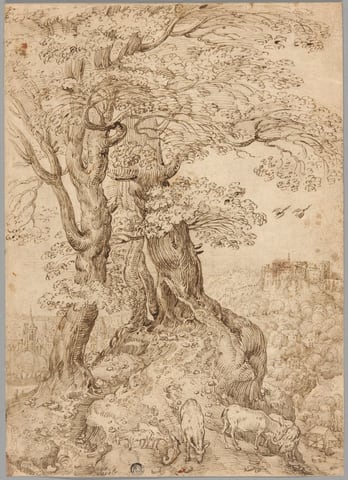
  1. A work made of pen and brown ink on cream laid paper.
    Wooded Landscape with Donkeys and Goats, and Castle on Hill in DistancePaul Bril, n.d.Courtesy of the Art Institute of Chicago
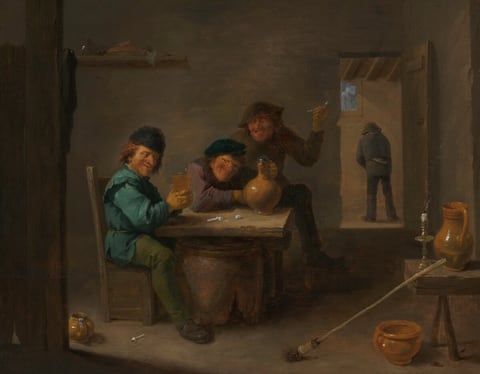
  2. Three pale-skinned people gather around a wooden table in a dimly lit tavern as a fourth person urinates against a wall in a back room in this horizontal painting. The table is a square board resting on a broken barrel. All three men at the table have prominent, reddened noses set in wide faces, and they wear clothing and hats in tones of spruce blue, olive green, muted purple, gray, or brown. One man sits on the left side of the table, holding a glass of beer with both hands. He wears what might be a furry cap. His face is turned slightly toward us but he looks down and to our right. The other seated man is across from us. He grins widely as he hunches over one forearm and holds the neck of a lidded ceramic jug with his other hand. He has a long, chunky chin and stares out at us from under a prominent brow ridge. The third man here stands behind, holding up a white clay pipe. His mouth is open, his eyes slitted, possibly crossed, and he hunches down. One foot rests on a low wooden box, a foot warmer. Another white clay pipe and the broken bowl of a pipe sit on the table, and another pipe lies by the first man’s feet. Also across the floor are two pots and a stubby broom, the long handle of which lies against a table holding a brass candlestick. A wisp of smoke rises from the wick in the candle stub. A shelf hung on the wall near the upper left corner of the painting holds a glass vessel and perhaps a plate. Two wooden beams line the left edge of the composition, and a cloth is draped over a nail there. The floor and wall are nearly uniform taupe gray. A rectangular doorway opens into the next room, in the top right corner of the painting. There a man stands facing the wall with both hands down in front of his torso. A window is set high in the wall there and the timbered ceiling is visible. The artist signed the lower left corner the painting, “D Teniers f.” The first two digits of the date read “16.”
    Peasants in a TavernDavid Teniers the Younger, c. 1633Courtesy National Gallery of Art, Washington
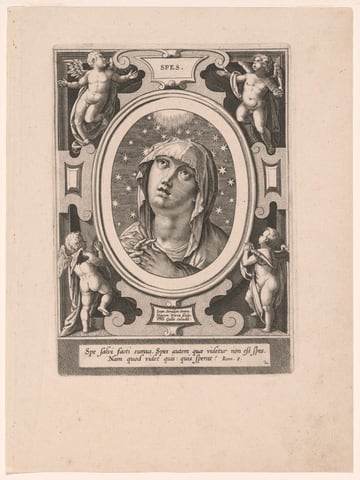
  3. A work made of engraving on paper.
    Spes, plate 2 from The Seven VirtuesHieronymous Wierix, c. 1598Courtesy of the Art Institute of Chicago
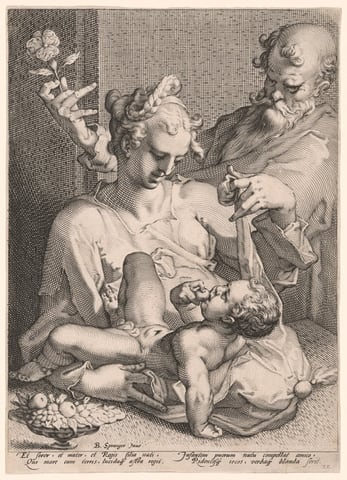
  4. A work made of engraving on laid paper.
    The Holy FamilyPieter de Jode, I, c. 1585-1595Courtesy of the Art Institute of Chicago

Second room, north wall
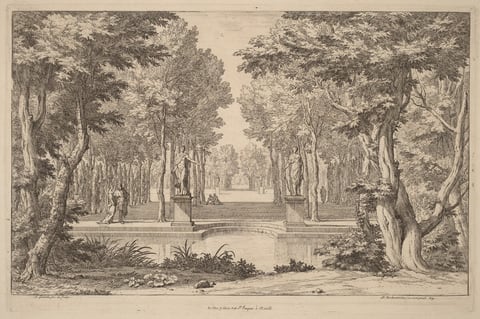
  1. The image shows a formal garden or park with a symmetrical view. It is taken from a slightly elevated position, revealing the vast space beyond a foreground of foliage and low-growing plants. The horizon line is positioned near the midpoint, where a tree-lined pathway extends into the distance. Flanking the pathway are two statues on pedestals under leafy trees. The scene is detailed with intricate line work emphasizing textures and forms. The color palette is monochromatic in various shades of brown, creating a classic appearance. Paved steps and a bridge over a small body of water add to the ordered elegance of the garden.
    The Two StatuesAbraham Genoels IICourtesy National Gallery of Art, Washington
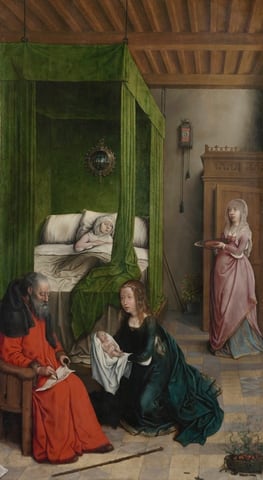
  2. The Birth and Naming of John the Baptist, by Juan de Flandes, 1496–99
    The Birth and Naming of John the BaptistJuan de Flandes, 1496–99Courtesy of the Cleveland Museum of Art
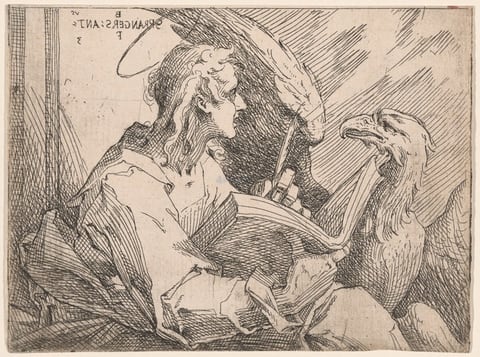
  3. A work made of etching on ivory laid paper.
    St. John the EvangelistBartholomaeus Spranger, c. 1590Courtesy of the Art Institute of Chicago
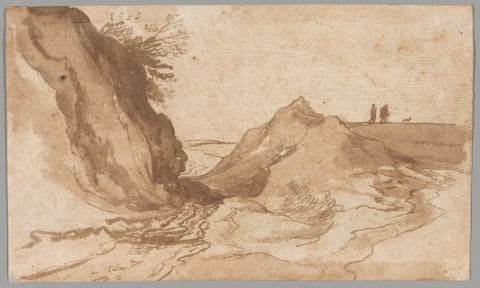
  4. A work made of pen and brush and brown ink and brush and brown wash on ivory laid paper.
    A Hilly Landscape with Figures Near a RavineJan Brueghel the Elder, 1595Courtesy of the Art Institute of Chicago

Third room, north wall
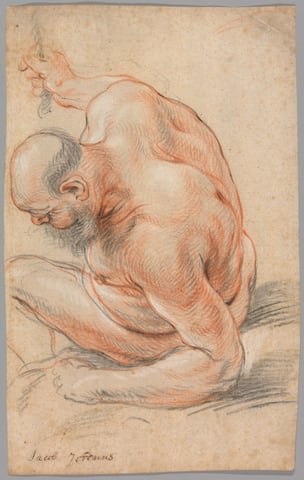
  1. A work made of red and black chalk, with touches of white chalk, on cream laid paper.
    Nude Old Man Seated, Leaning on His Forearm, Facing LeftJacob Jordaens, c. 1640Courtesy of the Art Institute of Chicago
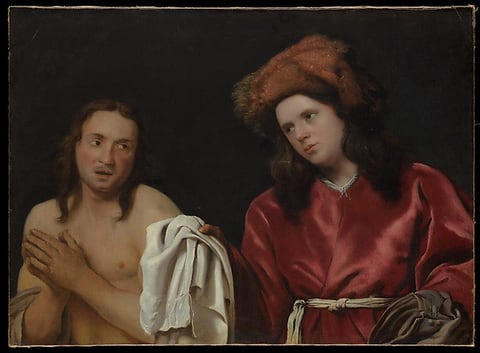
  2. Clothing the Naked, by Michiel Sweerts, ca. 1661
    Clothing the NakedMichiel Sweerts, ca. 1661Courtesy of The Metropolitan Museum of Art