Floor plan

Time and placeThe 19th century

The 19th century

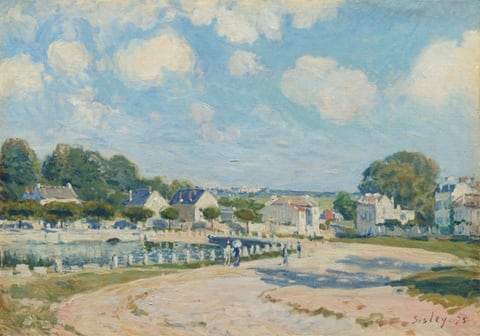
A work made of oil on canvas.
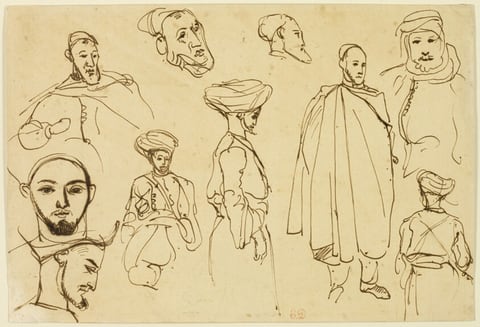
A work made of pen and brown ink, with traces of graphite, on tan wove paper, laid down on cream wove paper.
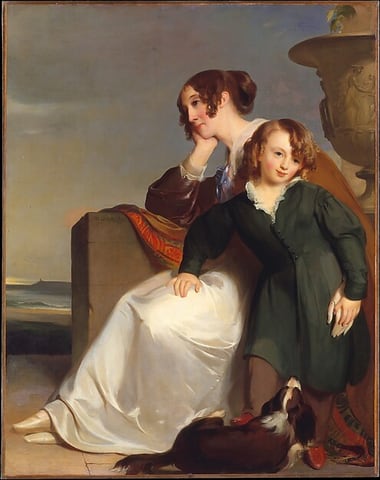
Mother and Son, by Thomas Sully, 1840
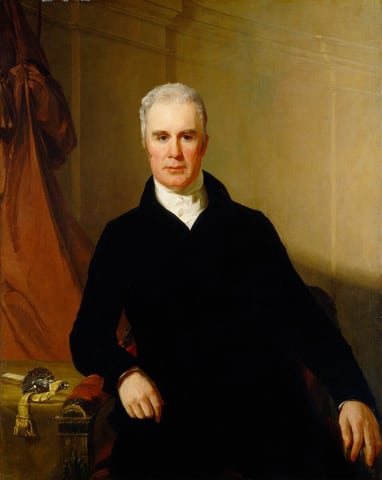
The image shows an upper-body portrait of a man seated in a formal position. The man is depicted with a slight turn of his head, directly facing the viewer with a composed expression. He has short gray hair that is neatly styled. His facial features include a high forehead and firm jawline. He is dressed in a dark formal jacket with a high-collared white shirt visible at the neckline. His left hand rests on the arm of the chair, which is ornately carved with a scroll design. A fabric with an intricate pattern is draped over the back of the chair. There is no visible jewelry. In the background, there is a muted backdrop with a warm hue. On the left side of the image, a flowing drapery in a rich reddish tone adds depth to the setting.
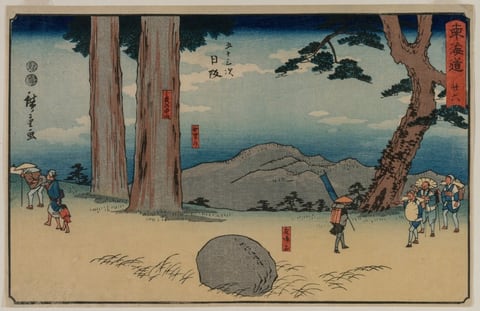
Nissaka: The Night-Weeping Stone at Sayo no Nakayama, from the series The Fifty-Three Stations of the Tōkaidō, by Utagawa Hiroshige, c. 1848–50
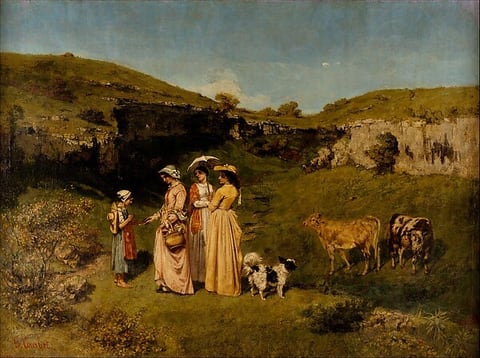
Young Ladies of the Village, by Gustave Courbet, 1851–52

The works in this room are listed below.

Works in this room

Works made in the 19th century, anywhere in the world.

Section 1, north wall

  1. A work made of oil on canvas.
    Watering Place at MarlyAlfred Sisley, 1875Courtesy of the Art Institute of Chicago
  2. A work made of pen and brown ink, with traces of graphite, on tan wove paper, laid down on cream wove paper.
    Sketches of Algerian MenEugène Delacroix, c. 1832Courtesy of the Art Institute of Chicago
  3. Mother and Son, by Thomas Sully, 1840
    Mother and SonThomas Sully, 1840Courtesy of The Metropolitan Museum of Art

Section 1, south wall

  1. The image shows an upper-body portrait of a man seated in a formal position. The man is depicted with a slight turn of his head, directly facing the viewer with a composed expression. He has short gray hair that is neatly styled. His facial features include a high forehead and firm jawline. He is dressed in a dark formal jacket with a high-collared white shirt visible at the neckline. His left hand rests on the arm of the chair, which is ornately carved with a scroll design. A fabric with an intricate pattern is draped over the back of the chair. There is no visible jewelry. In the background, there is a muted backdrop with a warm hue. On the left side of the image, a flowing drapery in a rich reddish tone adds depth to the setting.
    Charles Carnan RidgelyThomas Sully, 1820Courtesy National Gallery of Art, Washington
  2. Nissaka: The Night-Weeping Stone at Sayo no Nakayama, from the series The Fifty-Three Stations of the Tōkaidō, by Utagawa Hiroshige, c. 1848–50
    Nissaka: The Night-Weeping Stone at Sayo no Nakayama, from the series The Fifty-Three Stations of the TōkaidōUtagawa Hiroshige, c. 1848–50Courtesy of the Cleveland Museum of Art
  3. Young Ladies of the Village, by Gustave Courbet, 1851–52
    Young Ladies of the VillageGustave Courbet, 1851–52Courtesy of The Metropolitan Museum of Art

Section 2, south wall
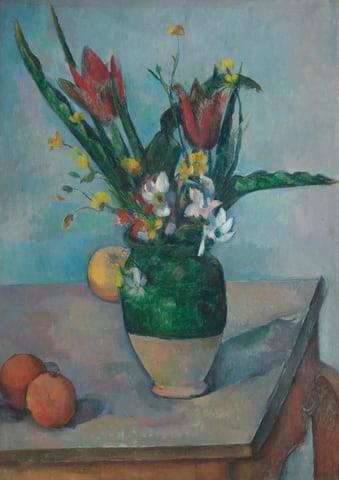
  1. A work made of oil on canvas.
    The Vase of TulipsPaul Cézanne, c. 1890Courtesy of the Art Institute of Chicago
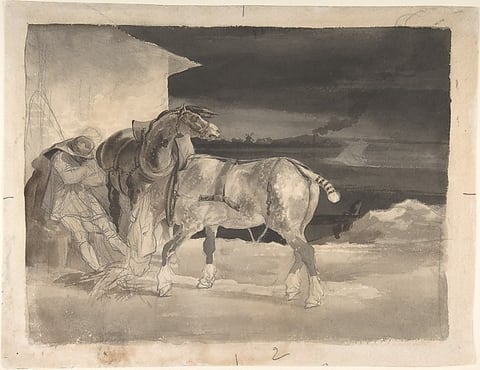
  2. Two Draft Horses with a Sleeping Driver, by Jean Louis André Théodore Géricault, 1820–22
    Two Draft Horses with a Sleeping DriverJean Louis André Théodore Géricault, 1820–22Courtesy of The Metropolitan Museum of Art
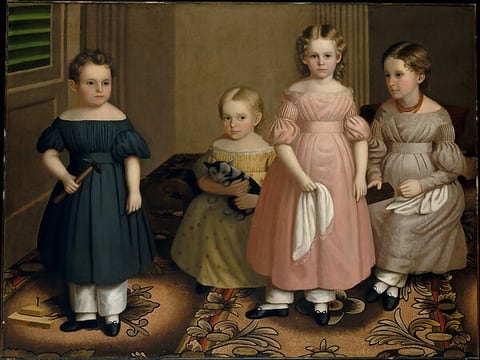
  3. The Alling Children, by Oliver Tarbell Eddy, ca. 1839
    The Alling ChildrenOliver Tarbell Eddy, ca. 1839Courtesy of The Metropolitan Museum of Art

Section 2, north wall
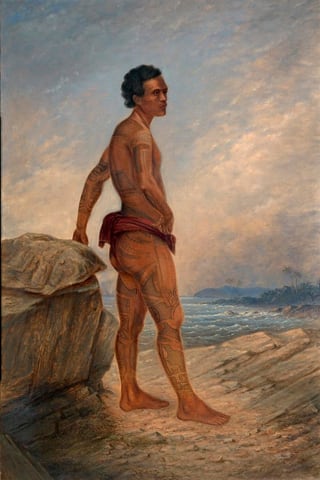
  1. Melanesian Man, by Antonion Zeno Shindler, ca. 1890-1899
    Melanesian ManAntonion Zeno Shindler, ca. 1890-1899Courtesy of the Smithsonian American Art Museum
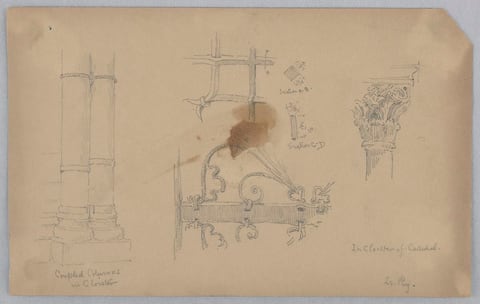
  2. IN CLOISTER OF CATHEDREAL, LE PUY
    In Cloister of Cathedreal, Le PuyArnold William Brunner, 1883Courtesy of Cooper Hewitt, Smithsonian Design Museum
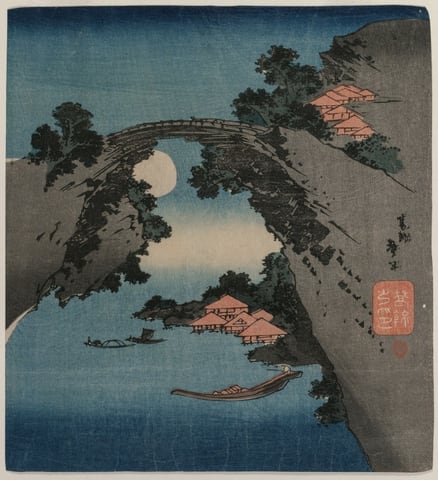
  3. The Monkey Bridge, by Katsushika Taito II, early 1830s
    The Monkey BridgeKatsushika Taito II, early 1830sCourtesy of the Cleveland Museum of Art
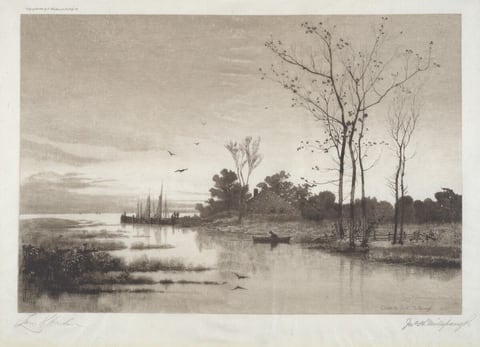
  4. The image depicts a landscape with a river flowing through it. In the foreground, there is a small boat on the water, and in the background, sailboats are docked near a strip of land. Tall trees with sparse foliage are on the right side, with a structure nestled among them near the water. The horizon is slightly above the center of the image, with a calm sky above it. The brushstrokes vary in texture, with fine strokes for the sky and water and more detailed strokes for the trees. The color palette is muted, with sepia and gray tones creating a peaceful atmosphere. Birds are scattered in the sky.
    Shrewsbury RiverJohn Hill Millspaugh, 1887Courtesy National Gallery of Art, Washington

Section 3, north wall
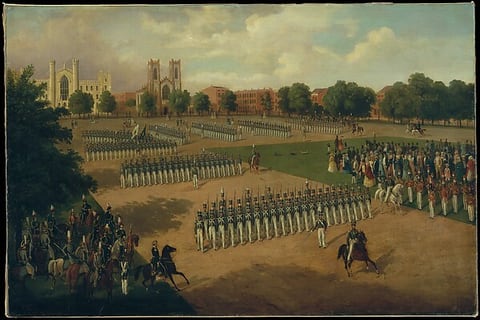
  1. Seventh Regiment on Review, Washington Square, New York, by Otto Boetticher, 1851
    Seventh Regiment on Review, Washington Square, New YorkOtto Boetticher, 1851Courtesy of The Metropolitan Museum of Art
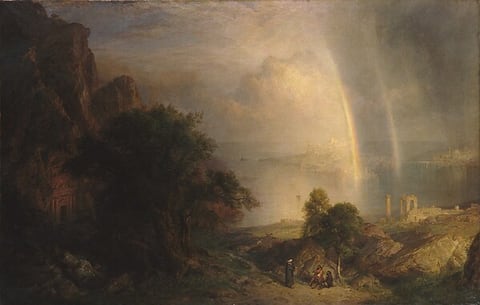
  2. The Aegean Sea, by Frederic Edwin Church, ca. 1877
    The Aegean SeaFrederic Edwin Church, ca. 1877Courtesy of The Metropolitan Museum of Art
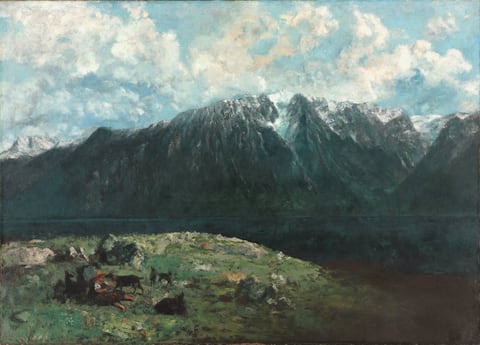
  3. Panoramic View of the Alps, Les Dents du Midi, by Gustave Courbet, 1877
    Panoramic View of the Alps, Les Dents du MidiGustave Courbet, 1877Courtesy of the Cleveland Museum of Art