Floor plan

Time and placeThe 19th century

The 19th century

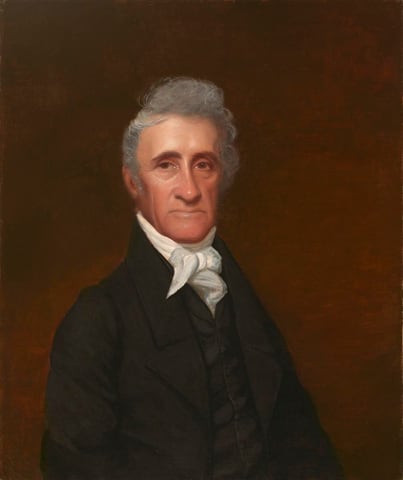
Artist: John Wesley Jarvis, Sitter: Stephen Van Rensselaer III, Current owner: National Portrait Gallery, Smithsonian Institution
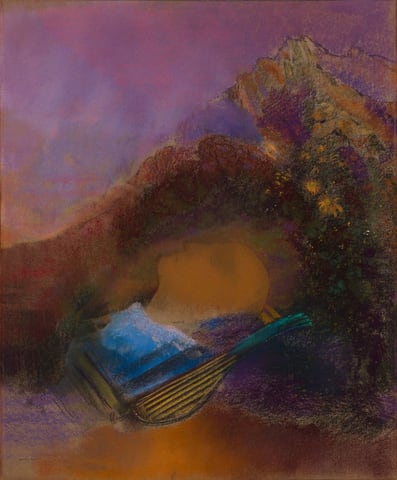
Orpheus, by Odilon Redon, c. 1903–10
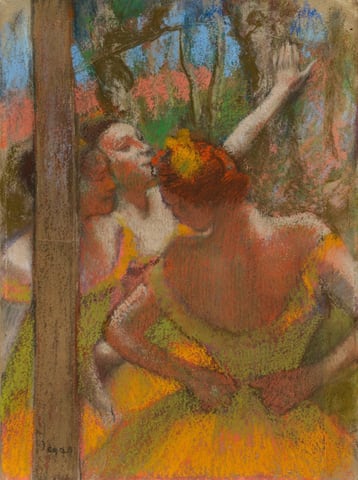
Dancers, by Edgar Degas, c. 1896
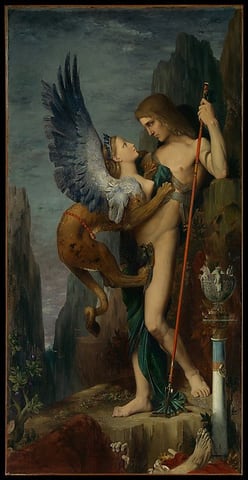
Oedipus and the Sphinx, by Gustave Moreau, 1864
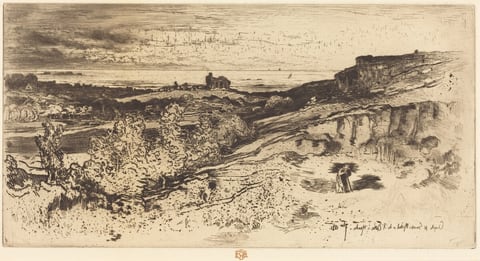
The image shows an elevated view of a landscape with detailed line work in warm sepia tones. The horizon is located near the top, with a cluster of structures visible in the distance. Close to us, there is textured shrubbery, and the ground is marked with dots and lines. Rolling hills and flat areas lead towards the horizon, where the sky is depicted with horizontal lines and hatchings.
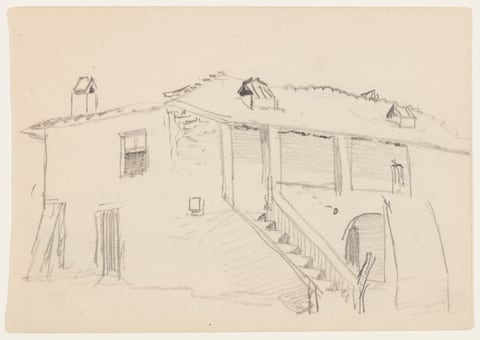
ITALIAN FARMHOUSE
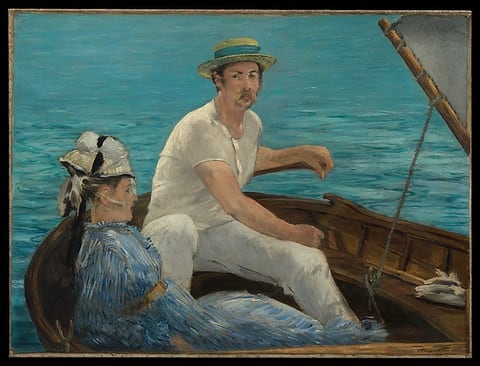
Boating, by Édouard Manet, 1874

The works in this room are listed below.

Works in this room

Works made in the 19th century, anywhere in the world.

Section 1, north wall

  1. Artist: John Wesley Jarvis, Sitter: Stephen Van Rensselaer III, Current owner: National Portrait Gallery, Smithsonian Institution
    Stephen Van Rensselaer IIIJohn Wesley Jarvis, c. 1825-35Courtesy of the National Portrait Gallery, Smithsonian Institution
  2. Orpheus, by Odilon Redon, c. 1903–10
    OrpheusOdilon Redon, c. 1903–10Courtesy of the Cleveland Museum of Art
  3. Dancers, by Edgar Degas, c. 1896
    DancersEdgar Degas, c. 1896Courtesy of the Cleveland Museum of Art
  4. Oedipus and the Sphinx, by Gustave Moreau, 1864
    Oedipus and the SphinxGustave Moreau, 1864Courtesy of The Metropolitan Museum of Art

Section 1, south wall

  1. The image shows an elevated view of a landscape with detailed line work in warm sepia tones. The horizon is located near the top, with a cluster of structures visible in the distance. Close to us, there is textured shrubbery, and the ground is marked with dots and lines. Rolling hills and flat areas lead towards the horizon, where the sky is depicted with horizontal lines and hatchings.
    La Chapelle Saint-Michel à l'EstreFélix-Hilaire BuhotCourtesy National Gallery of Art, Washington
  2. ITALIAN FARMHOUSE
    Italian FarmhouseFrederic Edwin Church, September 1868 - April 1869Courtesy of Cooper Hewitt, Smithsonian Design Museum
  3. Boating, by Édouard Manet, 1874
    BoatingÉdouard Manet, 1874Courtesy of The Metropolitan Museum of Art

Section 2, south wall
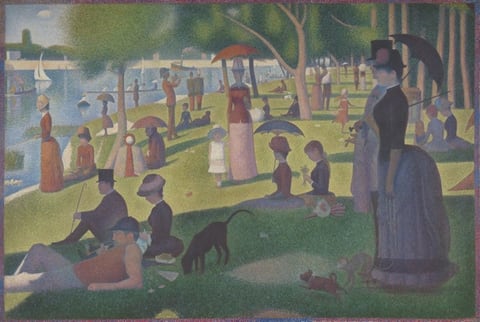
  1. Large painting of people in a crowded park, brushstrokes are dots.
    A Sunday on La Grande Jatte — 1884Georges Seurat, 1884–86, border added 1888–89Courtesy of the Art Institute of Chicago
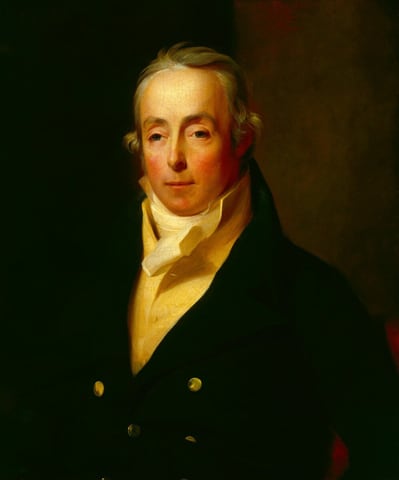
  2. This painting is a portrait of a man from the waist up. He is facing us, with pale skin, thin lips, rosy cheeks, light green eyes, and gray hair styled into curls around his ears. He has a neutral expression. The man is wearing a dark coat with gold buttons on the front, with a pale-yellow shirt underneath and a white cravat around his neck. The background is a dark and indistinct brown color.
    Abraham KintzingThomas Sully, 1815Courtesy National Gallery of Art, Washington
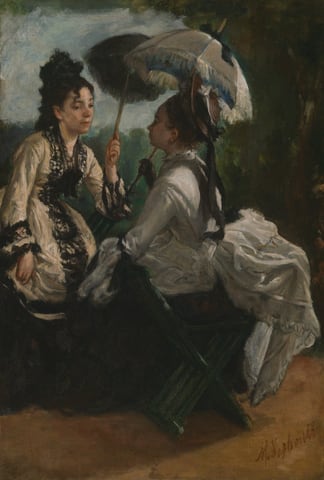
  3. A work made of oil on canvas.
    The ConversationMarcellin Gilbert Desboutin, 1875–79Courtesy of the Art Institute of Chicago

Section 2, north wall
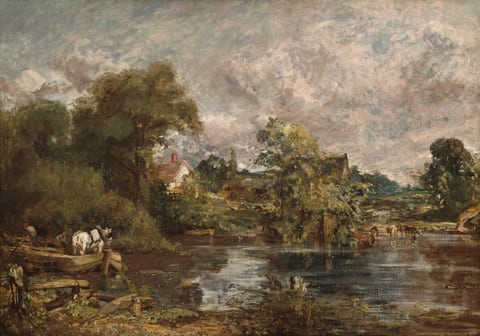
  1. From a grassy riverbank, we look across the placid surface of a river lined along the far bank with trees and farm animals in this horizontal landscape painting. The scene is painted loosely with brushstrokes visible throughout, so some details are difficult to make out. For the surface of the river, russet-brown and steel-gray paint skims lightly across the canvas and leaves some unpainted areas visible, creating the effect of light shimmering on the still water. On our left, a shallow wooden barge is propelled along the stream by two men in red caps with long poles. The boat carries a white horse wearing blinders and a harness. The riverbank beyond is lined with pale, sage-green grass tinged with gold, growing in front of a tangle of darker green trees and bushes. Across the water from us near the middle of the picture, a small rowboat sits in the shallows at the foot of a steep riverbank. Above, a white cottage with a reddish roof and chimney is tucked behind the trees, with a wooden rack full of hay next to it. Nearby, a plow and wheeled cart, highlighted with strokes of white, sit near more mounds of hay. Rocky fields reach into the distance. The vista is blocked to our right by another clump of trees and a rocky outcropping, rising from the stream, to our right of center. The steep, dark roof of a farmhouse is barely visible among the trees. Along the riverside to our right, a small group of cinnamon-brown and cream-white cows stand at water's edge. A rolling pasture stretches behind them to meet blue hills in the distance. Above, in the upper third of the painting, mottled white, pale rose, and gray clouds rolling across a steel-gray sky are reflected in the water below.
    The White HorseJohn Constable, 1818-1819Courtesy National Gallery of Art, Washington
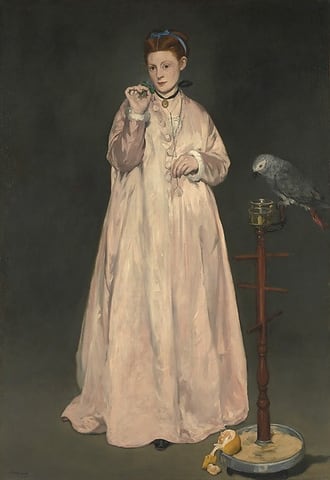
  2. Young Lady in 1866, by Édouard Manet, 1866
    Young Lady in 1866Édouard Manet, 1866Courtesy of The Metropolitan Museum of Art
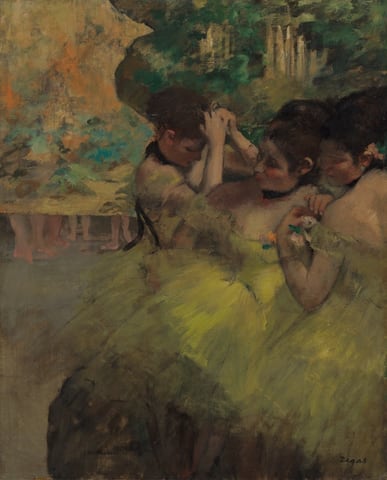
  3. Three light-skinned, dark-haired ballerinas, painted in muted tones, wear off-the-shoulder yellow leotards and tutus as they huddle near each other. One adjusts her costume, while one holds her hands clasped above her head. At left is a painted screen with four pairs of feet visible underneath.
    Yellow Dancers (In the Wings)Edgar Degas, 1874–76Courtesy of the Art Institute of Chicago

Section 3, north wall
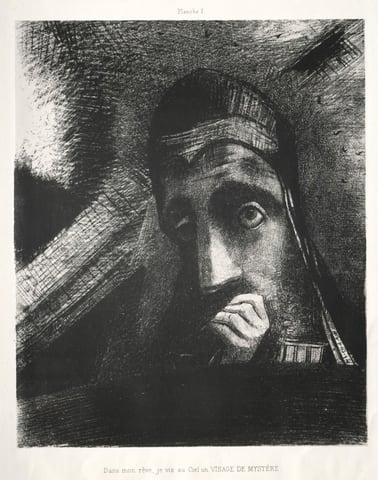
  1. In My Dream I Saw in the Sky a Face of Mystery, by Odilon Redon, 1885
    In My Dream I Saw in the Sky a Face of MysteryOdilon Redon, 1885Courtesy of the Cleveland Museum of Art
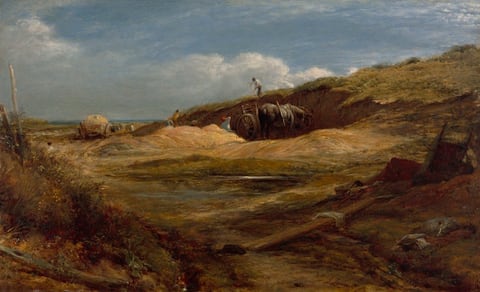
  2. A work made of oil on panel.
    The Sand Pits, Hampstead HeathJohn Linnell, 1834Courtesy of the Art Institute of Chicago
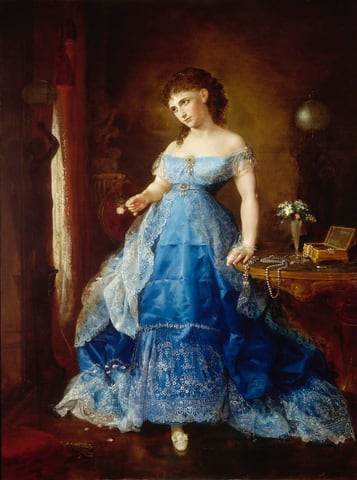
  3. We Both Must Fade (Mrs. Fithian), by Lilly Martin Spencer, 1869
    We Both Must Fade (Mrs. Fithian)Lilly Martin Spencer, 1869Courtesy of the Smithsonian American Art Museum