Floor plan

Time and placeThe 19th century

The 19th century

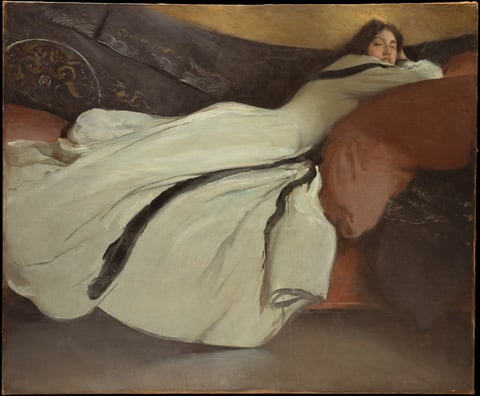
Repose, by John White Alexander, 1895
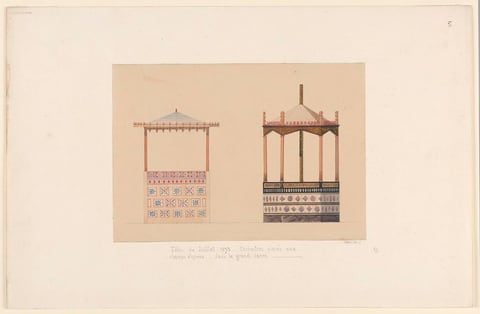
"ORCHSTRES PLACES AUX CHAMPS ELYSEES, DANS LE GRAN CARRES"
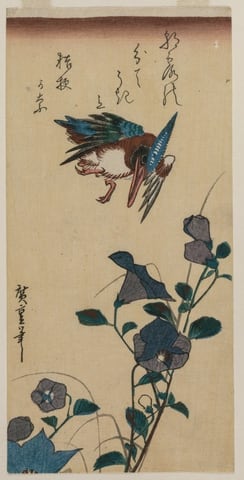
Kingfisher and Chinese Bellflowers, by Utagawa Hiroshige, early or mid-1830s
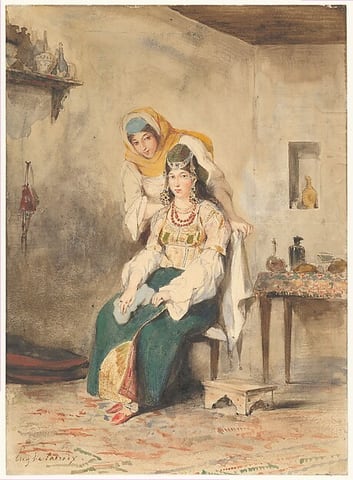
Saada, the Wife of Abraham Ben-Chimol, and Préciada, One of Their Daughters, by Eugène Delacroix, 1832
A work made of color woodblock print; ōban.
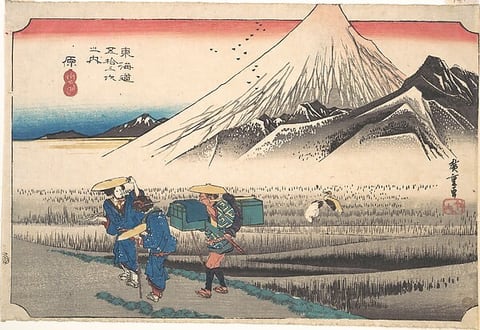
Hara: Mount Fuji in the Morning (Hara, Asa no Fuji), from the series Fifty-Three Stations of the Tōkaidō Road (Tōkaidō gojūsan tsugi), also known as the First Tōkaidō or Great Tōkaidō, by Utagawa Hiroshige, ca. 1833–34
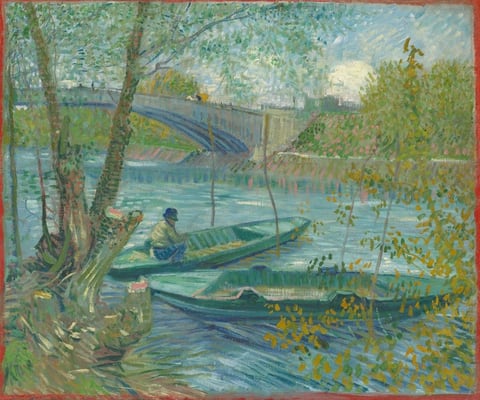
Painting in short strokes of pale blue, green, white, yellow, and pink, of a fisherman in one of two small boats on a river, a tree-lined bank and a bridge in the background.
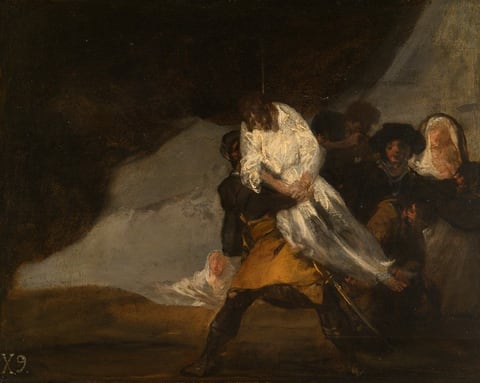
A work made of oil on panel.

The works in this room are listed below.

Works in this room

Works made in the 19th century, anywhere in the world.

Section 1, north wall

  1. Repose, by John White Alexander, 1895
    ReposeJohn White Alexander, 1895Courtesy of The Metropolitan Museum of Art
  2. "ORCHSTRES PLACES AUX CHAMPS ELYSEES, DANS LE GRAN CARRES"
    "Orchstres places aux Champs elysees, dans le gran carres"Félix Duban, 1833Courtesy of Cooper Hewitt, Smithsonian Design Museum
  3. Kingfisher and Chinese Bellflowers, by Utagawa Hiroshige, early or mid-1830s
    Kingfisher and Chinese BellflowersUtagawa Hiroshige, early or mid-1830sCourtesy of the Cleveland Museum of Art
  4. Saada, the Wife of Abraham Ben-Chimol, and Préciada, One of Their Daughters, by Eugène Delacroix, 1832
    Saada, the Wife of Abraham Ben-Chimol, and Préciada, One of Their DaughtersEugène Delacroix, 1832Courtesy of The Metropolitan Museum of Art

Section 1, south wall

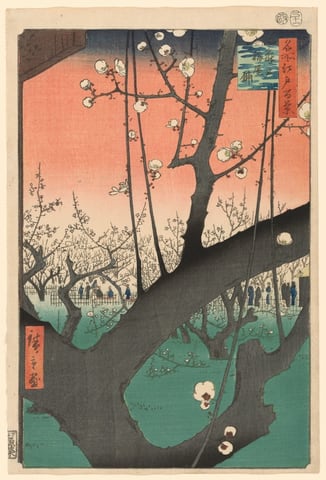
  1. A work made of color woodblock print; ōban.
    Plum Garden at Kameido (Kameido Umeyashiki), from the series "One Hundred Famous Views of Edo (Meisho Edo hyakkei)"Utagawa Hiroshige, 1857Courtesy of the Art Institute of Chicago
  2. Hara: Mount Fuji in the Morning (Hara, Asa no Fuji), from the series Fifty-Three Stations of the Tōkaidō Road (Tōkaidō gojūsan tsugi), also known as the First Tōkaidō or Great Tōkaidō, by Utagawa Hiroshige, ca. 1833–34
    Hara: Mount Fuji in the Morning (Hara, Asa no Fuji), from the series Fifty-Three Stations of the Tōkaidō Road (Tōkaidō gojūsan tsugi), also known as the First Tōkaidō or Great TōkaidōUtagawa Hiroshige, ca. 1833–34Courtesy of The Metropolitan Museum of Art
  3. Painting in short strokes of pale blue, green, white, yellow, and pink, of a fisherman in one of two small boats on a river, a tree-lined bank and a bridge in the background.
    Fishing in Spring, the Pont de Clichy (Asnières)Vincent van Gogh, 1887Courtesy of the Art Institute of Chicago
  4. A work made of oil on panel.
    The Hanged MonkFrancisco Goya, c. 1810Courtesy of the Art Institute of Chicago

Section 2, south wall
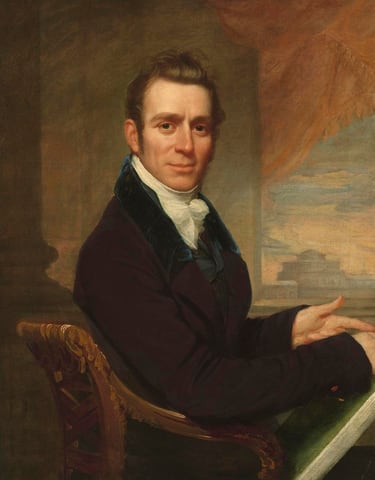
  1. Artist: John Wesley Jarvis, Sitter: Joseph Delaplaine, Current owner: National Portrait Gallery, Smithsonian Institution
    Joseph DelaplaineJohn Wesley Jarvis, January 1819Courtesy of the National Portrait Gallery, Smithsonian Institution
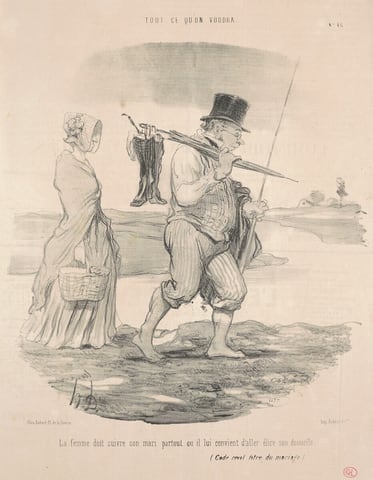
  2. The image shows two individuals walking across a muddy path. The male figure is walking to the right with a forward stride, while the female figure follows behind with a downward gaze. The man has a pronounced nose and chin and is wearing a tall hat, rolled-up pants, a vest, and shirt, with a coat or jacket slung over his shoulder. He carries an umbrella and a pair of boots tied together. The woman wears a bonnet and a long dress with a shawl, while carrying a woven basket. The background is minimal with a sketched landscape and a large shadow above the figures.
    La femme doit suivre son mari ...Honoré Daumier, 1848Courtesy National Gallery of Art, Washington
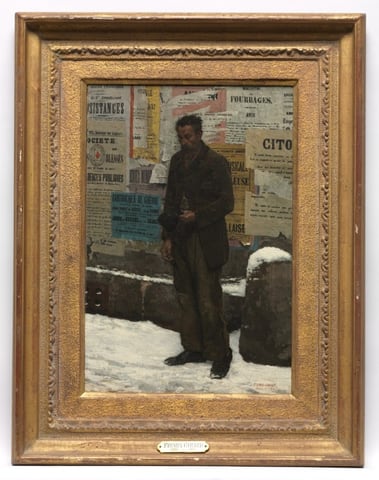
  3. The Veteran, by Marie-François Firmin-Girard, 1870
    The VeteranMarie-François Firmin-Girard, 1870Courtesy of the Cleveland Museum of Art
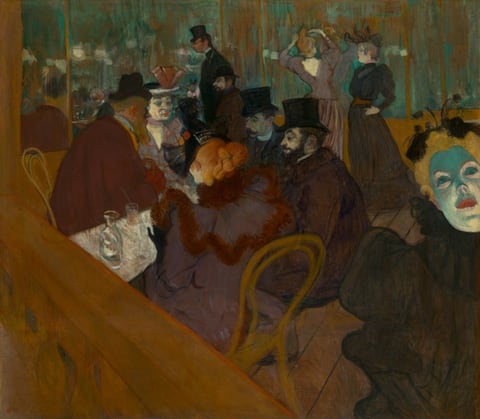
  4. Painting, heavy in tones of blue-green and burnt orange, depicting a bar scene at night. The men wear top hats and many are bearded; the women are dressed in voluminous gowns and decorative hats. Five people converse in the center of the composition and a woman with a green face dominates the right foreground.
    At the Moulin RougeHenri de Toulouse-Lautrec, 1892–95Courtesy of the Art Institute of Chicago

Section 2, north wall
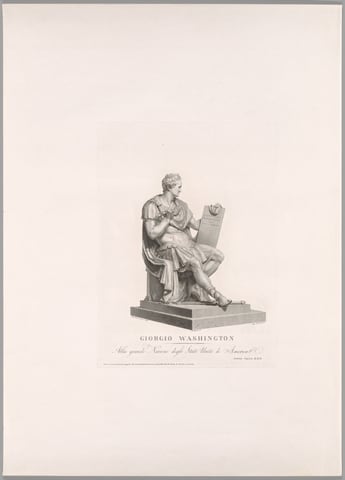
  1. A work made of engraving in black on ivory wove paper.
    George Washington, Front View, from Oeuvre de CanovaAntonio Canova, 1817Courtesy of the Art Institute of Chicago
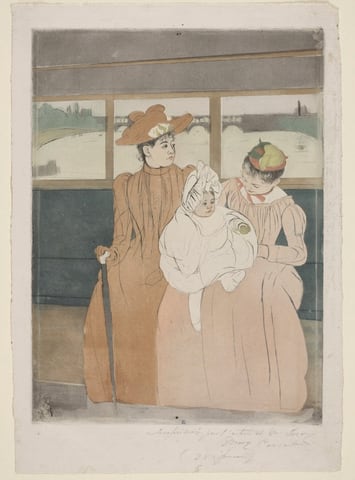
  2. In the Omnibus, by Mary Cassatt, 1890–91
    In the OmnibusMary Cassatt, 1890–91Courtesy of the Cleveland Museum of Art
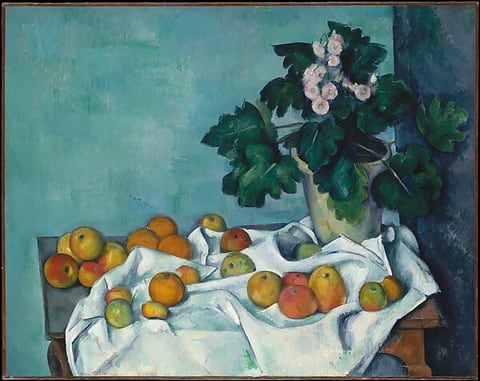
  3. Still Life with Apples and a Pot of Primroses, by Paul Cézanne, ca. 1890
    Still Life with Apples and a Pot of PrimrosesPaul Cézanne, ca. 1890Courtesy of The Metropolitan Museum of Art
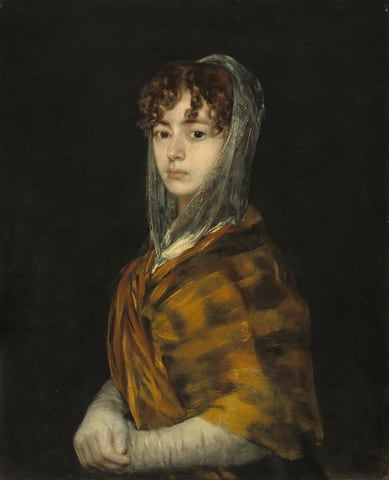
  4. Shown from the waist up in front of a black background, a young woman with pale white skin and curly brown hair looks directly out at us over her shoulder with her body angled to our left in this vertical portrait. She has dark brown eyes, a straight nose, smooth skin, and her pink lips are closed. Curls fall across her forehead but the rest of her hair is pulled up under a white lace scarf, called a mantilla. The mantilla is tucked under the wide orange and black shawl wrapped around her shoulders. She clasps her hands at her waist, and her hands and forearms are covered with long white gloves that disappear under the shawl.
    Señora Sabasa GarciaFrancisco Goya, c. 1806/1811Courtesy National Gallery of Art, Washington