Floor plan

Time and placeThe 19th century

The 19th century

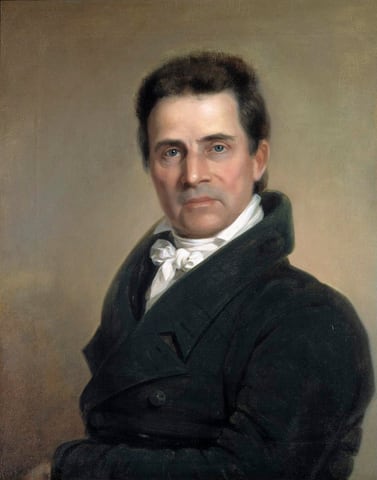
John Cockey, III, by Philip Tilyard, ca. 1822-1827
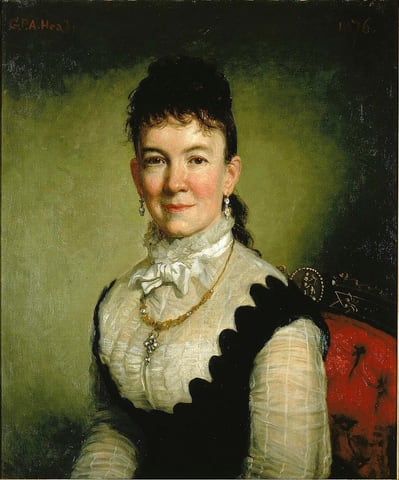
Mrs. Albert J. Myer (Catherine Walden), by George Peter Alexander Healy, 1876
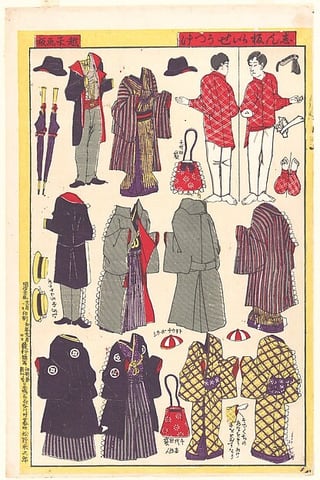
Paper Doll Clothing, 1897–98
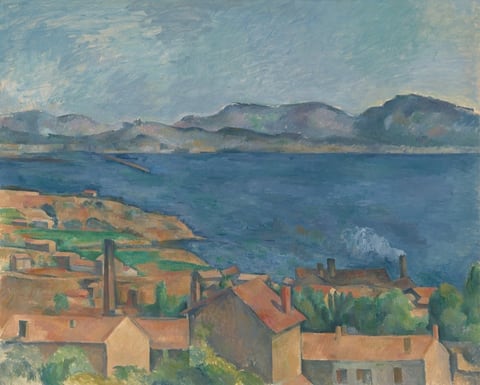
Impressionist sea landscape, tan houses, blue ocean, distant mountains.
A work made of oil on canvas.
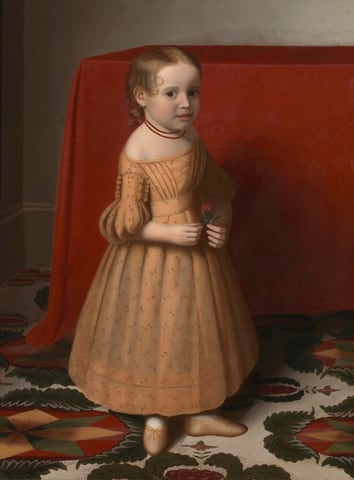
Portrait of a Young Girl with Rose, by Oliver Tarbell Eddy, ca. 1838
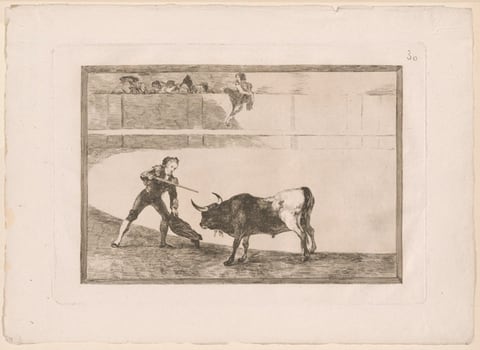
A work made of etching, aquatint, drypoint and burin on ivory laid paper.
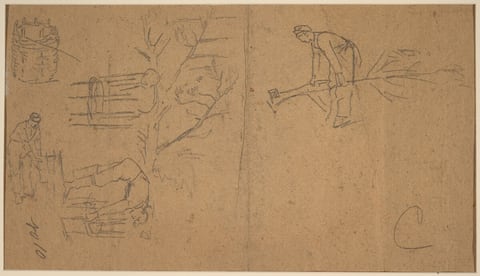
This is a drawing of various sketches related to woodcutting or carpentry. The drawing features several pencil sketches on tan paper. On the left side, there are depictions of a barrel or basket, and beneath it, several outline sketches of figures engaged in activities involving woodwork. The right side of the drawing shows a figure bent over a large beam or branch. The sketches are simple, with minimal detail, capturing the basic form and movement of the figures and objects involved in woodwork-related activities.

The works in this room are listed below.

Works in this room

Works made in the 19th century, anywhere in the world.

Section 1, north wall

  1. John Cockey, III, by Philip Tilyard, ca. 1822-1827
    John Cockey, IIIPhilip Tilyard, ca. 1822-1827Courtesy of the Smithsonian American Art Museum
  2. Mrs. Albert J. Myer (Catherine Walden), by George Peter Alexander Healy, 1876
    Mrs. Albert J. Myer (Catherine Walden)George Peter Alexander Healy, 1876Courtesy of the Smithsonian American Art Museum
  3. Paper Doll Clothing, 1897–98
    Paper Doll ClothingUnrecorded Japanese maker, 1897–98Courtesy of The Metropolitan Museum of Art
  4. Impressionist sea landscape, tan houses, blue ocean, distant mountains.
    The Bay of Marseille, Seen from L'EstaquePaul Cézanne, c. 1885Courtesy of the Art Institute of Chicago

Section 1, south wall

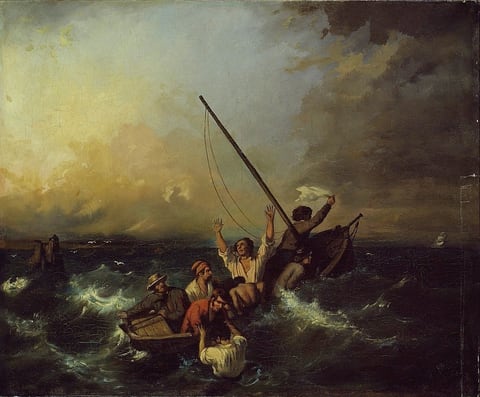
  1. A work made of oil on canvas.
    ShipwreckAfter Eugène Isabey, 19th centuryCourtesy of the Art Institute of Chicago
  2. Portrait of a Young Girl with Rose, by Oliver Tarbell Eddy, ca. 1838
    Portrait of a Young Girl with RoseOliver Tarbell Eddy, ca. 1838Courtesy of the Smithsonian American Art Museum
  3. A work made of etching, aquatint, drypoint and burin on ivory laid paper.
    Pedro Romero killing the halted bull, plate 30 from The Art of BullfightingFrancisco Goya, 1814/16, published 1816Courtesy of the Art Institute of Chicago
  4. This is a drawing of various sketches related to woodcutting or carpentry. The drawing features several pencil sketches on tan paper. On the left side, there are depictions of a barrel or basket, and beneath it, several outline sketches of figures engaged in activities involving woodwork. The right side of the drawing shows a figure bent over a large beam or branch. The sketches are simple, with minimal detail, capturing the basic form and movement of the figures and objects involved in woodwork-related activities.
    Soldiers felling sapling, and weaving saplings into baskets [verso]Winslow Homer, 1862Courtesy National Gallery of Art, Washington

Section 2, south wall
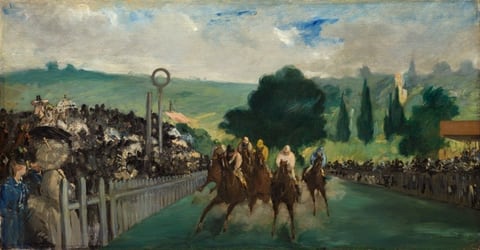
  1. A work made of oil on canvas.
    The Races at LongchampÉdouard Manet, 1866Courtesy of the Art Institute of Chicago
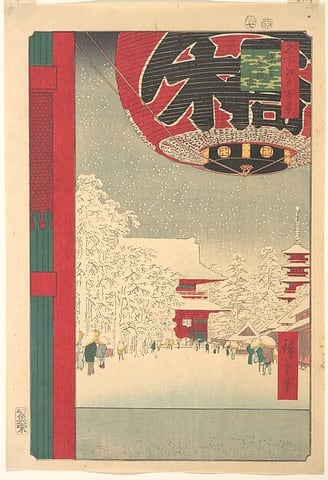
  2. Kinryūsan Temple at Asakusa, from the series "One Hundred Famous Views of Edo", by Utagawa Hiroshige, 1856
    Kinryūsan Temple at Asakusa, from the series "One Hundred Famous Views of Edo"Utagawa Hiroshige, 1856Courtesy of The Metropolitan Museum of Art
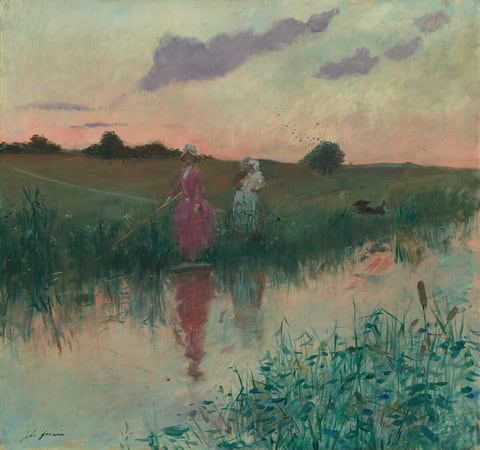
  3. In this painting, there are two women standing near a body of water, surrounded by tall green grass and white flowers. One woman wears a bright pink dress, while the other wears a brown dress with a white apron. The woman in pink holds a long, thin rod outwards, its other end connected to a thin string and a small red lure floating on the water. The other woman stands behind her and holds a baby wearing white clothes and a white bonnet. Behind both women, on the right, is a brown shape like a small dog running towards them. The reflection of the women is visible against the still, blue water. The sky is light blue at the top, transitioning to a warm pink by the horizon, crossed by purple clouds and a flock of small birds. In the bottom right corner, across the water from the women, is a patch of more tall blue-and-green grass. The brushstrokes of the painting are light and feathery.
    The Artist's Wife FishingJean Louis Forain, 1896Courtesy National Gallery of Art, Washington
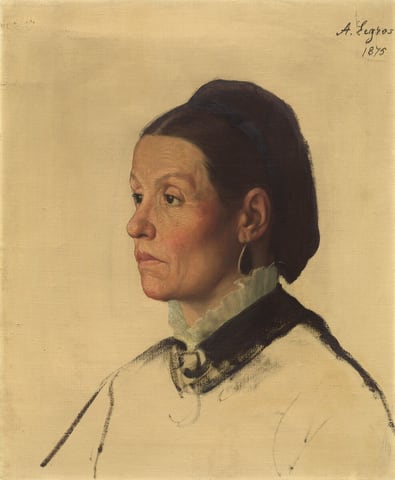
  4. The image portrays a woman in a profile view, with her head turned towards the left. She has medium-length dark hair styled back, wearing a high-collared garment with ruffled edges. She has a sharp nose, defined cheekbones, and a firm chin. The background is a plain, light-colored canvas, and the artist's signature "A. Legros" and the year "1875" are seen in the upper right corner.
    Portrait of a WomanAlphonse Legros, 1875Courtesy National Gallery of Art, Washington

Section 2, north wall
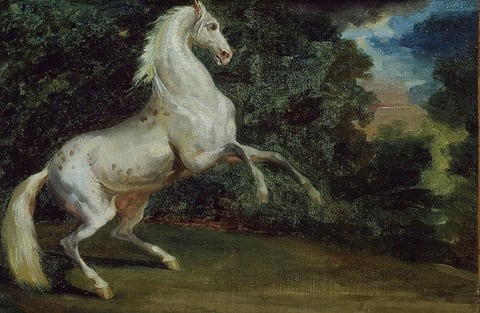
  1. A work made of oil on canvas.
    Prancing HorseFollower of Jean Louis André Théodore Géricault, 1808–12Courtesy of the Art Institute of Chicago
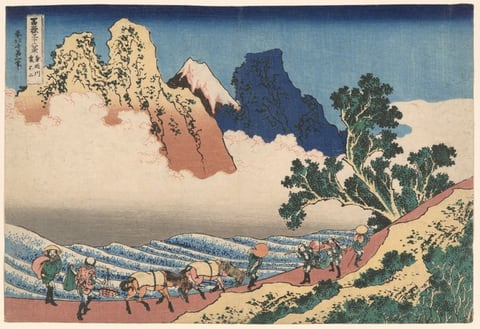
  2. Print showing a string of travelers with horses walking along a narrow hillside path beneath an enormous craggy beige mountain at left and an equally massive and craggy deep-blue mountain at right. A brown snow-covered peak appears between these mountains. A mass of cream-colored clouds and a river with rounded ripples fill the middle plane of the composition.
    The Back of Mount Fuji Seen from Minobu River (Minobugawa Urafuji), from the series Thirty-Six Views of Mount Fuji (Fugaku sanjūrokkei)Katsushika Hokusai, 1830-33Courtesy of the Art Institute of Chicago

Section 3, north wall
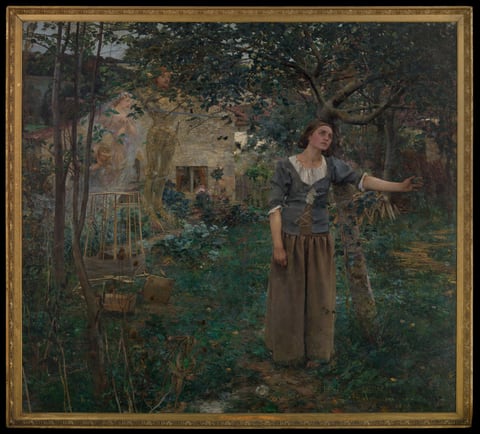
  1. Joan of Arc, by Jules Bastien-Lepage, 1879
    Joan of ArcJules Bastien-Lepage, 1879Courtesy of The Metropolitan Museum of Art
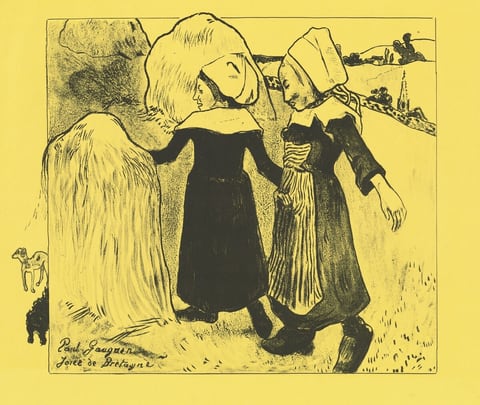
  2. The image shows two women walking arm in arm, both in traditional attire. One woman is facing away with a slight profile, while the other is seen from the side. Their faces are stylized and simplistic with covered hair. They wear long dresses with aprons and collars, and one has a striped apron. Haystacks and greenery surround them. Faint figures are in the background, as well as a spire-like structure. A dog is seen near the haystack, with simple lines suggesting a landscape.
    Pleasures of Brittany (Joies de Bretagne)Paul Gauguin, 1889Courtesy National Gallery of Art, Washington