Floor plan

Time and placeThe 19th century

The 19th century

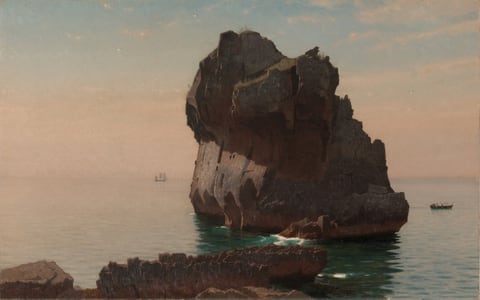
Capri, by William Stanley Haseltine, 1869
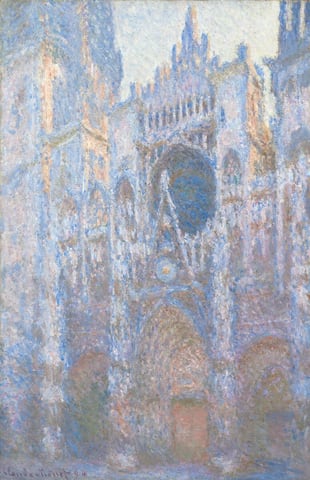
We look up at the exterior of a church that soars the height of this vertical painting. The church is painted with visible dabs and strokes of azure blue, peach, lavender purple, and camel brown to create a blurred look, as if seeing a reflection in the rippling surface of a puddle. The church façade is angled to our left, away from us. The main door and its surround takes up the center of the composition, where a rectangular door is set within nested, pointed arches that lead up to a narrow, tall, triangular gable. The point of that gable overlaps the round, dark rose window, which is the same width as the portal surround below. Spires flank the central section and rise precipitously off the top edge of the painting. The sky above is painted with daubs of white and pale blue. The artist signed and dated the lower left, “Claude Monet 94.”
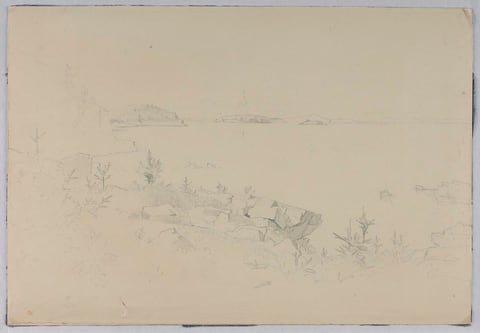
STUDY OF SEASCAPE. PORCUPINE ISLANDS, BAR HARBOR, ME
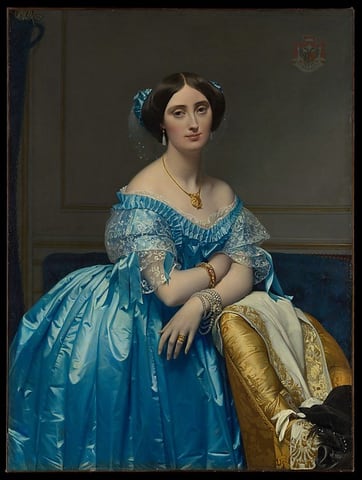
Joséphine-Éléonore-Marie-Pauline de Galard de Brassac de Béarn (1825–1860), Princesse de Broglie, by Jean Auguste Dominique Ingres, 1851–53
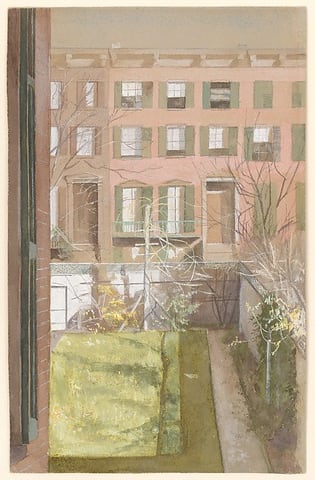
Garden View, Brooklyn, by Fidelia Bridges, ca. 1867
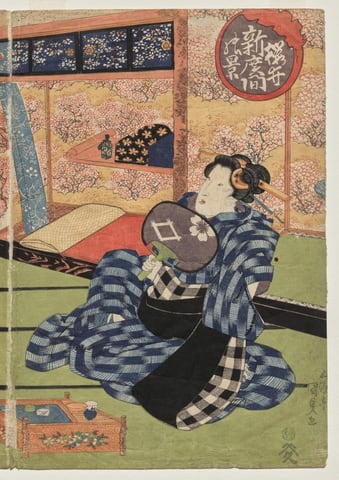
A View of the Large New Room at Sakurai, by Utagawa Kunisada, early or mid 1830s
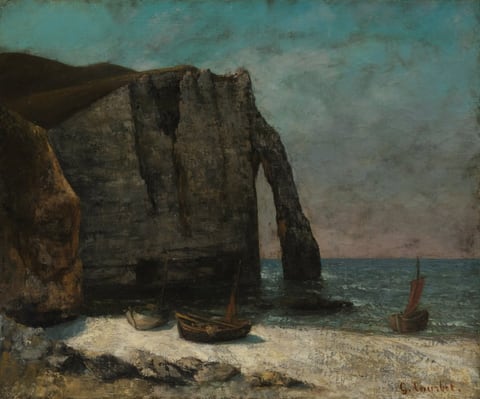
The Cliff at Étretat, by Gustave Courbet, after 1872
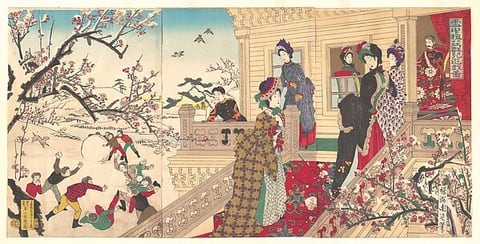
Children Playing in the Snow under Plum Trees in Bloom (Secchū baisō gunji yūgi zu), by Yōshū (Hashimoto) Chikanobu, November 1887

The works in this room are listed below.

Works in this room

Works made in the 19th century, anywhere in the world.

Section 1, north wall

  1. Capri, by William Stanley Haseltine, 1869
    CapriWilliam Stanley Haseltine, 1869Courtesy of the Cleveland Museum of Art
  2. We look up at the exterior of a church that soars the height of this vertical painting. The church is painted with visible dabs and strokes of azure blue, peach, lavender purple, and camel brown to create a blurred look, as if seeing a reflection in the rippling surface of a puddle. The church façade is angled to our left, away from us. The main door and its surround takes up the center of the composition, where a rectangular door is set within nested, pointed arches that lead up to a narrow, tall, triangular gable. The point of that gable overlaps the round, dark rose window, which is the same width as the portal surround below. Spires flank the central section and rise precipitously off the top edge of the painting. The sky above is painted with daubs of white and pale blue. The artist signed and dated the lower left, “Claude Monet 94.”
    Rouen Cathedral, West FaçadeClaude Monet, 1894Courtesy National Gallery of Art, Washington
  3. STUDY OF SEASCAPE. PORCUPINE ISLANDS, BAR HARBOR, ME
    Study of seascape. Porcupine Islands, Bar Harbor, MEWilliam Stanley Haseltine, 1859Courtesy of Cooper Hewitt, Smithsonian Design Museum
  4. Joséphine-Éléonore-Marie-Pauline de Galard de Brassac de Béarn (1825–1860), Princesse de Broglie, by Jean Auguste Dominique Ingres, 1851–53
    Joséphine-Éléonore-Marie-Pauline de Galard de Brassac de Béarn (1825–1860), Princesse de BroglieJean Auguste Dominique Ingres, 1851–53Courtesy of The Metropolitan Museum of Art

Section 1, south wall

  1. Garden View, Brooklyn, by Fidelia Bridges, ca. 1867
    Garden View, BrooklynFidelia Bridges, ca. 1867Courtesy of The Metropolitan Museum of Art
  2. A View of the Large New Room at Sakurai, by Utagawa Kunisada, early or mid 1830s
    A View of the Large New Room at SakuraiUtagawa Kunisada, early or mid 1830sCourtesy of the Cleveland Museum of Art
  3. The Cliff at Étretat, by Gustave Courbet, after 1872
    The Cliff at ÉtretatGustave Courbet, after 1872Courtesy of the Cleveland Museum of Art
  4. Children Playing in the Snow under Plum Trees in Bloom (Secchū baisō gunji yūgi zu), by Yōshū (Hashimoto) Chikanobu, November 1887
    Children Playing in the Snow under Plum Trees in Bloom (Secchū baisō gunji yūgi zu)Yōshū (Hashimoto) Chikanobu, November 1887Courtesy of The Metropolitan Museum of Art

Section 2, south wall
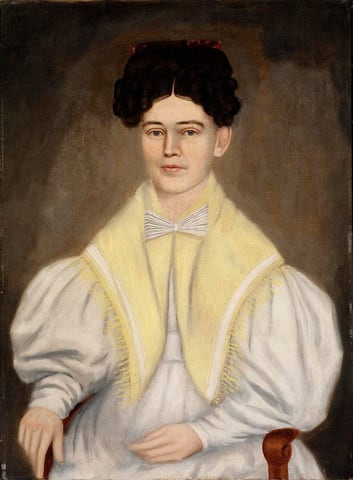
  1. Portrait of a Woman with a Shawl, by Erastus Salisbury Field, ca. 1825-1850
    Portrait of a Woman with a ShawlErastus Salisbury Field, ca. 1825-1850Courtesy of the Smithsonian American Art Museum
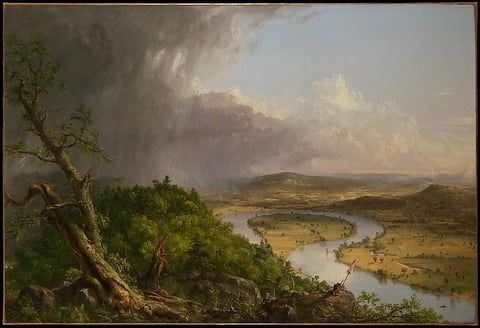
  2. View from Mount Holyoke, Northampton, Massachusetts, after a Thunderstorm—The Oxbow, by Thomas Cole, 1836
    View from Mount Holyoke, Northampton, Massachusetts, after a Thunderstorm—The OxbowThomas Cole, 1836Courtesy of The Metropolitan Museum of Art
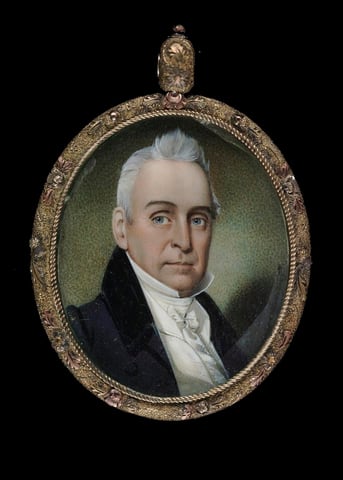
  3. William Wilson, by George Catlin, ca. 1826
    William WilsonGeorge Catlin, ca. 1826Courtesy of the Smithsonian American Art Museum

Section 2, north wall
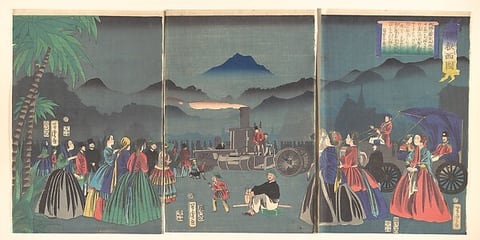
  1. France (furansukoku), by Utagawa Yoshitora, 2nd month, 1865
    France (furansukoku)Utagawa Yoshitora, 2nd month, 1865Courtesy of The Metropolitan Museum of Art
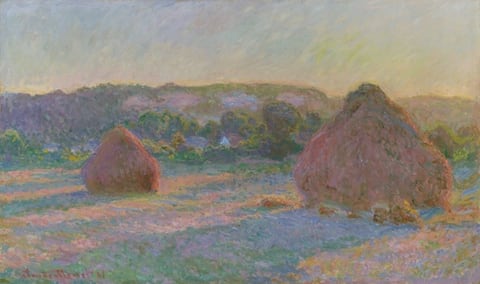
  2. Painting composed of short, dense brushstrokes depicts two domed stacks of wheat that cast long shadows on a field. The angled light indicates either a rising or setting sun.
    Stacks of Wheat (End of Summer)Claude Monet, 1890–91Courtesy of the Art Institute of Chicago
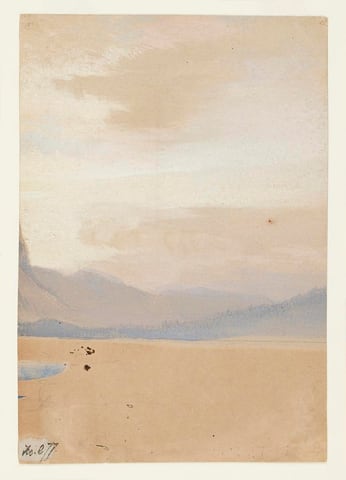
  3. AMERICAN PLAINS WITH MOUNTAIN RANGE IN THE DISTANCE
    American Plains with Mountain Range in the DistanceThomas Moran, before 1872Courtesy of Cooper Hewitt, Smithsonian Design Museum

Section 3, north wall
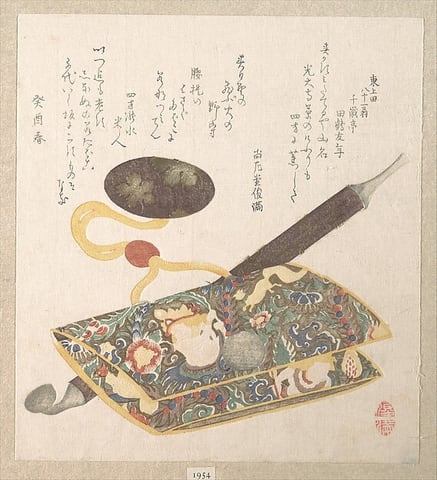
  1. Tobacco Pouch and Pipe, by Kubo Shunman, 1813
    Tobacco Pouch and PipeKubo Shunman, 1813Courtesy of The Metropolitan Museum of Art
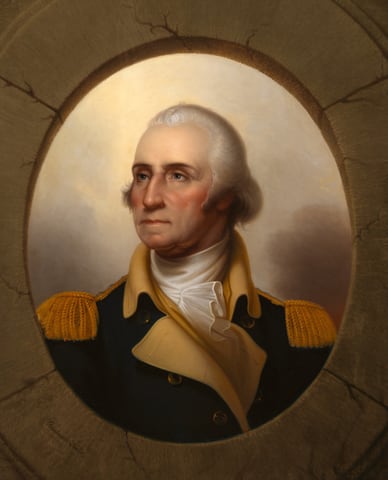
  2. Artist: Rembrandt Peale, Sitter: George Washington, Current owner: National Portrait Gallery, Smithsonian Institution
    George Washington (Porthole type)Rembrandt Peale, c. 1853Courtesy of the National Portrait Gallery, Smithsonian Institution