Floor plan

Time and place19th-century France

19th-century France

A work made of oil on paper, mounted on canvas.
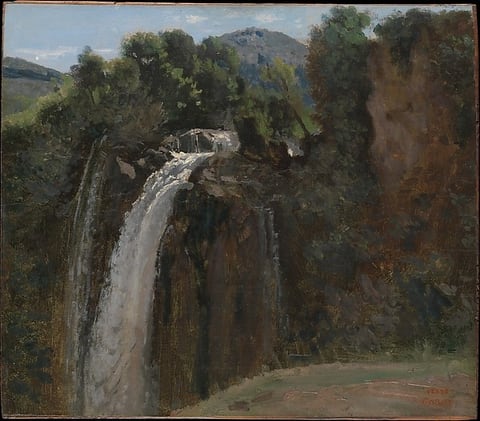
Waterfall at Terni, by Jean Baptiste Camille Corot, 1826
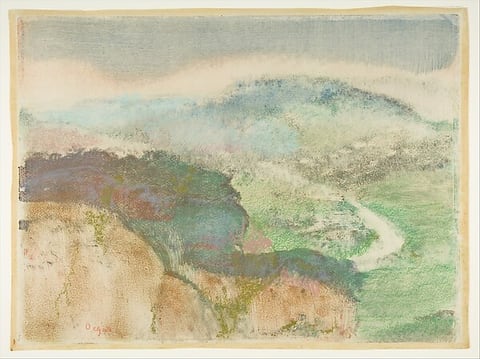
Landscape, by Edgar Degas, 1892
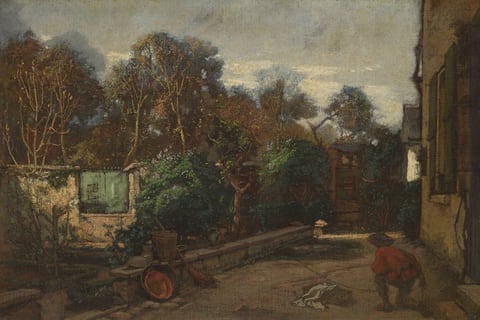
A work made of oil on canvas.
Woman Meditating, by Jean Baptiste Camille Corot, after 1868
Impressionist sea landscape, tan houses, blue ocean, distant mountains.
The Orange Christ, by Maurice Denis, 1889
Blessing of a Yacht on the Belon River, by Maurice Denis, 1899

The works in this room are listed below.

Works in this room

Works made in France in the 19th century.

First room, north wall

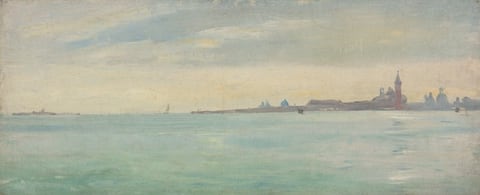
  1. A work made of oil on paper, mounted on canvas.
    Venice Seen from the Public GardenJean Jules Antoine Lecomte du Noüy, 1873Courtesy of the Art Institute of Chicago
  2. Waterfall at Terni, by Jean Baptiste Camille Corot, 1826
    Waterfall at TerniJean Baptiste Camille Corot, 1826Courtesy of The Metropolitan Museum of Art
  3. Landscape, by Edgar Degas, 1892
    LandscapeEdgar Degas, 1892Courtesy of The Metropolitan Museum of Art
  4. A work made of oil on canvas.
    The Bird CatcherThomas Couture, c. 1857Courtesy of the Art Institute of Chicago

First room, south wall

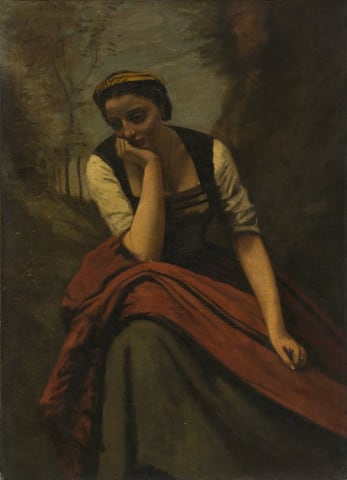
  1. Woman Meditating, by Jean Baptiste Camille Corot, after 1868
    Woman MeditatingJean Baptiste Camille Corot, after 1868Courtesy of the Cleveland Museum of Art
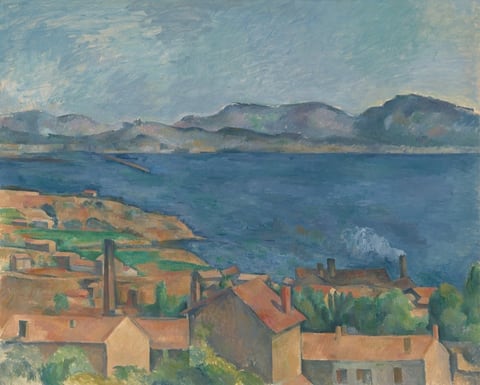
  2. Impressionist sea landscape, tan houses, blue ocean, distant mountains.
    The Bay of Marseille, Seen from L'EstaquePaul Cézanne, c. 1885Courtesy of the Art Institute of Chicago
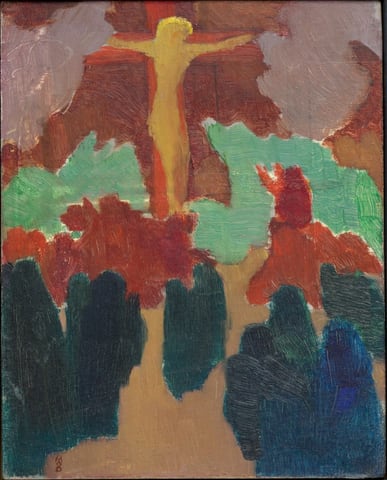
  3. The Orange Christ, by Maurice Denis, 1889
    The Orange ChristMaurice Denis, 1889Courtesy of the Cleveland Museum of Art
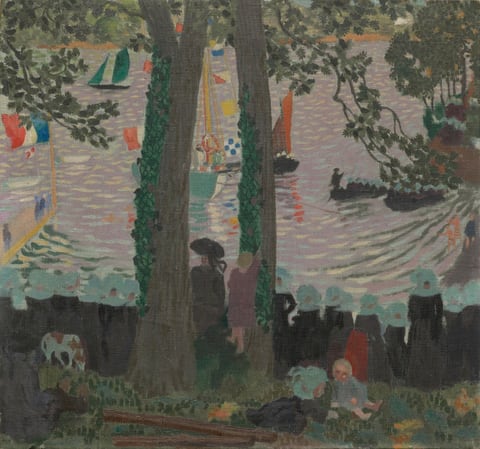
  4. Blessing of a Yacht on the Belon River, by Maurice Denis, 1899
    Blessing of a Yacht on the Belon RiverMaurice Denis, 1899Courtesy of the Cleveland Museum of Art

Second room, south wall
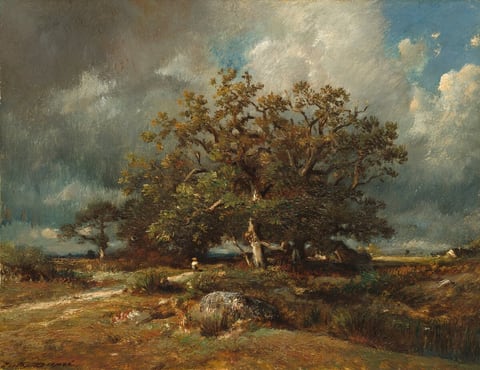
  1. The painting depicts a landscape with a field, trees, and a dramatic cloudy sky. Grass, rocks, and a group of large trees are visible in the center of the composition. Below the trees, there is a small shape that could be a person looking up. Farther back, there are some small triangular structures that might be houses. The brushstrokes are expressive and not much detail is visible in the smaller shapes. The grass and foliage are painted in earthy tones of brown, orange, and green, while the sky is blue with areas of thick gray and white clouds.
    The Old OakJules Dupré, c. 1870Courtesy National Gallery of Art, Washington
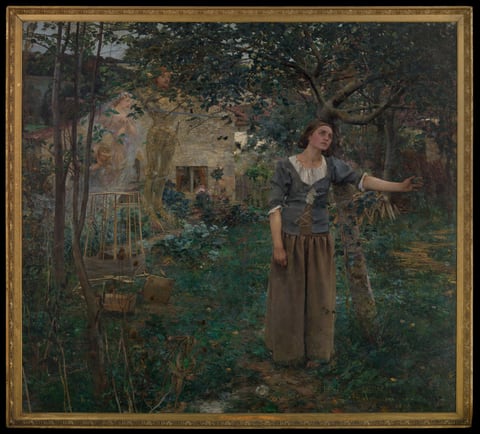
  2. Joan of Arc, by Jules Bastien-Lepage, 1879
    Joan of ArcJules Bastien-Lepage, 1879Courtesy of The Metropolitan Museum of Art
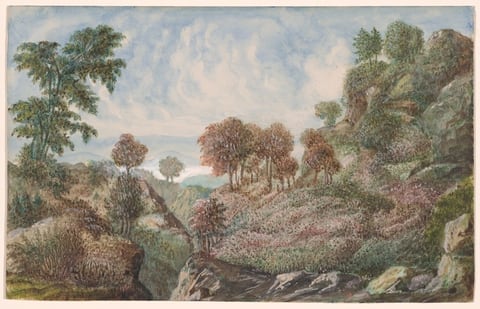
  3. A work made of watercolor and opaque watercolor on cream wove paper.
    Landscape with River GorgeGeorge Sand, 1860/69Courtesy of the Art Institute of Chicago

Second room, north wall
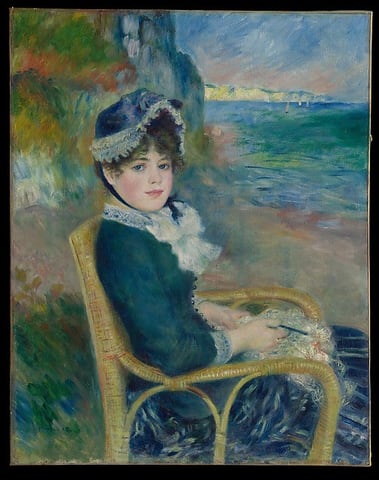
  1. By the Seashore, by Pierre-Auguste Renoir, 1883
    By the SeashorePierre-Auguste Renoir, 1883Courtesy of The Metropolitan Museum of Art
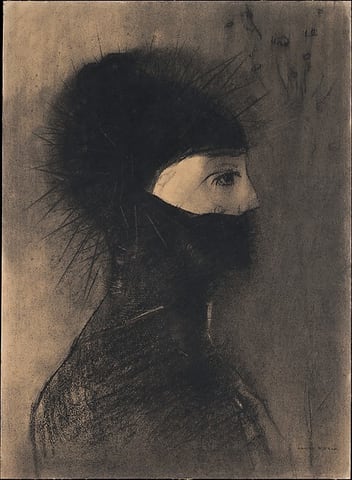
  2. Armor, by Odilon Redon, 1891
    ArmorOdilon Redon, 1891Courtesy of The Metropolitan Museum of Art
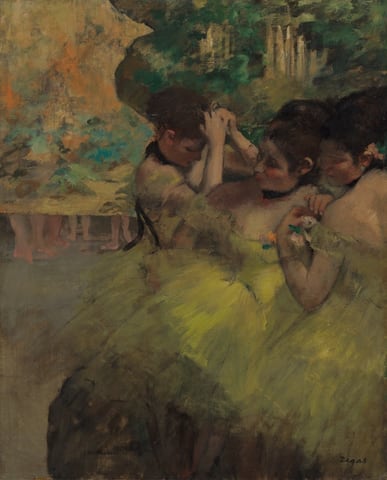
  3. Three light-skinned, dark-haired ballerinas, painted in muted tones, wear off-the-shoulder yellow leotards and tutus as they huddle near each other. One adjusts her costume, while one holds her hands clasped above her head. At left is a painted screen with four pairs of feet visible underneath.
    Yellow Dancers (In the Wings)Edgar Degas, 1874–76Courtesy of the Art Institute of Chicago

Third room, north wall
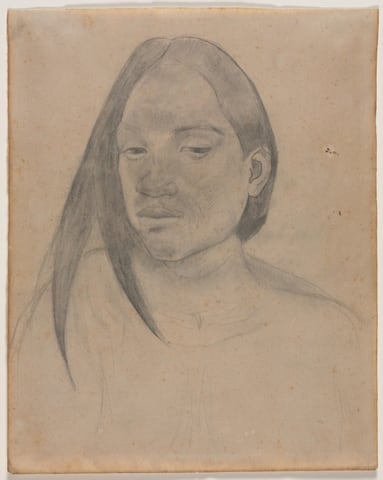
  1. Head of a Tahitian Woman, by Paul Gauguin, 1891
    Head of a Tahitian WomanPaul Gauguin, 1891Courtesy of the Cleveland Museum of Art
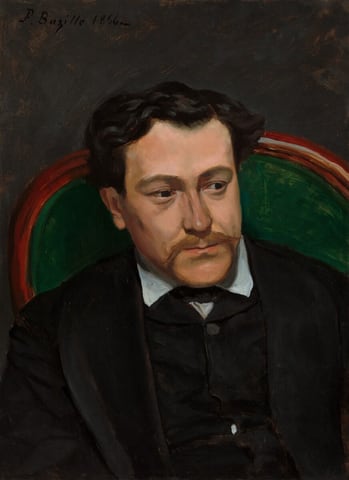
  2. Shown from the chest up, a pale-skinned man in a suit sits in a high-backed chair, looking slightly to our right in this vertical portrait painting. His eyes and head are both turned slightly to our right, with only one ear visible on our left. His shoulder on our right and the right side of the chair are slightly cut off by the edge of the painting. He has a straight nose, high cheekbones, and pale pink closed lips. His eyes are dark, with small shadows beneath them. His black, wavy hair is parted on our right and cropped short on the sides of his head, with thick, defined waves on top. He has a light brown mustache that extends past the edge of his lips and flips up at the ends and a small, thin goatee. Beneath his chin, the collar of his white shirt is visible. The man wears an open suit jacket with a black vest, which folds slightly just below his chest, revealing a glimpse of his white shirt beneath it in a gap between buttons. The chair is only visible from the man’s shoulders up and ends at his forehead. It has a curved, round top back with a red frame and dark green upholstery. The part of the red frame on the right side of the painting has white and yellow highlights. The background is dark gray with visible brushstrokes. The artist signed and dated the painting at the top left, “F. Bazille. 1866.”
    Edouard BlauFrédéric Bazille, probably 1869Courtesy National Gallery of Art, Washington