Floor plan

Time and place17th-century Netherlands
17th-century Netherlands
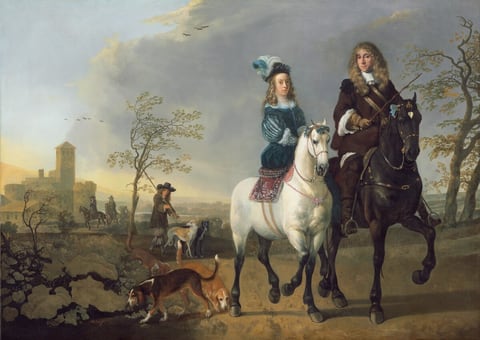
An elegantly dressed man and woman ride horses toward us and to our right in a landscape with low, rolling hills, stone buildings, and trees in this horizontal painting. The two horses and riders take up the right half of the composition. Both people have pale skin and look at us. The woman has a high forehead, a straight nose, a round face, and curly blond hair falling to her shoulders. She wears a sapphire-blue dress with slashed sleeves to reveal a white garment beneath. Her hat is adorned with blue and white feathers, and she wears a string of pearls around her neck. The legs of her white horse darken to black below the knees, and the bridle is tied with blue bows near the horse’s ears. The sidesaddle sits on a woven, rug-like blanket. Next to her, to our right, the man rides a larger chestnut-brown horse with a white triangle between its eyes. The man looks at us out of the corners of his dark eyes under gathered brows. He has a long, straight nose and is cleanshaven, though a hint of a five o’clock shadow slightly darkens his cleft chin. His light brown hair falls in curls down past his shoulders, and he wears a dark brown coat with voluminous white fabric rippling out above tan-colored gloves. He holds a riding crop in his right hand, on our left, resting against his hip. Near the white horse’s feet, to our left, a dark brown dog with a white nose sniffs at a plant. Behind it, another reddish-brown dog sniffs the ground near the horse’s back hoof. A third dog stands beyond, partially obscured by bushes and plants growing in the lower left corner of the canvas. A man wearing a tall black, wide-brimmed hat and carrying a long staff leads two slender dogs resembling grayhounds on leashes along the path, a little behind the riders. Two more elegantly dressed men ride horses toward us father back on the path. Sand-colored stone buildings, hazy in the distance, are clustered around a squared tower, possibly a bell tower, to our left. The land dips gently to the horizon line in the deep distance. The riders are silhouetted against a swirling slate-blue cloud that fills most of the sky in the top two-thirds of the painting. The sky clears to pale blue to our left and then warms to golden yellow along the horizon, beyond the buildings. The artist signed the painting near the lower left corner: “A. Cuijp.”
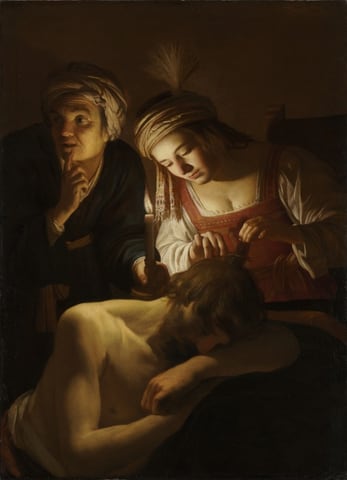
Samson and Delilah, by Gerrit van Honthorst, c. 1616
A work made of oil on panel.
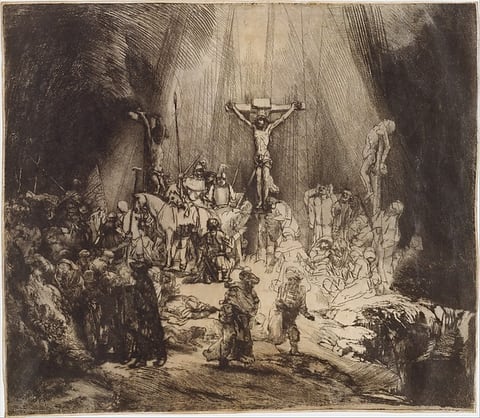
Christ Crucified between the Two Thieves: The Three Crosses, by Rembrandt van Rijn, 1653
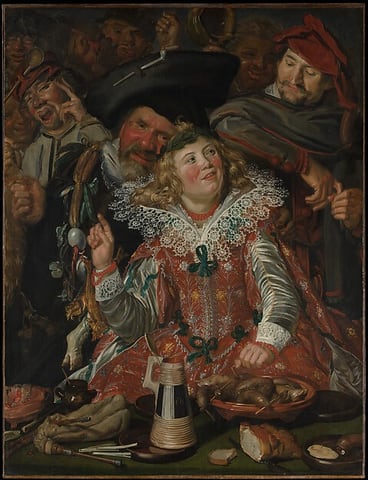
Merrymakers at Shrovetide, by Frans Hals, ca. 1616–17

The works in this room are listed below.

Works in this room

Works made in the Netherlands in the 17th century.

First room, north wall

  1. An elegantly dressed man and woman ride horses toward us and to our right in a landscape with low, rolling hills, stone buildings, and trees in this horizontal painting. The two horses and riders take up the right half of the composition. Both people have pale skin and look at us. The woman has a high forehead, a straight nose, a round face, and curly blond hair falling to her shoulders. She wears a sapphire-blue dress with slashed sleeves to reveal a white garment beneath. Her hat is adorned with blue and white feathers, and she wears a string of pearls around her neck. The legs of her white horse darken to black below the knees, and the bridle is tied with blue bows near the horse’s ears. The sidesaddle sits on a woven, rug-like blanket. Next to her, to our right, the man rides a larger chestnut-brown horse with a white triangle between its eyes. The man looks at us out of the corners of his dark eyes under gathered brows. He has a long, straight nose and is cleanshaven, though a hint of a five o’clock shadow slightly darkens his cleft chin. His light brown hair falls in curls down past his shoulders, and he wears a dark brown coat with voluminous white fabric rippling out above tan-colored gloves. He holds a riding crop in his right hand, on our left, resting against his hip. Near the white horse’s feet, to our left, a dark brown dog with a white nose sniffs at a plant. Behind it, another reddish-brown dog sniffs the ground near the horse’s back hoof. A third dog stands beyond, partially obscured by bushes and plants growing in the lower left corner of the canvas. A man wearing a tall black, wide-brimmed hat and carrying a long staff leads two slender dogs resembling grayhounds on leashes along the path, a little behind the riders. Two more elegantly dressed men ride horses toward us father back on the path. Sand-colored stone buildings, hazy in the distance, are clustered around a squared tower, possibly a bell tower, to our left. The land dips gently to the horizon line in the deep distance. The riders are silhouetted against a swirling slate-blue cloud that fills most of the sky in the top two-thirds of the painting. The sky clears to pale blue to our left and then warms to golden yellow along the horizon, beyond the buildings. The artist signed the painting near the lower left corner: “A. Cuijp.”
    Lady and Gentleman on HorsebackAelbert Cuyp, c. 1655, reworked 1660/1665Courtesy National Gallery of Art, Washington
  2. Samson and Delilah, by Gerrit van Honthorst, c. 1616
    Samson and DelilahGerrit van Honthorst, c. 1616Courtesy of the Cleveland Museum of Art

First room, south wall

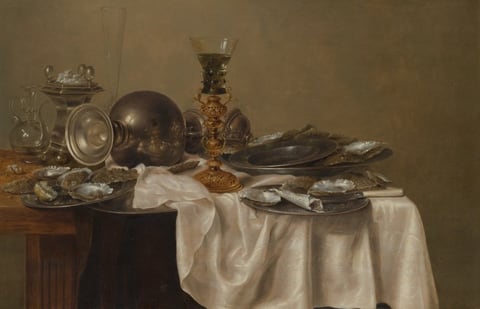
  1. A work made of oil on panel.
    Breakfast Still LifeWillem Claesz. Heda, 1647Courtesy of the Art Institute of Chicago
  2. Christ Crucified between the Two Thieves: The Three Crosses, by Rembrandt van Rijn, 1653
    Christ Crucified between the Two Thieves: The Three CrossesRembrandt van Rijn, 1653Courtesy of The Metropolitan Museum of Art
  3. Merrymakers at Shrovetide, by Frans Hals, ca. 1616–17
    Merrymakers at ShrovetideFrans Hals, ca. 1616–17Courtesy of The Metropolitan Museum of Art

Second room, south wall
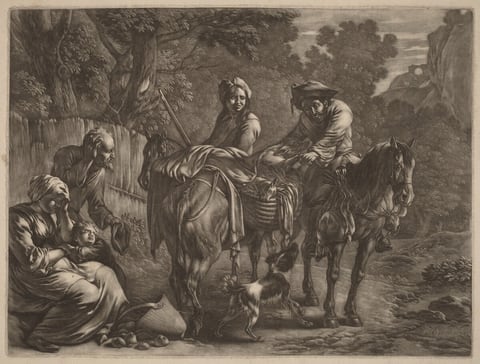
  1. This is a drawing of a rural scene with horses and figures. The image shows an interaction between several figures and two horses within a pastoral setting. In the foreground, two individuals are seated on the ground, accompanied by a small child. Nearby, a figure atop a horse reaches towards another figure who leads a laden horse. A dog is present, standing alert at the horse's hooves. The backdrop showcases lush trees and distant hills, suggesting a serene countryside environment. The attention to detail and shading creates a realistic depiction of this rustic scene.
    Robbers on HorsebackJan van Huchtenburgh, late 17th/early 18th centuryCourtesy National Gallery of Art, Washington
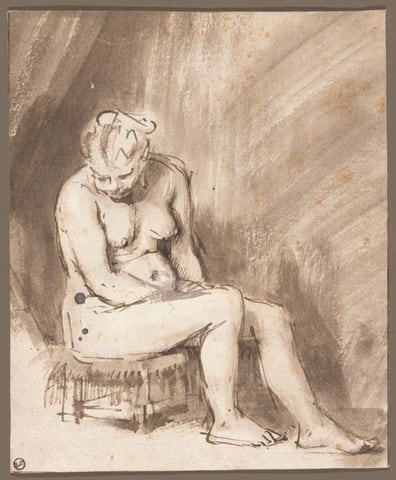
  2. Brown-tone drawing of a nude woman seated on a small stool, looking downward.
    Seated Female NudeRembrandt van Rijn, 1660/62Courtesy of the Art Institute of Chicago
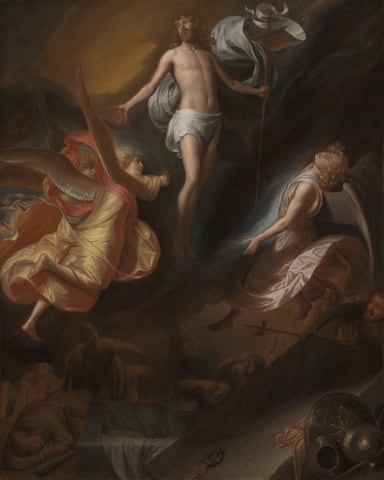
  3. A work made of oil on canvas.
    Resurrection of ChristSamuel van Hoogstraten, c. 1665Courtesy of the Art Institute of Chicago
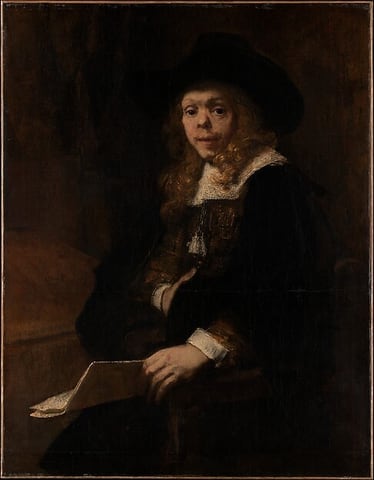
  4. Portrait of Gerard de Lairesse, by Rembrandt van Rijn, 1665–67
    Portrait of Gerard de LairesseRembrandt van Rijn, 1665–67Courtesy of The Metropolitan Museum of Art

Second room, north wall
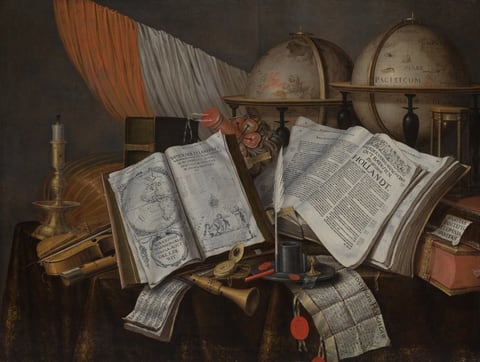
  1. A work made of oil on canvas.
    A Vanitas Still Life with a Flag, Candlestick, Musical Instruments, Books, Writing Paraphernalia, Globes, and HourglassEdwaert Collier, 1662Courtesy of the Art Institute of Chicago
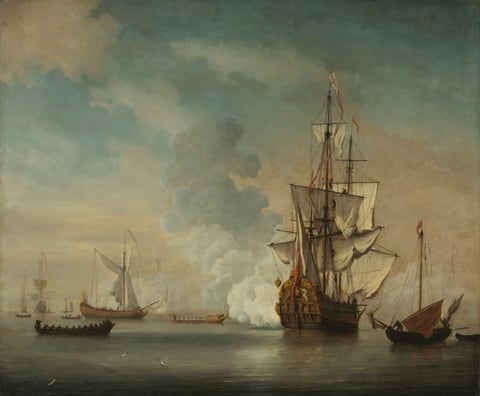
  2. English Warship Firing a Salute, 1690
    English Warship Firing a SaluteUnrecorded Dutch maker, 1690Courtesy of the Cleveland Museum of Art
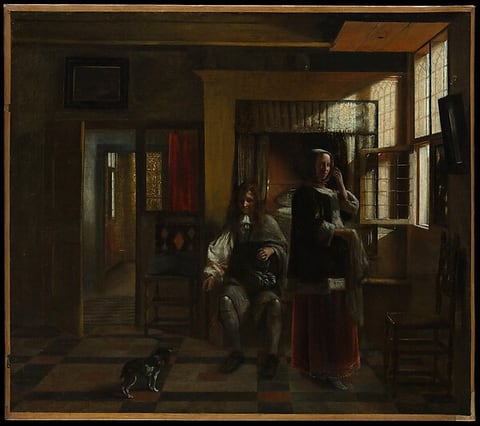
  3. Interior with a Young Couple, by Pieter de Hooch, probably ca. 1662–65
    Interior with a Young CouplePieter de Hooch, probably ca. 1662–65Courtesy of The Metropolitan Museum of Art

Third room, north wall
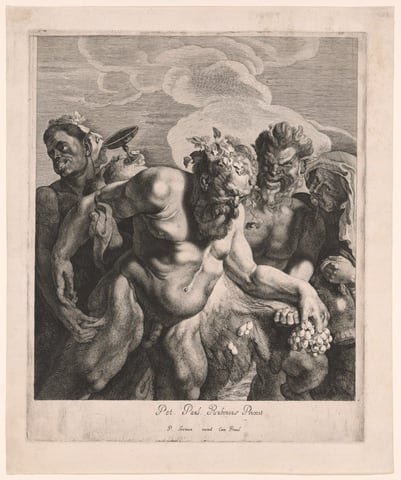
  1. A work made of engraving in black on cream laid paper.
    Drunken SilenusJonas Suyderhoef, 1642Courtesy of the Art Institute of Chicago
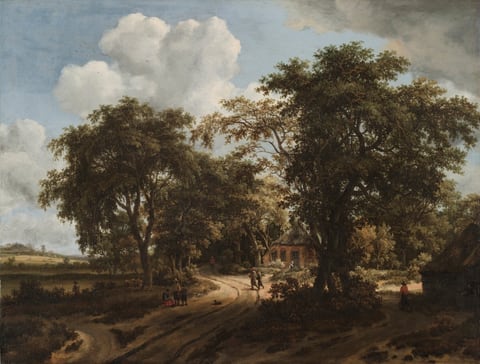
  2. A Cottage in the Woods, by Meindert Hobbema, c. 1662
    A Cottage in the WoodsMeindert Hobbema, c. 1662Courtesy of the Cleveland Museum of Art

Third room, south wall
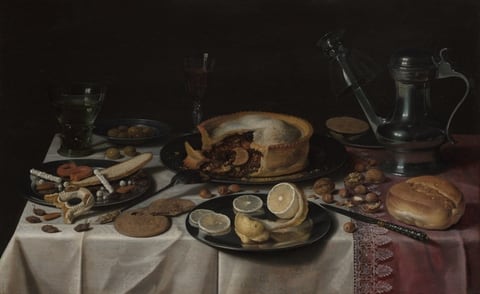
  1. A work made of oil on panel.
    Still LifePieter Claesz, c. 1625Courtesy of the Art Institute of Chicago
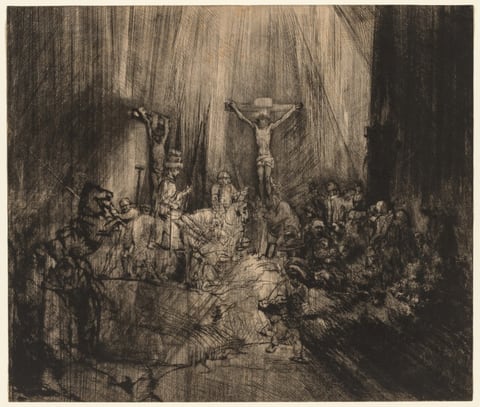
  2. Christ Crucified Between the Two Thieves: 'The Three Crosses', by Rembrandt van Rijn, 1653-c.1660
    Christ Crucified Between the Two Thieves: 'The Three Crosses'Rembrandt van Rijn, 1653-c.1660Courtesy of the Cleveland Museum of Art