Floor plan

Time and placeThe 15th century

The 15th century

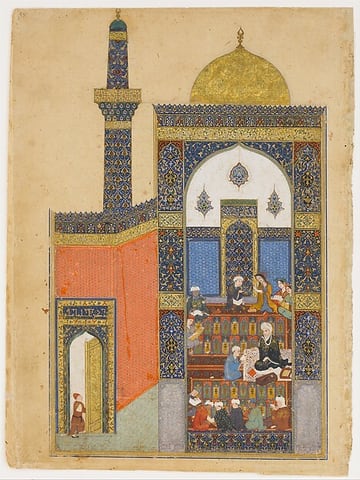
"Laila and Majnun at School", Folio from a Khamsa (Quintet) of Nizami of Ganja, by Ja'far Baisunghuri, 835 AH/1431–32 CE
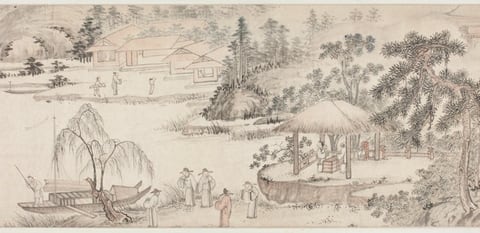
A work made of handscroll; ink and color on paper.
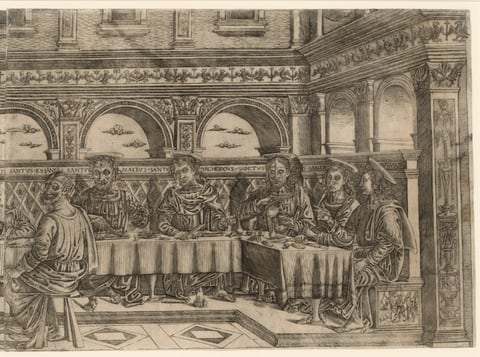
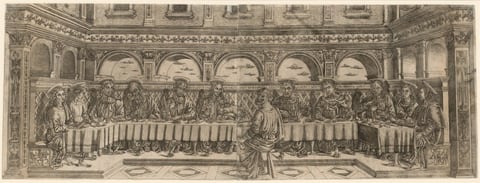
The Last Supper, by Lucantonio degli Uberti, c. 1500
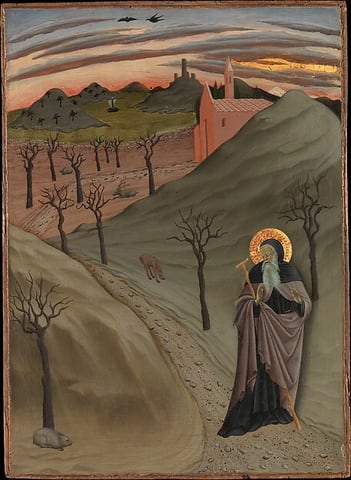
Saint Anthony the Abbot in the Wilderness, by Sano di Pietro (Ansano di Pietro di Mencio), ca. 1440
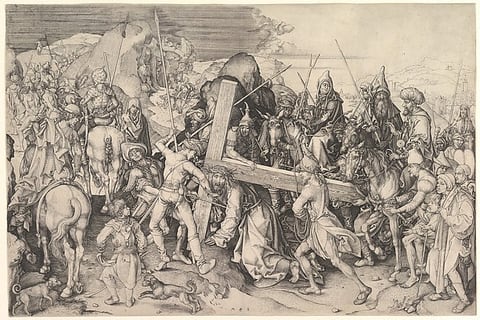
Christ Carrying the Cross, by Martin Schongauer, ca. 1475–80
The Last Supper (pair), by Lucantonio degli Uberti, c. 1500

The works in this room are listed below.

Works in this room

Works made in the 15th century, anywhere in the world.

First room, north wall

  1. "Laila and Majnun at School", Folio from a Khamsa (Quintet) of Nizami of Ganja, by Ja'far Baisunghuri, 835 AH/1431–32 CE
    "Laila and Majnun at School", Folio from a Khamsa (Quintet) of Nizami of GanjaJa'far Baisunghuri, 835 AH/1431–32 CECourtesy of The Metropolitan Museum of Art
  2. A work made of handscroll; ink and color on paper.
    Parting at the Gate of the CapitalYao Shou, Ming dynasty (1369–1644), 15th centuryCourtesy of the Art Institute of Chicago
  3. The Last Supper, by Lucantonio degli Uberti, c. 1500
    The Last SupperLucantonio degli Uberti, c. 1500Courtesy of the Cleveland Museum of Art

First room, south wall

  1. Saint Anthony the Abbot in the Wilderness, by Sano di Pietro (Ansano di Pietro di Mencio), ca. 1440
    Saint Anthony the Abbot in the WildernessSano di Pietro (Ansano di Pietro di Mencio), ca. 1440Courtesy of The Metropolitan Museum of Art
  2. Christ Carrying the Cross, by Martin Schongauer, ca. 1475–80
    Christ Carrying the CrossMartin Schongauer, ca. 1475–80Courtesy of The Metropolitan Museum of Art
  3. The Last Supper (pair), by Lucantonio degli Uberti, c. 1500
    The Last Supper (pair)Lucantonio degli Uberti, c. 1500Courtesy of the Cleveland Museum of Art

Second room, south wall
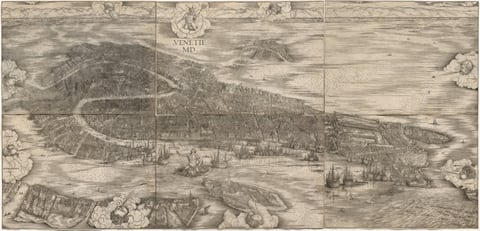
  1. View of Venice, by Jacopo de' Barbari, 1500
    View of VeniceJacopo de' Barbari, 1500Courtesy of the Cleveland Museum of Art
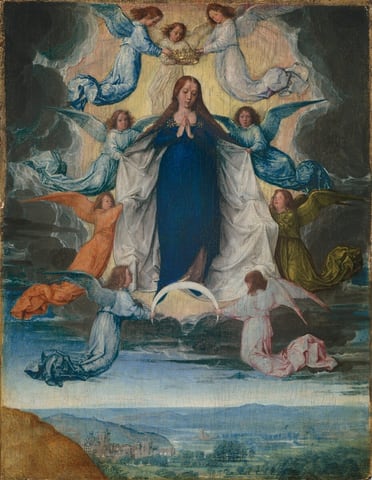
  2. A woman wearing a long, royal-blue dress is surrounded by nine winged angels as she floats on a thin, bright white, downward-pointing crescent moon above a deep landscape with a town tucked into rolling hills in this vertical painting. The woman, Mary, and all the angels have pale, peachy skin and long, brown hair. Mary and the angels float against a pale yellow and pale peach field of light enclosed within a mass of steel-gray clouds. She presses her fingertips together in front of her chest and gazes down and to our right, her dark eyes almost closed. She has a delicate, straight nose, and her small mouth is closed. Her brown hair parts in the middle and flows down over her shoulders. The angels wear flowing gowns in sky or topaz blue, olive green, tangerine orange, white, or light pink, each with matching wings. Three angels place a gold crown on Mary's head. Four others hold up the edges of a silvery white cape, which is fastened across her shoulders with brooches of white pearls surrounding ruby-red stones. The final two angels hold up the downward-facing points of the crescent moon beneath her. In the landscape below, groupings of trees are dotted among the rolling hills, with a village in the distance to our left. The blue, hazy horizon comes about a sixth of the way up the composition. A brown boulder sits in the bottom left corner, closer to us. The paint is visibly cracked throughout.
    The Assumption of the VirginMichel Sittow, c. 1500Courtesy National Gallery of Art, Washington

Second room, north wall
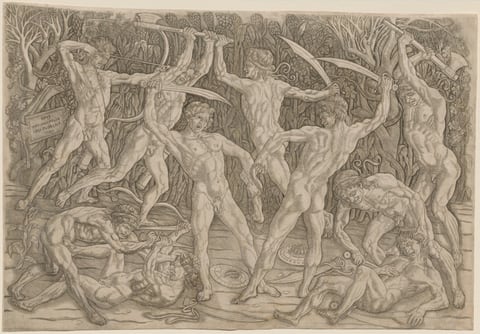
  1. Battle of the Nudes, by Antonio Pollaiuolo, 1470s–80s
    Battle of the NudesAntonio Pollaiuolo, 1470s–80sCourtesy of the Cleveland Museum of Art
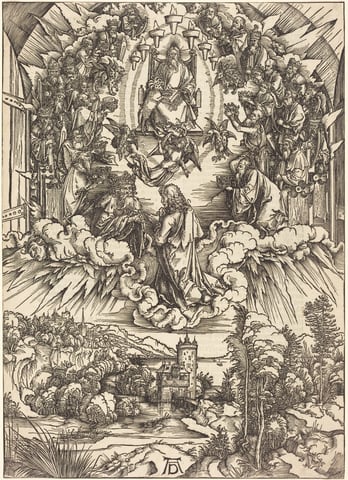
  2. The image features a celestial scene with multiple figures depicted from head to waist. Two central figures are engaged in a conversation amidst clouds. One figure appears seated, possibly on a throne, holding a book. Both figures have long hair and beards. The robes worn by the figures are detailed. Other figures surround them in a semi-circle, some wearing crowns, holding items like bowls. Heavenly hosts with wings are seen above. The background shows a detailed landscape with trees, a river, and castles nestled in hills.
    Saint John before God and the EldersAlbrecht Dürer, probably c. 1496/1498Courtesy National Gallery of Art, Washington
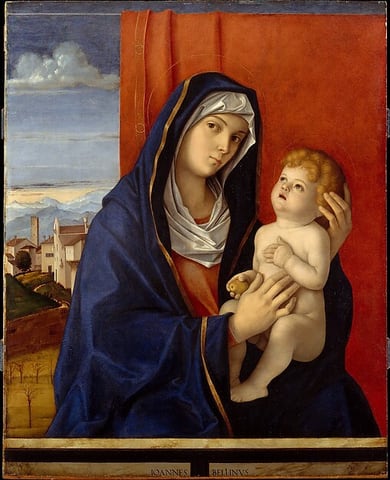
  3. Madonna and Child, by Giovanni Bellini, late 1480s
    Madonna and ChildGiovanni Bellini, late 1480sCourtesy of The Metropolitan Museum of Art

Third room, north wall
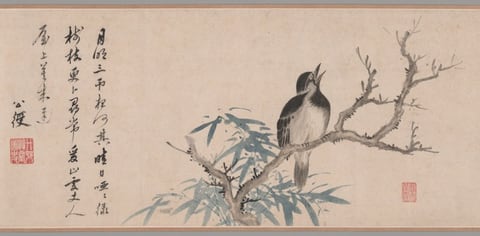
  1. A work made of handscroll; ink and color on paper.
    Pillars of the CountryYao Shou, Ming dynasty (1368–1644), 1494Courtesy of the Art Institute of Chicago
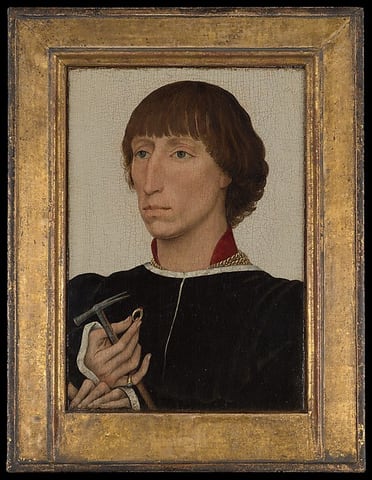
  2. Francesco d'Este (born ca. 1429, died after 1486), by Rogier van der Weyden, ca. 1460
    Francesco d'Este (born ca. 1429, died after 1486)Rogier van der Weyden, ca. 1460Courtesy of The Metropolitan Museum of Art
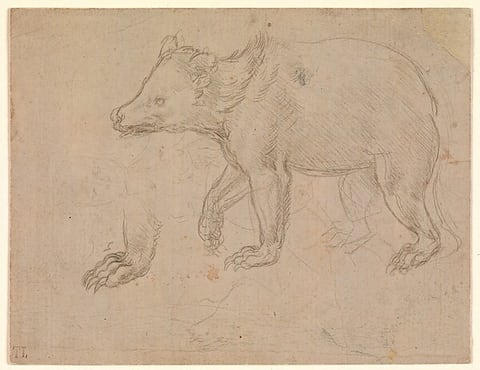
  3. A Bear Walking, by Leonardo da Vinci, ca. 1482–85
    A Bear WalkingLeonardo da Vinci, ca. 1482–85Courtesy of The Metropolitan Museum of Art

Third room, south wall
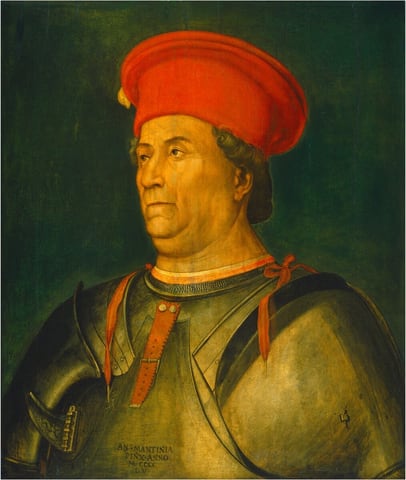
  1. This painting shows an upper-body portrait of a man in a three-quarter view, turned to the left. He has a prominent double chin, a slightly furrowed brow, thin lips, and a serious expression. He has pale yellow skin and short, dark hair, and he wears a large, red hat. He is clad in silver armor with red straps on his shoulder and chest. The background is a simple, dark green color.
    Francesco SforzaUnrecorded Italian maker, probably c. 1480/1500Courtesy National Gallery of Art, Washington
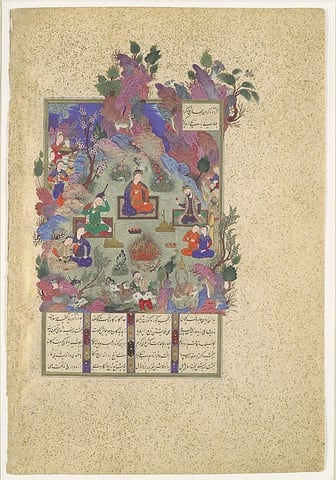
  2. "The Feast of Sada", Folio 22v from the Shahnama (Book of Kings) of Shah Tahmasp, by Abu'l Qasim Firdausi, ca. 1525
    "The Feast of Sada", Folio 22v from the Shahnama (Book of Kings) of Shah TahmaspAbu'l Qasim Firdausi, ca. 1525Courtesy of The Metropolitan Museum of Art