Baroque and Rococo
Works in this room
Drama, movement and deep shadow in the 1600s, then the light, playful decoration of eighteenth-century Europe.
First room, north wall
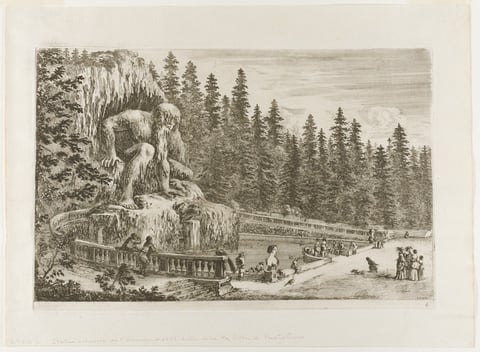
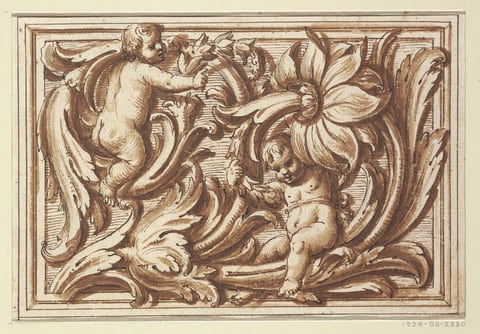
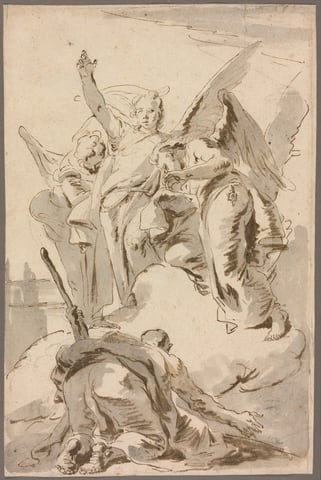
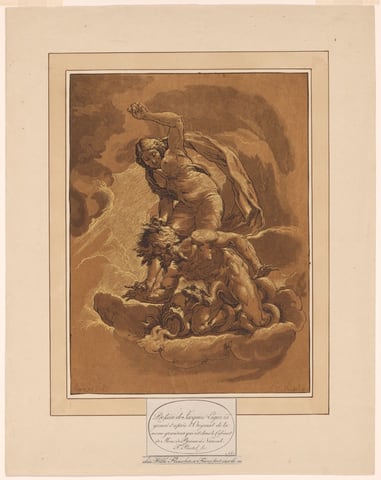
The Colossal Statue of the Apennines, from Views of Villa di PratolinoStefano della Bella, c. 1653Courtesy of the Art Institute of Chicago One of a set of projects for a title page and the decoration of a horizontal panelFrancesco Bedeschini, Italian, 1675-1699Courtesy of Cooper Hewitt, Smithsonian Design Museum Three Angels Appearing to AbrahamGiovanni Battista Tiepolo, c. 1726Courtesy of the Art Institute of Chicago The Triumph of Truth over EnvyMaria Katharina Prestel, 1781Courtesy of the Art Institute of Chicago
First room, south wall
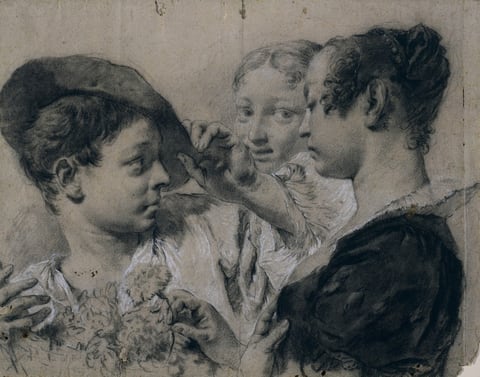
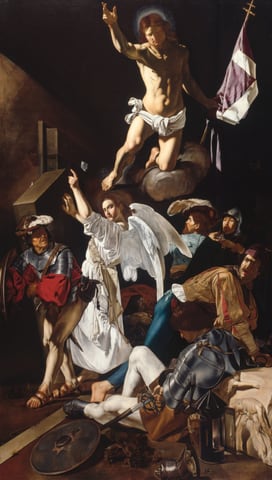
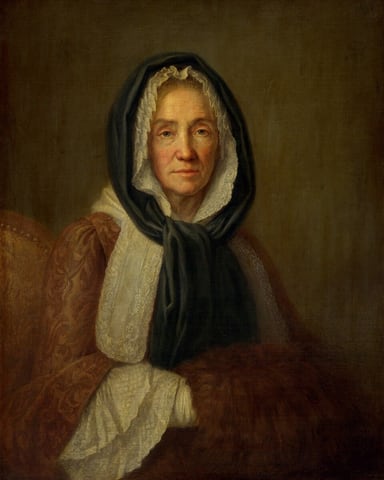
A Young Woman Buying a Pink from a Young ManGiovanni Battista Piazzetta, c. 1740Courtesy of the Cleveland Museum of Art The ResurrectionCecco del Caravaggio, c. 1619-20Courtesy of the Art Institute of Chicago Old Woman with a MuffUnrecorded French maker, second half 18th centuryCourtesy National Gallery of Art, Washington
Second room, south wall
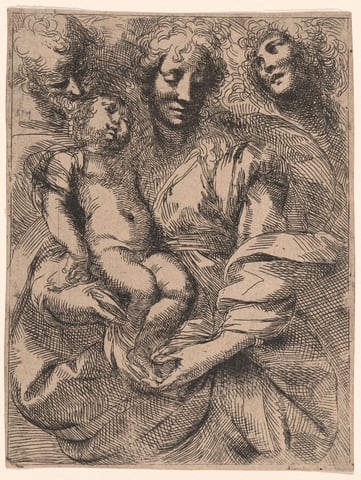
The Holy FamilyGiulio Cesare Procaccini, 1613/15Courtesy of the Art Institute of Chicago 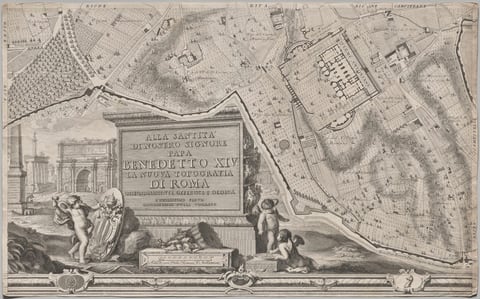
Nuova pianta di Roma data in luce da Giambattista Nolli l’anno MDCCXLVII, known as La Pianta Grande di RomaGiovanni Battista Nolli, 1748Courtesy of the Cleveland Museum of Art 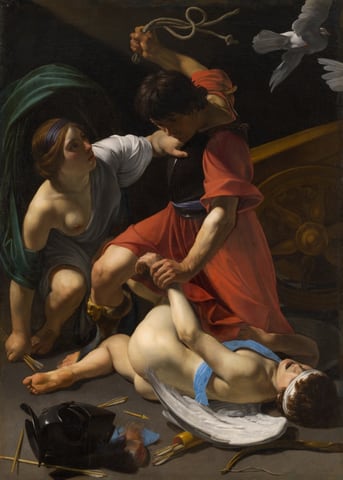
Cupid ChastisedBartolomeo Manfredi, 1613Courtesy of the Art Institute of Chicago
Second room, north wall
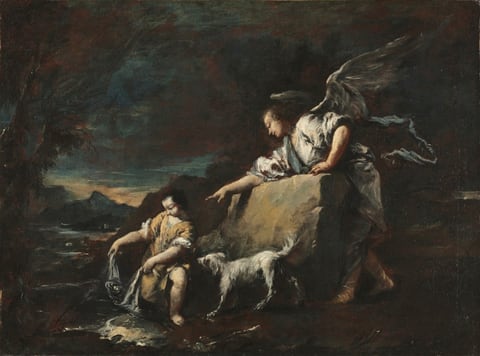
Tobias and the AngelFrancesco Guardi, 1750sCourtesy of the Cleveland Museum of Art 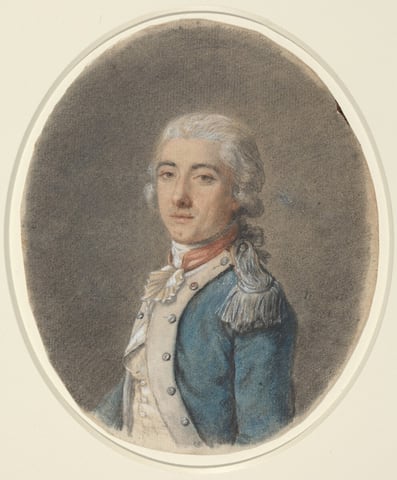
Portrait of a Man in a Military UniformUnrecorded French maker, 18th centuryCourtesy National Gallery of Art, Washington 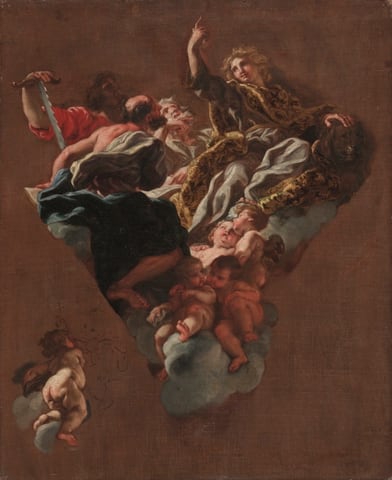
Sketch for "The Four Prophets of Israel" (for Il Gesù, Rome)Giovanni Battista Gaulli, c. 1675–1677Courtesy of the Cleveland Museum of Art
Third room, north wall
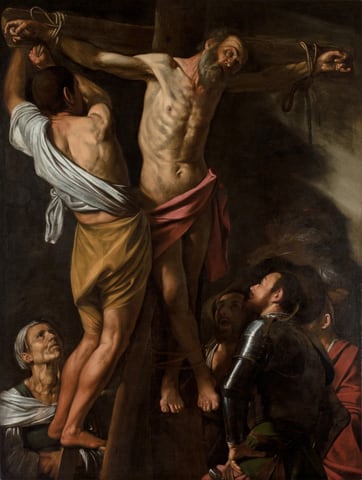
The Crucifixion of Saint AndrewCaravaggio, 1606–7Courtesy of the Cleveland Museum of Art 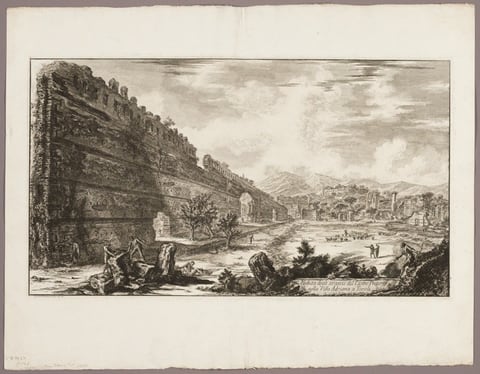
View of the Remains of the Praetorian Fort [the Poecile], Hadrian's Villa, Tivoli, from Views of RomeGiovanni Battista Piranesi, 1770Courtesy of the Art Institute of Chicago 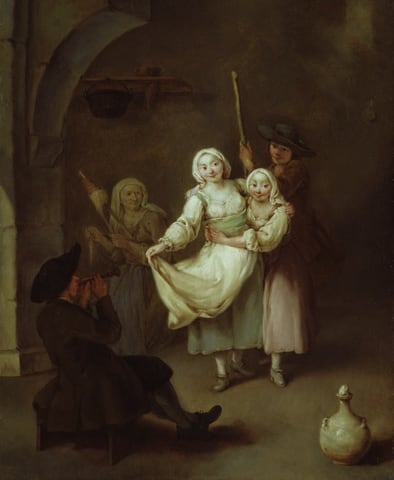
The DancePietro Longhi, c. 1750Courtesy of the Art Institute of Chicago