The Floating World
Works in this room
Japanese woodblock prints of the floating world: actors, courtesans, landscapes and the sea.
Section 1, north wall
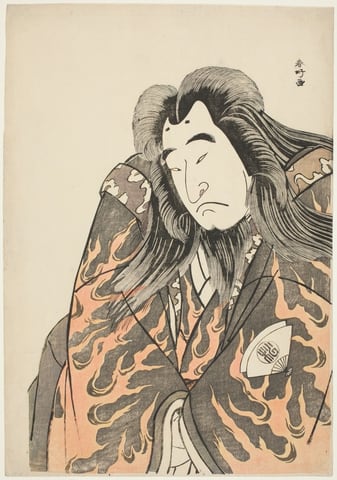
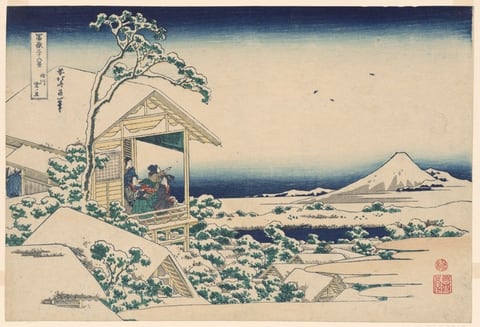
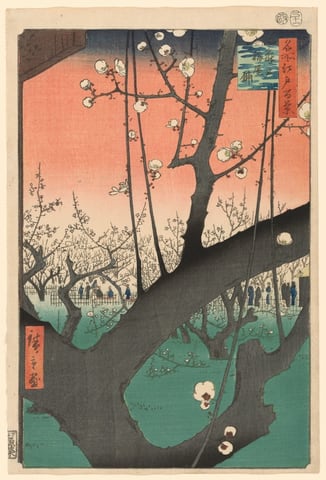
Actor Onoe Matsusuke I as Retired Emperor SutokuKatsukawa Shunkо̄, About 1780Courtesy of the Art Institute of Chicago Snowy Morning from Koishikawa (Koishikawa yuki no ashita), from the series "Thirty-six Views of Mount Fuji (Fugaku sanjurokkei)"Katsushika Hokusai, c. 1830/33Courtesy of the Art Institute of Chicago Plum Garden at Kameido (Kameido Umeyashiki), from the series "One Hundred Famous Views of Edo (Meisho Edo hyakkei)"Utagawa Hiroshige, 1857Courtesy of the Art Institute of Chicago
Section 1, south wall
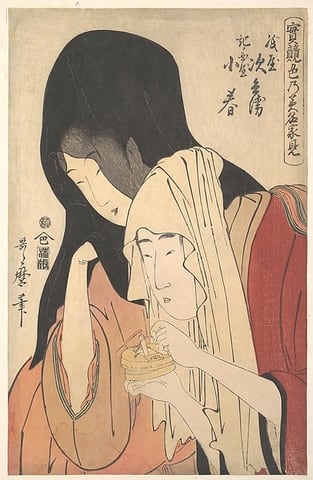
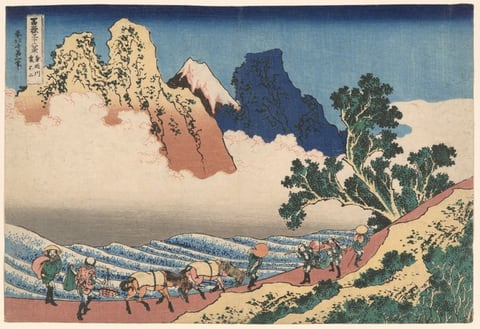
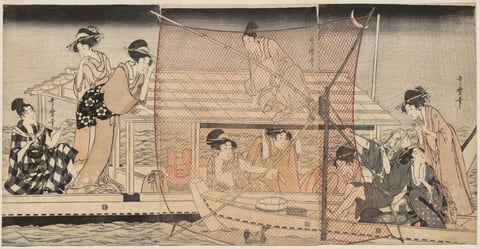
Jihei of Kamiya Eloping with the Geisha Koharu of Kinokuniya, from the series “True Feelings Compared: The Founts of Love” (Jitsu kurabe iro no Minakami)Kitagawa Utamaro, ca. 1798–99Courtesy of The Metropolitan Museum of Art The Back of Mount Fuji Seen from Minobu River (Minobugawa Urafuji), from the series Thirty-Six Views of Mount Fuji (Fugaku sanjūrokkei)Katsushika Hokusai, 1830-33Courtesy of the Art Institute of Chicago Net Fishing at Night on the Sumida RiverKitagawa Utamaro, c. 1800Courtesy of the Cleveland Museum of Art
Section 2, south wall
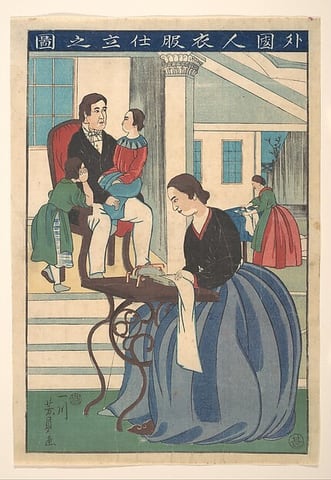
Foreign Family with Wife Making Clothes (Gaikokujin ifuku shitate no zu)Utagawa Yoshikazu, 1860Courtesy of The Metropolitan Museum of Art 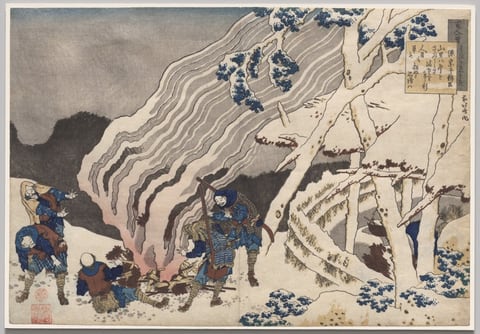
Poem by Minamoto no Muneyuki from the series One Hundred Poems by One Hundred Poets Explained by the NurseKatsushika Hokusai, 1835–36Courtesy of the Cleveland Museum of Art 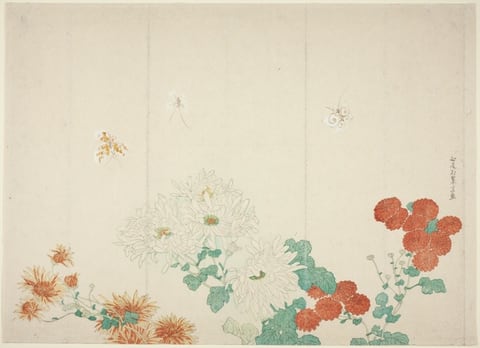
Three Types of ChrysanthemumsKitao Shigemasa, c. 1790Courtesy of the Art Institute of Chicago
Section 2, north wall
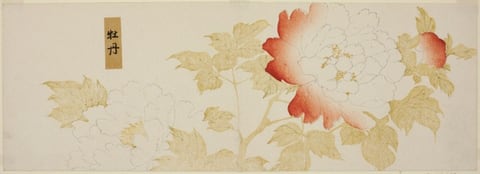
PeoniesKitagawa Utamaro, n.d.Courtesy of the Art Institute of Chicago 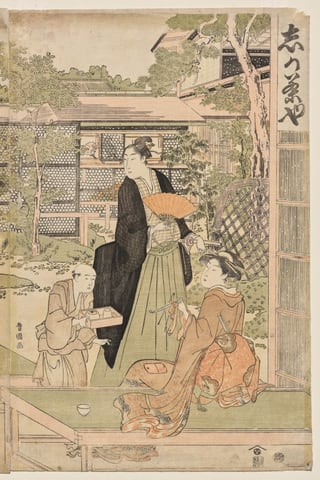
The Shika TeahouseUtagawa Toyokuni, early 1790sCourtesy of the Cleveland Museum of Art 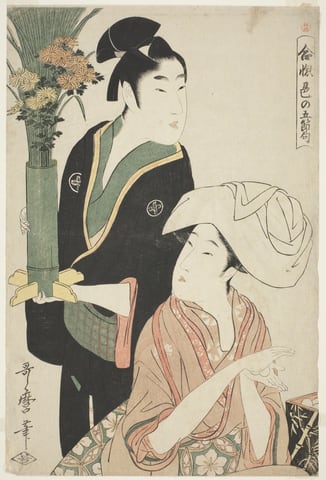
The Ninth Month, from the series Five Amorous Festivals of Love (Aibore iro no gosekku)Kitagawa Utamaro, 1801Courtesy of the Art Institute of Chicago
Section 3, north wall
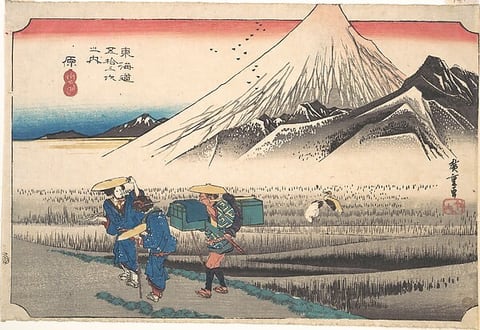
Hara: Mount Fuji in the Morning (Hara, Asa no Fuji), from the series Fifty-Three Stations of the Tōkaidō Road (Tōkaidō gojūsan tsugi), also known as the First Tōkaidō or Great TōkaidōUtagawa Hiroshige, ca. 1833–34Courtesy of The Metropolitan Museum of Art 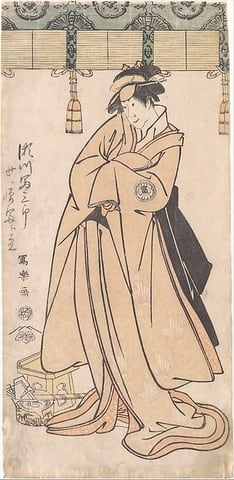
The Actor Segawa Tomisaburo II as the Otomos' Maid Wakakusa, Actually Prince KorehitoTōshūsai Sharaku, 1794–75Courtesy of The Metropolitan Museum of Art
Section 3, south wall
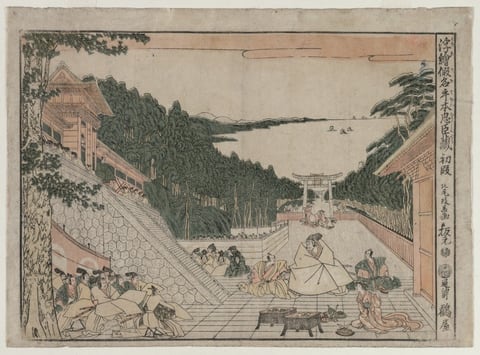
Perspective Pictures for The Treasure House of LoyaltyKitao Masayoshi, c. 1790sCourtesy of the Cleveland Museum of Art 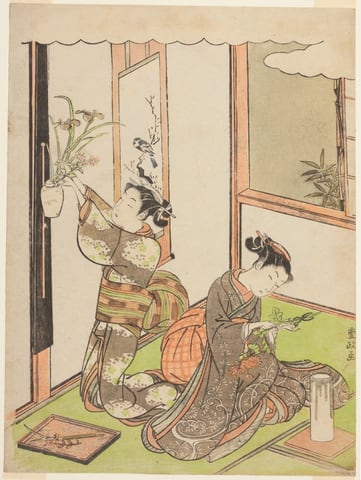
Flower ArrangingKitao Shigemasa, c. 1769Courtesy of the Art Institute of Chicago