Ukiyo-e
Works in this room
Japanese woodblock prints of the floating world: actors, courtesans, landscapes and the sea.
Section 1, north wall
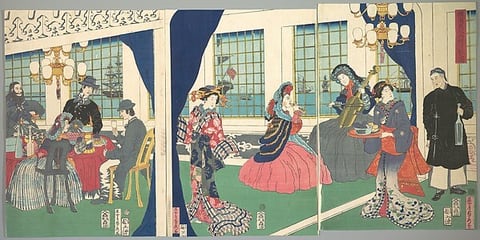
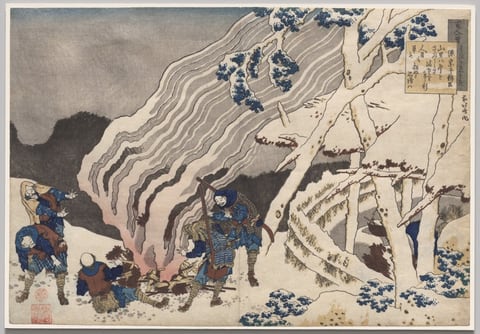
Foreigners in the Drawing Room of Foreign Merchant's House in YokohamaUtagawa (Gountei) Sadahide, 9th month, 1861Courtesy of The Metropolitan Museum of Art Poem by Minamoto no Muneyuki from the series One Hundred Poems by One Hundred Poets Explained by the NurseKatsushika Hokusai, 1835–36Courtesy of the Cleveland Museum of Art
Section 1, south wall
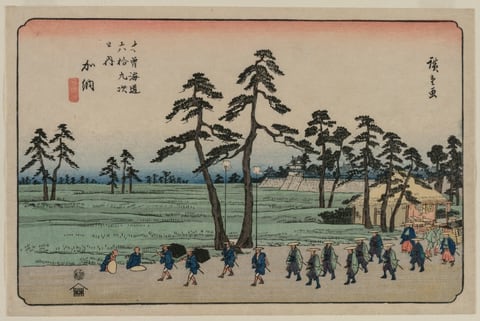
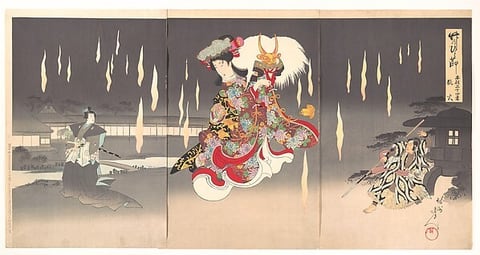
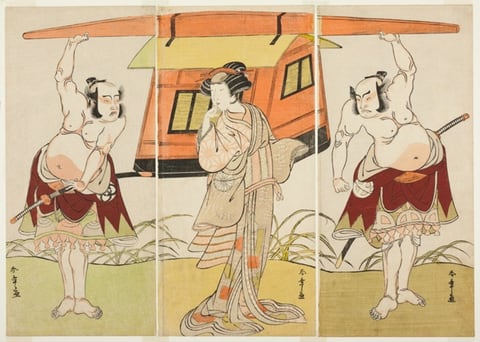
Kanō, from the series Sixty-nine Stations of the KisokaidōUtagawa Hiroshige, c. 1835–37Courtesy of the Cleveland Museum of Art Scene of Foxfire (Kitsunebi) from the Play Honchō nijūshikōYōshū (Hashimoto) Chikanobu, 1898Courtesy of The Metropolitan Museum of Art The Actors Otani Hiroji III as Yokambei (right), Nakamura Tomijuro I as Kuzunoha (center), and Bando Mitsugoro I as Yakambei (left), in the Last Scene from the Play Shinodazuma (The Wife from Shinoda Forest), Performed as a Supplement to the Play Kikyo-zome Onna Urakata (Female Diviner in Deep Violet), at the Morita Theater from the Ninth Day of the Ninth Month, 1776Katsukawa Shunshō, c. 1776Courtesy of the Art Institute of Chicago
Section 2, south wall
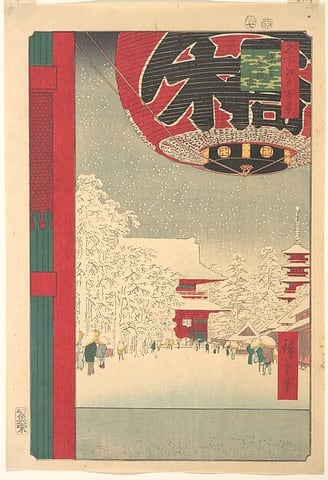
Kinryūsan Temple at Asakusa, from the series "One Hundred Famous Views of Edo"Utagawa Hiroshige, 1856Courtesy of The Metropolitan Museum of Art 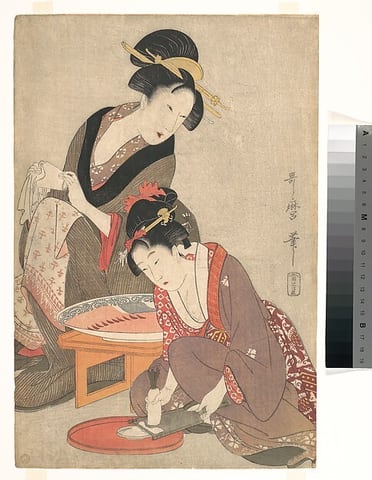
Women Grating Radish for SashimiKitagawa Utamaro, ca. 1798–99Courtesy of The Metropolitan Museum of Art 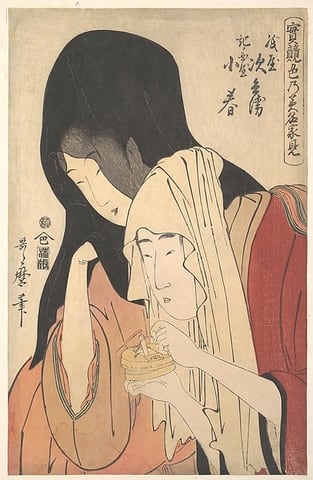
Jihei of Kamiya Eloping with the Geisha Koharu of Kinokuniya, from the series “True Feelings Compared: The Founts of Love” (Jitsu kurabe iro no Minakami)Kitagawa Utamaro, ca. 1798–99Courtesy of The Metropolitan Museum of Art
Section 2, north wall
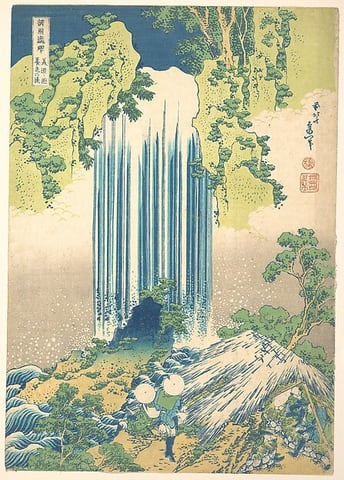
Yōrō Waterfall in Mino Province (Mino no Yōrō no taki), from the series A Tour of Waterfalls in Various Provinces (Shokoku taki meguri)Katsushika Hokusai, ca. 1832Courtesy of The Metropolitan Museum of Art 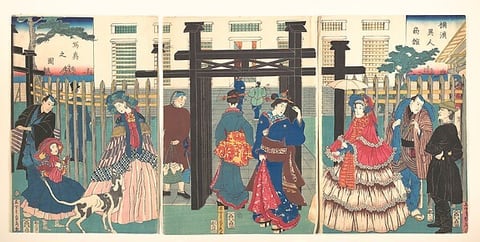
Foreign Business Establishment in Yokohama (Yokohama ijin shōkan shashin no zu)Utagawa (Gountei) Sadahide, 1861Courtesy of The Metropolitan Museum of Art
Section 3, north wall
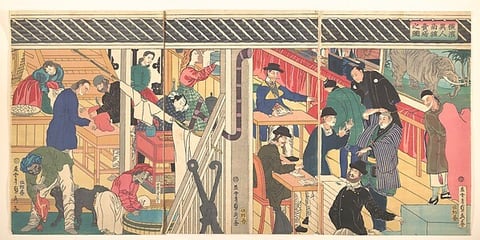
Foreign Business Establishment in Yokohama (Yokohama ijin shōkan uriba no zu)Utagawa (Gountei) Sadahide, 9th month, 1861Courtesy of The Metropolitan Museum of Art 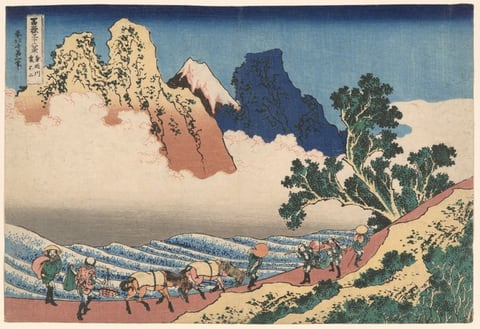
The Back of Mount Fuji Seen from Minobu River (Minobugawa Urafuji), from the series Thirty-Six Views of Mount Fuji (Fugaku sanjūrokkei)Katsushika Hokusai, 1830-33Courtesy of the Art Institute of Chicago 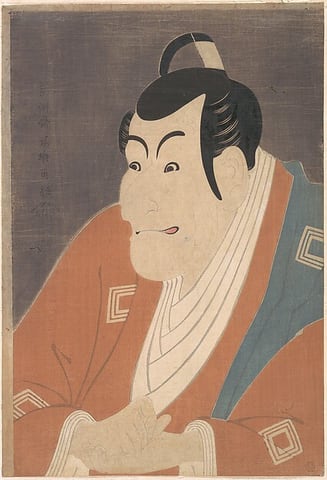
Ichikawa Ebizo IV in the role of Takemura SadanoshinTōshūsai Sharaku, Probably late 1880s or early 1890sCourtesy of The Metropolitan Museum of Art
Section 3, south wall
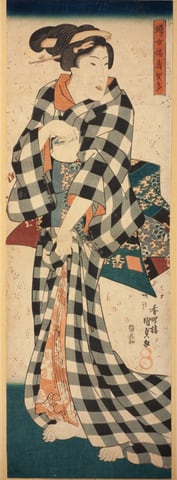
Image of a Japanese Woman (Fujo Yamato sugata)Utagawa Kunisada I (Toyokuni III), c. 1830/35Courtesy of the Art Institute of Chicago 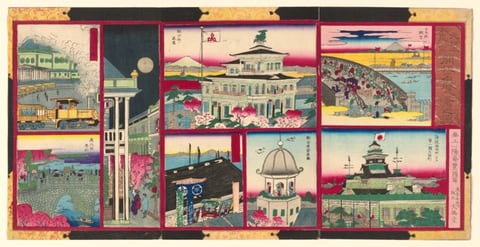
Eight Modern Views of Famous Places in Tokyo of Great Japan (Dai Nippon Tokyo kaika meisho hakkei no zu)Utagawa Kunisada II (Kunimasa III, Toyokuni IV), 1875Courtesy of the Art Institute of Chicago 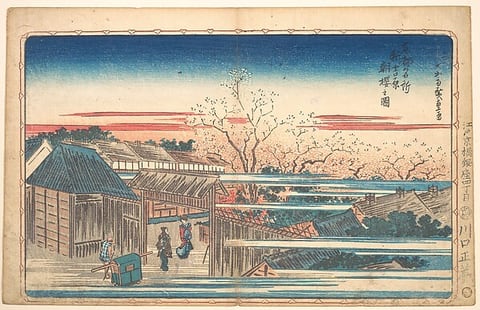
Morning Cherries at YoshiwaraUtagawa HiroshigeCourtesy of The Metropolitan Museum of Art