Floor plan

Style galleriesRenaissance

Renaissance

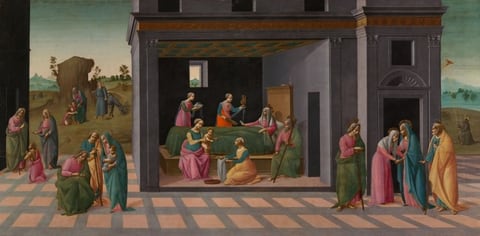
Outdoors, distinct groupings of adult men and women, some with halos, gather near a building. The front-facing wall of the building is not depicted, allowing for a view inside, where a woman sits in bed with two women nearby and two other women dress a baby. A bearded man sits near the bed.
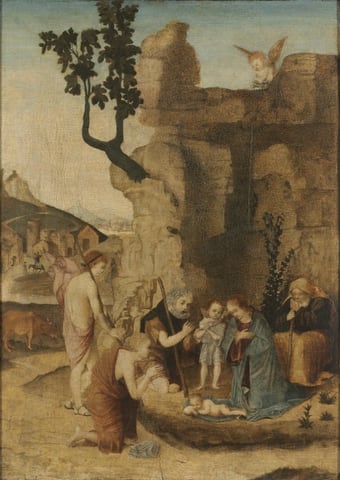
Adoration of the Shepherds, c. 1500
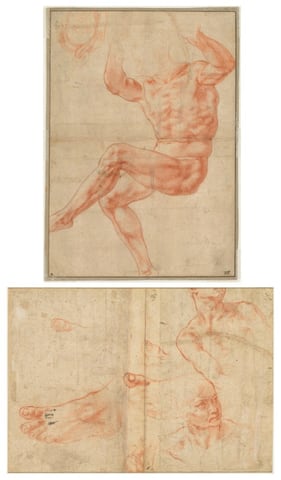
Study for the Nude Youth over the Prophet Daniel (recto); Figure Studies for the Sistine Ceiling (verso), by Michelangelo Buonarroti, 1510–11
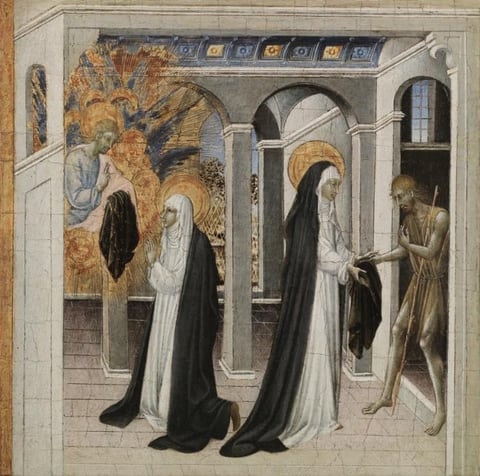
St. Catherine of Siena and the Beggar, by Giovanni di Paolo, 1460s
A work made of tempera on panel, transferred to canvas.
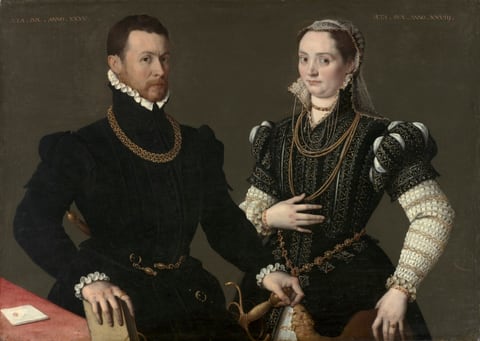
Portrait of a Couple, c. 1580–88
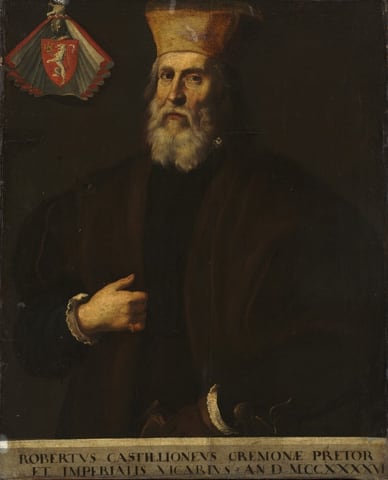
Portrait of Roberto Castiglione, early 1600s

The works in this room are listed below.

Works in this room

European art from about 1400 to 1600, when painters rediscovered perspective and the classical past.

First room, north wall

  1. Outdoors, distinct groupings of adult men and women, some with halos, gather near a building. The front-facing wall of the building is not depicted, allowing for a view inside, where a woman sits in bed with two women nearby and two other women dress a baby. A bearded man sits near the bed.
    Scenes from the Life of Saint John the BaptistBartolomeo di Giovanni, 1490/95Courtesy of the Art Institute of Chicago
  2. Adoration of the Shepherds, c. 1500
    Adoration of the ShepherdsUnrecorded Italian maker, c. 1500Courtesy of the Cleveland Museum of Art
  3. Study for the Nude Youth over the Prophet Daniel (recto); Figure Studies for the Sistine Ceiling (verso), by Michelangelo Buonarroti, 1510–11
    Study for the Nude Youth over the Prophet Daniel (recto); Figure Studies for the Sistine Ceiling (verso)Michelangelo Buonarroti, 1510–11Courtesy of the Cleveland Museum of Art
  4. St. Catherine of Siena and the Beggar, by Giovanni di Paolo, 1460s
    St. Catherine of Siena and the BeggarGiovanni di Paolo, 1460sCourtesy of the Cleveland Museum of Art

First room, south wall

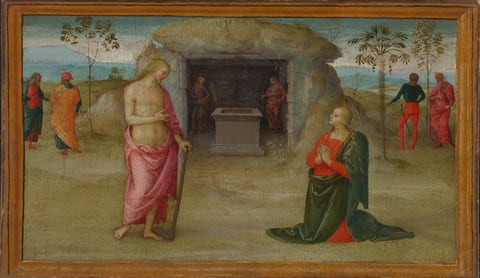
  1. A work made of tempera on panel, transferred to canvas.
    Noli Me TangerePerugino, 1500–05Courtesy of the Art Institute of Chicago
  2. Portrait of a Couple, c. 1580–88
    Portrait of a CoupleUnrecorded Italian maker, c. 1580–88Courtesy of the Cleveland Museum of Art
  3. Portrait of Roberto Castiglione, early 1600s
    Portrait of Roberto CastiglioneUnrecorded Italian maker, early 1600sCourtesy of the Cleveland Museum of Art

Second room, south wall
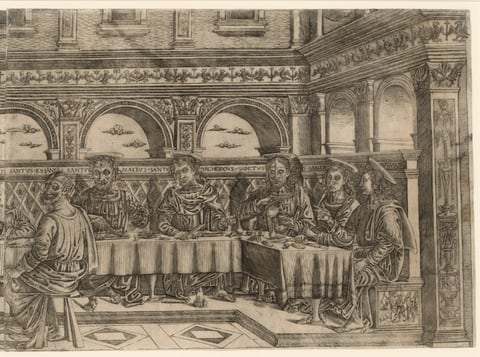
  1. The Last Supper, by Lucantonio degli Uberti, c. 1500
    The Last SupperLucantonio degli Uberti, c. 1500Courtesy of the Cleveland Museum of Art
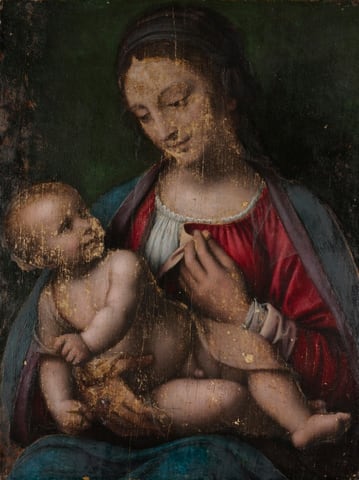
  2. Virgin and Child, by Bernardino Luini, 1500s
    Virgin and ChildBernardino Luini, 1500sCourtesy of the Cleveland Museum of Art
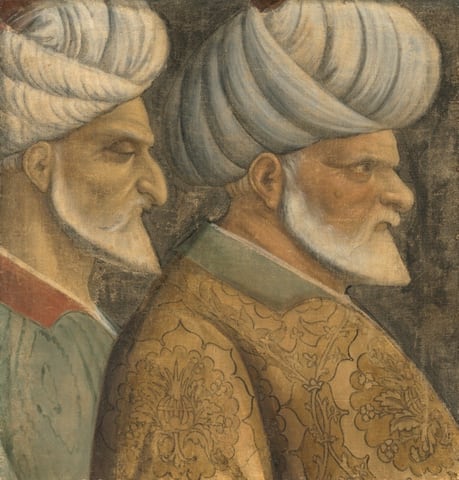
  3. A work made of tempera on canvas.
    Sinan Reis and Hayreddin BarbarossaItalian, c. 1535Courtesy of the Art Institute of Chicago
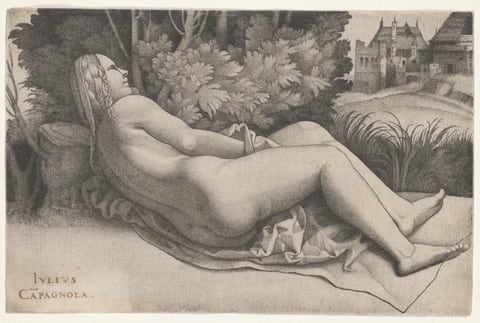
  4. Venus Reclining in a Landscape, by Giulio Campagnola, c. 1508–9
    Venus Reclining in a LandscapeGiulio Campagnola, c. 1508–9Courtesy of the Cleveland Museum of Art

Second room, north wall
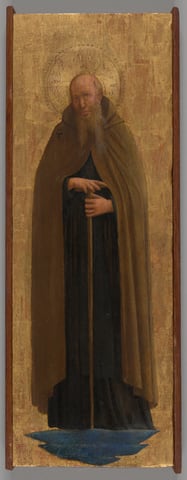
  1. A work made of tempera on panel.
    Saint Anthony AbbotFra Angelico, 1440–41Courtesy of the Art Institute of Chicago
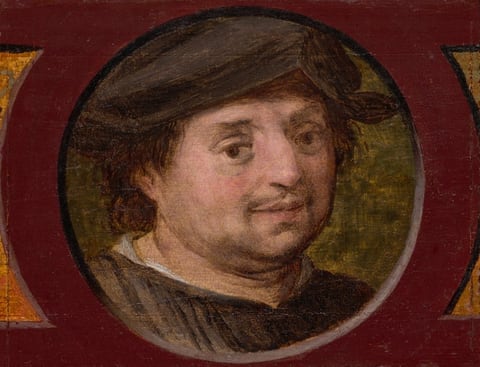
  2. A work made of oil on panel.
    Domenico da GambassiAndrea del Sarto, 1525–28Courtesy of the Art Institute of Chicago
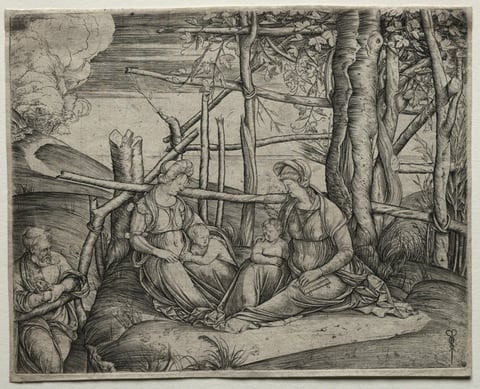
  3. The Holy Family with Saint Elizabeth, by Jacopo de' Barbari, c. 1503
    The Holy Family with Saint ElizabethJacopo de' Barbari, c. 1503Courtesy of the Cleveland Museum of Art

Third room, north wall
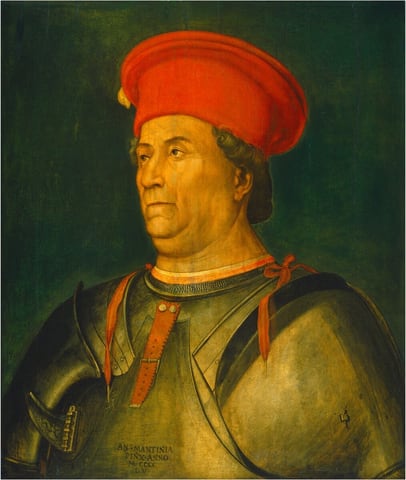
  1. This painting shows an upper-body portrait of a man in a three-quarter view, turned to the left. He has a prominent double chin, a slightly furrowed brow, thin lips, and a serious expression. He has pale yellow skin and short, dark hair, and he wears a large, red hat. He is clad in silver armor with red straps on his shoulder and chest. The background is a simple, dark green color.
    Francesco SforzaUnrecorded Italian maker, probably c. 1480/1500Courtesy National Gallery of Art, Washington
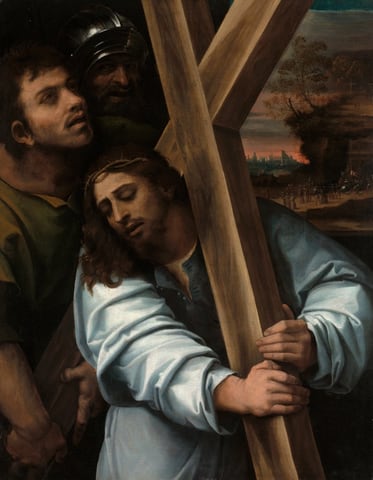
  2. A work made of oil on panel.
    Christ Carrying the CrossSebastiano del Piombo, c. 1515–17Courtesy of the Art Institute of Chicago