Floor plan

Style galleriesPrints of the 19th century
Prints of the 19th century
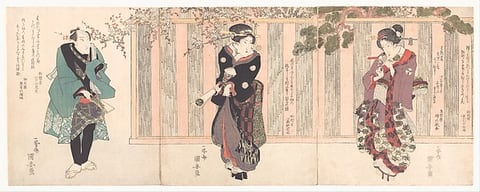
Three Kabuki Actors Playing Hanetsuki, by Utagawa Kuniyasu, ca. 1823
A work made of color woodblock print; oban.
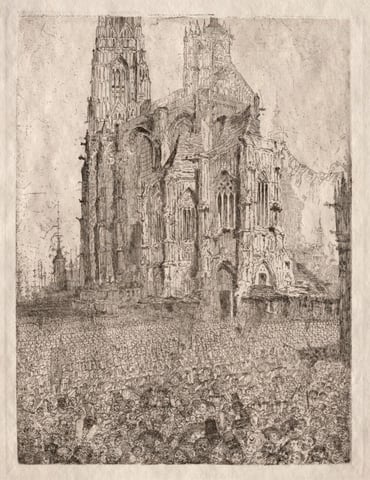
The Cathedral, by James Ensor, 1886
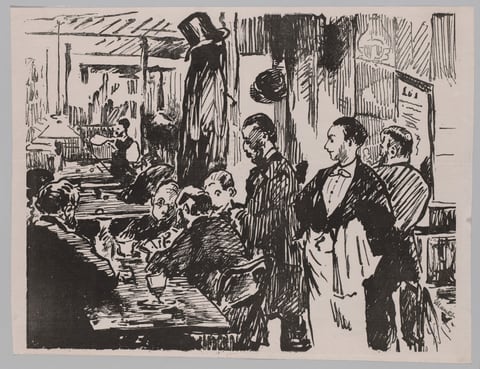
At the Café, by Édouard Manet, 1874
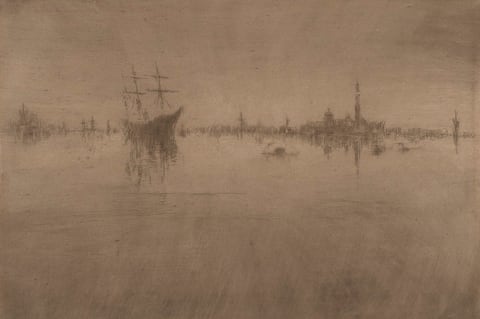
A work made of etching and drypoint in brown on cream laid paper.

The works in this room are listed below.

Works in this room

Prints made in the 19th century, from every museum.

Section 1, north wall

  1. Three Kabuki Actors Playing Hanetsuki, by Utagawa Kuniyasu, ca. 1823
    Three Kabuki Actors Playing HanetsukiUtagawa Kuniyasu, ca. 1823Courtesy of The Metropolitan Museum of Art
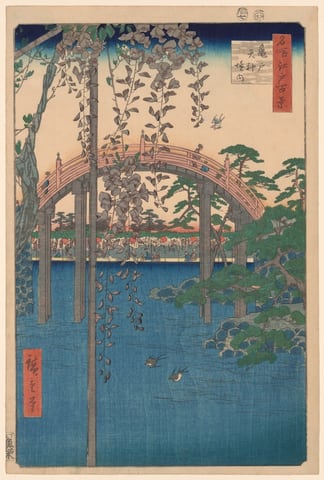
  2. A work made of color woodblock print; oban.
    Precincts of Kameido Tenjin Shrine (Kameido Tenjin keidai), from the series "One Hundred Famous Views of Edo (Meisho Edo hyakkei)"Utagawa Hiroshige, 1856Courtesy of the Art Institute of Chicago
  3. The Cathedral, by James Ensor, 1886
    The CathedralJames Ensor, 1886Courtesy of the Cleveland Museum of Art

Section 1, south wall

  1. At the Café, by Édouard Manet, 1874
    At the CaféÉdouard Manet, 1874Courtesy of the Cleveland Museum of Art
  2. A work made of etching and drypoint in brown on cream laid paper.
    Nocturne, from Venice, a Series of Twelve Etchings (the "First Venice Set")James McNeill Whistler, 1879–80Courtesy of the Art Institute of Chicago

Section 2, south wall
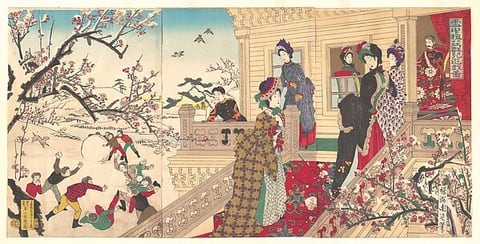
  1. Children Playing in the Snow under Plum Trees in Bloom (Secchū baisō gunji yūgi zu), by Yōshū (Hashimoto) Chikanobu, November 1887
    Children Playing in the Snow under Plum Trees in Bloom (Secchū baisō gunji yūgi zu)Yōshū (Hashimoto) Chikanobu, November 1887Courtesy of The Metropolitan Museum of Art
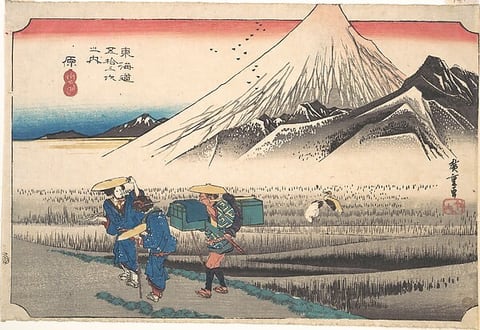
  2. Hara: Mount Fuji in the Morning (Hara, Asa no Fuji), from the series Fifty-Three Stations of the Tōkaidō Road (Tōkaidō gojūsan tsugi), also known as the First Tōkaidō or Great Tōkaidō, by Utagawa Hiroshige, ca. 1833–34
    Hara: Mount Fuji in the Morning (Hara, Asa no Fuji), from the series Fifty-Three Stations of the Tōkaidō Road (Tōkaidō gojūsan tsugi), also known as the First Tōkaidō or Great TōkaidōUtagawa Hiroshige, ca. 1833–34Courtesy of The Metropolitan Museum of Art

Section 2, north wall
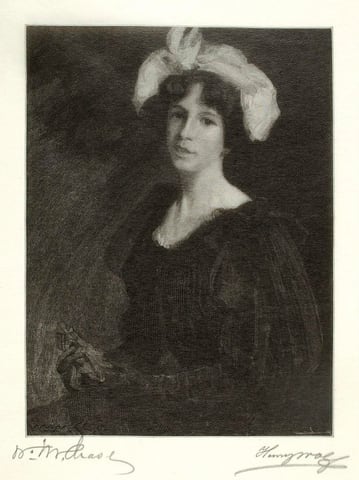
  1. Portrait of Mrs. C--, by Henry Wolf, 1894
    Portrait of Mrs. C--Henry Wolf, 1894Courtesy of the Smithsonian American Art Museum
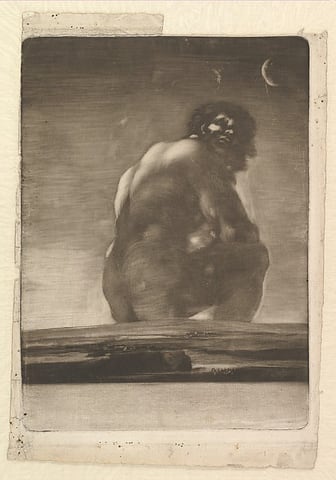
  2. Seated Giant, by Francisco Goya, by 1818 (possibly 1814–18)
    Seated GiantFrancisco Goya, by 1818 (possibly 1814–18)Courtesy of The Metropolitan Museum of Art
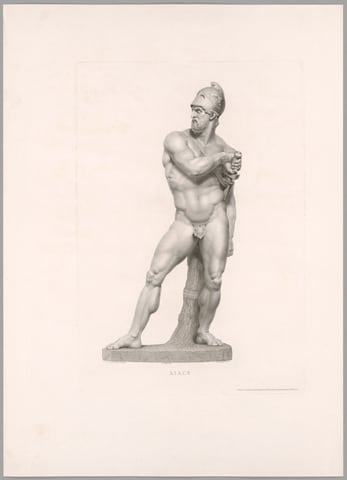
  3. A work made of engraving and etching in black on ivory wove paper.
    Ajax, Front View, from Oeuvre de CanovaAntonio Canova, 1817Courtesy of the Art Institute of Chicago

Section 3, north wall
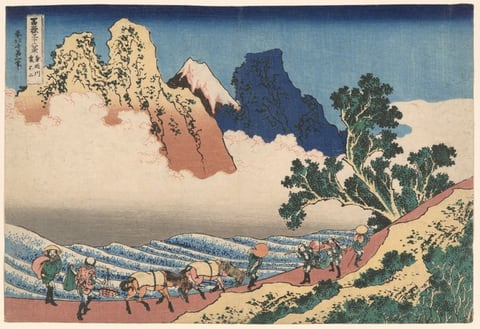
  1. Print showing a string of travelers with horses walking along a narrow hillside path beneath an enormous craggy beige mountain at left and an equally massive and craggy deep-blue mountain at right. A brown snow-covered peak appears between these mountains. A mass of cream-colored clouds and a river with rounded ripples fill the middle plane of the composition.
    The Back of Mount Fuji Seen from Minobu River (Minobugawa Urafuji), from the series Thirty-Six Views of Mount Fuji (Fugaku sanjūrokkei)Katsushika Hokusai, 1830-33Courtesy of the Art Institute of Chicago
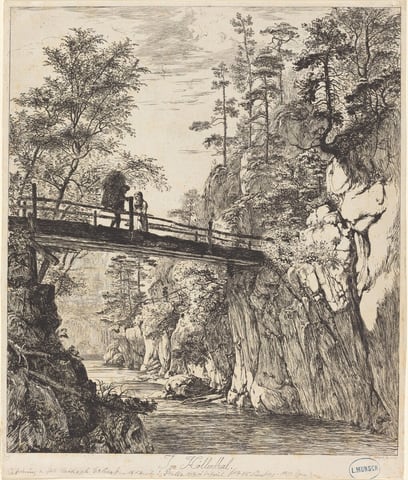
  2. The image shows a landscape with a wooden bridge crossing over a river in a valley. The scenery includes cliffs, trees, and flowing water below. The artwork features fine, detailed brushstrokes depicting the texture of the cliffs, foliage, and water. The color scheme is monochromatic with various shades of gray and sepia tones. Two figures are seen on the bridge, contributing to the sense of scale and activity in the serene setting.
    Im Höllenthal (In the Höllen Valley)Johann Christoph Erhard, 1818Courtesy National Gallery of Art, Washington
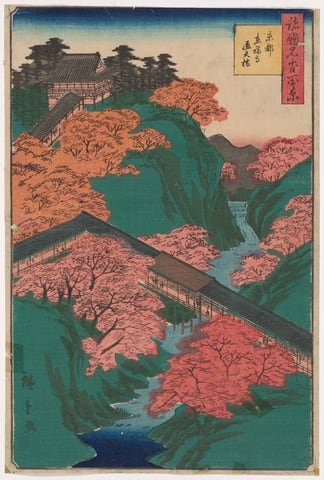
  3. A work made of color woodblock print.
    Tsuten-kyo Bridge, Tofuku Temple, Kyoto (Kyoto Tofukuji Tsutenkyo bashi) from the series “One Hundred Famous Views in the Various Provinces (Shokoku meisho hyakkei)”Utagawa Hiroshige II, 1859Courtesy of the Art Institute of Chicago

Section 3, south wall
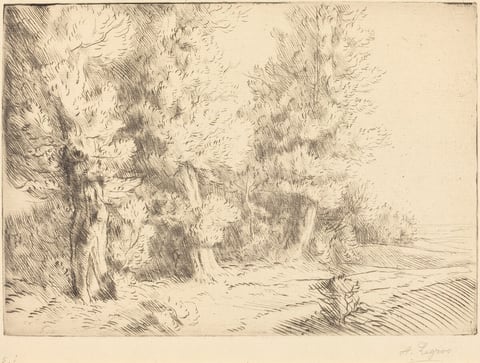
  1. The image shows a sketch-like scene viewed from a slightly elevated perspective, depicting a landscape dominated by a line of trees. The horizon is low in the image, just above a rising slope, with tall trees extending towards the sky. The trees and foliage are characterized by brushstrokes and crosshatching technique, conveying texture and shading. The color palette is monochromatic, with dark and light tones for a serene, natural quality. Line and shadow add movement and highlight the beauty of the trees as they recede into the distance, merging with the sky.
    In the Forest of Fontainebleau (Dans la foret de Fontainebleau)Alphonse LegrosCourtesy National Gallery of Art, Washington
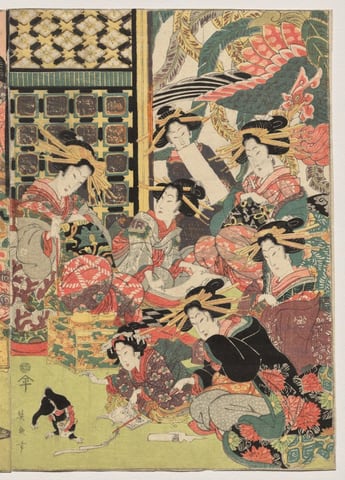
  2. A Picture of the Viewing in the Pleasure Quarters, by Kikukawa Eizan, 1810s
    A Picture of the Viewing in the Pleasure QuartersKikukawa Eizan, 1810sCourtesy of the Cleveland Museum of Art
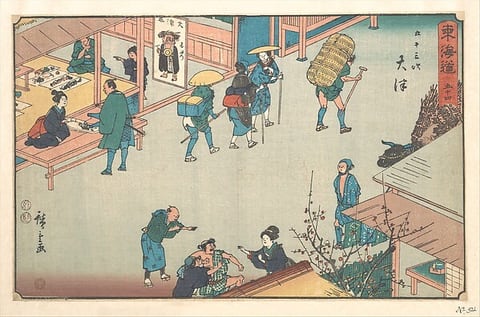
  3. Ōtsu, from the series The Fifty-Three Stations of the Tōkaidō Road (Tōkaidō gojūsan tsugi, Ōtsu), 1847–52
    Ōtsu, from the series The Fifty-Three Stations of the Tōkaidō Road (Tōkaidō gojūsan tsugi, Ōtsu)Unrecorded Japanese maker, 1847–52Courtesy of The Metropolitan Museum of Art