Floor plan

Style galleriesPrints of the 18th century
Prints of the 18th century
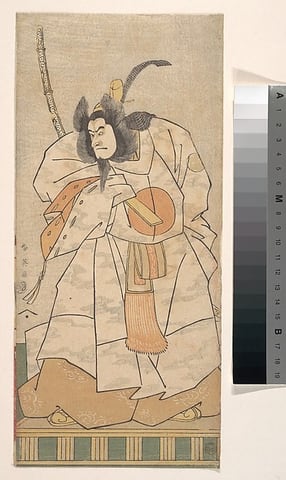
The Actor Morita Kanya VIII as Tatsugorō, by Katsukawa Shun'ei, 1794 (Kansei 6)
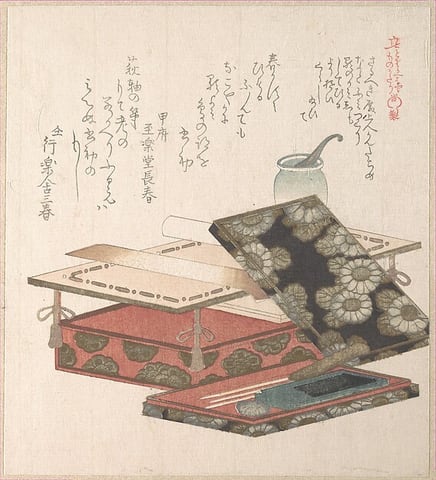
Table and Writing Set, by Kubo Shunman, 19th century
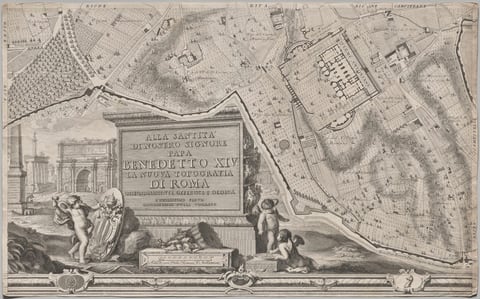
Nuova pianta di Roma data in luce da Giambattista Nolli l’anno MDCCXLVII, known as La Pianta Grande di Roma, by Giovanni Battista Nolli, 1748
A work made of color woodblock print; oban.

The works in this room are listed below.

Works in this room

Prints made in the 18th century, from every museum.

Section 1, north wall

  1. The Actor Morita Kanya VIII as Tatsugorō, by Katsukawa Shun'ei, 1794 (Kansei 6)
    The Actor Morita Kanya VIII as TatsugorōKatsukawa Shun'ei, 1794 (Kansei 6)Courtesy of The Metropolitan Museum of Art
  2. Table and Writing Set, by Kubo Shunman, 19th century
    Table and Writing SetKubo Shunman, 19th centuryCourtesy of The Metropolitan Museum of Art

Section 1, south wall

  1. Nuova pianta di Roma data in luce da Giambattista Nolli l’anno MDCCXLVII, known as La Pianta Grande di Roma, by Giovanni Battista Nolli, 1748
    Nuova pianta di Roma data in luce da Giambattista Nolli l’anno MDCCXLVII, known as La Pianta Grande di RomaGiovanni Battista Nolli, 1748Courtesy of the Cleveland Museum of Art
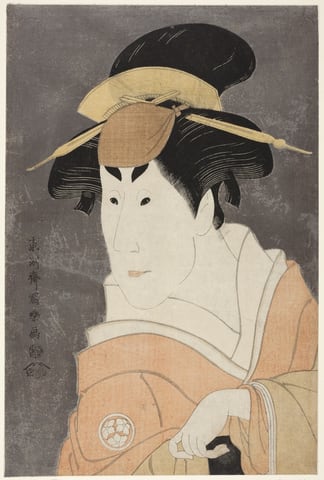
  2. A work made of color woodblock print; oban.
    The actor Osagawa Tsuneyo II as Osan, Ippei’s elder sisterTōshūsai Sharaku, 1794Courtesy of the Art Institute of Chicago

Section 2, south wall
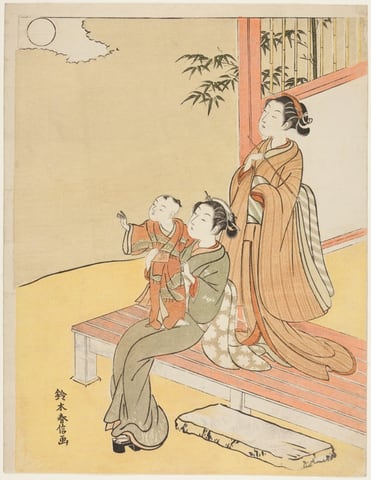
  1. A work made of color woodblock print; chuban.
    Viewing the MoonSuzuki Harunobu, c. 1767/68Courtesy of the Art Institute of Chicago
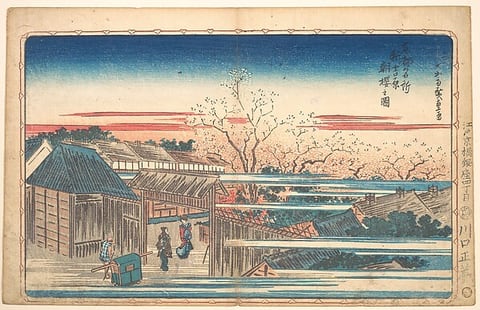
  2. Morning Cherries at Yoshiwara, by Utagawa Hiroshige
    Morning Cherries at YoshiwaraUtagawa HiroshigeCourtesy of The Metropolitan Museum of Art
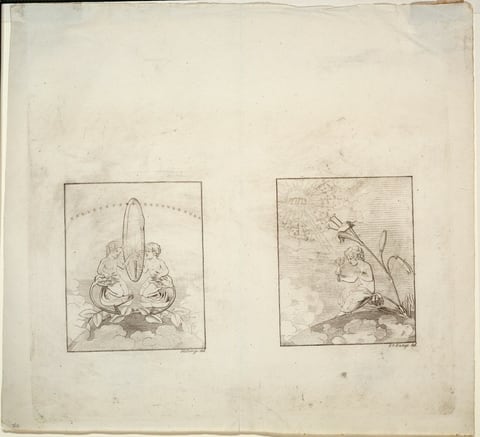
  3. A work made of etching on ivory wove paper.
    Child with RosebudPhillip Otto Runge, n.d.Courtesy of the Art Institute of Chicago

Section 2, north wall
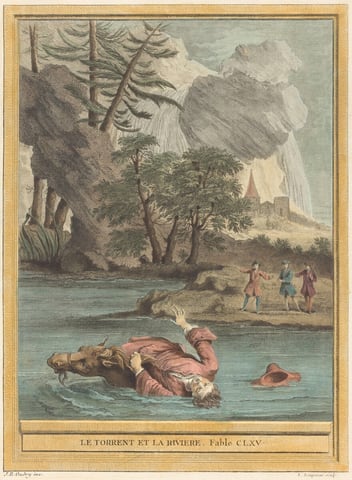
  1. The image shows a man in a red coat in a river, holding on to a horse. A hat floats nearby. Three figures in 18th-century clothing stand on a rocky riverbank looking concerned. In the background, there are trees, a castle-like structure, and large clouds. The brushstrokes are detailed, capturing movement and textures. The color palette includes muted tones like earthy browns, greens, soft blue, and subtle reds.
    Le torrent et la riviere (The Torrent and theRiver)Louis-Simon Lempereur, published 1756Courtesy National Gallery of Art, Washington
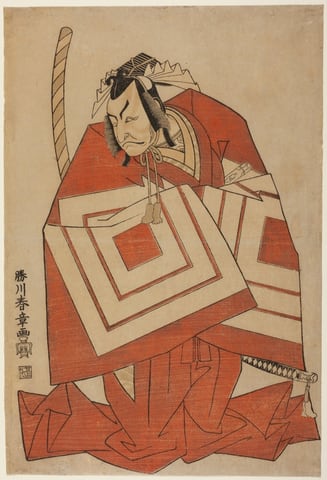
  2. A work made of color woodblock print; oban.
    The Actor Ichikawa Danjuro IV in a "Shibaraku" Role, Possibly from the Play Ima o Sakari Suehiro Genji (The Genji Clan Now at Its Zenith), Performed at the Nakamura Theater from the First Day of the Eleventh Month, 1768Katsukawa Shunshō, c. 1768Courtesy of the Art Institute of Chicago

Section 3, north wall
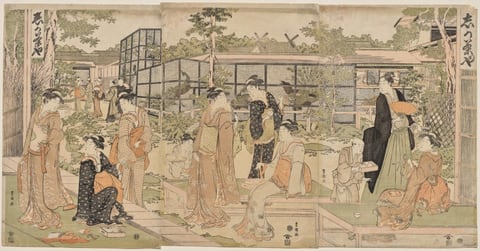
  1. The Shika Teahouse, by Utagawa Toyokuni, early 1790s
    The Shika TeahouseUtagawa Toyokuni, early 1790sCourtesy of the Cleveland Museum of Art
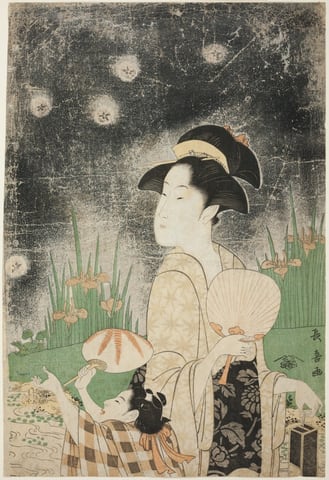
  2. A work made of color woodblock print; ōban.
    Catching FirefliesEishosai Choki, c.1790sCourtesy of the Art Institute of Chicago

Section 3, south wall
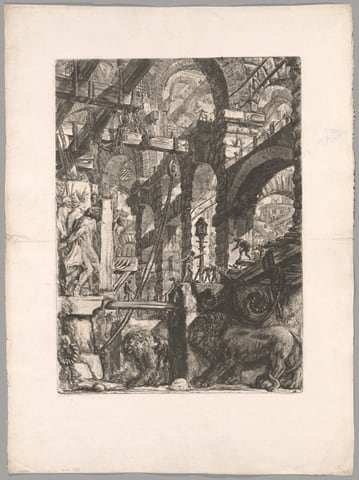
  1. A work made of etching and engraving on heavy ivory laid paper.
    The Lion Bas-Reliefs, plate 5 from Imaginary PrisonsGiovanni Battista Piranesi, 1761Courtesy of the Art Institute of Chicago
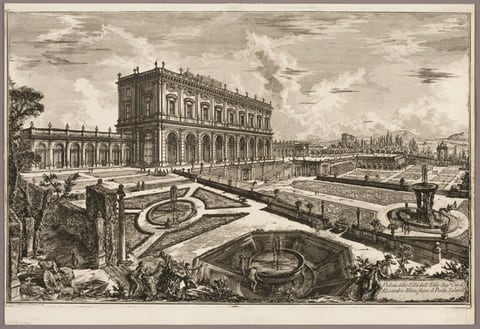
  2. A work made of etching on ivory laid paper.
    View of the Villa of His Eminence Cardinal Alessandro Albani, outside Porta Salaria, from Views of RomeGiovanni Battista Piranesi, 1769, published 1800–07Courtesy of the Art Institute of Chicago

Section 4, south wall
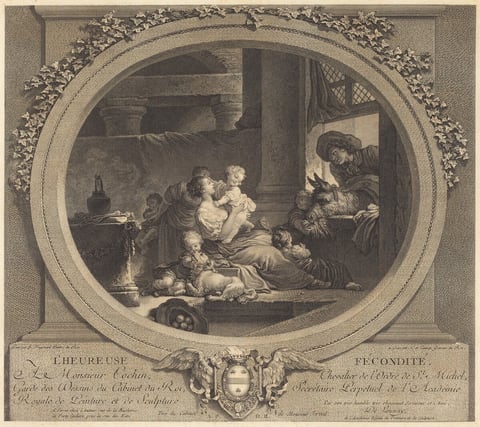
  1. The engraving depicts a gathering around a woman holding a child in her arms in an indoor setting with stone columns and an arched background. Another woman is next to her, looking towards her while leaning over what appears to be a child or possibly a doll on a small donkey. Surrounding the central woman are several children, some seated and playing on the floor. A dog is resting at the central woman's feet. The image features lush drapery, creating a warm and intimate setting. The style suggests classical or historical fashion, and there is an ornate border with ivy leaves. The text and emblem below likely contain relevant inscriptions.
    L'heureuse féconditéNicolas Delaunay, 1777Courtesy National Gallery of Art, Washington
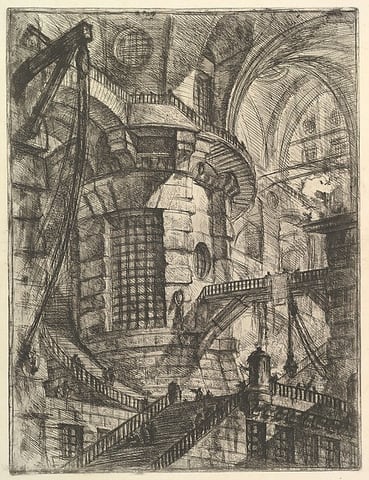
  2. The Round Tower, from "Carceri d'invenzione" (Imaginary Prisons), by Giovanni Battista Piranesi, ca. 1749–50
    The Round Tower, from "Carceri d'invenzione" (Imaginary Prisons)Giovanni Battista Piranesi, ca. 1749–50Courtesy of The Metropolitan Museum of Art
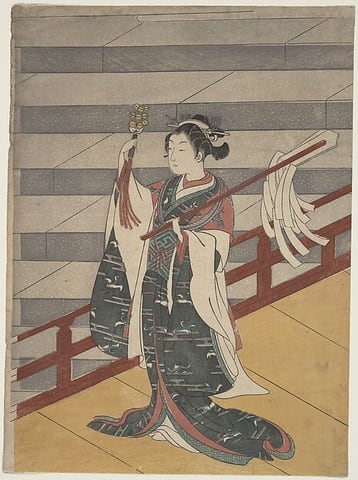
  3. Girl on Balcony above Stone Stairway, by Suzuki Harunobu, ca. 1768
    Girl on Balcony above Stone StairwaySuzuki Harunobu, ca. 1768Courtesy of The Metropolitan Museum of Art