Floor plan

Style galleriesPost-Impressionism

Post-Impressionism

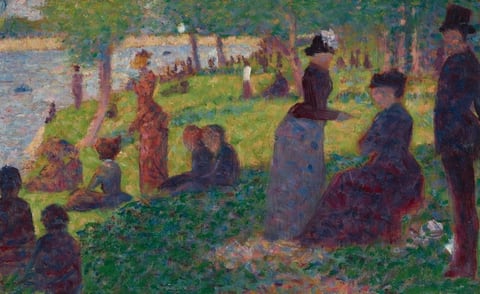
Heavy daubs of pigment form a crowded scene of roughly defined, finely dressed individuals in a brightly color park along a riverbank.
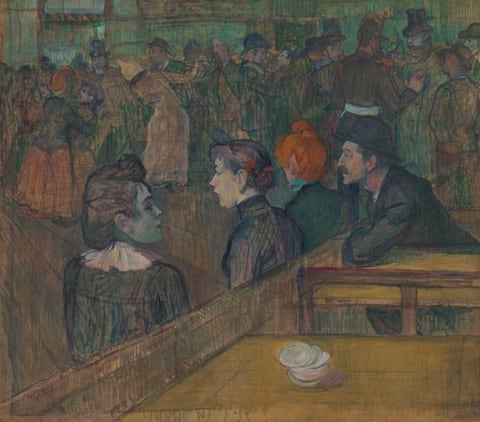
A scene in brown and green tones of people dancing indoors. In the foreground, three women stand near boothed tables while a man sits.
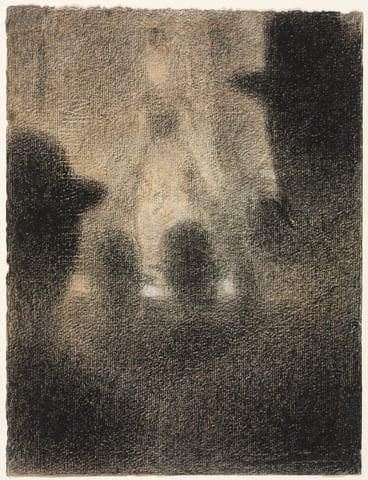
At the Concert Parisien, by Georges Seurat, 1887–88
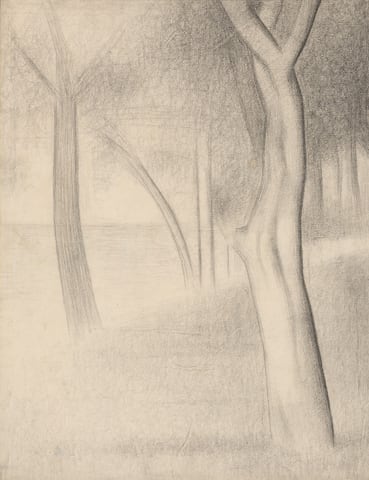
A work made of black conté crayon, on white laid paper, laid down on cream board.
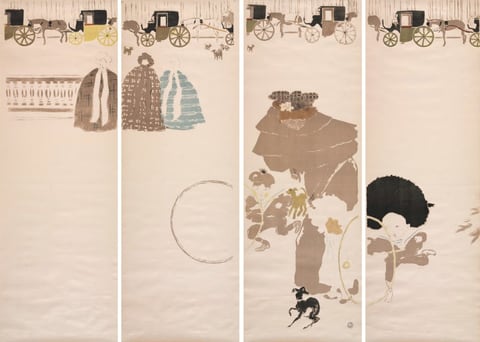
Nursemaids’ Promenade, Frieze of Carriages, by Pierre Bonnard, 1895
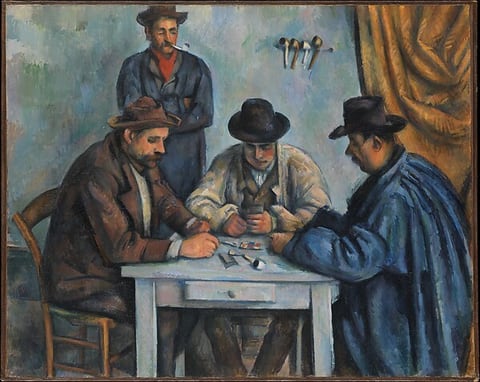
The Card Players, by Paul Cézanne, 1890–92
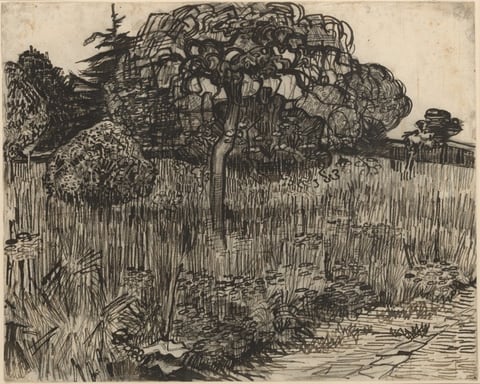
A work made of reed pen and black-brown ink, with black chalk on off-white wove paper.

The works in this room are listed below.

Works in this room

Artists who kept Impressionism's colour but pushed towards structure, symbol and feeling.

First room, north wall

  1. Heavy daubs of pigment form a crowded scene of roughly defined, finely dressed individuals in a brightly color park along a riverbank.
    Oil Sketch for "A Sunday on La Grande Jatte — 1884"Georges Seurat, 1884Courtesy of the Art Institute of Chicago
  2. A scene in brown and green tones of people dancing indoors. In the foreground, three women stand near boothed tables while a man sits.
    Moulin de la GaletteHenri de Toulouse-Lautrec, 1889Courtesy of the Art Institute of Chicago
  3. At the Concert Parisien, by Georges Seurat, 1887–88
    At the Concert ParisienGeorges Seurat, 1887–88Courtesy of the Cleveland Museum of Art
  4. A work made of black conté crayon, on white laid paper, laid down on cream board.
    Trees (study for La Grande Jatte)Georges Seurat, 1884Courtesy of the Art Institute of Chicago

First room, south wall

  1. Nursemaids’ Promenade, Frieze of Carriages, by Pierre Bonnard, 1895
    Nursemaids’ Promenade, Frieze of CarriagesPierre Bonnard, 1895Courtesy of the Cleveland Museum of Art
  2. The Card Players, by Paul Cézanne, 1890–92
    The Card PlayersPaul Cézanne, 1890–92Courtesy of The Metropolitan Museum of Art
  3. A work made of reed pen and black-brown ink, with black chalk on off-white wove paper.
    Weeping TreeVincent van Gogh, 1889Courtesy of the Art Institute of Chicago

Second room, south wall
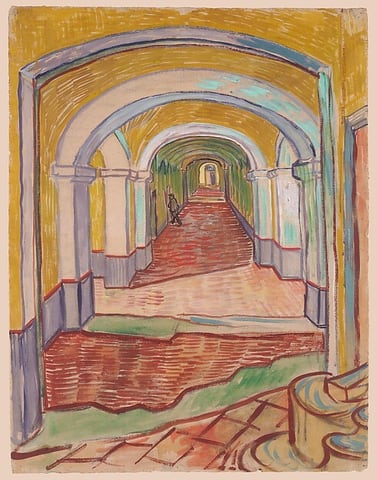
  1. Corridor in the Asylum, by Vincent van Gogh, September 1889
    Corridor in the AsylumVincent van Gogh, September 1889Courtesy of The Metropolitan Museum of Art
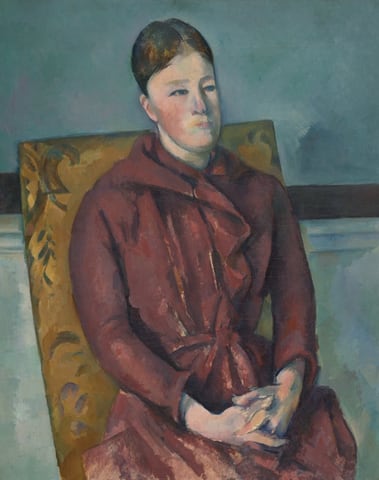
  2. Painting of a placid-looking, light-skinned woman in a maroon dress, seated in a chair with yellow upholstery, hands folded.
    Madame Cezanne in a Yellow ChairPaul Cézanne, 1888–90Courtesy of the Art Institute of Chicago
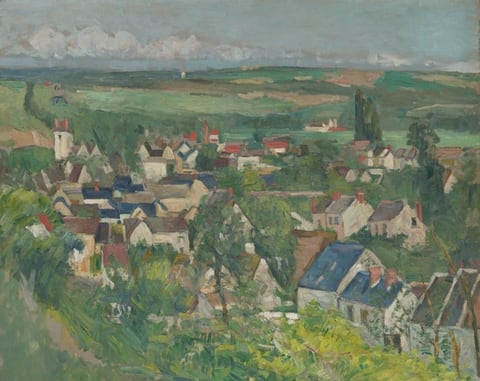
  3. View of a village surrounded by hills, fields, and trees, shown from a vantage point above the scene. Subtly rolling hills recede into a bluish gray-ish sky punctuated by white clouds. Thick brushstrokes built up atop each other are visible throughout.
    Auvers, Panoramic ViewPaul Cézanne, 1873–75Courtesy of the Art Institute of Chicago
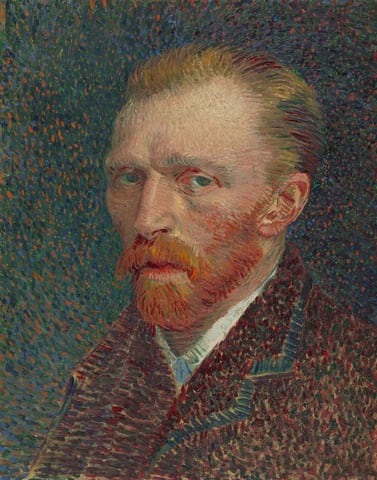
  4. Painting of a red-haired, bearded man with light skin, painted in short brushstrokes and multicolored dots. The background is likewise a mass of small, closely spaced colored dots, these in green, blue, and red-orange.
    Self-PortraitVincent van Gogh, 1887Courtesy of the Art Institute of Chicago

Second room, north wall
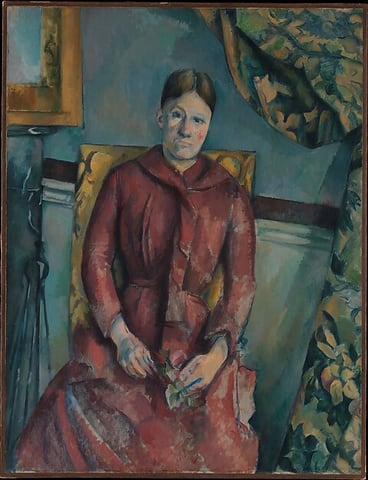
  1. Madame Cézanne (Hortense Fiquet, 1850–1922) in a Red Dress, by Paul Cézanne, 1888–90
    Madame Cézanne (Hortense Fiquet, 1850–1922) in a Red DressPaul Cézanne, 1888–90Courtesy of The Metropolitan Museum of Art
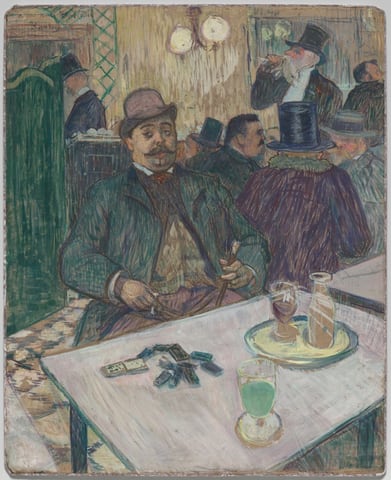
  2. Monsieur Boileau at the Café, by Henri de Toulouse-Lautrec, 1893
    Monsieur Boileau at the CaféHenri de Toulouse-Lautrec, 1893Courtesy of the Cleveland Museum of Art
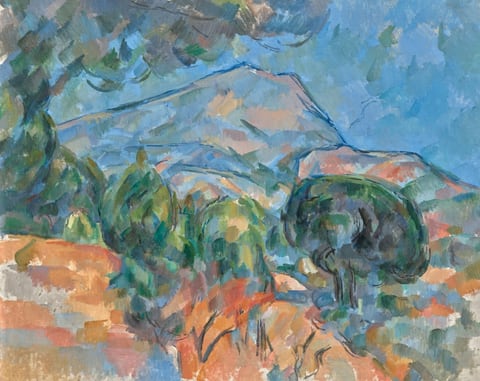
  3. Mount Sainte-Victoire, by Paul Cézanne, c. 1904
    Mount Sainte-VictoirePaul Cézanne, c. 1904Courtesy of the Cleveland Museum of Art

Third room, north wall
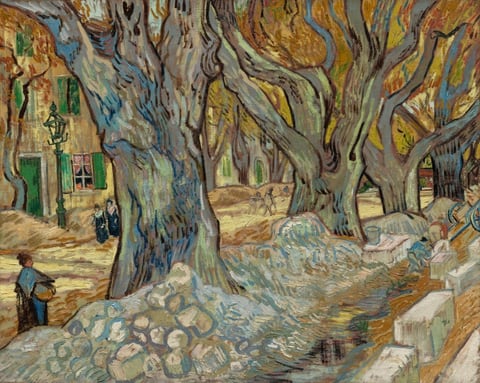
  1. The Large Plane Trees (Road Menders at Saint-Rémy), by Vincent van Gogh, 1889
    The Large Plane Trees (Road Menders at Saint-Rémy)Vincent van Gogh, 1889Courtesy of the Cleveland Museum of Art
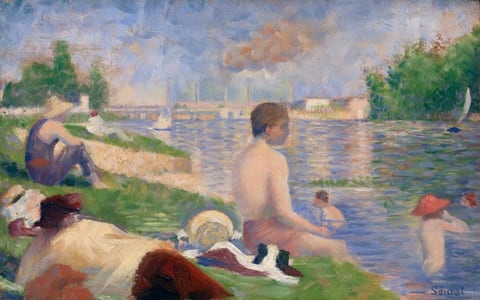
  2. A work made of oil on panel.
    Final Study for "Bathers at Asnières"Georges Seurat, 1883Courtesy of the Art Institute of Chicago