Floor plan

Style galleriesThe Northern Renaissance
The Northern Renaissance
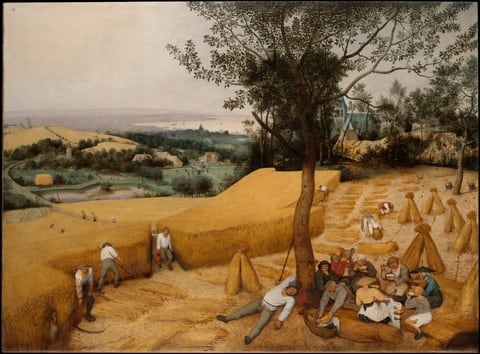
The Harvesters, by Pieter Bruegel, 1565
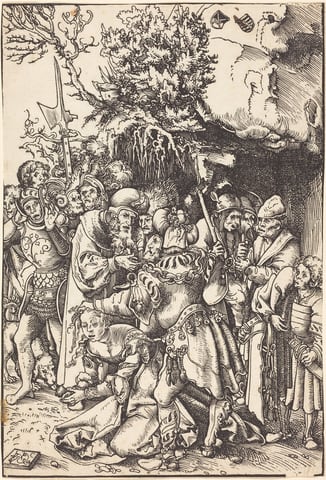
This is a drawing of a group of medieval figures and a tree. The image depicts a dense gathering of figures, all wearing elaborate period costumes, including helmets, robes, and armor. Their expressions vary. At the top, a leafy tree dominates the background alongside swirling clouds. The foreground hints at an interaction among the individuals, possibly a scene of discourse or judgment. Several personal items and tools are on the ground. The attention to detail and the use of line to create intricate patterns and textures are notable features of this work. This is in the style of Albrecht Dürer.
A work made of engraving in black on cream laid paper.
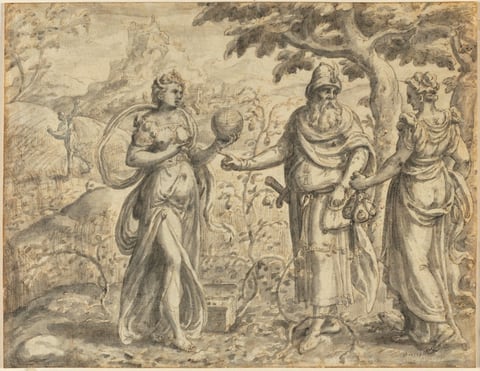
The Seed Received among the Thorns, from the Parable of the Sower, by Gerard P. van Groningen, c. 1573
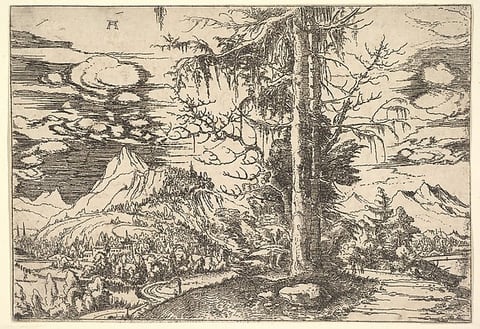
Landscape with a Double Spruce, by Albrecht Altdorfer, ca. 1521–22

The works in this room are listed below.

Works in this room

Dürer's prints, Holbein's portraits and the art of northern Europe in the 1500s.

Section 1, north wall

  1. The Harvesters, by Pieter Bruegel, 1565
    The HarvestersPieter Bruegel, 1565Courtesy of The Metropolitan Museum of Art
  2. This is a drawing of a group of medieval figures and a tree. The image depicts a dense gathering of figures, all wearing elaborate period costumes, including helmets, robes, and armor. Their expressions vary. At the top, a leafy tree dominates the background alongside swirling clouds. The foreground hints at an interaction among the individuals, possibly a scene of discourse or judgment. Several personal items and tools are on the ground. The attention to detail and the use of line to create intricate patterns and textures are notable features of this work. This is in the style of Albrecht Dürer.
    The Martyrdom of Saint BarbaraLucas Cranach the ElderCourtesy National Gallery of Art, Washington

Section 1, south wall

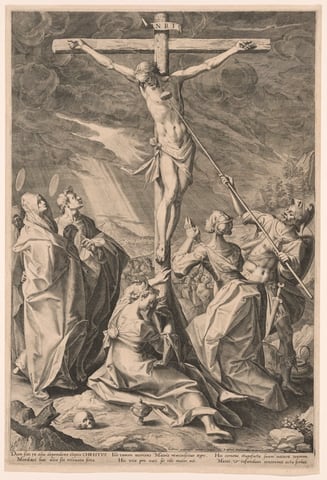
  1. A work made of engraving in black on cream laid paper.
    Christ on the CrossRaphael Sadeler, I, 1590Courtesy of the Art Institute of Chicago
  2. The Seed Received among the Thorns, from the Parable of the Sower, by Gerard P. van Groningen, c. 1573
    The Seed Received among the Thorns, from the Parable of the SowerGerard P. van Groningen, c. 1573Courtesy of the Cleveland Museum of Art
  3. Landscape with a Double Spruce, by Albrecht Altdorfer, ca. 1521–22
    Landscape with a Double SpruceAlbrecht Altdorfer, ca. 1521–22Courtesy of The Metropolitan Museum of Art

Section 2, south wall
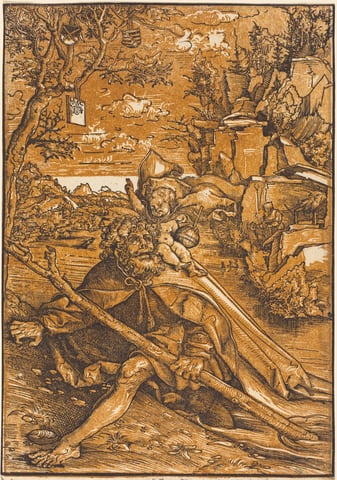
  1. This is a drawing of a wilderness setting by a river. The scene features rocky cliffs, lush vegetation, a large bearded figure holding a staff, and a small cherubic figure beside them. In the background, there is a village against a mountainous backdrop. The drawing has rich texture and intricate details, with a contrast of dark lines and lighter hues.
    Saint ChristopherLucas Cranach the Elder, 1506Courtesy National Gallery of Art, Washington
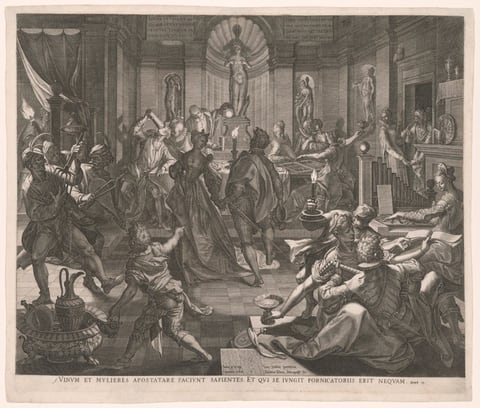
  2. A work made of engraving in black on cream laid paper.
    The Carnival (or the Prodigal Son)Jan Sadeler, I, 1588Courtesy of the Art Institute of Chicago

Section 2, north wall
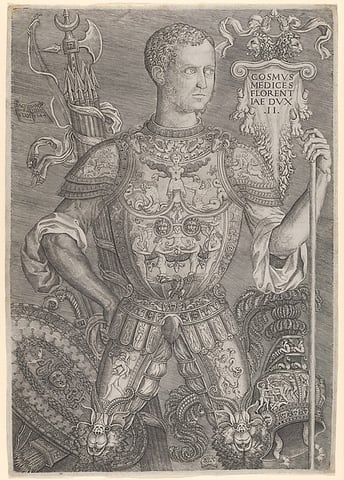
  1. Portrait of Cosimo de' Medici in full armor, his left hand resting on a staff, by Niccolò della Casa, 1544
    Portrait of Cosimo de' Medici in full armor, his left hand resting on a staffNiccolò della Casa, 1544Courtesy of The Metropolitan Museum of Art
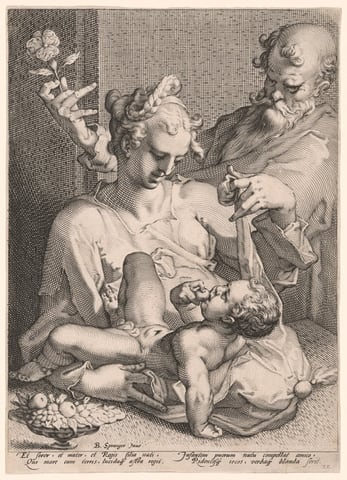
  2. A work made of engraving on laid paper.
    The Holy FamilyPieter de Jode, I, c. 1585-1595Courtesy of the Art Institute of Chicago
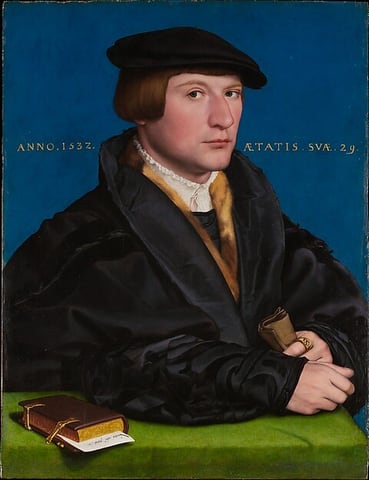
  3. Hermann von Wedigh III (died 1560), by Hans Holbein the Younger, 1532
    Hermann von Wedigh III (died 1560)Hans Holbein the Younger, 1532Courtesy of The Metropolitan Museum of Art

Section 3, north wall
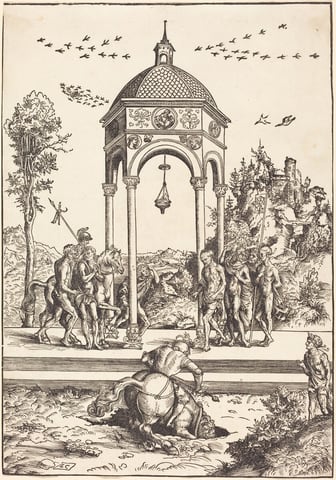
  1. This print features a detailed scene. In the center is a classical-style pavilion with arched openings and a domed roof adorned with intricate designs. A group of mostly-nude people is gathered around the pavilion, with one on horseback, holding a spear, and another holding a flag. In front of the pavilion, a knight on horseback appears to be falling into a dark hole in the ground. Vegetation, including trees and shrubs, is scattered throughout the landscape, and birds are seen flying in the sky above the pavilion. The horizon shows hills leading to a distant castle on a rocky formation on the right.
    Marcus Curtius Plunging into the ChasmLucas Cranach the ElderCourtesy National Gallery of Art, Washington
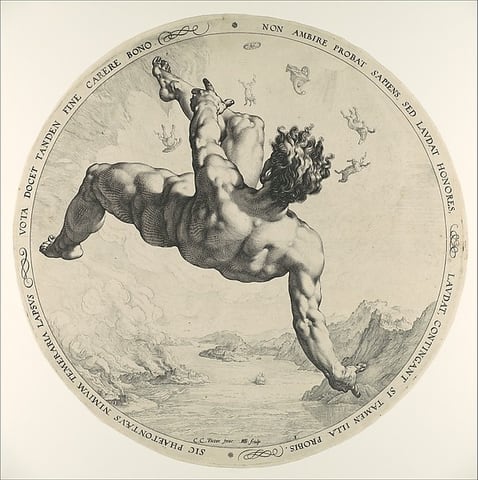
  2. Phaeton, from "The Four Disgracers", by Hendrick Goltzius, 1588
    Phaeton, from "The Four Disgracers"Hendrick Goltzius, 1588Courtesy of The Metropolitan Museum of Art

Section 3, south wall
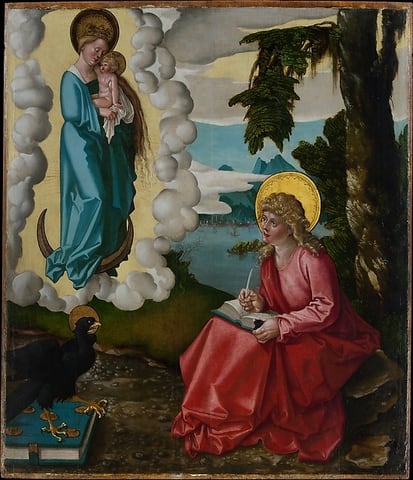
  1. Saint John on Patmos, by Hans Baldung (called Hans Baldung Grien), ca. 1511
    Saint John on PatmosHans Baldung (called Hans Baldung Grien), ca. 1511Courtesy of The Metropolitan Museum of Art
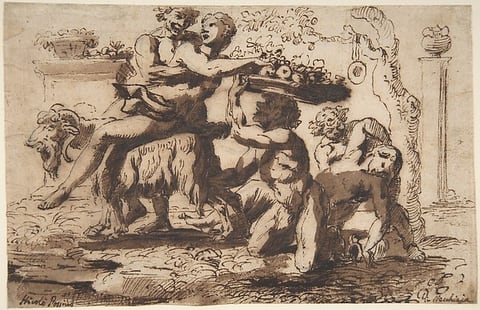
  2. Bacchanal, by Nicolas Poussin, ca. 1635–36
    BacchanalNicolas Poussin, ca. 1635–36Courtesy of The Metropolitan Museum of Art

Section 4, south wall
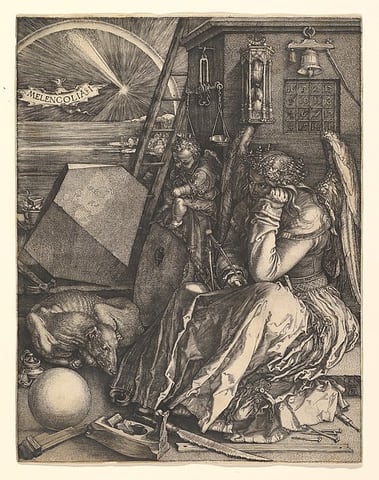
  1. Melencolia I, by Albrecht Dürer, 1514
    Melencolia IAlbrecht Dürer, 1514Courtesy of The Metropolitan Museum of Art
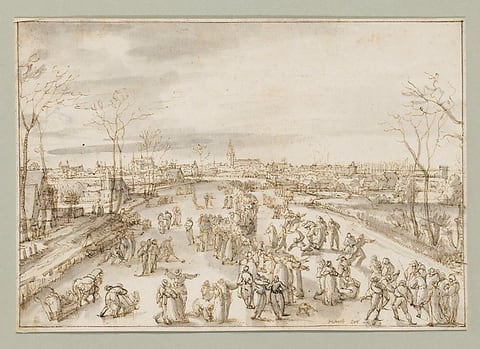
  2. Ice skaters on the Amstel in Amsterdam, by Hans Bol, 1589
    Ice skaters on the Amstel in AmsterdamHans Bol, 1589Courtesy of The Metropolitan Museum of Art