Mughal and Rajput painting
Works in this room
Jewel-bright painting from the Mughal court and the Rajput and Pahari kingdoms of India.
First room, north wall
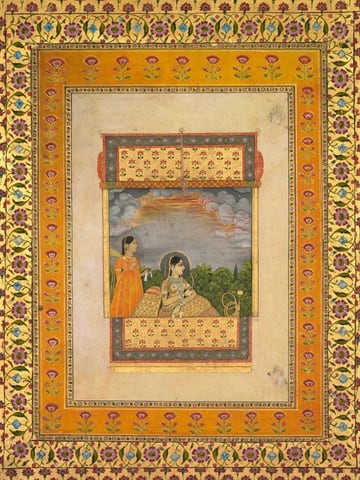
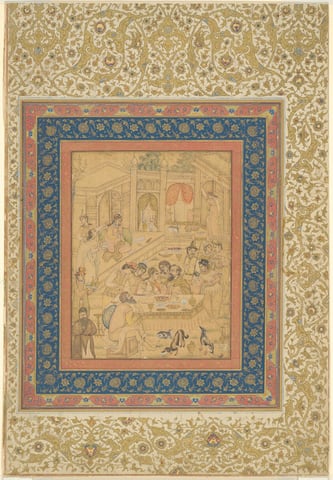
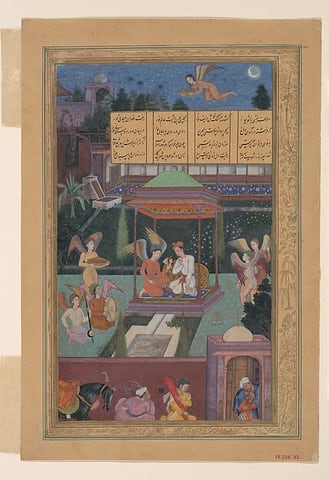
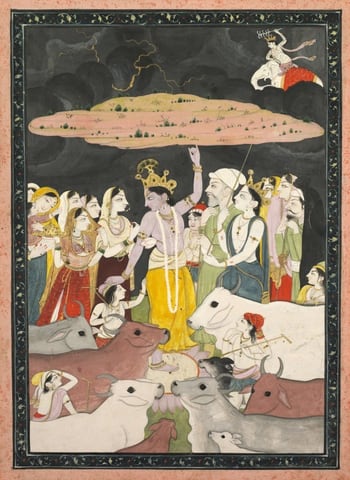
Princess and attendant in trompe l’oeil windowAqil Khan, c. 1765Courtesy of the Cleveland Museum of Art European Banquet Scene (or The Marriage Feast at Cana?)Mughal, Mughal period, c. 1600Courtesy of the Art Institute of Chicago "The Story of the Princess of the Blue Pavillion: The Youth of Rum Is Entertained in a Garden by a Fairy and her Maidens", Folio from a Khamsa (Quintet) of Amir Khusrau DihlaviAmir Khusrau Dihlavi, 1597–98Courtesy of The Metropolitan Museum of Art Krishna Lifting Mount GovardhanUnrecorded Indian maker, c. 1780–90Courtesy of the Cleveland Museum of Art
First room, south wall
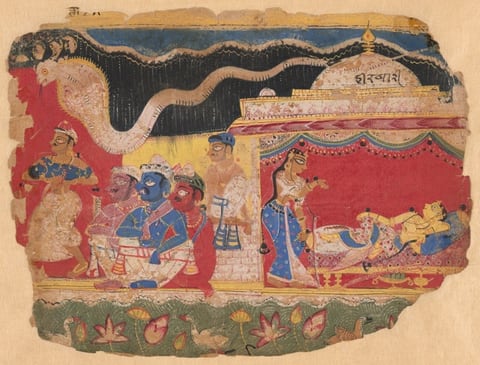
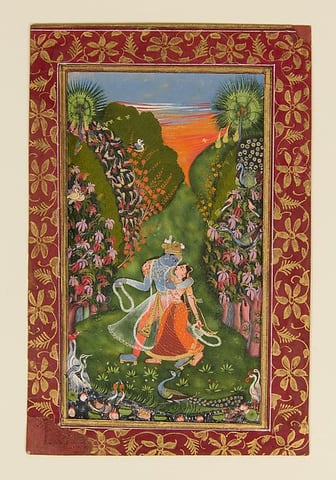
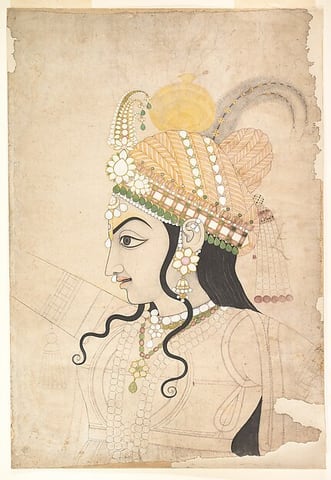
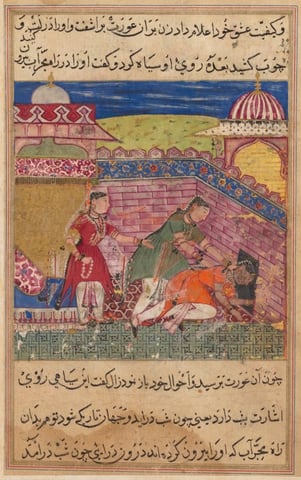
The Infant Krishna Spirited Away by Vasudev, from a copy of the Dispersed Bhagavat PuranaUnrecorded Indian maker, c. 1520–1530Courtesy of the Art Institute of Chicago Radha and Krishna Walk in a Flowering Grove (recto); Krishna Fluting (verso)the Kota Master, ca. 1720 (recto); ca. 1750–75 (verso)Courtesy of The Metropolitan Museum of Art Head of Krishna: cartoon for a mural of the RaslilaSahib Ram, ca. 1800Courtesy of The Metropolitan Museum of Art The deceitful wife ejects the procuress after blackening her face, from a Tuti-nama (Tales of a Parrot): Eighth NightShravana, c. 1560Courtesy of the Cleveland Museum of Art
Second room, south wall
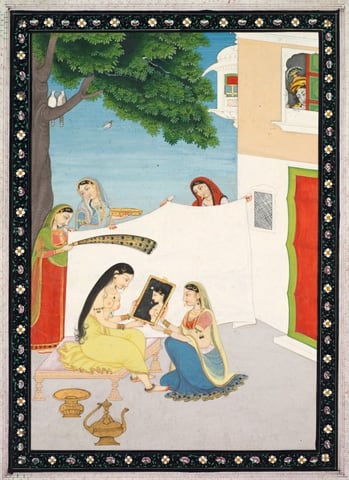
Toilette of RadhaUnrecorded Indian maker, c. 1810–20Courtesy of the Cleveland Museum of Art 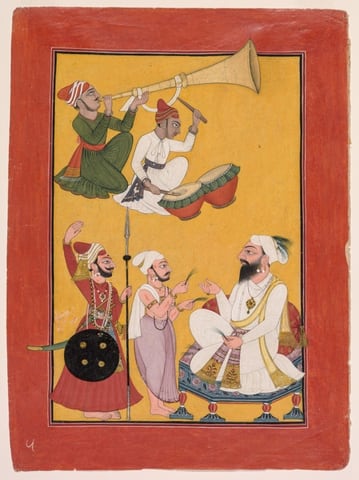
Celebrations of Krishna's Birth, from a Bhagavata PuranaUnrecorded Indian maker, c. 1725–30Courtesy of the Cleveland Museum of Art 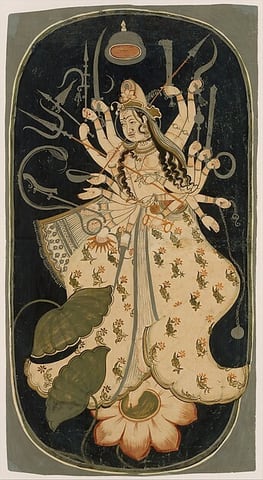
Mahadevi, the Great GoddessUnrecorded Indian maker, ca. 1725Courtesy of The Metropolitan Museum of Art 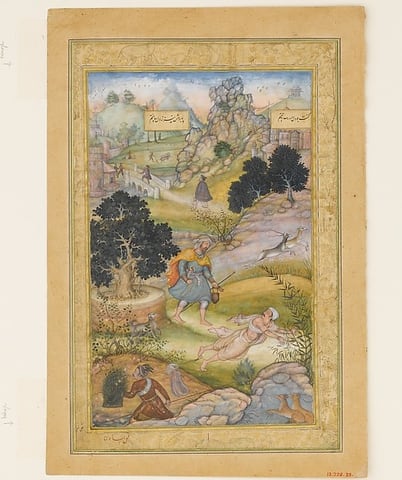
"A Muslim Pilgrim Learns a Lesson in Piety from a Brahman", Folio from a Khamsa (Quintet) of Amir Khusrau DihlaviAmir Khusrau Dihlavi, 1597–98Courtesy of The Metropolitan Museum of Art
Second room, north wall
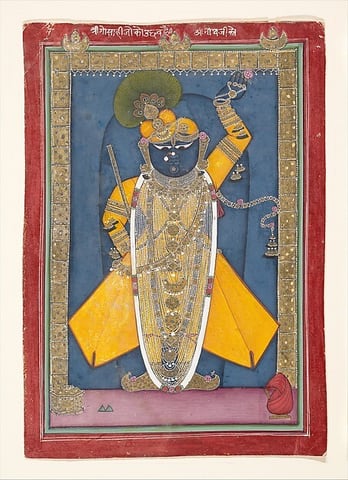
Krishna in the Form of Shri NathjiUnrecorded Indian maker, ca. 1840Courtesy of The Metropolitan Museum of Art 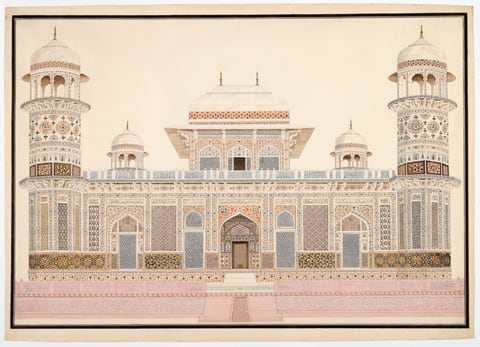
I'timad-ud-Daula's Tomb at AgraUnrecorded Indian maker, c. 1820Courtesy of the Art Institute of Chicago 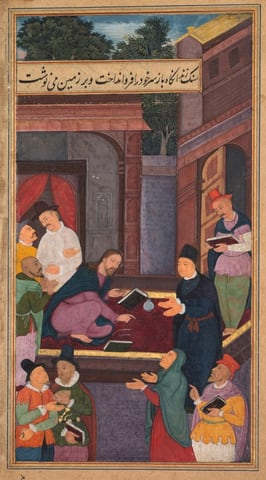
Jesus writes on the ground (folio 130 verso), from a Mirror of Holiness (Mir’at al-quds) of Father Jerome XavierUnrecorded Indian maker, 1602–4Courtesy of the Cleveland Museum of Art 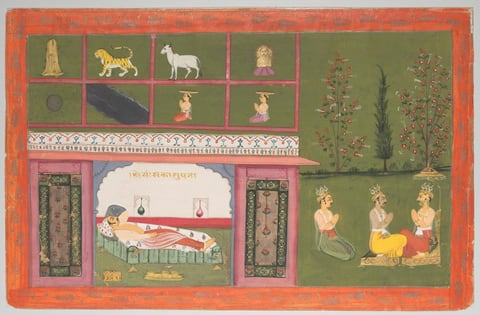
Prince Shreyamsa dreams of the coming of Rishabha, from a Panchakalyanaka (Five Auspicious Events)Unrecorded Indian maker, 1670–80Courtesy of the Cleveland Museum of Art