Floor plan

Style galleriesThe Italian Settecento
The Italian Settecento
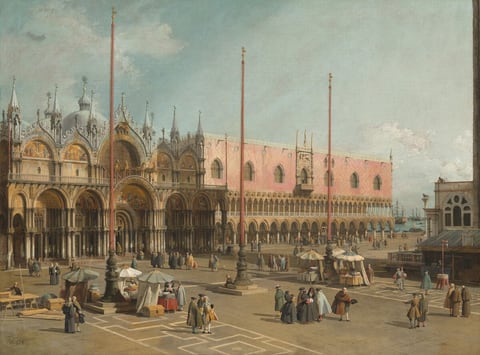
Dozens of men with several women and a few children gather in pairs or small groups across a sun-drenched plaza in front of a domed church next to a long, pale pink building in this horizontal painting. The people’s faces and hands we can see have pale, peachy skin. The men wear hats and shin-length capes or jackets over stockings in tones of charcoal gray, olive green, butterscotch yellow, black, and brown. The women wear black capes covering their heads and long, full skirts. The ash-brown plaza has two zones where geometric patterns are picked out in a lighter, oatmeal brown. Three coral-red flagpoles are spaced along the center of the plaza parallel to the two buildings. Each flagpole rests on an olive-green base about a third of the height of the pole. Tables under open umbrellas clustered around the outer two flagpoles display piles of cloth, and a few people gather around the wares. The domed building extends into the scene from the left edge of the painting, and reaches about a third of the way across as it angles away from us. It has a central portal with nested arches, flanked to each side by a pair of slightly smaller, arched portals. Scenes against gold backgrounds appear in the archway of each of the five doors. There is a second level of arches above. The smaller arches to either side are decorated with more scenes of people against gold backgrounds. Four gold horses stand atop the central, lower arch, each with one front and one back hoof raised. The arch behind them is dim, the back side of a stained-glass window. The stone of the arches and front of the building are light brown. The upper arches are lined with pale, slate-gray spires and curling tracery. The three-story pink building sits close by to our right, extending into the distance on the same angle as the church, and as tall as its neighbor. The lowest level is a series of open, pointed arches. The second level is also a row of arches, but more closely spaced. People walk and stand under both covered walkways. The top half of the building has a carnation-pink façade with seven windows evenly spaced across its width. The central window is surrounded by carved stone ornament. Along the right edge of the painting and closer to us than the large buildings is the corner of a two-story building. The lower level is in shadow under a sloping awning, creating a merchant’s stall, and the second level has a rounded, arched window. One person stands at the front corner of the roof and looks down into the square. In the narrow gap between the row of buildings to our left and the smaller structure to our right is a winged lion atop a tall column. Beyond that is sparkling blue water with several masted ships and long, narrow gondolas. The sky above has thin white clouds against a pale blue sky. The artist signed the lower left, “A.C.F.”
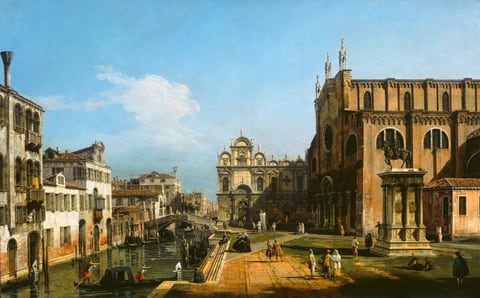
People walk, sit, or stand on a plaza along a canal lined on the far side with buildings in this horizontal landscape painting. The canal begins in the lower left corner and angles slightly right as it travels to the horizon, which comes about a third of the way up this composition. One, two, three, or four-story buildings line the canal to the left into the far distance. Arched doorways give direct access to the water, and one person leans out an upper-story window. The buildings are reflected in the gently rippling water, which is painted in shades of olive green. A stepped bridge crosses the canal in the near distance, and two gondoliers guide a long, narrow boat to a platform alongside the plaza in the bottom left corner of the composition. People walk or stand singly or in pairs on the plaza in the bottom right quadrant of the painting. The women wear dresses with long skirts and head coverings in shades of black, white, yellow, or pale pink. The men wear hats, jackets, capes, stockings, and slacks in shades of peanut brown, muted yellow, red, blue, or white. The people all appear to have pale, peachy skin. A statue of a man riding a horse rests on a towering platform in a grassy patch to our right. Beyond it is the blocky form of a red brick church. One man in a pair standing on the plaza gestures toward the entrance with a walking stick and others approach the central entrance. Sunlight streams across the scene from the upper right, throwing the church façade into shadow and casting a deep shadow across the face of another building that encloses the far side of the plaza. That second building has arched windows and doors, statues lining the roofline, and a winged lion over the entrance. A fat cloud trundles across a mostly empty vibrant blue sky above.
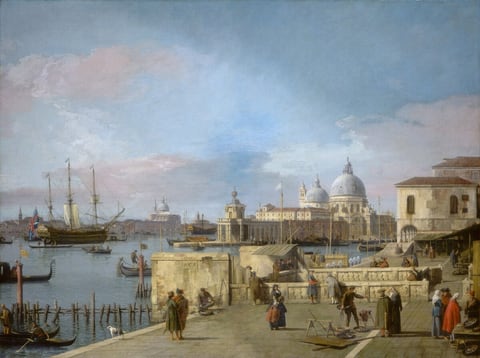
We look slightly down onto a port-side town along a canal, with a church across the water from us in this horizontal landscape painting. A bright blue sky with billowing white, pink, and gray clouds fills the top two-thirds of the painting. Below, a three-masted ship with all but one sail furled is surrounded by a couple dozen black long, low boats, gondolas, and one or two other sailboats. People stand and walk mostly in pairs and trios along the stone walkway under us, which extends into the distance to our right. The women all wear long dresses and most of the men wear suits with knee-length jackets with tails or capes, and hats. The clothing is painted in shades of brick and terracotta red, pine green, royal blue, and gray. The walkway is interrupted by two low walls that partition off an area near us. The angled roofs of stalls line the walkway in the farther distance before it is again interrupted, this time by a two-story, cream-colored building. The walkway continues as a narrower path under an arched arcade on the lower level of that building, alongside the water. On the far side of the canal, to our left and in the distance, a cluster of ivory-white buildings includes a structure with two stone-blue domes. More buildings extend into the deep distance to our left.
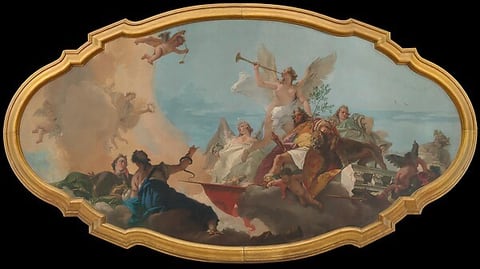
The Glorification of the Barbaro Family, by Giovanni Battista Tiepolo, ca. 1750

The works in this room are listed below.

Works in this room

Venetian views, Roman ruins and grand decoration in eighteenth-century Italy.

First room, north wall

  1. Dozens of men with several women and a few children gather in pairs or small groups across a sun-drenched plaza in front of a domed church next to a long, pale pink building in this horizontal painting. The people’s faces and hands we can see have pale, peachy skin. The men wear hats and shin-length capes or jackets over stockings in tones of charcoal gray, olive green, butterscotch yellow, black, and brown. The women wear black capes covering their heads and long, full skirts. The ash-brown plaza has two zones where geometric patterns are picked out in a lighter, oatmeal brown. Three coral-red flagpoles are spaced along the center of the plaza parallel to the two buildings. Each flagpole rests on an olive-green base about a third of the height of the pole. Tables under open umbrellas clustered around the outer two flagpoles display piles of cloth, and a few people gather around the wares. The domed building extends into the scene from the left edge of the painting, and reaches about a third of the way across as it angles away from us. It has a central portal with nested arches, flanked to each side by a pair of slightly smaller, arched portals. Scenes against gold backgrounds appear in the archway of each of the five doors. There is a second level of arches above. The smaller arches to either side are decorated with more scenes of people against gold backgrounds. Four gold horses stand atop the central, lower arch, each with one front and one back hoof raised. The arch behind them is dim, the back side of a stained-glass window. The stone of the arches and front of the building are light brown. The upper arches are lined with pale, slate-gray spires and curling tracery. The three-story pink building sits close by to our right, extending into the distance on the same angle as the church, and as tall as its neighbor. The lowest level is a series of open, pointed arches. The second level is also a row of arches, but more closely spaced. People walk and stand under both covered walkways. The top half of the building has a carnation-pink façade with seven windows evenly spaced across its width. The central window is surrounded by carved stone ornament. Along the right edge of the painting and closer to us than the large buildings is the corner of a two-story building. The lower level is in shadow under a sloping awning, creating a merchant’s stall, and the second level has a rounded, arched window. One person stands at the front corner of the roof and looks down into the square. In the narrow gap between the row of buildings to our left and the smaller structure to our right is a winged lion atop a tall column. Beyond that is sparkling blue water with several masted ships and long, narrow gondolas. The sky above has thin white clouds against a pale blue sky. The artist signed the lower left, “A.C.F.”
    The Square of Saint Mark's, VeniceCanaletto, 1742/1744Courtesy National Gallery of Art, Washington
  2. People walk, sit, or stand on a plaza along a canal lined on the far side with buildings in this horizontal landscape painting. The canal begins in the lower left corner and angles slightly right as it travels to the horizon, which comes about a third of the way up this composition. One, two, three, or four-story buildings line the canal to the left into the far distance. Arched doorways give direct access to the water, and one person leans out an upper-story window. The buildings are reflected in the gently rippling water, which is painted in shades of olive green. A stepped bridge crosses the canal in the near distance, and two gondoliers guide a long, narrow boat to a platform alongside the plaza in the bottom left corner of the composition. People walk or stand singly or in pairs on the plaza in the bottom right quadrant of the painting. The women wear dresses with long skirts and head coverings in shades of black, white, yellow, or pale pink. The men wear hats, jackets, capes, stockings, and slacks in shades of peanut brown, muted yellow, red, blue, or white. The people all appear to have pale, peachy skin. A statue of a man riding a horse rests on a towering platform in a grassy patch to our right. Beyond it is the blocky form of a red brick church. One man in a pair standing on the plaza gestures toward the entrance with a walking stick and others approach the central entrance. Sunlight streams across the scene from the upper right, throwing the church façade into shadow and casting a deep shadow across the face of another building that encloses the far side of the plaza. That second building has arched windows and doors, statues lining the roofline, and a winged lion over the entrance. A fat cloud trundles across a mostly empty vibrant blue sky above.
    The Campo di SS. Giovanni e Paolo, VeniceBernardo Bellotto, 1743/1747Courtesy National Gallery of Art, Washington

First room, south wall

  1. We look slightly down onto a port-side town along a canal, with a church across the water from us in this horizontal landscape painting. A bright blue sky with billowing white, pink, and gray clouds fills the top two-thirds of the painting. Below, a three-masted ship with all but one sail furled is surrounded by a couple dozen black long, low boats, gondolas, and one or two other sailboats. People stand and walk mostly in pairs and trios along the stone walkway under us, which extends into the distance to our right. The women all wear long dresses and most of the men wear suits with knee-length jackets with tails or capes, and hats. The clothing is painted in shades of brick and terracotta red, pine green, royal blue, and gray. The walkway is interrupted by two low walls that partition off an area near us. The angled roofs of stalls line the walkway in the farther distance before it is again interrupted, this time by a two-story, cream-colored building. The walkway continues as a narrower path under an arched arcade on the lower level of that building, alongside the water. On the far side of the canal, to our left and in the distance, a cluster of ivory-white buildings includes a structure with two stone-blue domes. More buildings extend into the deep distance to our left.
    Entrance to the Grand Canal from the Molo, VeniceCanaletto, 1742/1744Courtesy National Gallery of Art, Washington
  2. The Glorification of the Barbaro Family, by Giovanni Battista Tiepolo, ca. 1750
    The Glorification of the Barbaro FamilyGiovanni Battista Tiepolo, ca. 1750Courtesy of The Metropolitan Museum of Art

Second room, south wall
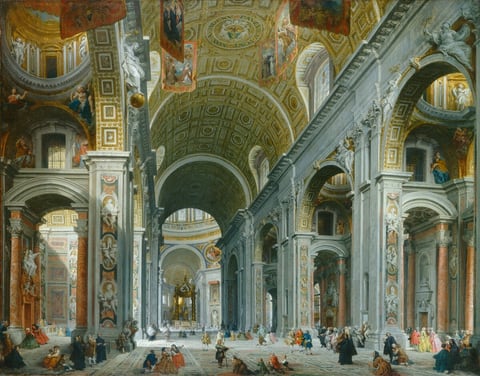
  1. The soaring, gilded vault of a central aisle of the inside of a church fills this horizontal painting. The ceiling of the nave curves up and away from us like a tunnel. It is lined with coffers, which have inset panels, decorated with gold. The light-filled nave angles down from the top center of the composition toward the lower left as it moves away from us. The white stone pillars supporting the barrel vault are intricately carved and decorated with pudgy, winged cherubs holding portraits of men, and aisles run parallel to the central nave to our left and right. In the side aisles, pink marble columns flank altars in chapels. At the far end of the church, the nave is interrupted where it opens into the light-filled crossing, before continuing beyond. Marking the space where the long hall of the church is intersected by a shorter arm to create a cross shape is a structure made of four twisting columns supporting a pointed canopy, all cast in bronze. Tiny men and women pray or gather in pairs and small groups along the nave. Some wear tattered clothing and others are elegantly dressed.
    Interior of Saint Peter's, RomeGiovanni Paolo Panini, c. 1754Courtesy National Gallery of Art, Washington
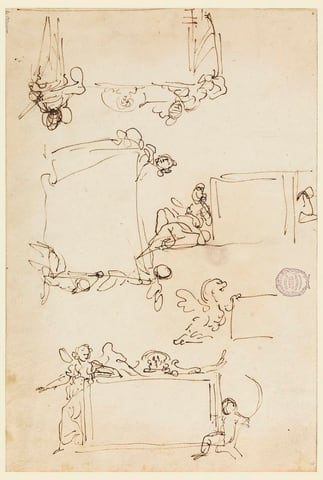
  2. SKETCHES FOR A TABLET
    Sketches for a tabletCarlo Marchionni, ca. 1750Courtesy of Cooper Hewitt, Smithsonian Design Museum
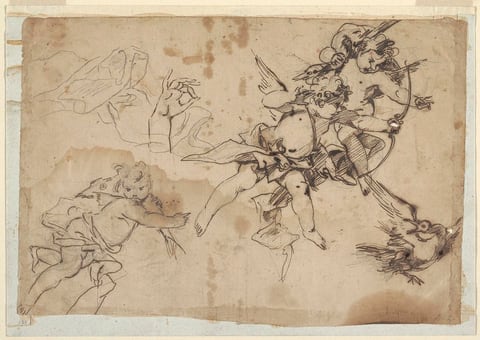
  3. STUDY FOR A PAINTING ON THEME OF CALLISTO
    Study for a Painting on Theme of CallistoFilippo Falciatore, ca. 1750Courtesy of Cooper Hewitt, Smithsonian Design Museum

Second room, north wall
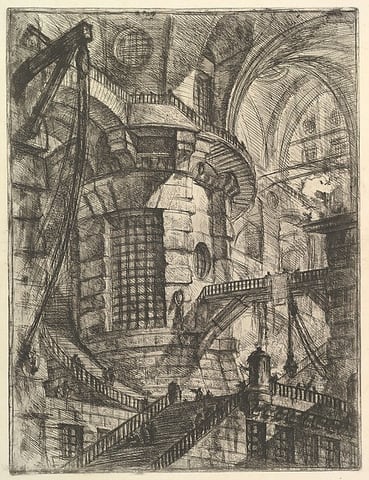
  1. The Round Tower, from "Carceri d'invenzione" (Imaginary Prisons), by Giovanni Battista Piranesi, ca. 1749–50
    The Round Tower, from "Carceri d'invenzione" (Imaginary Prisons)Giovanni Battista Piranesi, ca. 1749–50Courtesy of The Metropolitan Museum of Art
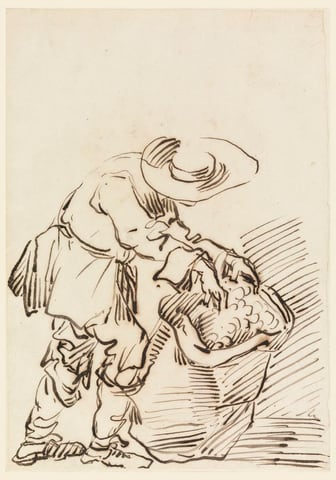
  2. WORKING PEASANT
    Working PeasantCarlo Marchionni, 1728–78Courtesy of Cooper Hewitt, Smithsonian Design Museum
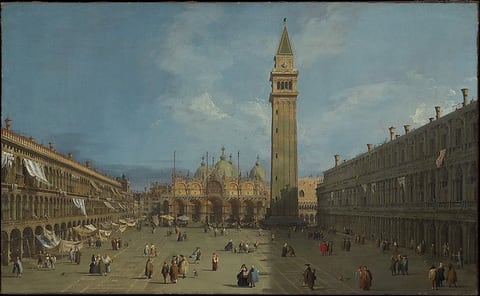
  3. Piazza San Marco, by Canaletto, late 1720s
    Piazza San MarcoCanaletto, late 1720sCourtesy of The Metropolitan Museum of Art
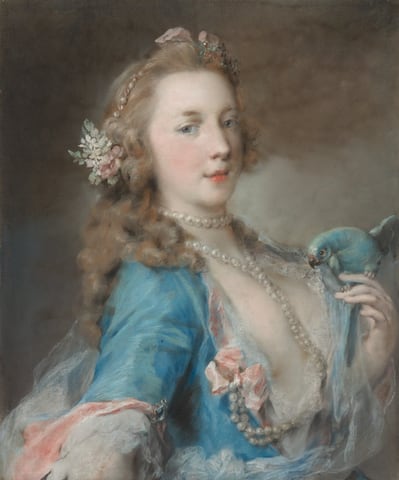
  4. A pastel drawing of woman in blue and pink dress with blue parrot.
    A Young Lady with a ParrotRosalba Carriera, c. 1730Courtesy of the Art Institute of Chicago

Third room, north wall
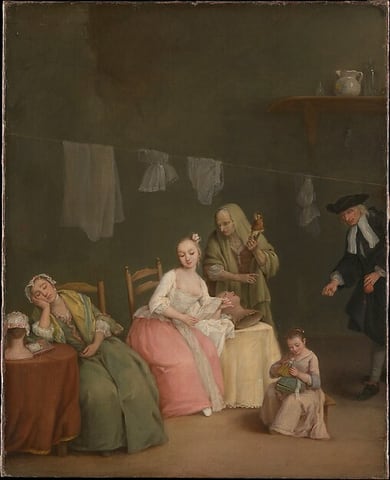
  1. The Letter, by Pietro Longhi, 1746
    The LetterPietro Longhi, 1746Courtesy of The Metropolitan Museum of Art
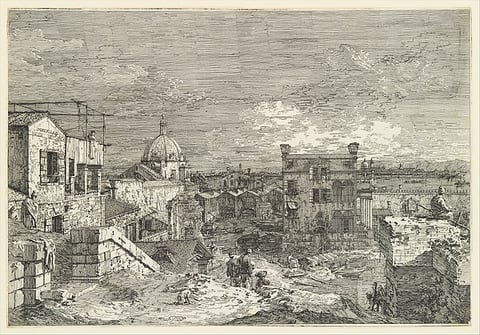
  2. Imaginary View of Venice, houses at left with figures on terraces, a domed church at center in the background, boats and boat-sheds below, and a seated man observing from a wall at right in the foreground, from "Views" (Vedute altre prese da i luoghi altre ideate da Antonio Canal), by Canaletto, 1741
    Imaginary View of Venice, houses at left with figures on terraces, a domed church at center in the background, boats and boat-sheds below, and a seated man observing from a wall at right in the foreground, from "Views" (Vedute altre prese da i luoghi altre ideate da Antonio Canal)Canaletto, 1741Courtesy of The Metropolitan Museum of Art
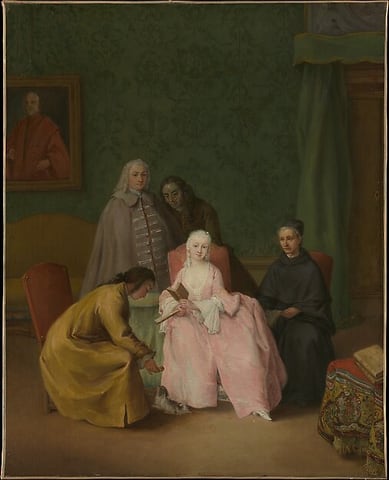
  3. The Visit, by Pietro Longhi, 1746
    The VisitPietro Longhi, 1746Courtesy of The Metropolitan Museum of Art

Third room, south wall
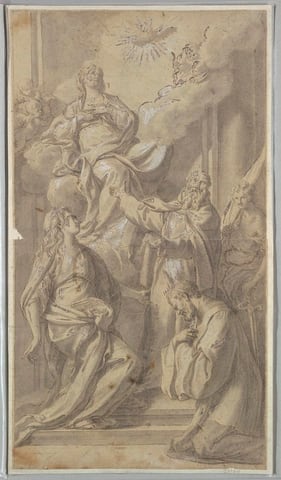
  1. MADONNA AND SAINTS
    Madonna and SaintsSebastiano Conca, ca. 1730Courtesy of Cooper Hewitt, Smithsonian Design Museum
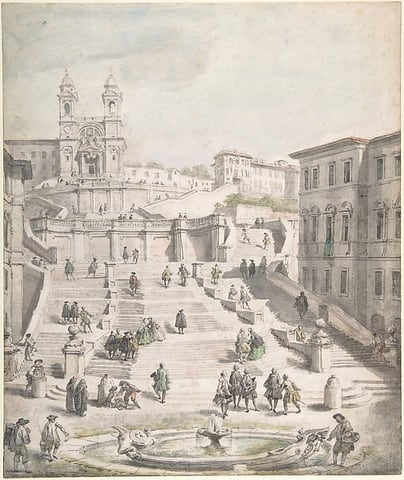
  2. Scalinata della Trinità dei Monti, by Giovanni Paolo Panini, ca. 1756–58
    Scalinata della Trinità dei MontiGiovanni Paolo Panini, ca. 1756–58Courtesy of The Metropolitan Museum of Art