Hudson River School
Works in this room
American landscape painters of the mid-1800s who made wilderness their grand subject.
Section 1, north wall
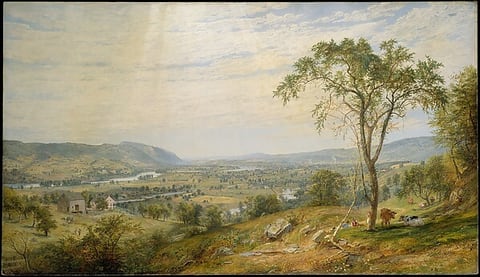
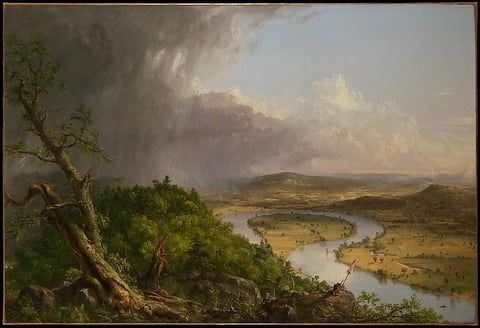
The Valley of WyomingJasper Francis Cropsey, 1865Courtesy of The Metropolitan Museum of Art View from Mount Holyoke, Northampton, Massachusetts, after a Thunderstorm—The OxbowThomas Cole, 1836Courtesy of The Metropolitan Museum of Art
Section 1, south wall
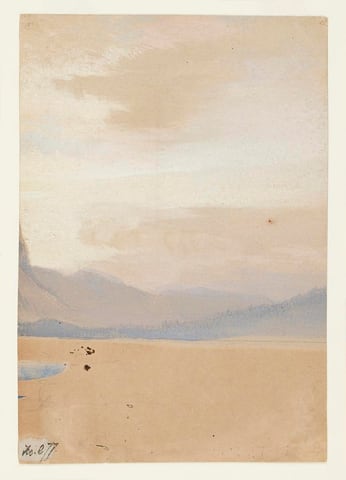
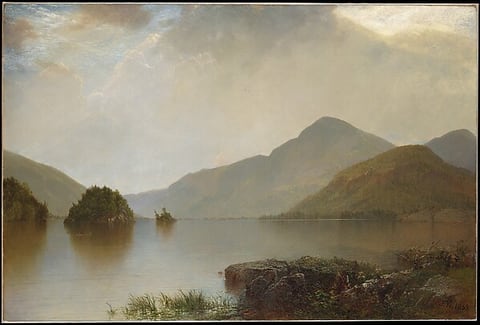
American Plains with Mountain Range in the DistanceThomas Moran, before 1872Courtesy of Cooper Hewitt, Smithsonian Design Museum Lake GeorgeJohn Frederick Kensett, 1869Courtesy of The Metropolitan Museum of Art
Section 2, south wall
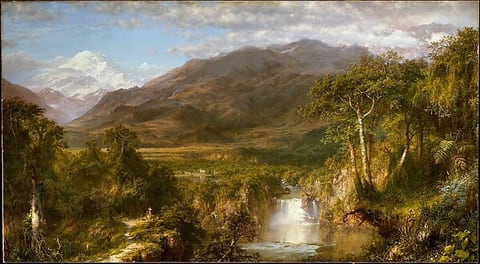
Heart of the AndesFrederic Edwin Church, 1859Courtesy of The Metropolitan Museum of Art 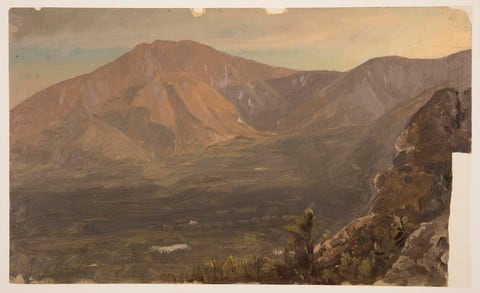
Mt. Katahdin from South Turner Mountain, MaineFrederic Edwin Church, 1877–78Courtesy of Cooper Hewitt, Smithsonian Design Museum
Section 2, north wall
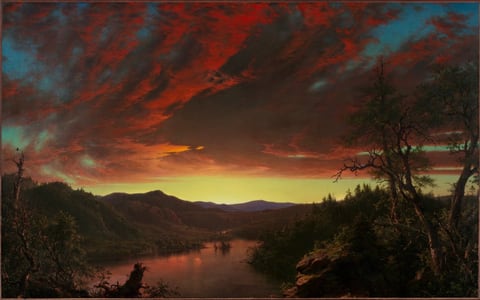
Twilight in the WildernessFrederic Edwin Church, 1860Courtesy of the Cleveland Museum of Art 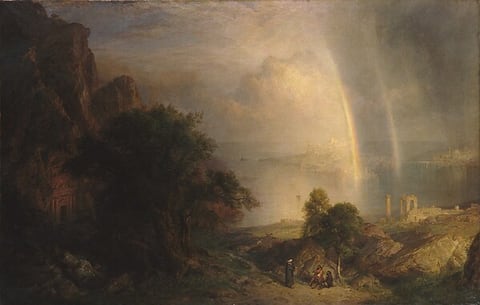
The Aegean SeaFrederic Edwin Church, ca. 1877Courtesy of The Metropolitan Museum of Art
Section 3, north wall
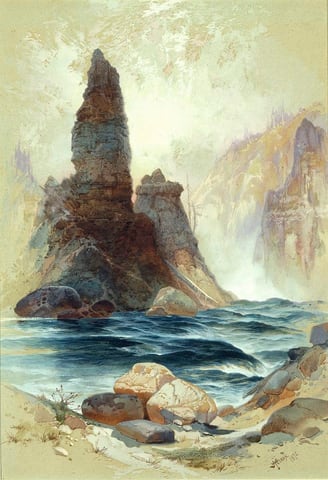
Above Tower Falls, YellowstoneThomas Moran, 1872Courtesy of the Smithsonian American Art Museum 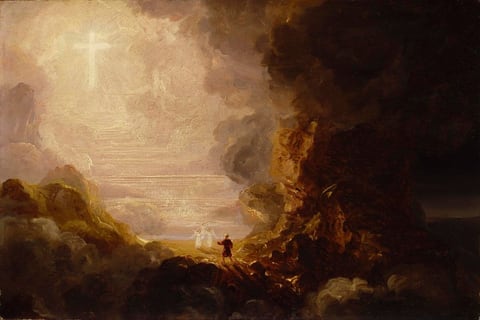
The Pilgrim of the Cross at the End of His Journey (study for series, The Cross and the World)Thomas Cole, ca. 1846-1848Courtesy of the Smithsonian American Art Museum 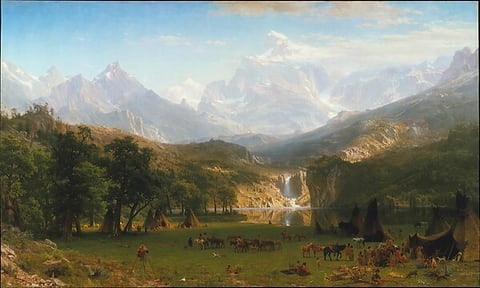
The Rocky Mountains, Lander's PeakAlbert Bierstadt, 1863Courtesy of The Metropolitan Museum of Art
Section 3, south wall
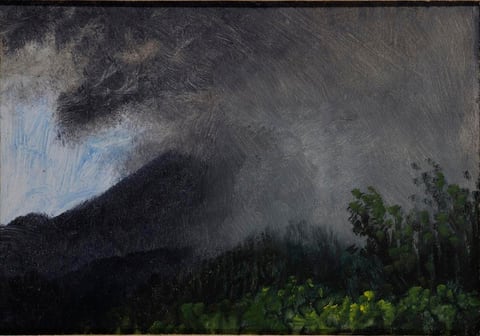
Gathering StormAlbert Bierstadt, (c. 1857-1858)Courtesy of the Hirshhorn Museum and Sculpture Garden, Smithsonian Institution 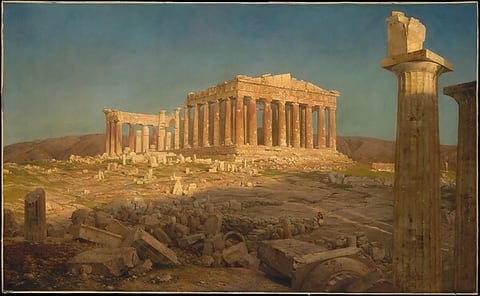
The ParthenonFrederic Edwin Church, 1871Courtesy of The Metropolitan Museum of Art 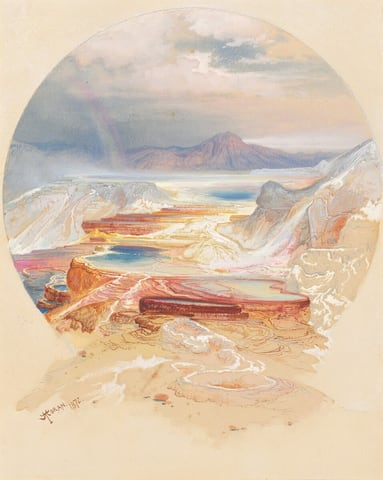
Minerva Terrace, YellowstoneThomas Moran, 1872Courtesy National Gallery of Art, Washington
Section 4, south wall
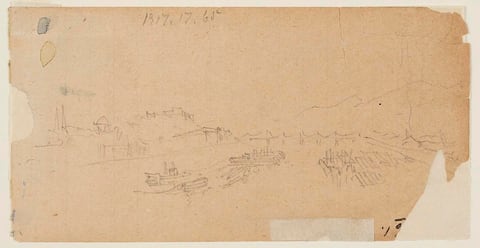
The Tetons, Shown from the PlainThomas Moran, August 28, 1879Courtesy of Cooper Hewitt, Smithsonian Design Museum 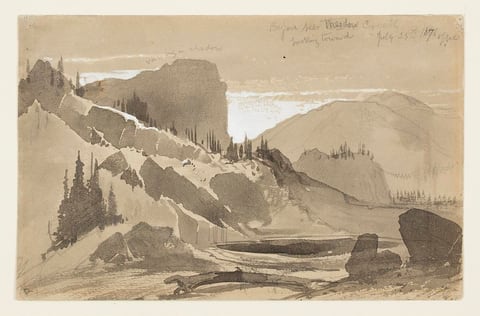
Near Meadow Creek, UtahThomas Moran, July 25, 1871Courtesy of Cooper Hewitt, Smithsonian Design Museum