Floor plan

Style galleriesDrawings

Drawings

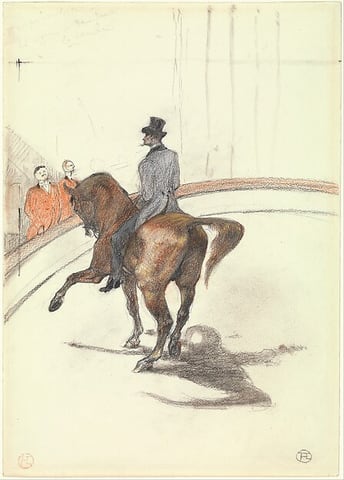
At the Circus: The Spanish Walk (Au Cirque: Le Pas espagnol), by Henri de Toulouse-Lautrec, 1899
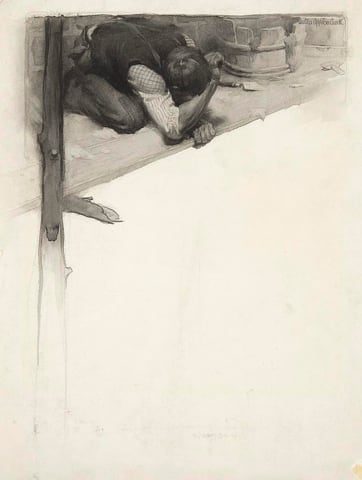
VIGNETTE: MAN CROUCHING ON A SCAFFOLDING
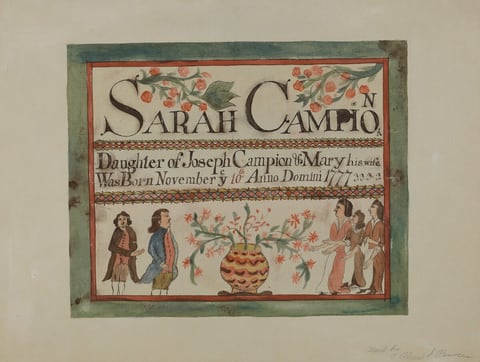
This painting is a birth record for Sarah Campion, daughter of Joseph and Mary Campion, born on November 16th, 1777. It features elaborate calligraphy and ornamental designs. The borders contain floral patterns with red and orange-colored flowers and green leaves. The central text is decorative, and at the bottom are human-like figures in colonial attire standing beside a flower vase. The artwork reflects a style reminiscent of early American folk art, created by an anonymous folk artist capturing the essence of 18th-century American artistry.
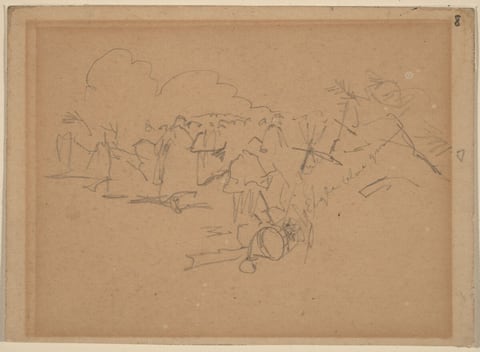
The image displays curved and angular lines creating an abstract composition hinting at humanoid shapes and possible vegetation or trees. The lines suggest motion and activity, with shapes resembling drums and sticks scattered around. The overall impression is of a gathering or event, with figures depicted standing or moving, along with lines indicating movement or sound waves from musical instruments.
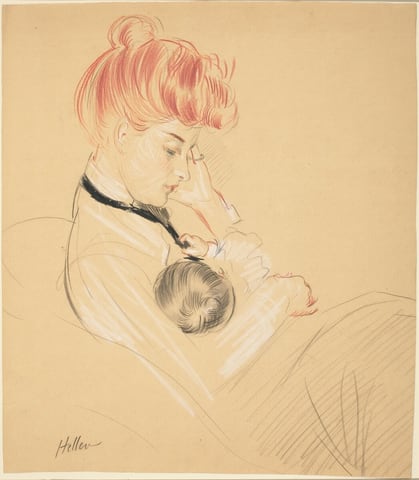
Madame Helleu Cradling Paulette in Her Arms, by Paul-César Helleu, 1904/1905
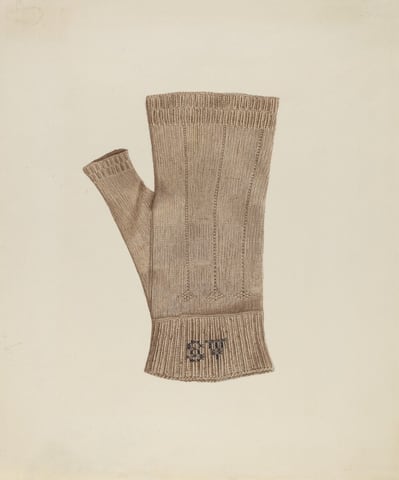
The image shows a beige knitted fingerless glove on a light-colored background. The glove is flat and displayed vertically, with the thumb-piece extending to the left. There is a subtle dark pattern or lettering at the base of the glove. The color palette is warm with beige tones against the light background, emphasizing the texture and design of the glove.

The works in this room are listed below.

Works in this room

Every one of the collection's drawings, in today's hang.

Section 1, north wall

  1. At the Circus: The Spanish Walk (Au Cirque: Le Pas espagnol), by Henri de Toulouse-Lautrec, 1899
    At the Circus: The Spanish Walk (Au Cirque: Le Pas espagnol)Henri de Toulouse-Lautrec, 1899Courtesy of The Metropolitan Museum of Art
  2. VIGNETTE: MAN CROUCHING ON A SCAFFOLDING
    Vignette: Man Crouching on a ScaffoldingWalter Appleton Clark, 1899Courtesy of Cooper Hewitt, Smithsonian Design Museum
  3. This painting is a birth record for Sarah Campion, daughter of Joseph and Mary Campion, born on November 16th, 1777. It features elaborate calligraphy and ornamental designs. The borders contain floral patterns with red and orange-colored flowers and green leaves. The central text is decorative, and at the bottom are human-like figures in colonial attire standing beside a flower vase. The artwork reflects a style reminiscent of early American folk art, created by an anonymous folk artist capturing the essence of 18th-century American artistry.
    Pa. German Birth CertificateGlenn Pearce, c. 1936Courtesy National Gallery of Art, Washington

Section 1, south wall

  1. The image displays curved and angular lines creating an abstract composition hinting at humanoid shapes and possible vegetation or trees. The lines suggest motion and activity, with shapes resembling drums and sticks scattered around. The overall impression is of a gathering or event, with figures depicted standing or moving, along with lines indicating movement or sound waves from musical instruments.
    End of the March [recto]Winslow Homer, 1862Courtesy National Gallery of Art, Washington
  2. Madame Helleu Cradling Paulette in Her Arms, by Paul-César Helleu, 1904/1905
    Madame Helleu Cradling Paulette in Her ArmsPaul-César Helleu, 1904/1905Courtesy National Gallery of Art, Washington
  3. The image shows a beige knitted fingerless glove on a light-colored background. The glove is flat and displayed vertically, with the thumb-piece extending to the left. There is a subtle dark pattern or lettering at the base of the glove. The color palette is warm with beige tones against the light background, emphasizing the texture and design of the glove.
    Knitted GloveElizabeth Moutal, c. 1936Courtesy National Gallery of Art, Washington

Section 2, south wall
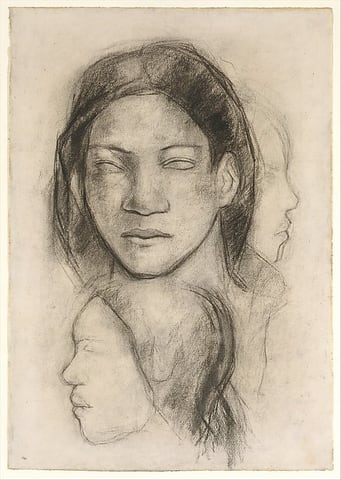
  1. Tahitian Faces (Frontal View and Profiles), by Paul Gauguin, ca. 1899
    Tahitian Faces (Frontal View and Profiles)Paul Gauguin, ca. 1899Courtesy of The Metropolitan Museum of Art
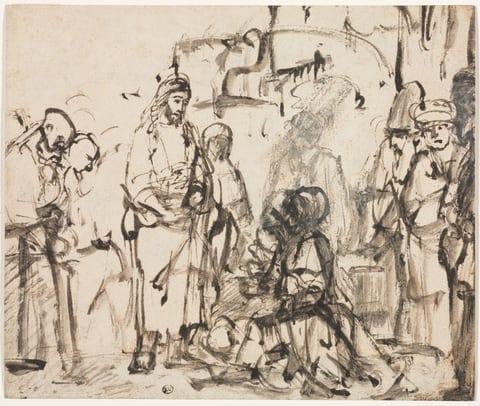
  2. The Meeting of Christ with Martha and Mary after the Death of Lazarus, by Rembrandt van Rijn, c. 1662–65
    The Meeting of Christ with Martha and Mary after the Death of LazarusRembrandt van Rijn, c. 1662–65Courtesy of the Cleveland Museum of Art
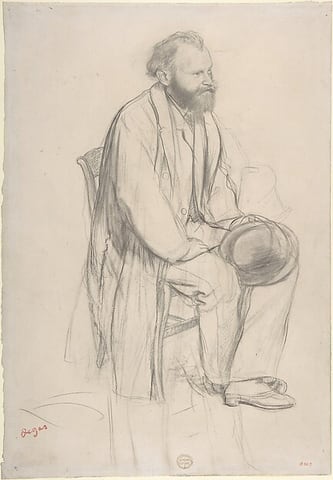
  3. Édouard Manet, Seated, Holding His Hat, by Edgar Degas, ca. 1868
    Édouard Manet, Seated, Holding His HatEdgar Degas, ca. 1868Courtesy of The Metropolitan Museum of Art

Section 2, north wall
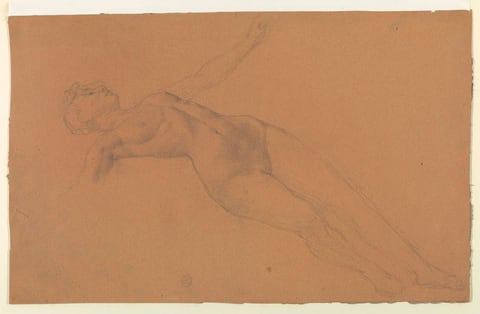
  1. STUDY FOR "DIANA AND HER ATTENDANTS AMONG THE CONSTELLATIONS"
    Study for "Diana and Her Attendants among the Constellations"Francis Augustus Lathrop, ca. 1894Courtesy of Cooper Hewitt, Smithsonian Design Museum
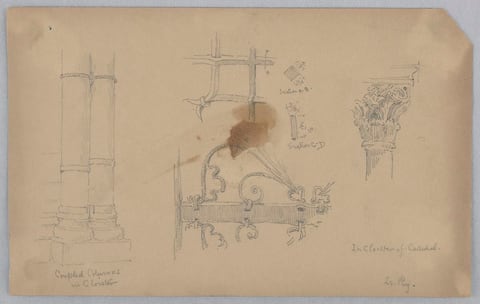
  2. IN CLOISTER OF CATHEDREAL, LE PUY
    In Cloister of Cathedreal, Le PuyArnold William Brunner, 1883Courtesy of Cooper Hewitt, Smithsonian Design Museum

Section 3, north wall
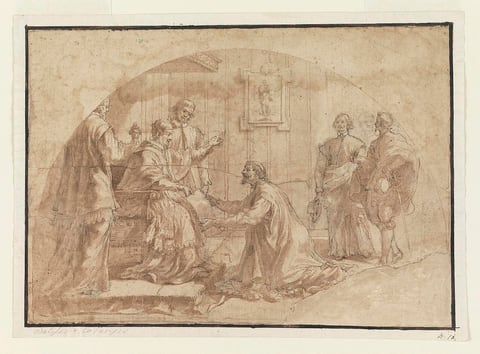
  1. POPE RECEIVING VISITOR
    Pope Receiving VisitorBelisario Corenzio, 1590–1646Courtesy of Cooper Hewitt, Smithsonian Design Museum
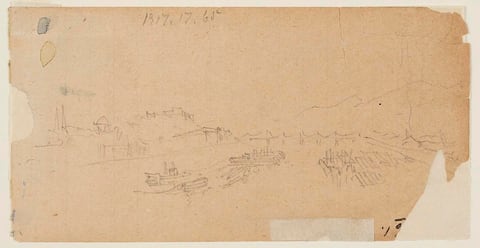
  2. THE TETONS, SHOWN FROM THE PLAIN
    The Tetons, Shown from the PlainThomas Moran, August 28, 1879Courtesy of Cooper Hewitt, Smithsonian Design Museum
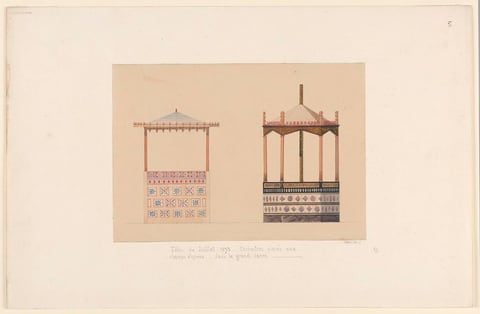
  3. "ORCHSTRES PLACES AUX CHAMPS ELYSEES, DANS LE GRAN CARRES"
    "Orchstres places aux Champs elysees, dans le gran carres"Félix Duban, 1833Courtesy of Cooper Hewitt, Smithsonian Design Museum

Section 3, south wall
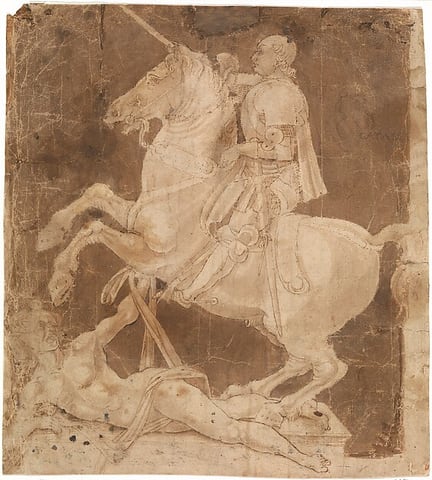
  1. Study for the Equestrian Monument to Francesco Sforza, by Antonio Pollaiuolo, early to mid 1480s
    Study for the Equestrian Monument to Francesco SforzaAntonio Pollaiuolo, early to mid 1480sCourtesy of The Metropolitan Museum of Art
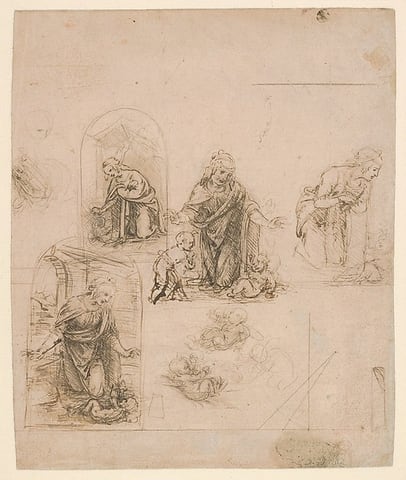
  2. Compositional Sketches for the Virgin Adoring the Christ Child, with and without the Infant St. John the Baptist; Diagram of a Perspectival Projection (recto); Slight Doodles (verso), by Leonardo da Vinci, 1480–85
    Compositional Sketches for the Virgin Adoring the Christ Child, with and without the Infant St. John the Baptist; Diagram of a Perspectival Projection (recto); Slight Doodles (verso)Leonardo da Vinci, 1480–85Courtesy of The Metropolitan Museum of Art