Floor plan

Style galleriesDrawings

Drawings

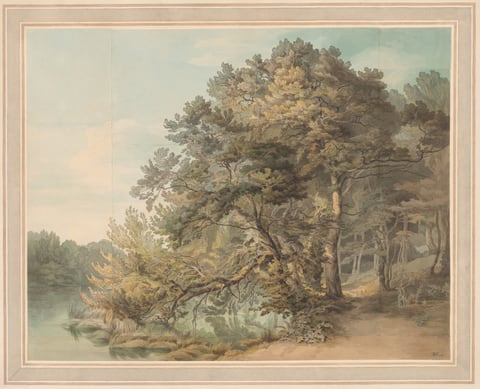
The image shows a forest by a serene, tree-lined body of water. The horizon is high with tall trees extending close to it, creating a sense of depth. The brushstrokes and watercolor application are delicate, capturing textures of leaves and water gently. The color palette includes muted greens, soft browns, and hints of blue and cream. Closest to us is a dense cluster of trees on the right, curving over the water. Across the water, other tree clusters and shrubs recede into the misty background towards the left.
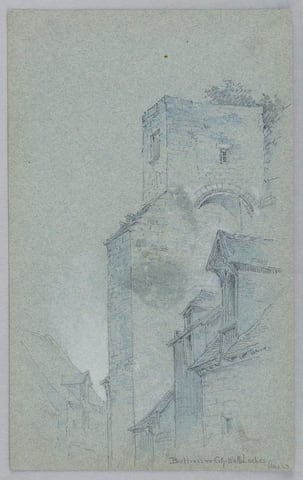
BUTTRESSES ON CITY WALLS; LOCHES
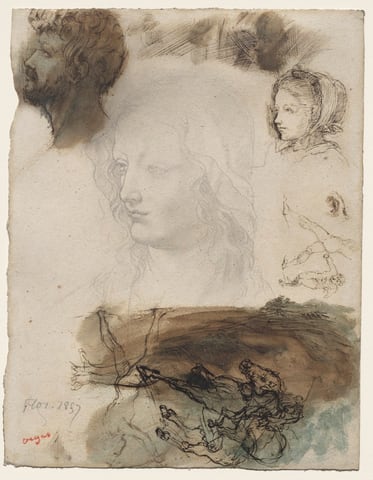
Sheet of Studies and Sketches, by Edgar Degas, 1858
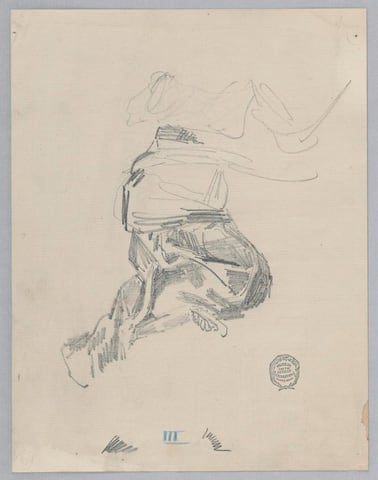
STUDY OF DRAPERY
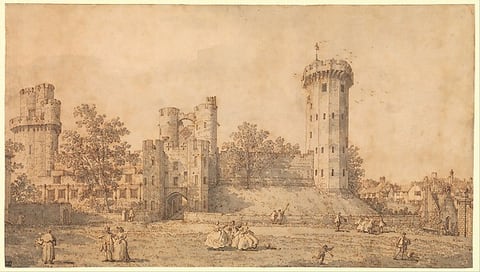
Warwick Castle: The East Front, by Canaletto, 1752
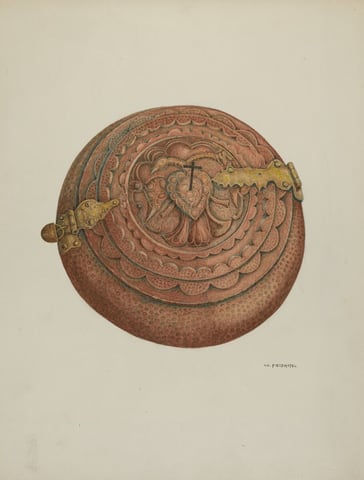
The image features a round, ornately decorated object resembling a shield with metallic-looking decorative hinges on its surface. The color palette is primarily earthy tones such as brown, red, and hints of gold. The object is centered in the image, viewed from the front, with engravings decorating its surface. The background is plain and light in color.

The works in this room are listed below.

Works in this room

Every one of the collection's drawings, in today's hang.

Section 1, north wall

  1. The image shows a forest by a serene, tree-lined body of water. The horizon is high with tall trees extending close to it, creating a sense of depth. The brushstrokes and watercolor application are delicate, capturing textures of leaves and water gently. The color palette includes muted greens, soft browns, and hints of blue and cream. Closest to us is a dense cluster of trees on the right, curving over the water. Across the water, other tree clusters and shrubs recede into the misty background towards the left.
    Peamore, DevonJohn White Abbott, 1799Courtesy National Gallery of Art, Washington
  2. BUTTRESSES ON CITY WALLS; LOCHES
    Buttresses on City Walls; LochesArnold William Brunner, 1883Courtesy of Cooper Hewitt, Smithsonian Design Museum
  3. Sheet of Studies and Sketches, by Edgar Degas, 1858
    Sheet of Studies and SketchesEdgar Degas, 1858Courtesy of the Cleveland Museum of Art

Section 1, south wall

  1. STUDY OF DRAPERY
    Study of DraperyFrancis Augustus Lathrop, ca. 1895Courtesy of Cooper Hewitt, Smithsonian Design Museum
  2. Warwick Castle: The East Front, by Canaletto, 1752
    Warwick Castle: The East FrontCanaletto, 1752Courtesy of The Metropolitan Museum of Art
  3. The image features a round, ornately decorated object resembling a shield with metallic-looking decorative hinges on its surface. The color palette is primarily earthy tones such as brown, red, and hints of gold. The object is centered in the image, viewed from the front, with engravings decorating its surface. The background is plain and light in color.
    Baptismal FontWilliam Kieckhofel, c. 1941Courtesy National Gallery of Art, Washington

Section 2, south wall
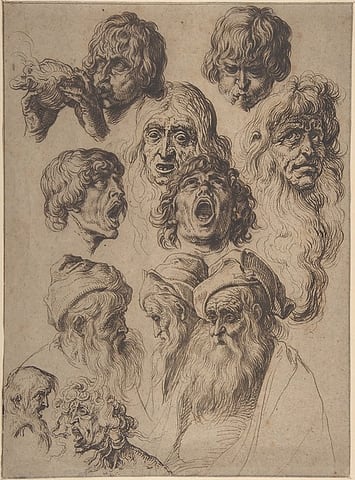
  1. Study of Eleven Heads, by Jacques de Gheyn II, late 16th–early 17th century
    Study of Eleven HeadsJacques de Gheyn II, late 16th–early 17th centuryCourtesy of The Metropolitan Museum of Art
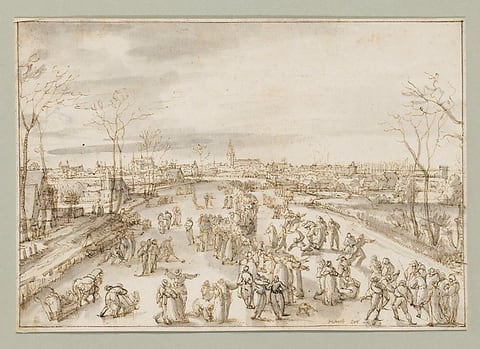
  2. Ice skaters on the Amstel in Amsterdam, by Hans Bol, 1589
    Ice skaters on the Amstel in AmsterdamHans Bol, 1589Courtesy of The Metropolitan Museum of Art
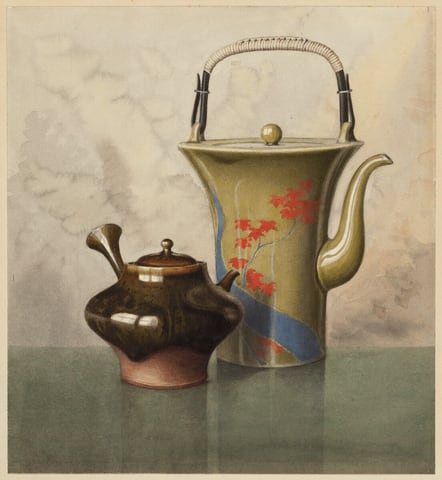
  3. There are two teapots in the image. The larger teapot has a decorative pattern of red leaves and blue curve on an olive-green background, with a white handle. The smaller teapot has a dark brown glossy finish. The color palette consists of earthy tones like browns, olive green, red, and blue. The larger teapot is positioned slightly to the right, behind the smaller one, which is in the foreground on a reflective green surface. The background has a light beige appearance.
    Asian Tea PotsHenry Farrer, n.d.Courtesy National Gallery of Art, Washington

Section 2, north wall
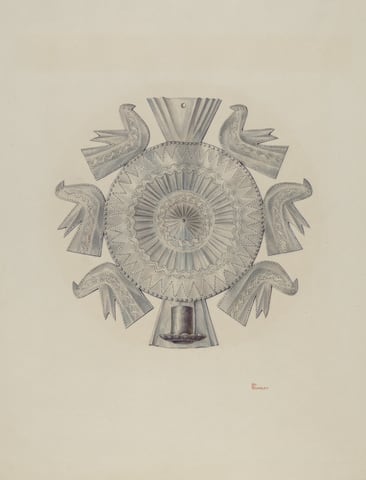
  1. The image shows an abstract composition with circular and linear shapes. In the center is a large, intricately patterned circle with concentric rings, zigzag, and radiating lines. Around it are six identical abstract forms resembling birds or wings, radiating outward. The shapes create a symmetrical pattern reminiscent of a rotating wheel or a sunburst.
    Cut Tin CandleholderHal Blakeley, 1940Courtesy National Gallery of Art, Washington
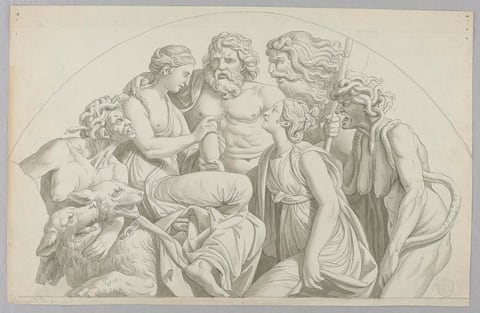
  2. PSYCHE ASKS PROSERPINE TO PUT A LITTLE OF HER BEAUTY IN AN URN FOR VENUS
    Psyche Asks Proserpine to Put a Little of her Beauty in an Urn for VenusJohann August Nahl The Younger, ca. 1781Courtesy of Cooper Hewitt, Smithsonian Design Museum
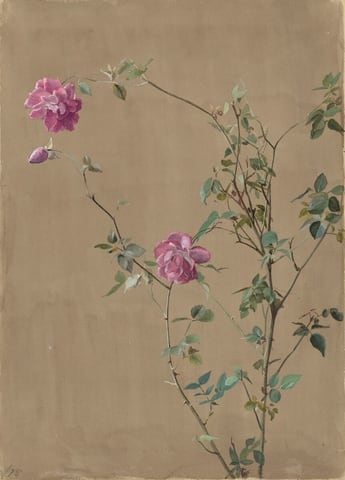
  3. This detailed painting shows two pink roses and a pink bud on a long, thin green stem with green leaves and small green thorns. The tall stem rises near the right edge of the painting, with some thin branches reaching out to either side. The largest rose is positioned near the top left corner of the painting, with the small bud right below it. The other large flower is right around the center of the painting. The background is a flat beige color.
    Pink RosesFidelia Bridges, 1875Courtesy National Gallery of Art, Washington

Section 3, north wall
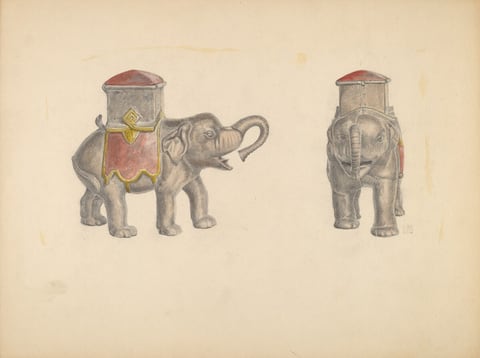
  1. This is a drawing of two ornate elephants. The image depicts two stylized elephants, each adorned with decorative elements. Both elephants are shown carrying a structure on their backs, resembling a small tower or box with a red domed top. The left elephant is turned to the side, its trunk raised. The right elephant faces forward. Each structure on their backs is detailed with intricate designs, including a diamond shape on the side. The overall composition suggests a ceremonial or regal theme. The subtle use of colors like red and gold enhances the ornate appearance. The coloring and shading indicate an attention to detail typical of deliberately crafted illustrations.
    Iron Bank ElephantZ.S. Lupus, c. 1938Courtesy National Gallery of Art, Washington
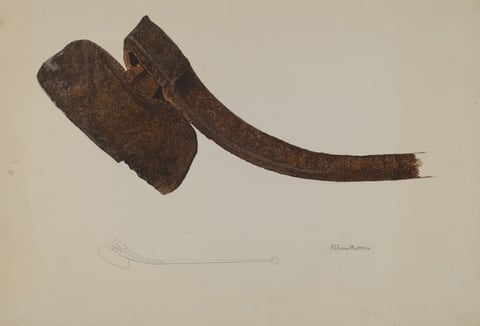
  2. The image shows a large, rusted ax with a curved brown handle placed diagonally across the canvas. The color palette consists of muted browns and beiges, highlighting the aged appearance of the ax. Beneath the ax, there is a faint outline sketch of a similar object, and the artist's signature is located to the right of the sketch. The ax is in the upper half of the image, while the sketch and signature are in the center-bottom section.
    Dumb IronAlfonso Moreno, c. 1938Courtesy National Gallery of Art, Washington
Section 3, south wall

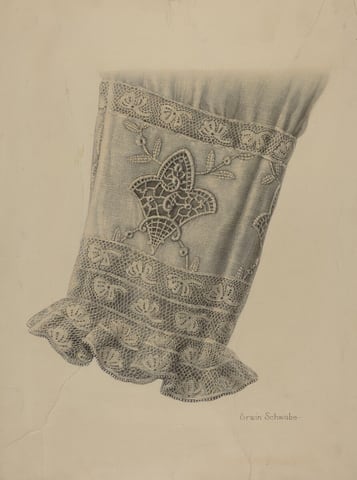
  1. The image shows a lace-trimmed sleeve with a floral lace design in the center, primarily in shades of gray and off-white. The sleeve is positioned vertically in the center of the image, with the top slightly obscured by shadow and the ruffled lace edge at the bottom. The lace details are intricate and precise, enhancing the texture and complexity of the design.
    Cuff LaceErwin Schwabe, c. 1937Courtesy National Gallery of Art, Washington
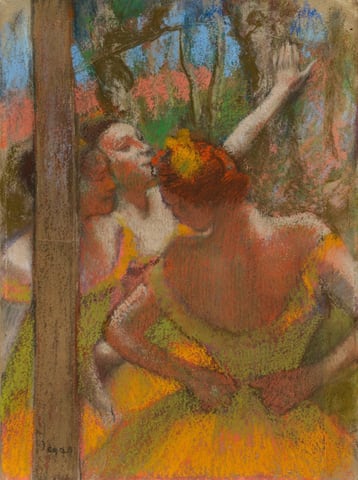
  2. Dancers, by Edgar Degas, c. 1896
    DancersEdgar Degas, c. 1896Courtesy of the Cleveland Museum of Art