Floor plan

Style galleriesDrawings of the 19th century
Drawings of the 19th century
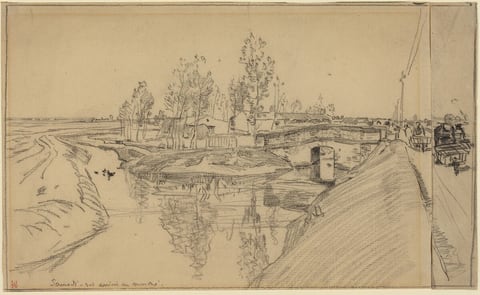
The image depicts a landscape with a road alongside a canal. The view is elevated, showing the road, canal, trees, and structures on the horizon. The style of the sketch is characterized by soft lines and shading, creating depth. The color palette is monochromatic with shades of gray. Closest to us, a canal borders the road with some ducks in the water. Figures and carts are seen on the road leading into the distance.
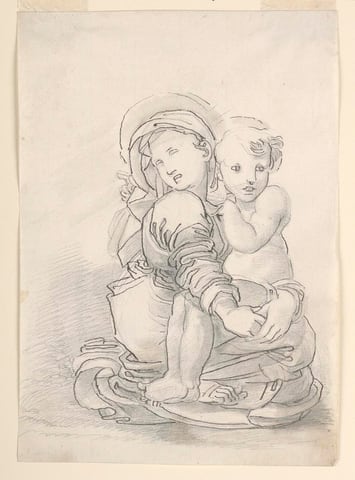
THE VIRGIN WITH THE CHILD
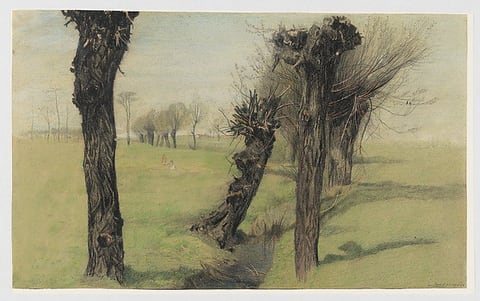
Willow trees at a brook (Weidenbach near Neuostra), by Emilie Mediz-Pelikan, 1895
STUDY OF DRAPERY
ROOKWOOD POTTERY
OTTER CLIFFS

The works in this room are listed below.

Works in this room

Drawings made in the 19th century, from every museum.

Section 1, north wall

  1. The image depicts a landscape with a road alongside a canal. The view is elevated, showing the road, canal, trees, and structures on the horizon. The style of the sketch is characterized by soft lines and shading, creating depth. The color palette is monochromatic with shades of gray. Closest to us, a canal borders the road with some ducks in the water. Figures and carts are seen on the road leading into the distance.
    Arrivee au MarcheAuguste LepèreCourtesy National Gallery of Art, Washington
  2. THE VIRGIN WITH THE CHILD
    The Virgin with the ChildFortunato Duranti, 1820–1850Courtesy of Cooper Hewitt, Smithsonian Design Museum
  3. Willow trees at a brook (Weidenbach near Neuostra), by Emilie Mediz-Pelikan, 1895
    Willow trees at a brook (Weidenbach near Neuostra)Emilie Mediz-Pelikan, 1895Courtesy of The Metropolitan Museum of Art

Section 1, south wall

  1. STUDY OF DRAPERY
    Study of DraperyFrancis Augustus Lathrop, ca. 1895Courtesy of Cooper Hewitt, Smithsonian Design Museum
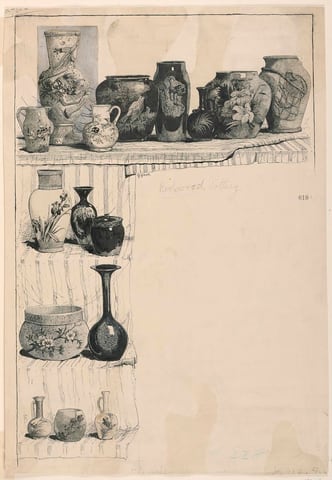
  2. ROOKWOOD POTTERY
    Rookwood PotteryGeorge Gibson, 1886Courtesy of Cooper Hewitt, Smithsonian Design Museum
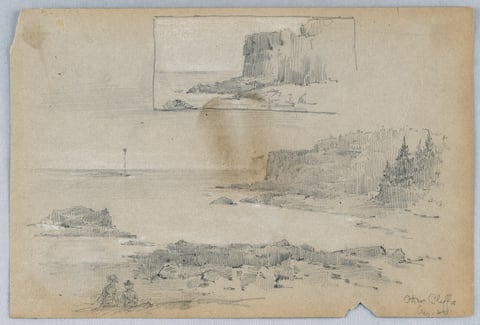
  3. OTTER CLIFFS
    Otter CliffsArnold William Brunner, 1879–80Courtesy of Cooper Hewitt, Smithsonian Design Museum

Section 2, south wall
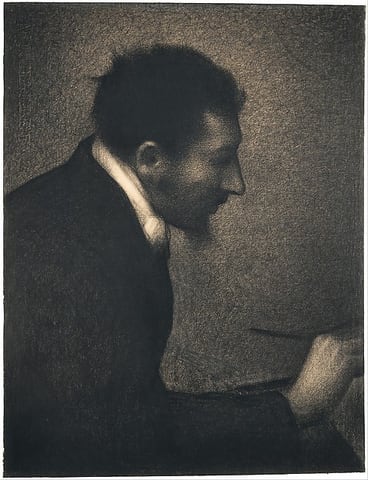
  1. Aman-Jean (Portrait of Edmond François Aman-Jean), by Georges Seurat, 1882–83
    Aman-Jean (Portrait of Edmond François Aman-Jean)Georges Seurat, 1882–83Courtesy of The Metropolitan Museum of Art
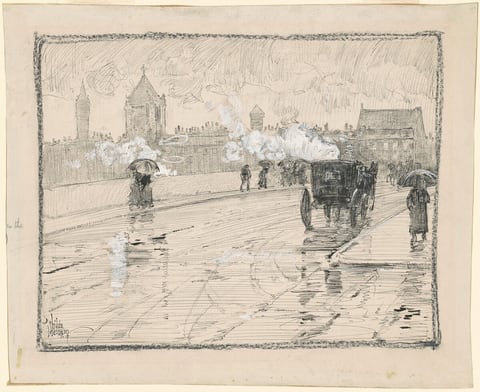
  2. The image shows a street scene from an elevated viewpoint. A horse-drawn carriage is seen moving on a wet road, reflecting light. Pedestrians with umbrellas populate the avenue. The road is visibly marked with rainwater. The skyline displays detailed architectural features like church spires and towers. The painting is done in fine, linear brushstrokes highlighting movement and atmosphere. The grayscale palette emphasizes the rainy urban setting. Wisps of steam or smoke are visible. The intricate line work and shading depict a textured, busy street under an overcast sky.
    Rainy Day, BostonChilde Hassam, 1886Courtesy National Gallery of Art, Washington

Section 2, north wall
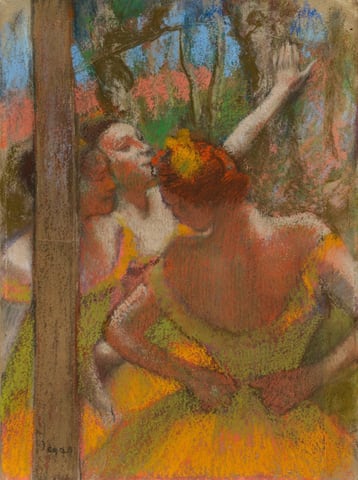
  1. Dancers, by Edgar Degas, c. 1896
    DancersEdgar Degas, c. 1896Courtesy of the Cleveland Museum of Art
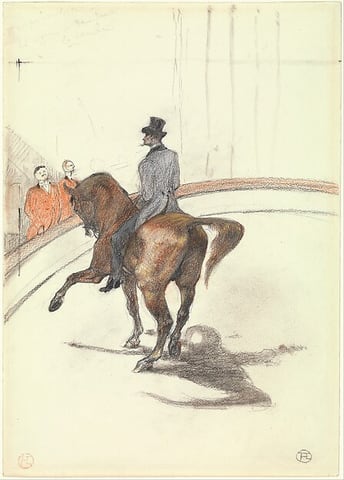
  2. At the Circus: The Spanish Walk (Au Cirque: Le Pas espagnol), by Henri de Toulouse-Lautrec, 1899
    At the Circus: The Spanish Walk (Au Cirque: Le Pas espagnol)Henri de Toulouse-Lautrec, 1899Courtesy of The Metropolitan Museum of Art
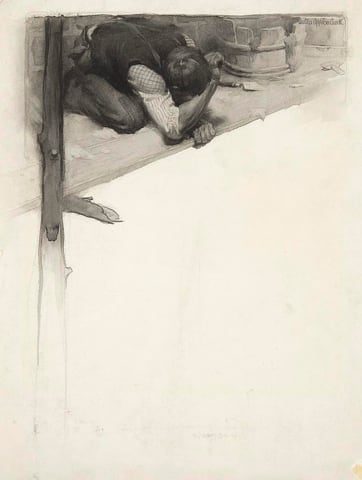
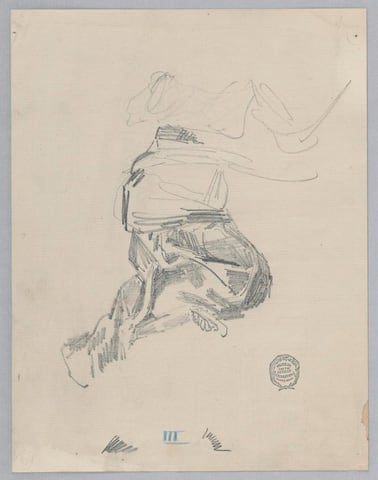
  3. VIGNETTE: MAN CROUCHING ON A SCAFFOLDING
    Vignette: Man Crouching on a ScaffoldingWalter Appleton Clark, 1899Courtesy of Cooper Hewitt, Smithsonian Design Museum

Section 3, north wall
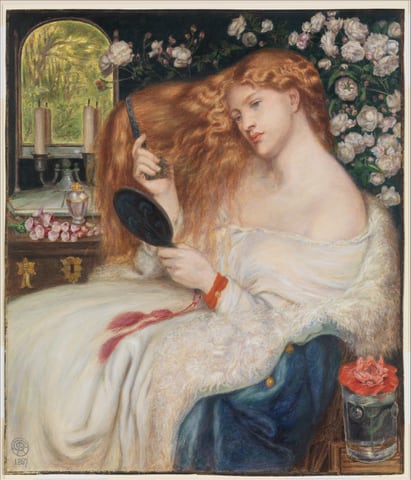
  1. Lady Lilith, by Dante Gabriel Rossetti, 1867
    Lady LilithDante Gabriel Rossetti, 1867Courtesy of The Metropolitan Museum of Art
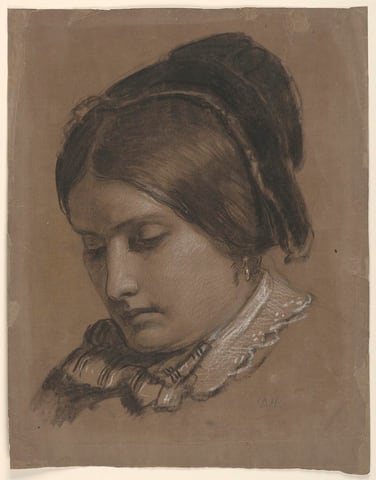
  2. THE ARTIST'S WIFE SOPHIE
    The Artist's Wife SophieDaniel Huntington, 1853Courtesy of Cooper Hewitt, Smithsonian Design Museum

Section 3, south wall
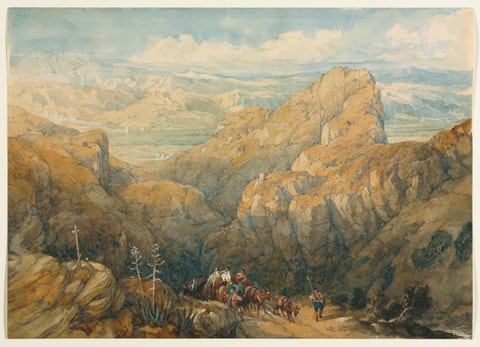
  1. Descent into the Plain of Granada, by David Roberts, 1834
    Descent into the Plain of GranadaDavid Roberts, 1834Courtesy of the Cleveland Museum of Art
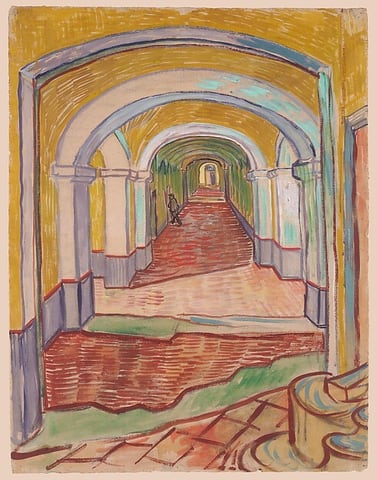
  2. Corridor in the Asylum, by Vincent van Gogh, September 1889
    Corridor in the AsylumVincent van Gogh, September 1889Courtesy of The Metropolitan Museum of Art
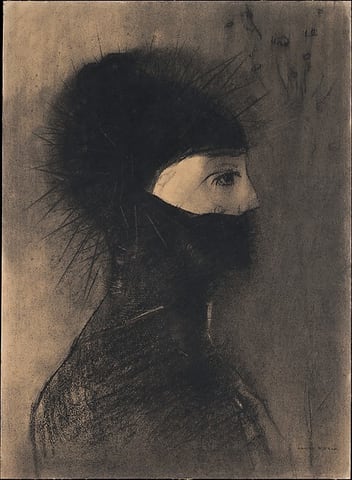
  3. Armor, by Odilon Redon, 1891
    ArmorOdilon Redon, 1891Courtesy of The Metropolitan Museum of Art