Floor plan

Style galleriesDrawings of the 19th century
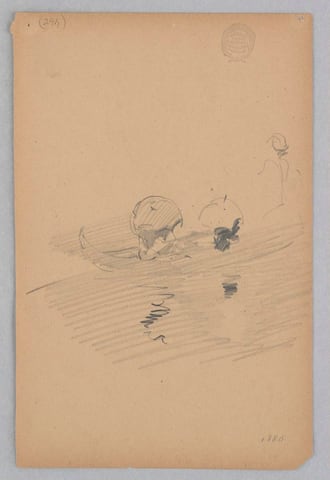
Drawings of the 19th century
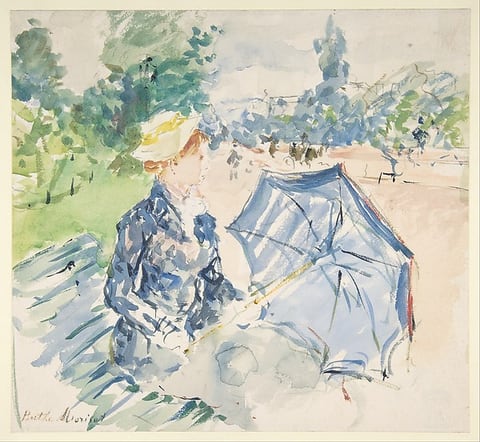
A Woman Seated at a Bench on the Avenue du Bois, by Berthe Morisot, 1885
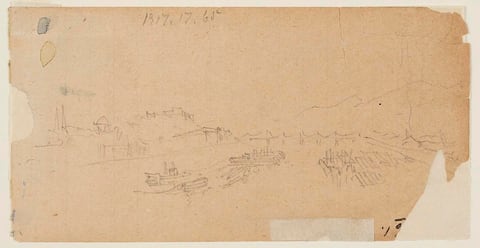
VIEW OF VENICE, ITALY
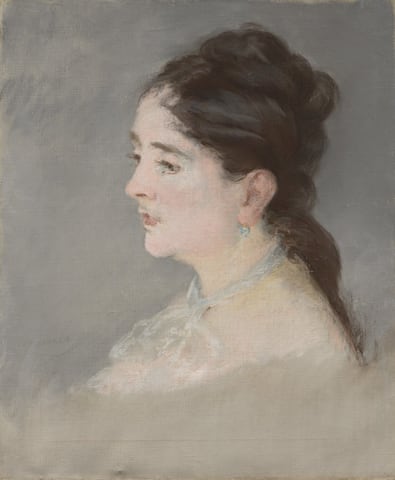
Claire Campbell, by Édouard Manet, 1876
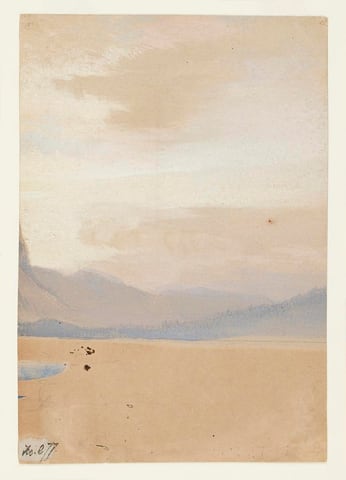
THE TETONS, SHOWN FROM THE PLAIN
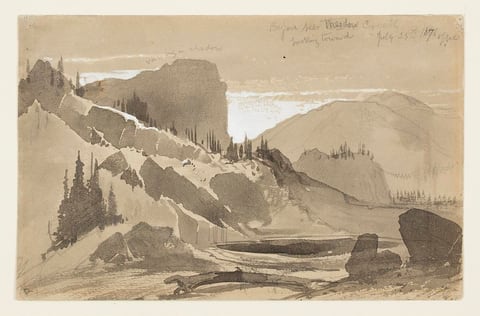
NEAR MEADOW CREEK, UTAH
AMERICAN PLAINS WITH MOUNTAIN RANGE IN THE DISTANCE

The works in this room are listed below.

Works in this room

Drawings made in the 19th century, from every museum.

Section 1, north wall

  1. A Woman Seated at a Bench on the Avenue du Bois, by Berthe Morisot, 1885
    A Woman Seated at a Bench on the Avenue du BoisBerthe Morisot, 1885Courtesy of The Metropolitan Museum of Art
  2. VIEW OF VENICE, ITALY
    View of Venice, ItalyRobert Frederick Blum, 1880Courtesy of Cooper Hewitt, Smithsonian Design Museum
  3. Claire Campbell, by Édouard Manet, 1876
    Claire CampbellÉdouard Manet, 1876Courtesy of the Cleveland Museum of Art

Section 1, south wall

  1. THE TETONS, SHOWN FROM THE PLAIN
    The Tetons, Shown from the PlainThomas Moran, August 28, 1879Courtesy of Cooper Hewitt, Smithsonian Design Museum
  2. NEAR MEADOW CREEK, UTAH
    Near Meadow Creek, UtahThomas Moran, July 25, 1871Courtesy of Cooper Hewitt, Smithsonian Design Museum
  3. AMERICAN PLAINS WITH MOUNTAIN RANGE IN THE DISTANCE
    American Plains with Mountain Range in the DistanceThomas Moran, before 1872Courtesy of Cooper Hewitt, Smithsonian Design Museum

Section 2, south wall
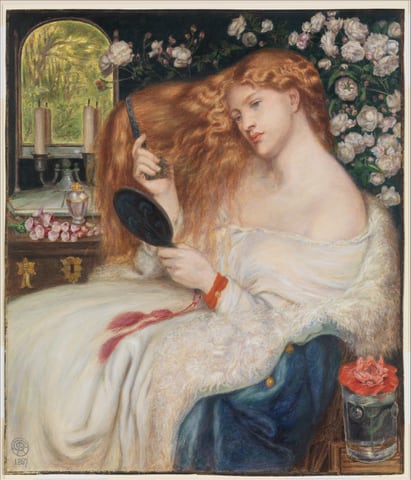
  1. Lady Lilith, by Dante Gabriel Rossetti, 1867
    Lady LilithDante Gabriel Rossetti, 1867Courtesy of The Metropolitan Museum of Art
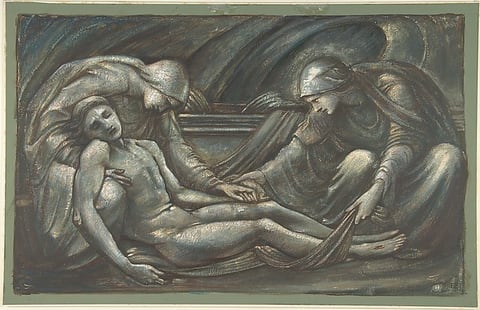
  2. The Entombment, by Sir Edward Burne-Jones, 1879
    The EntombmentSir Edward Burne-Jones, 1879Courtesy of The Metropolitan Museum of Art

Section 2, north wall
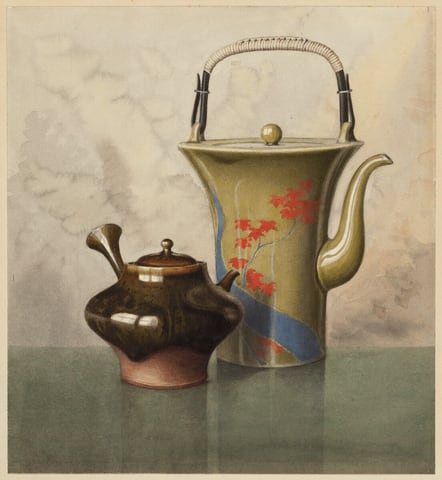
  1. There are two teapots in the image. The larger teapot has a decorative pattern of red leaves and blue curve on an olive-green background, with a white handle. The smaller teapot has a dark brown glossy finish. The color palette consists of earthy tones like browns, olive green, red, and blue. The larger teapot is positioned slightly to the right, behind the smaller one, which is in the foreground on a reflective green surface. The background has a light beige appearance.
    Asian Tea PotsHenry Farrer, n.d.Courtesy National Gallery of Art, Washington
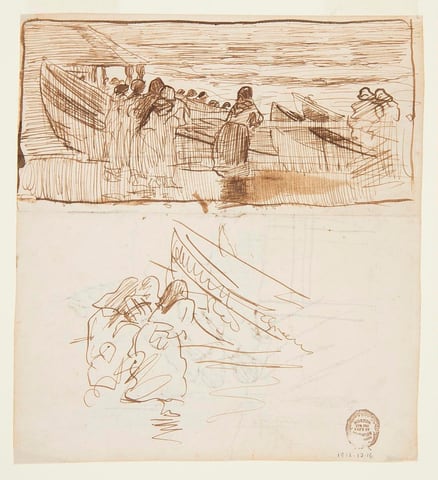
  2. TWO STUDIES OF WOMEN STANDING BEHIND RAILING, LOOKING AT THE LAUNCHING OF DORIES, CULLERCOATS, ENGLAND
    Two Studies of Women Standing behind Railing, Looking at the Launching of Dories, Cullercoats, EnglandWinslow Homer, 1881Courtesy of Cooper Hewitt, Smithsonian Design Museum
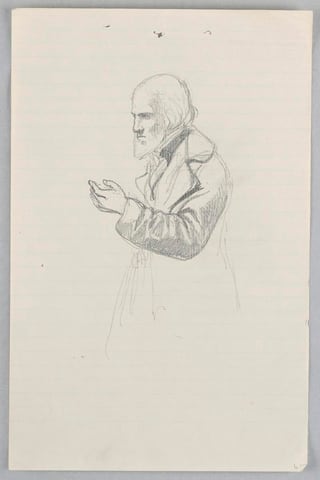
  3. STUDY FOR "SCIENTIFIC GROUP"
    Study for "Scientific Group"Daniel Huntington, 1858Courtesy of Cooper Hewitt, Smithsonian Design Museum

Section 3, north wall
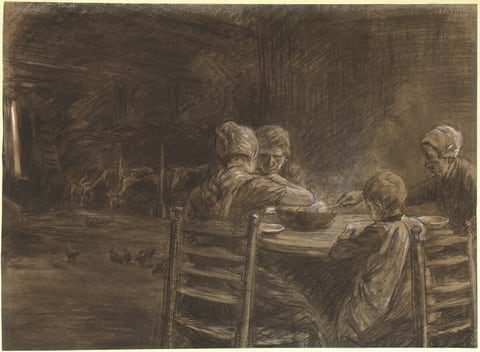
  1. This is a drawing of a rustic interior scene. The artwork depicts an interior where a table is surrounded by chairs. On the table, there is a bowl, as the individuals appear to be interacting or reaching towards it. In the background, livestock and chickens are visible, suggesting the environment is possibly a farm or a barn with a dining space. The use of soft lines and shading creates a warm, intimate, and slightly somber atmosphere within the image, with light and shadow playing an important role in highlighting the subjects and their surroundings.
    East Frisian Peasants Eating SupperMax Liebermann, 1893Courtesy National Gallery of Art, Washington
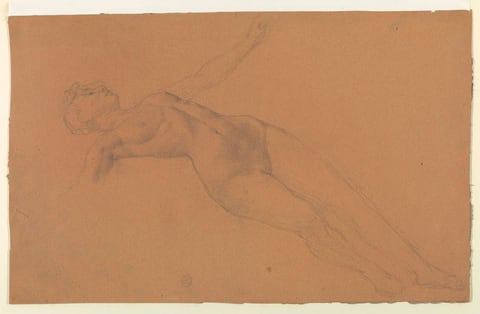
  2. STUDY FOR "DIANA AND HER ATTENDANTS AMONG THE CONSTELLATIONS"
    Study for "Diana and Her Attendants among the Constellations"Francis Augustus Lathrop, ca. 1894Courtesy of Cooper Hewitt, Smithsonian Design Museum

Section 3, south wall
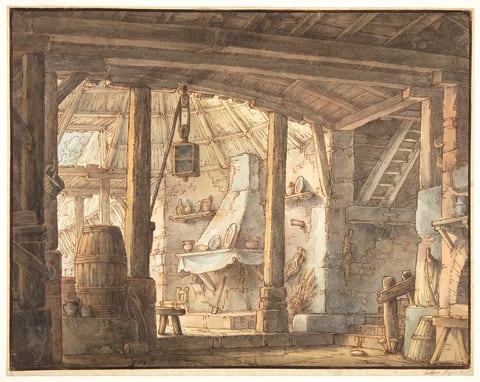
  1. RUSTIC INTERIOR: STAGE DESIGN FOR THE TEATRO DE' FELICINI, BOLOGNA
    Rustic Interior: Stage Design for the Teatro de' Felicini, BolognaAntonio Giuseppe Basoli, ca. 1810Courtesy of Cooper Hewitt, Smithsonian Design Museum
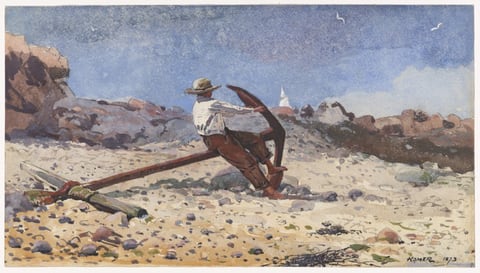
  2. Boy with Anchor, by Winslow Homer, 1873
    Boy with AnchorWinslow Homer, 1873Courtesy of the Cleveland Museum of Art
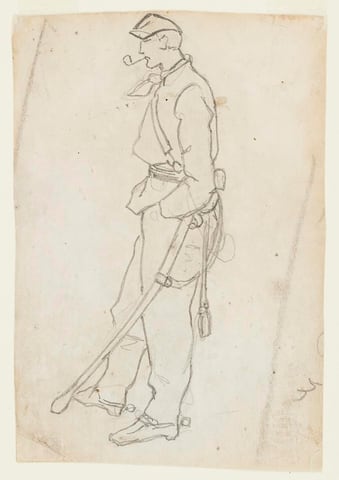
  3. SOLDIER WITH SWORD AND PIPE
    Soldier with Sword and PipeWinslow Homer, 1862Courtesy of Cooper Hewitt, Smithsonian Design Museum