Floor plan

Style galleriesDrawings of the 19th century
Drawings of the 19th century
Leaping Trout, by Winslow Homer, 1889
The image shows a dense, forested area with towering trees. The composition leads the eye along a pathway into the distance, without a distinct horizon line. The intricate brushstrokes depict the texture and foliage of the trees, suggesting movement and light filtering through the leaves. The color palette is rich and earthy, with shades of green, brown, yellow, and orange, creating a vibrant yet tranquil atmosphere emphasizing light and shadow.
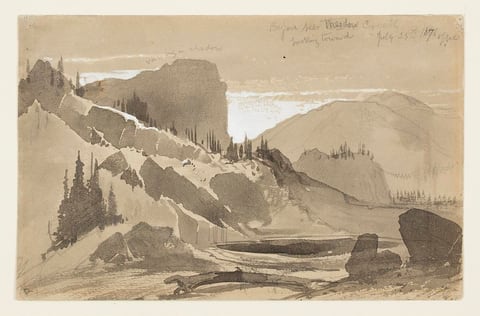
NEAR MEADOW CREEK, UTAH
Landscape with Wheelbarrow, by Vincent van Gogh, 1883
Loggia of the Ducal Palace, Venice, by John Ruskin, 1849–50

The works in this room are listed below.

Works in this room

Drawings made in the 19th century, from every museum.

Section 1, north wall

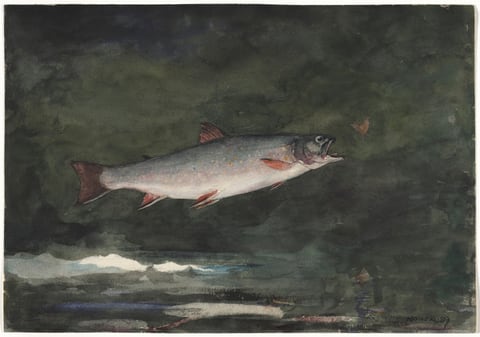
  1. Leaping Trout, by Winslow Homer, 1889
    Leaping TroutWinslow Homer, 1889Courtesy of the Cleveland Museum of Art
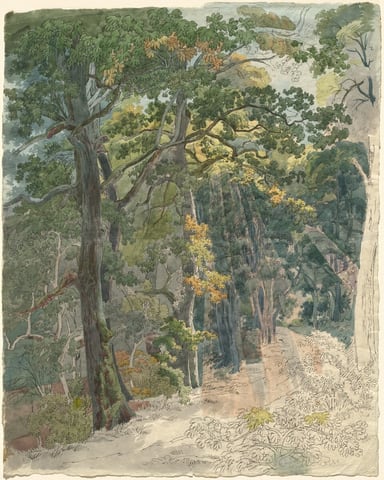
  2. The image shows a dense, forested area with towering trees. The composition leads the eye along a pathway into the distance, without a distinct horizon line. The intricate brushstrokes depict the texture and foliage of the trees, suggesting movement and light filtering through the leaves. The color palette is rich and earthy, with shades of green, brown, yellow, and orange, creating a vibrant yet tranquil atmosphere emphasizing light and shadow.
    Rays of Sunlight Striking a Woodland PathFriedrich Salathé, c. 1815Courtesy National Gallery of Art, Washington

Section 1, south wall

  1. NEAR MEADOW CREEK, UTAH
    Near Meadow Creek, UtahThomas Moran, July 25, 1871Courtesy of Cooper Hewitt, Smithsonian Design Museum
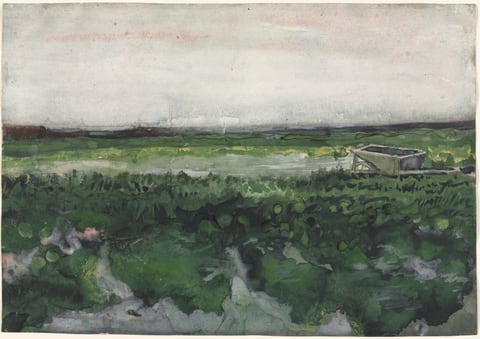
  2. Landscape with Wheelbarrow, by Vincent van Gogh, 1883
    Landscape with WheelbarrowVincent van Gogh, 1883Courtesy of the Cleveland Museum of Art
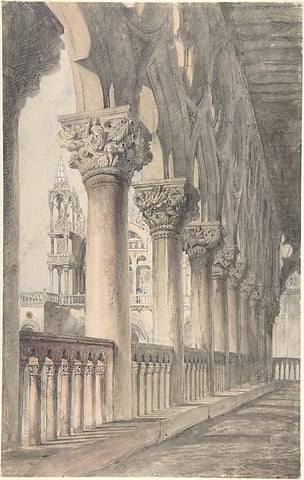
  3. Loggia of the Ducal Palace, Venice, by John Ruskin, 1849–50
    Loggia of the Ducal Palace, VeniceJohn Ruskin, 1849–50Courtesy of The Metropolitan Museum of Art

Section 2, south wall
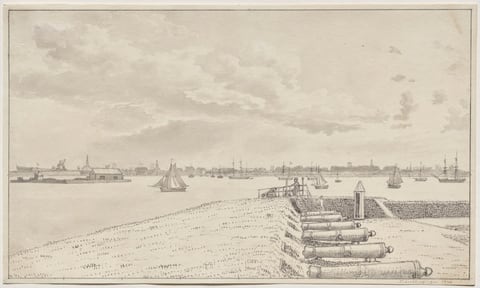
  1. View from the Battery toward the City, by Christoffer Wilhelm Eckersberg, 1836
    View from the Battery toward the CityChristoffer Wilhelm Eckersberg, 1836Courtesy of the Cleveland Museum of Art
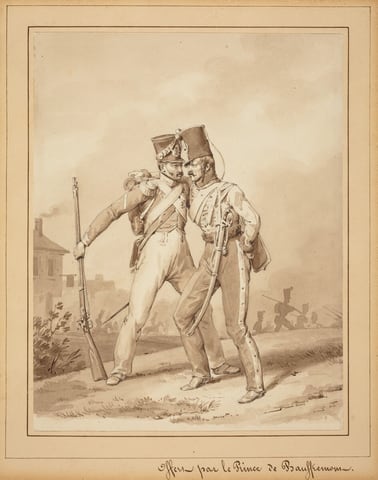
  2. The image features two men in military uniform engaging closely with each other. Both are shown from head to toe. The man on the left stands with his left leg forward, holding a rifle, and has his right arm around the shoulder of the other man. The man on the right has his right leg slightly bent, supporting his weight, and is holding a sword in his left hand. Each man has distinctive facial features. Both wear tall, elaborate military hats and detailed uniforms. The man on the left displays a strap over his shoulder, while the man on the right has intricate decorations on his jacket and trousers. In the background, there are a few more soldiers and part of a building to the left. The setting is monochromatic.
    Two GrenadiersVictor AdamCourtesy National Gallery of Art, Washington
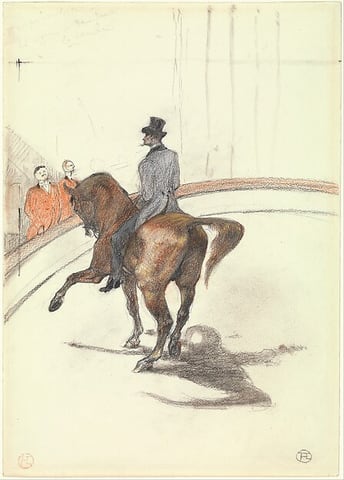
  3. At the Circus: The Spanish Walk (Au Cirque: Le Pas espagnol), by Henri de Toulouse-Lautrec, 1899
    At the Circus: The Spanish Walk (Au Cirque: Le Pas espagnol)Henri de Toulouse-Lautrec, 1899Courtesy of The Metropolitan Museum of Art

Section 2, north wall
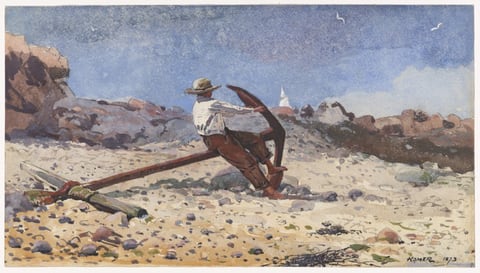
  1. Boy with Anchor, by Winslow Homer, 1873
    Boy with AnchorWinslow Homer, 1873Courtesy of the Cleveland Museum of Art
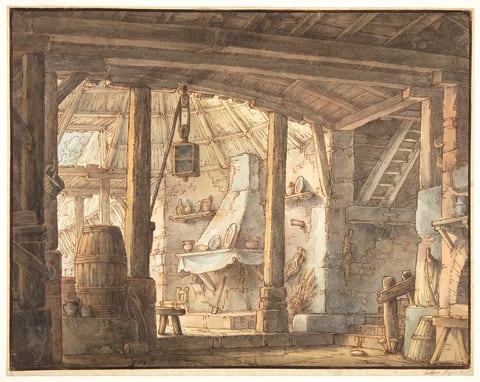
  2. RUSTIC INTERIOR: STAGE DESIGN FOR THE TEATRO DE' FELICINI, BOLOGNA
    Rustic Interior: Stage Design for the Teatro de' Felicini, BolognaAntonio Giuseppe Basoli, ca. 1810Courtesy of Cooper Hewitt, Smithsonian Design Museum
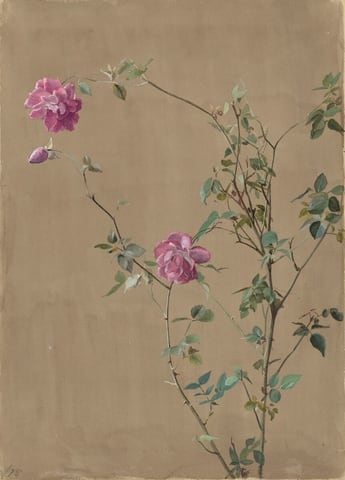
  3. This detailed painting shows two pink roses and a pink bud on a long, thin green stem with green leaves and small green thorns. The tall stem rises near the right edge of the painting, with some thin branches reaching out to either side. The largest rose is positioned near the top left corner of the painting, with the small bud right below it. The other large flower is right around the center of the painting. The background is a flat beige color.
    Pink RosesFidelia Bridges, 1875Courtesy National Gallery of Art, Washington

Section 3, north wall
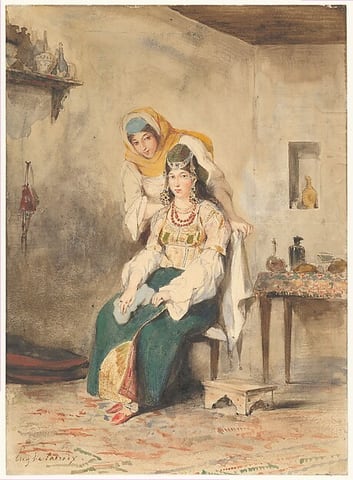
  1. Saada, the Wife of Abraham Ben-Chimol, and Préciada, One of Their Daughters, by Eugène Delacroix, 1832
    Saada, the Wife of Abraham Ben-Chimol, and Préciada, One of Their DaughtersEugène Delacroix, 1832Courtesy of The Metropolitan Museum of Art
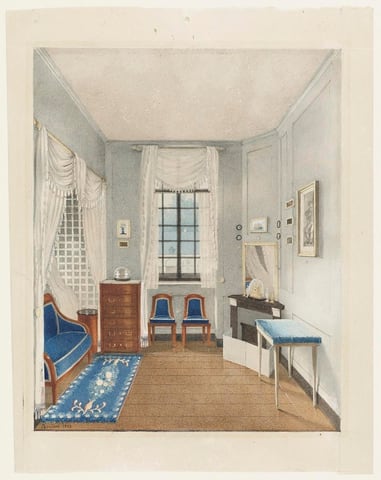
  2. A FRENCH RESTORATION BEDROOM
    A French Restoration BedroomBouilhet, French, 1823Courtesy of Cooper Hewitt, Smithsonian Design Museum
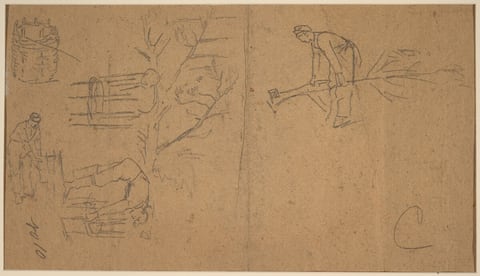
  3. This is a drawing of various sketches related to woodcutting or carpentry. The drawing features several pencil sketches on tan paper. On the left side, there are depictions of a barrel or basket, and beneath it, several outline sketches of figures engaged in activities involving woodwork. The right side of the drawing shows a figure bent over a large beam or branch. The sketches are simple, with minimal detail, capturing the basic form and movement of the figures and objects involved in woodwork-related activities.
    Soldiers felling sapling, and weaving saplings into baskets [verso]Winslow Homer, 1862Courtesy National Gallery of Art, Washington

Section 3, south wall
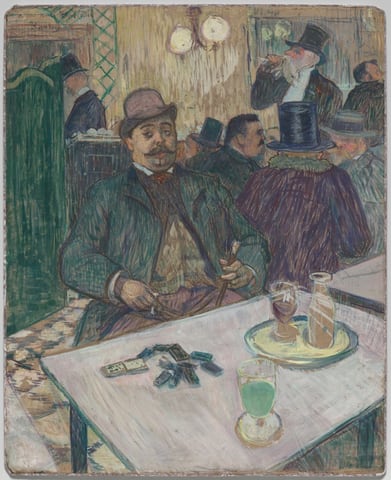
  1. Monsieur Boileau at the Café, by Henri de Toulouse-Lautrec, 1893
    Monsieur Boileau at the CaféHenri de Toulouse-Lautrec, 1893Courtesy of the Cleveland Museum of Art
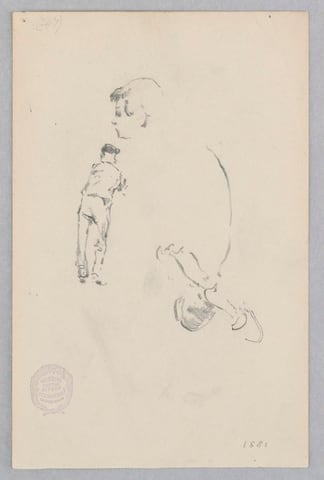
  2. FIGURES
    FiguresRobert Frederick Blum, 1881Courtesy of Cooper Hewitt, Smithsonian Design Museum