Floor plan

Style galleriesThe American Gilded Age
The American Gilded Age
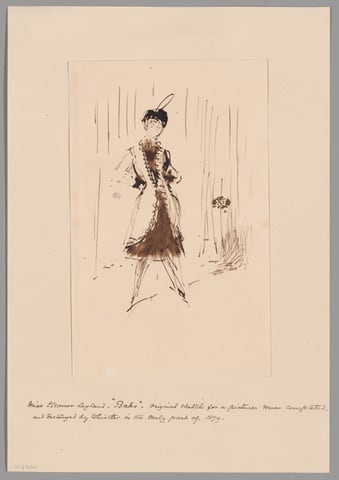
A work made of pen and brown ink, with brush and brown ink, on cream pseudo-laid paper tipped onto cream wove paper.
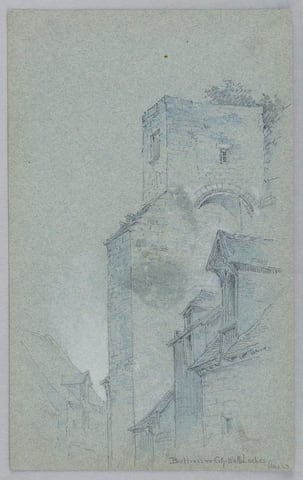
BUTTRESSES ON CITY WALLS; LOCHES
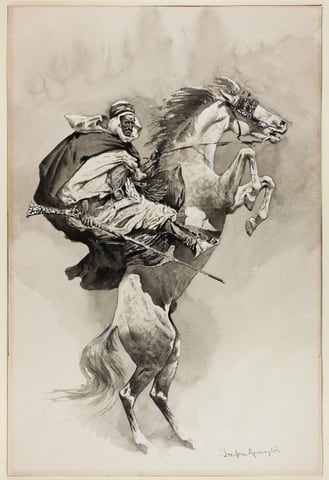
A work made of brush and black gray wash heightened with white gouache over graphite, on cream laminate board.
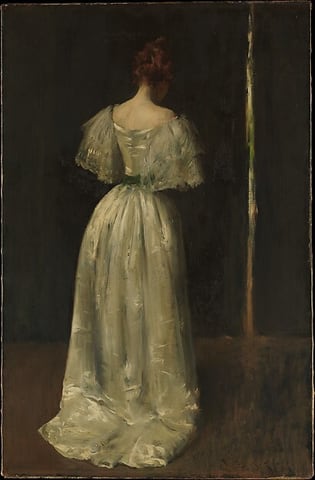
Seventeenth Century Lady, by William Merritt Chase, ca. 1895
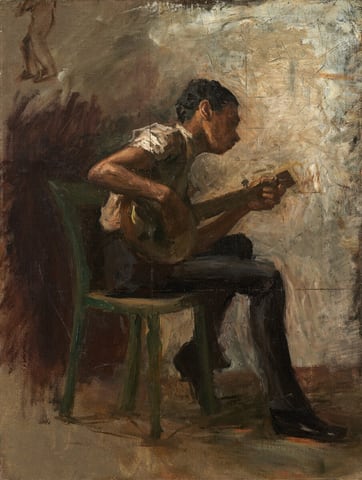
A young, gangly, brown-skinned boy sits on a green chair and leans over the banjo he plays in this loosely painted, vertical composition. His body faces our right in profile, and his head leans to his left and away from us. Light comes from our left to highlight his ear and the side of his chin, but throws his profile into shadow against the lighter background. The boy has short black hair and wears a white shirt with the sleeves rolled up, black pants, and black shoes. The floor is loosely painted with streaks of earth brown, taupe, and dark moss green. The wall behind the boy is painted with visible strokes of parchment brown, peachy tan, pearl white, and fog gray. The space to our left of the boy is dark brown, and an outline of a standing person is sketched in the top left corner. A grid is overlaid across the boy’s body and the chair.
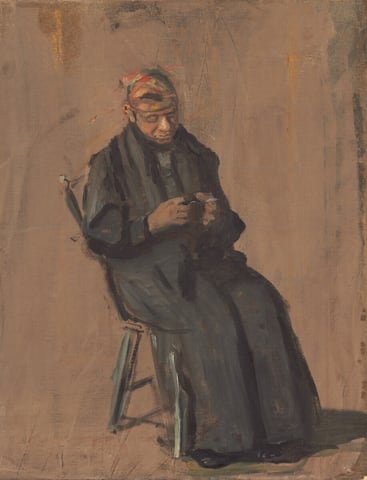
This painting shows a person seated on a stool or chair, wearing a long, dark-blue robe or gown. They are slightly turned toward the right, looking downward at something they hold in their hands, and their head is covered with a cloth or cap. The background is textured with earthy tones, mostly tan with some patches of yellow ochre and gray.
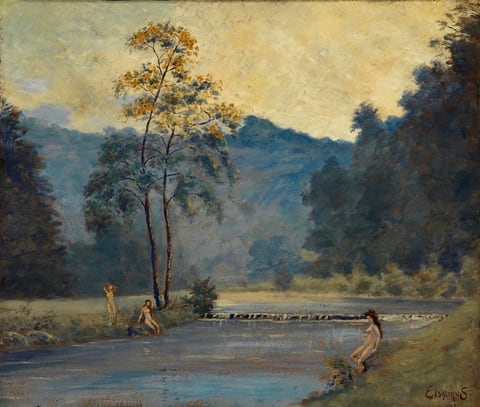
Three Girls and River, by Louis M. Eilshemius, 1907
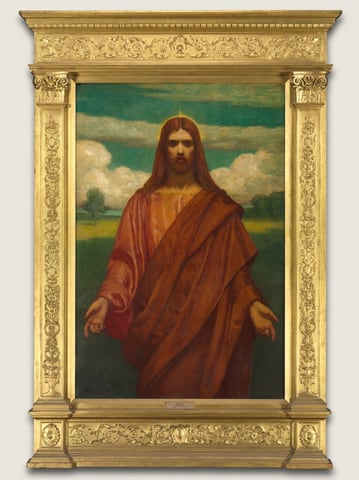
Christ, by Kenyon Cox, 1905

The works in this room are listed below.

Works in this room

Painting and design in the United States from the Civil War to 1910.

First room, north wall

  1. A work made of pen and brown ink, with brush and brown ink, on cream pseudo-laid paper tipped onto cream wove paper.
    Study for "The Blue Girl: Portrait of Miss Elinor Leyland"James McNeill Whistler, c. 1879Courtesy of the Art Institute of Chicago
  2. BUTTRESSES ON CITY WALLS; LOCHES
    Buttresses on City Walls; LochesArnold William Brunner, 1883Courtesy of Cooper Hewitt, Smithsonian Design Museum
  3. A work made of brush and black gray wash heightened with white gouache over graphite, on cream laminate board.
    "As They Threw their Animals Back upon their Haunches," illustration for An Arabian Day and Night, in Harper's New Monthly MagazineFrederic Remington, n.d.Courtesy of the Art Institute of Chicago
  4. Seventeenth Century Lady, by William Merritt Chase, ca. 1895
    Seventeenth Century LadyWilliam Merritt Chase, ca. 1895Courtesy of The Metropolitan Museum of Art

First room, south wall

  1. A young, gangly, brown-skinned boy sits on a green chair and leans over the banjo he plays in this loosely painted, vertical composition. His body faces our right in profile, and his head leans to his left and away from us. Light comes from our left to highlight his ear and the side of his chin, but throws his profile into shadow against the lighter background. The boy has short black hair and wears a white shirt with the sleeves rolled up, black pants, and black shoes. The floor is loosely painted with streaks of earth brown, taupe, and dark moss green. The wall behind the boy is painted with visible strokes of parchment brown, peachy tan, pearl white, and fog gray. The space to our left of the boy is dark brown, and an outline of a standing person is sketched in the top left corner. A grid is overlaid across the boy’s body and the chair.
    Study for "The Dancing Lesson": The Banjo PlayerThomas Eakins, probably 1877Courtesy National Gallery of Art, Washington
  2. This painting shows a person seated on a stool or chair, wearing a long, dark-blue robe or gown. They are slightly turned toward the right, looking downward at something they hold in their hands, and their head is covered with a cloth or cap. The background is textured with earthy tones, mostly tan with some patches of yellow ochre and gray.
    The ChaperoneThomas Eakins, c. 1908Courtesy National Gallery of Art, Washington
  3. Three Girls and River, by Louis M. Eilshemius, 1907
    Three Girls and RiverLouis M. Eilshemius, 1907Courtesy of the Smithsonian American Art Museum
  4. Christ, by Kenyon Cox, 1905
    ChristKenyon Cox, 1905Courtesy of the Cleveland Museum of Art

Second room, south wall
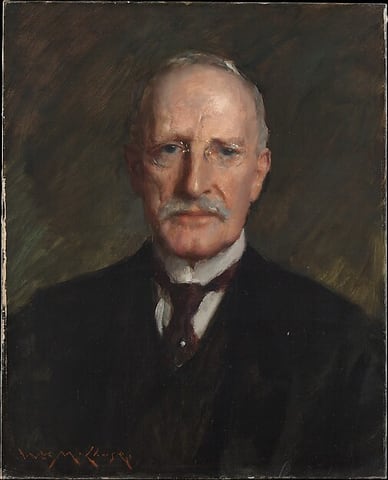
  1. Edward Guthrie Kennedy, by William Merritt Chase, ca. 1895
    Edward Guthrie KennedyWilliam Merritt Chase, ca. 1895Courtesy of The Metropolitan Museum of Art
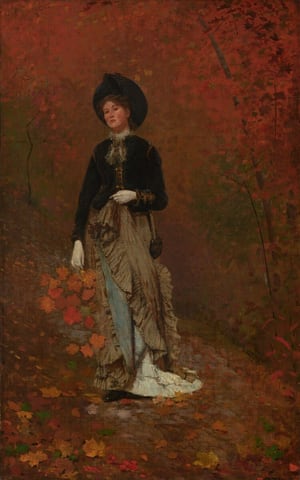
  2. A woman with smooth, pale skin and wearing a hat, long dress, and gloves, stands holding a bunch of pumpkin-orange leaves against a background of trees painted with touches of rust orange and pine green in this vertical painting. The woman tips her head back slightly to look at us with dark eyes under arched eyebrows. Her cheeks are flushed and her coral-pink lips closed. Her round black hat perches on the back of her head and she has an inky black, long-sleeved, hip-length jacket with bronze trim at the shoulders, cuffs, and down the front. A gauzy bow is tied at her neck. Her left elbow, on our right, is bent and she holds up her tan-colored, ruffled skirt with a white-gloved hand. The raised skirt exposes sky-blue lining and white, ruffled flounces at her feet. Her right arm, on our left, hangs at her side and holds the handle of a basket. Deep marigold-orange leaves cascade out of the basket. One black shoe peeks out from under her long skirt. She stands on a hill carpeted with crimson-red, tawny-brown, golden yellow, and forest-green leaves. The space behind her is filled with touches and dabs of red, orange, brown, black, and tan.
    AutumnWinslow Homer, 1877Courtesy National Gallery of Art, Washington
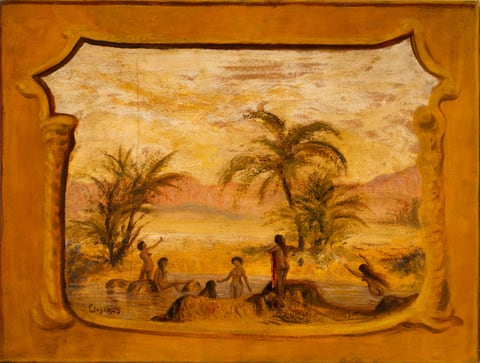
  3. Louis Eilshemius
    Samoan SceneLouis M. Eilshemius, 1908Courtesy of the Hirshhorn Museum and Sculpture Garden, Smithsonian Institution
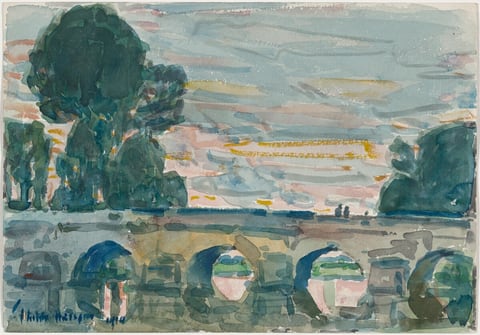
  4. The Bridge at Grez [recto], by Childe Hassam, 1904
    The Bridge at Grez [recto]Childe Hassam, 1904Courtesy National Gallery of Art, Washington

Second room, north wall
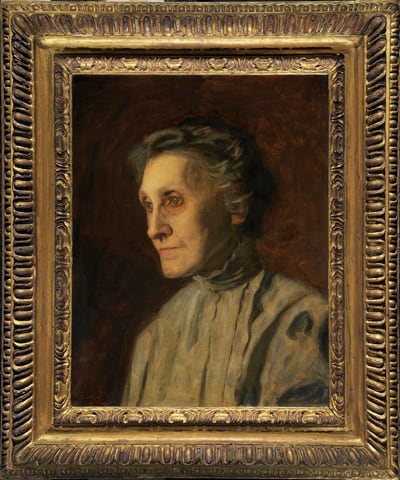
  1. Thomas Eakins
    Portrait of Mrs. Helen Mac Knight (Portrait of a Mother)Thomas Eakins, (c. 1903)Courtesy of the Hirshhorn Museum and Sculpture Garden, Smithsonian Institution
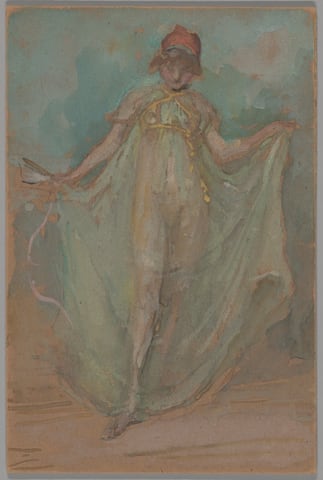
  2. Pale watercolor drawing of young dancer in long sheer dress.
    Green and Blue: The DancerJames McNeill Whistler, c. 1893Courtesy of the Art Institute of Chicago

Third room, north wall
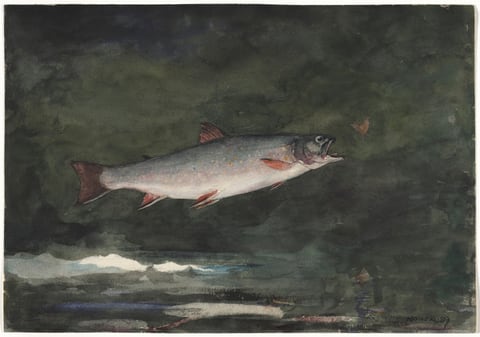
  1. Leaping Trout, by Winslow Homer, 1889
    Leaping TroutWinslow Homer, 1889Courtesy of the Cleveland Museum of Art
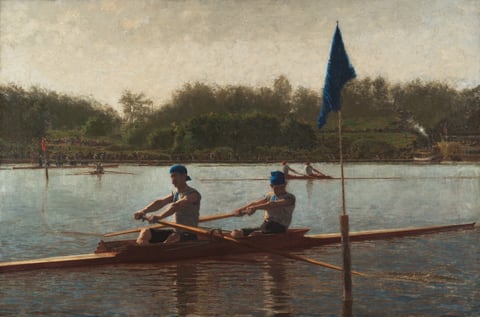
  2. The Biglin Brothers Turning the Stake, by Thomas Eakins, 1873
    The Biglin Brothers Turning the StakeThomas Eakins, 1873Courtesy of the Cleveland Museum of Art