Floor plan

Style galleriesThe American Gilded Age
The American Gilded Age
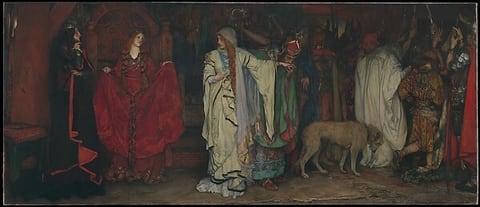
"King Lear," Act I, Scene I, by Edwin Austin Abbey, 1898
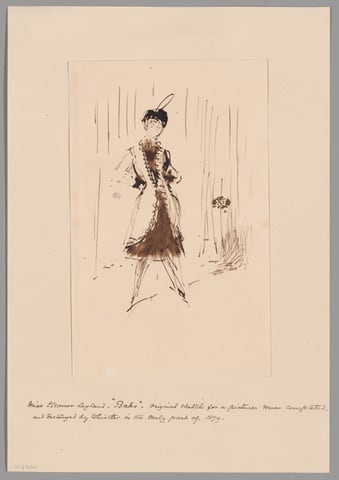
A work made of pen and brown ink, with brush and brown ink, on cream pseudo-laid paper tipped onto cream wove paper.
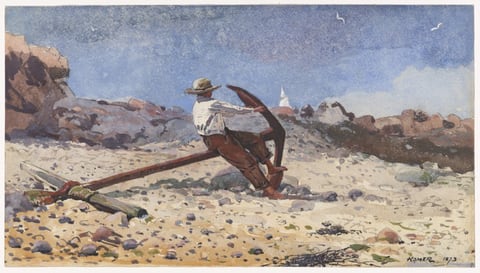
Boy with Anchor, by Winslow Homer, 1873
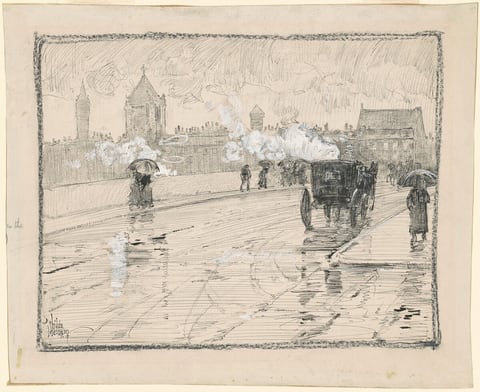
The image shows a street scene from an elevated viewpoint. A horse-drawn carriage is seen moving on a wet road, reflecting light. Pedestrians with umbrellas populate the avenue. The road is visibly marked with rainwater. The skyline displays detailed architectural features like church spires and towers. The painting is done in fine, linear brushstrokes highlighting movement and atmosphere. The grayscale palette emphasizes the rainy urban setting. Wisps of steam or smoke are visible. The intricate line work and shading depict a textured, busy street under an overcast sky.
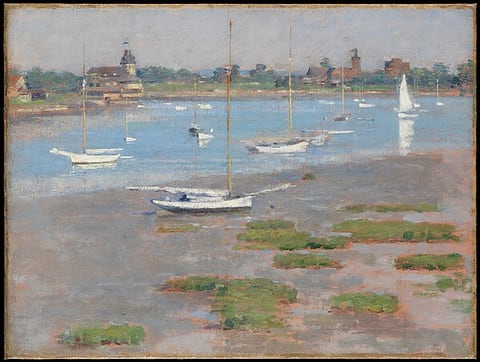
Low Tide, Riverside Yacht Club, by Theodore Robinson, 1894
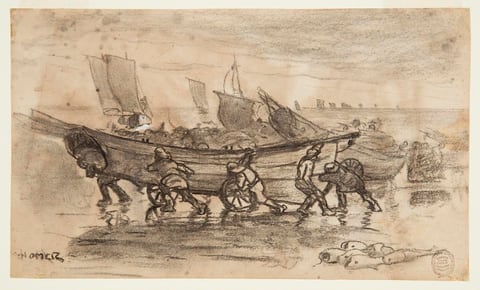
FISHERMEN BEACHING A DORY, CULLERCOATS, ENGLAND
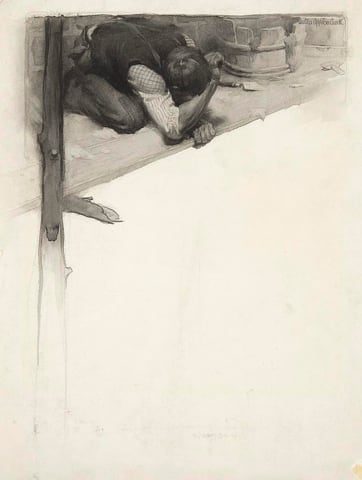
VIGNETTE: MAN CROUCHING ON A SCAFFOLDING

The works in this room are listed below.

Works in this room

Painting and design in the United States from the Civil War to 1910.

First room, north wall

  1. "King Lear," Act I, Scene I, by Edwin Austin Abbey, 1898
    "King Lear," Act I, Scene IEdwin Austin Abbey, 1898Courtesy of The Metropolitan Museum of Art
  2. A work made of pen and brown ink, with brush and brown ink, on cream pseudo-laid paper tipped onto cream wove paper.
    Study for "The Blue Girl: Portrait of Miss Elinor Leyland"James McNeill Whistler, c. 1879Courtesy of the Art Institute of Chicago
  3. Boy with Anchor, by Winslow Homer, 1873
    Boy with AnchorWinslow Homer, 1873Courtesy of the Cleveland Museum of Art

First room, south wall

  1. The image shows a street scene from an elevated viewpoint. A horse-drawn carriage is seen moving on a wet road, reflecting light. Pedestrians with umbrellas populate the avenue. The road is visibly marked with rainwater. The skyline displays detailed architectural features like church spires and towers. The painting is done in fine, linear brushstrokes highlighting movement and atmosphere. The grayscale palette emphasizes the rainy urban setting. Wisps of steam or smoke are visible. The intricate line work and shading depict a textured, busy street under an overcast sky.
    Rainy Day, BostonChilde Hassam, 1886Courtesy National Gallery of Art, Washington
  2. Low Tide, Riverside Yacht Club, by Theodore Robinson, 1894
    Low Tide, Riverside Yacht ClubTheodore Robinson, 1894Courtesy of The Metropolitan Museum of Art
  3. FISHERMEN BEACHING A DORY, CULLERCOATS, ENGLAND
    Fishermen Beaching a Dory, Cullercoats, EnglandWinslow Homer, 1881Courtesy of Cooper Hewitt, Smithsonian Design Museum
  4. VIGNETTE: MAN CROUCHING ON A SCAFFOLDING
    Vignette: Man Crouching on a ScaffoldingWalter Appleton Clark, 1899Courtesy of Cooper Hewitt, Smithsonian Design Museum

Second room, south wall
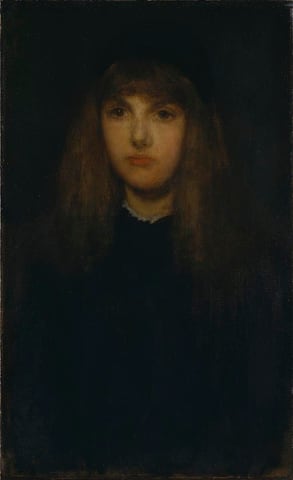
  1. James Abbott McNeill Whistler
    Girl in Black (Pouting Tom)James McNeill Whistler, (1896-1901)Courtesy of the Hirshhorn Museum and Sculpture Garden, Smithsonian Institution
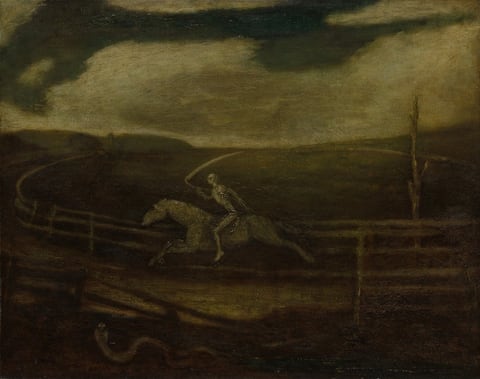
  2. The Race Track (Death on a Pale Horse), by Albert Pinkham Ryder, c. 1896–1908
    The Race Track (Death on a Pale Horse)Albert Pinkham Ryder, c. 1896–1908Courtesy of the Cleveland Museum of Art
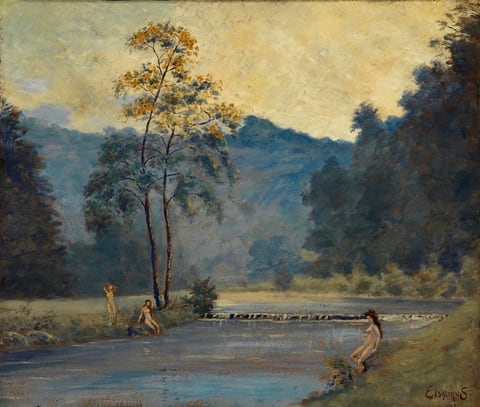
  3. Three Girls and River, by Louis M. Eilshemius, 1907
    Three Girls and RiverLouis M. Eilshemius, 1907Courtesy of the Smithsonian American Art Museum
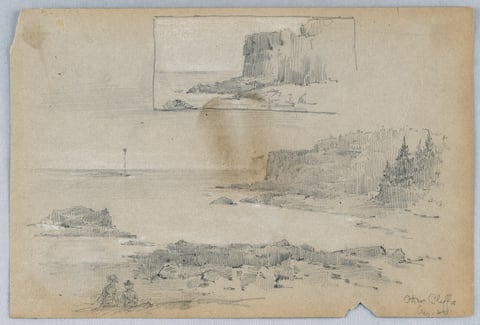
  4. OTTER CLIFFS
    Otter CliffsArnold William Brunner, 1879–80Courtesy of Cooper Hewitt, Smithsonian Design Museum

Second room, north wall
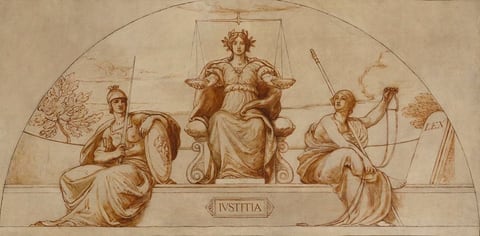
  1. Cartoon for mural of Minnesota State Capital, "Institute of Justice", by Kenyon Cox, ca. 1904
    Cartoon for mural of Minnesota State Capital, "Institute of Justice"Kenyon Cox, ca. 1904Courtesy of the Smithsonian American Art Museum
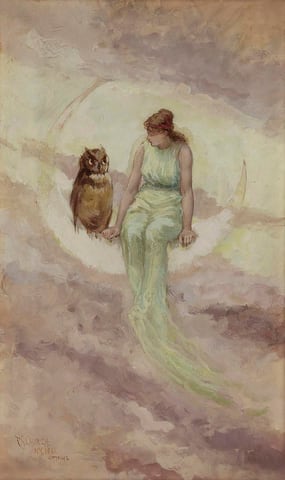
  2. The Witch's Daughter, by Frederick Stuart Church, 1881
    The Witch's DaughterFrederick Stuart Church, 1881Courtesy of the Smithsonian American Art Museum
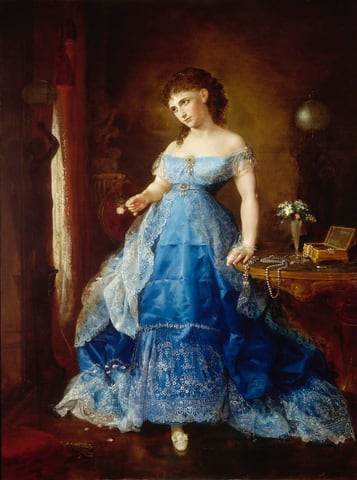
  3. We Both Must Fade (Mrs. Fithian), by Lilly Martin Spencer, 1869
    We Both Must Fade (Mrs. Fithian)Lilly Martin Spencer, 1869Courtesy of the Smithsonian American Art Museum

Third room, north wall
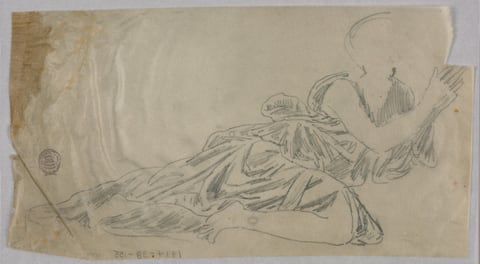
  1. DRAPERY STUDY
    Drapery StudyFrancis Augustus Lathrop, ca. 1895Courtesy of Cooper Hewitt, Smithsonian Design Museum
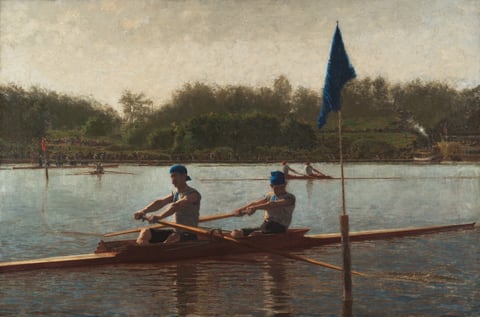
  2. The Biglin Brothers Turning the Stake, by Thomas Eakins, 1873
    The Biglin Brothers Turning the StakeThomas Eakins, 1873Courtesy of the Cleveland Museum of Art