Floor plan

Style galleriesThe American Gilded Age
The American Gilded Age
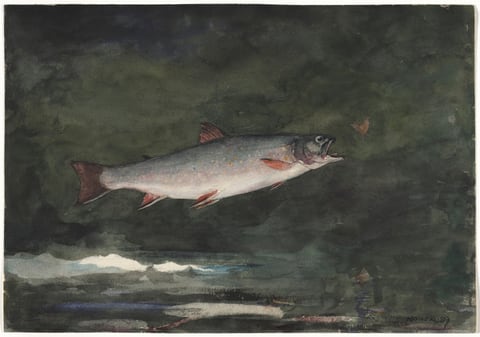
Leaping Trout, by Winslow Homer, 1889
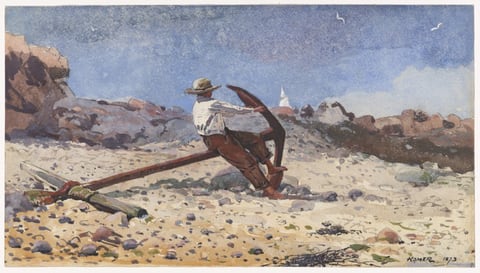
Boy with Anchor, by Winslow Homer, 1873
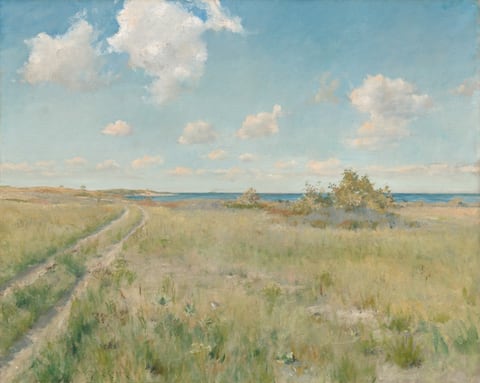
The Old Road to the Sea, by William Merritt Chase, c. 1893
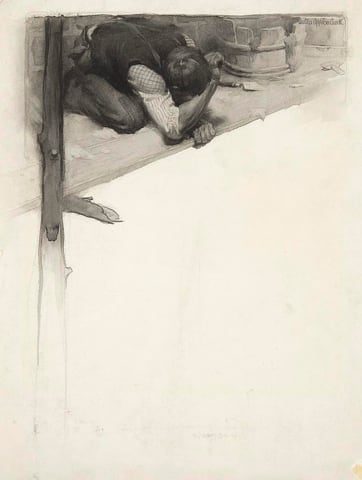
VIGNETTE: MAN CROUCHING ON A SCAFFOLDING
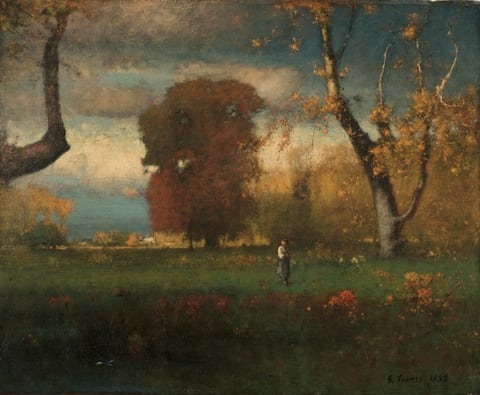
Landscape, by George Inness, 1888
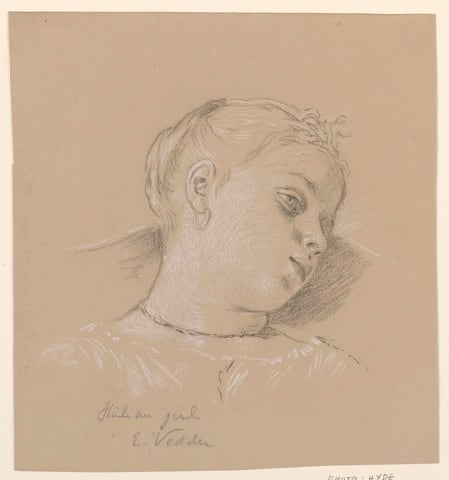
ITALIAN GIRL

The works in this room are listed below.

Works in this room

Painting and design in the United States from the Civil War to 1910.

First room, north wall

  1. Leaping Trout, by Winslow Homer, 1889
    Leaping TroutWinslow Homer, 1889Courtesy of the Cleveland Museum of Art
  2. Boy with Anchor, by Winslow Homer, 1873
    Boy with AnchorWinslow Homer, 1873Courtesy of the Cleveland Museum of Art
  3. The Old Road to the Sea, by William Merritt Chase, c. 1893
    The Old Road to the SeaWilliam Merritt Chase, c. 1893Courtesy of the Cleveland Museum of Art

First room, south wall

  1. VIGNETTE: MAN CROUCHING ON A SCAFFOLDING
    Vignette: Man Crouching on a ScaffoldingWalter Appleton Clark, 1899Courtesy of Cooper Hewitt, Smithsonian Design Museum
  2. Landscape, by George Inness, 1888
    LandscapeGeorge Inness, 1888Courtesy of the Cleveland Museum of Art
  3. ITALIAN GIRL
    Italian girlElihu Vedder, ca. 1885Courtesy of Cooper Hewitt, Smithsonian Design Museum

Second room, south wall
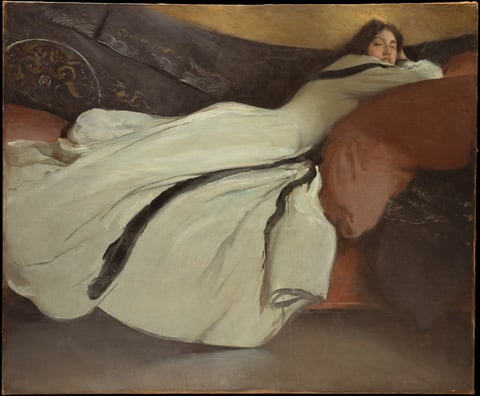
  1. Repose, by John White Alexander, 1895
    ReposeJohn White Alexander, 1895Courtesy of The Metropolitan Museum of Art
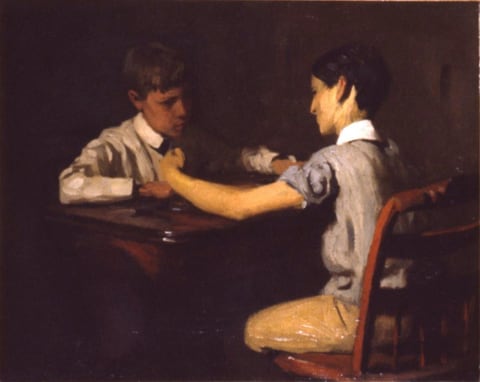
  2. Checker Players, by Thomas Anshutz, ca. 1895
    Checker PlayersThomas Anshutz, ca. 1895Courtesy of the Smithsonian American Art Museum
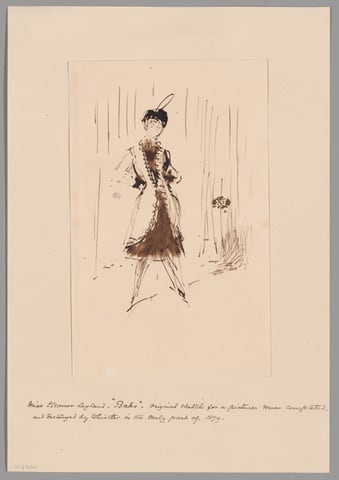
  3. A work made of pen and brown ink, with brush and brown ink, on cream pseudo-laid paper tipped onto cream wove paper.
    Study for "The Blue Girl: Portrait of Miss Elinor Leyland"James McNeill Whistler, c. 1879Courtesy of the Art Institute of Chicago

Second room, north wall
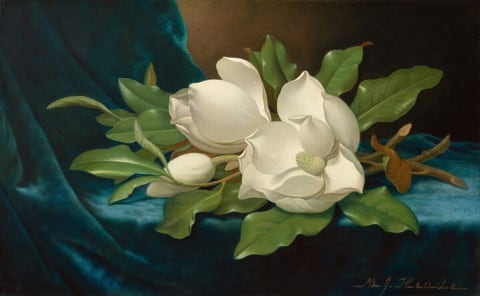
  1. Twigs of a magnolia tree with light green, glossy leaves and three cream-white blossoms lie on a sapphire-blue cloth in this horizontal still life painting. Brightly lit from our left, the blossoms and leaves nearly fill the composition, and the cut ends lie on the fabric to our right. The blue fabric cascades from the upper left and across the table or ledge. The three flowers are in various stages of bloom. The tightest bud is to our left, overlapped by a stem and the tender, unfurling leaves of a branch. The blossom next to it, at the center, is starting to open. The petals of the third blossom, to our right, splay open around the flower’s oval-shaped stamen. Light glints off the waxy leaves surrounding the flowers. The tawny-brown underside of one leaf is visible where it turns over, near the cut ends of the branches. Light shimmering on the fabric darkens from bright blue to our right, to deep royal blue in the shadows to the upper left, suggesting the fabric is velvet. The background is streaked with tan and pine green behind the fabric, and becomes nearly black in the shadows of the upper right corner and along the bottom edge. The artist signed the lower right corner, "MJ. Heade."
    Giant Magnolias on a Blue Velvet ClothMartin Johnson Heade, c. 1890Courtesy National Gallery of Art, Washington
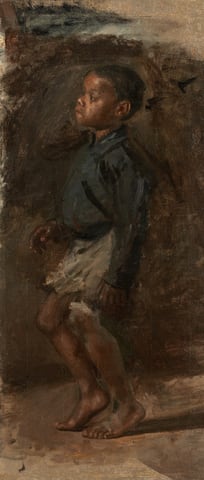
  2. Study for "The Dancing Lesson": The Boy, by Thomas Eakins, probably 1877
    Study for "The Dancing Lesson": The BoyThomas Eakins, probably 1877Courtesy National Gallery of Art, Washington
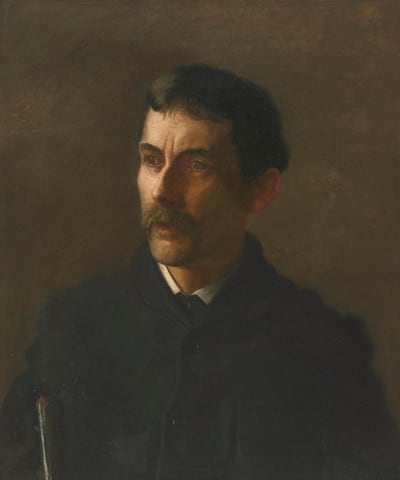
  3. Artist: Thomas Cowperthwaite Eakins, Sitter: Talcott Williams, Current owner: National Portrait Gallery, Smithsonian Institution
    Talcott WilliamsThomas Eakins, c. 1889Courtesy of the National Portrait Gallery, Smithsonian Institution
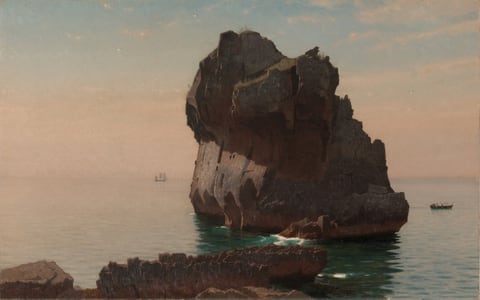
  4. Capri, by William Stanley Haseltine, 1869
    CapriWilliam Stanley Haseltine, 1869Courtesy of the Cleveland Museum of Art

Third room, north wall
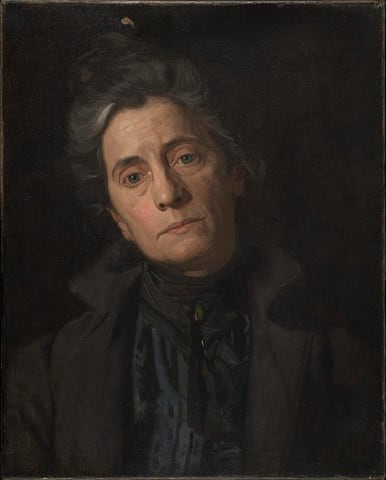
  1. Thomas Eakins
    Portrait of Mrs. Thomas EakinsThomas Eakins, (c. 1899)Courtesy of the Hirshhorn Museum and Sculpture Garden, Smithsonian Institution
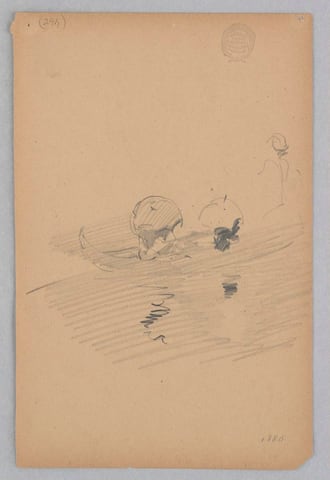
  2. VIEW OF VENICE, ITALY
    View of Venice, ItalyRobert Frederick Blum, 1880Courtesy of Cooper Hewitt, Smithsonian Design Museum
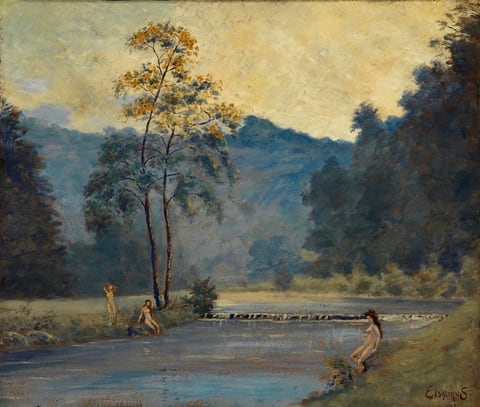
  3. Three Girls and River, by Louis M. Eilshemius, 1907
    Three Girls and RiverLouis M. Eilshemius, 1907Courtesy of the Smithsonian American Art Museum