Floor plan

Style galleriesThe American Gilded Age
The American Gilded Age
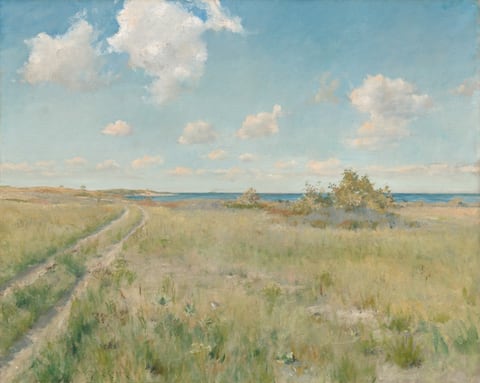
The Old Road to the Sea, by William Merritt Chase, c. 1893
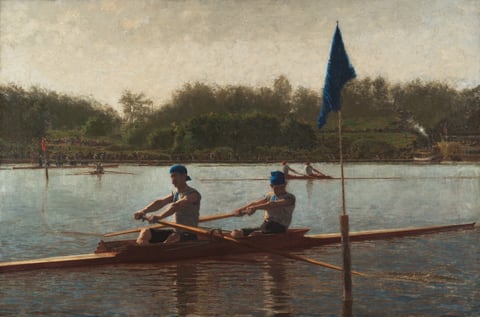
The Biglin Brothers Turning the Stake, by Thomas Eakins, 1873
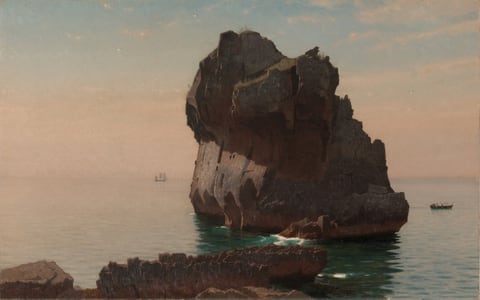
Capri, by William Stanley Haseltine, 1869
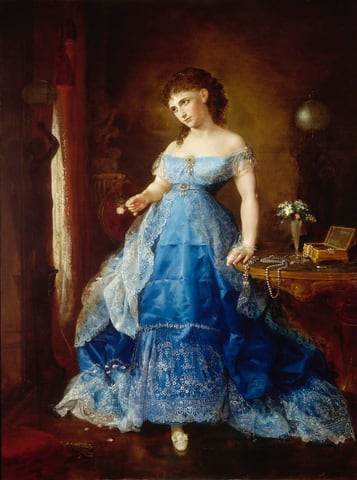
We Both Must Fade (Mrs. Fithian), by Lilly Martin Spencer, 1869
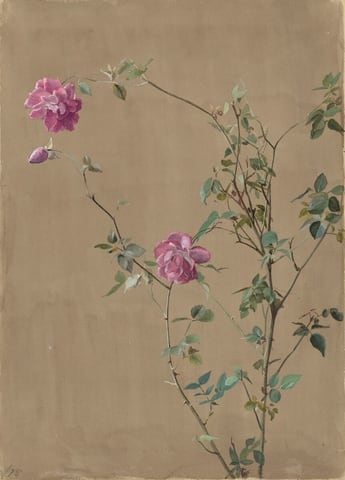
This detailed painting shows two pink roses and a pink bud on a long, thin green stem with green leaves and small green thorns. The tall stem rises near the right edge of the painting, with some thin branches reaching out to either side. The largest rose is positioned near the top left corner of the painting, with the small bud right below it. The other large flower is right around the center of the painting. The background is a flat beige color.

The works in this room are listed below.

Works in this room

Painting and design in the United States from the Civil War to 1910.

First room, north wall

  1. The Old Road to the Sea, by William Merritt Chase, c. 1893
    The Old Road to the SeaWilliam Merritt Chase, c. 1893Courtesy of the Cleveland Museum of Art
  2. The Biglin Brothers Turning the Stake, by Thomas Eakins, 1873
    The Biglin Brothers Turning the StakeThomas Eakins, 1873Courtesy of the Cleveland Museum of Art

First room, south wall

  1. Capri, by William Stanley Haseltine, 1869
    CapriWilliam Stanley Haseltine, 1869Courtesy of the Cleveland Museum of Art
  2. We Both Must Fade (Mrs. Fithian), by Lilly Martin Spencer, 1869
    We Both Must Fade (Mrs. Fithian)Lilly Martin Spencer, 1869Courtesy of the Smithsonian American Art Museum
  3. This detailed painting shows two pink roses and a pink bud on a long, thin green stem with green leaves and small green thorns. The tall stem rises near the right edge of the painting, with some thin branches reaching out to either side. The largest rose is positioned near the top left corner of the painting, with the small bud right below it. The other large flower is right around the center of the painting. The background is a flat beige color.
    Pink RosesFidelia Bridges, 1875Courtesy National Gallery of Art, Washington

Second room, south wall
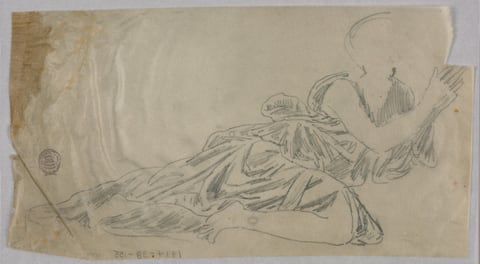
  1. DRAPERY STUDY
    Drapery StudyFrancis Augustus Lathrop, ca. 1895Courtesy of Cooper Hewitt, Smithsonian Design Museum
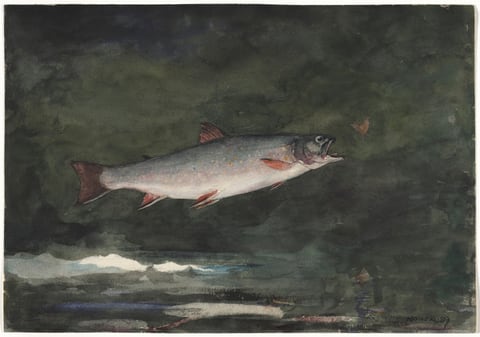
  2. Leaping Trout, by Winslow Homer, 1889
    Leaping TroutWinslow Homer, 1889Courtesy of the Cleveland Museum of Art
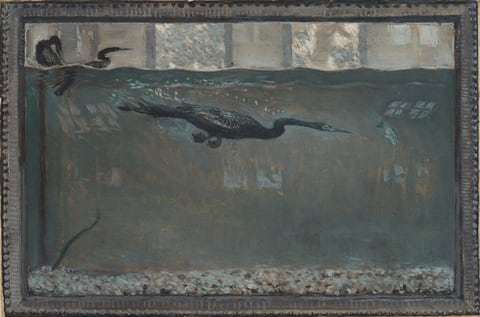
  3. Diving Cormorant, by Otto H. Bacher, 1900
    Diving CormorantOtto H. Bacher, 1900Courtesy of the Cleveland Museum of Art
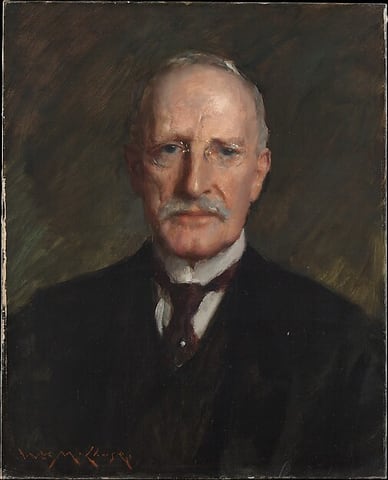
  4. Edward Guthrie Kennedy, by William Merritt Chase, ca. 1895
    Edward Guthrie KennedyWilliam Merritt Chase, ca. 1895Courtesy of The Metropolitan Museum of Art

Second room, north wall
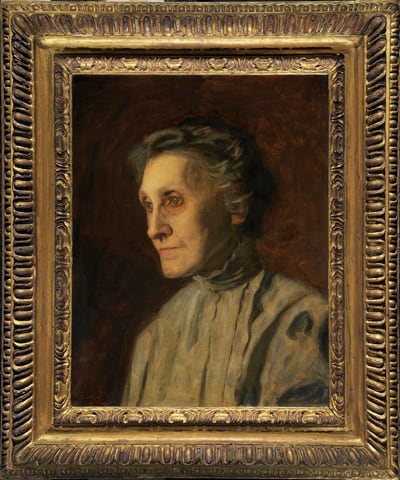
  1. Thomas Eakins
    Portrait of Mrs. Helen Mac Knight (Portrait of a Mother)Thomas Eakins, (c. 1903)Courtesy of the Hirshhorn Museum and Sculpture Garden, Smithsonian Institution
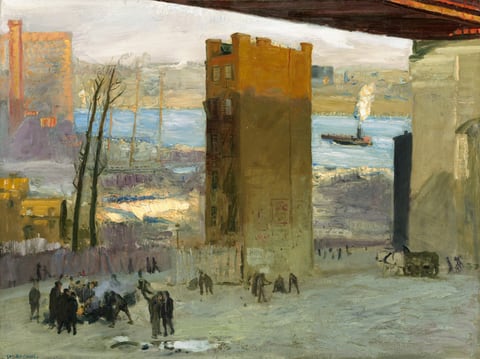
  2. A six-story, narrow building stands alone in an otherwise unoccupied lot under the deck of a high bridge, with a river and cityscape in the background in this horizontal painting. Dozens of people, small in scale, are each painted with a few swipes of black and some with peach-colored faces. They gather at the foot of the building and around a fire to our left, near the lower left corner of the composition. The fire is painted with a dash of orange, a few touches of canary yellow, and a smudge of gray smoke. Several more people stand and sit against the building, which has a streetlamp near its entrance. The back end of the building angles away from us to our right, so we see the narrow, front entrance side to our left. Each of the six floors of the building has two windows with fire escape ladders on the narrow side we can see. Some strokes in red and white on the lower levels of the long, flat side of the building suggest signs or posters. The top story glows a warm sienna brown in sunlight, while the rest of the building and the scene below are in shadow. More people walk along a grayish-violet fence that encloses the lot beyond the building. The ground is painted thickly with slate gray, pale, sage green, and one smear of white to suggest snow. To our right and a short distance from us, a white horse pulls a carriage near the foot of the bridge. The ivory-white, concrete piling rises up and off the right edge of the canvas and supports the deck of the bridge above. Only a sliver of the brick-red underside of the bridge is visible, skimming the top edge of the painting in the upper right corner. Two twiggy, barren trees grow up beyond the muted purple fence, and the landscape beyond is bright in the sunlight. A terracotta-orange building rises along the left edge of the painting, with the area between it and the lot under the bridge filled with thickly painted patches of butter yellow, amethyst purple, and sage green. Beyond that, an ice-blue river flows across the composition. The shore beyond is lined with patches of beige and tan paint that could be buildings. A black tugboat puffs bright white smoke in the river. The sky above is frosty white. The artist signed the work with dark blue in the lower left corner of the painting, “Geo Bellows.”
    The Lone TenementGeorge Bellows, 1909Courtesy National Gallery of Art, Washington
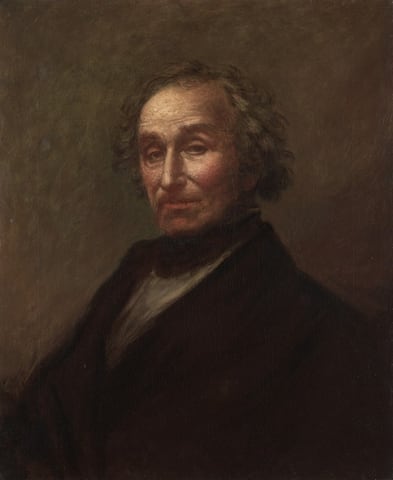
  3. Alvan Clark, 1870s
    Alvan ClarkUnrecorded American maker, 1870sCourtesy of the Cleveland Museum of Art

Third room, north wall
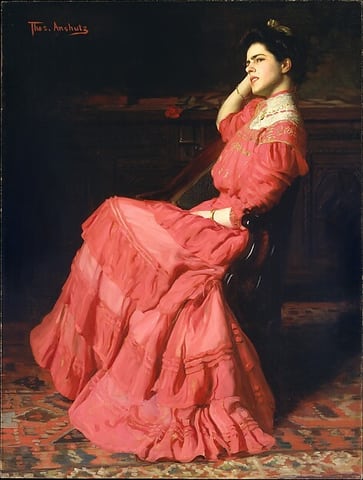
  1. A Rose, by Thomas Anshutz, 1907
    A RoseThomas Anshutz, 1907Courtesy of The Metropolitan Museum of Art
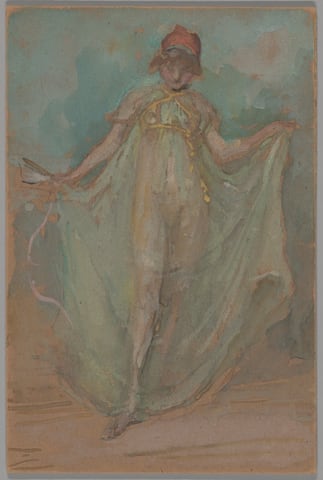
  2. Pale watercolor drawing of young dancer in long sheer dress.
    Green and Blue: The DancerJames McNeill Whistler, c. 1893Courtesy of the Art Institute of Chicago
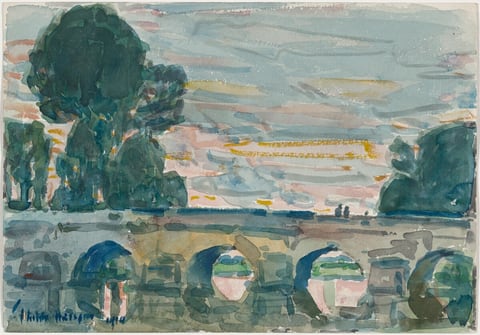
  3. The Bridge at Grez [recto], by Childe Hassam, 1904
    The Bridge at Grez [recto]Childe Hassam, 1904Courtesy National Gallery of Art, Washington
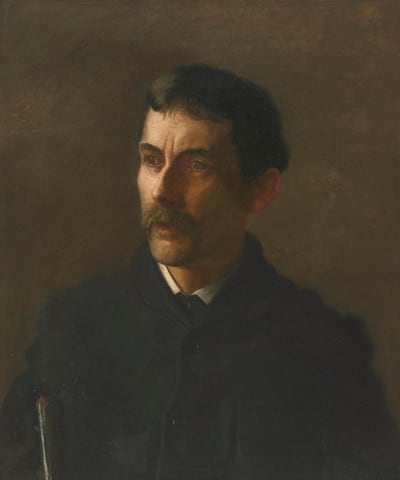
  4. Artist: Thomas Cowperthwaite Eakins, Sitter: Talcott Williams, Current owner: National Portrait Gallery, Smithsonian Institution
    Talcott WilliamsThomas Eakins, c. 1889Courtesy of the National Portrait Gallery, Smithsonian Institution