Floor plan

Time and placeThe 19th century

The 19th century

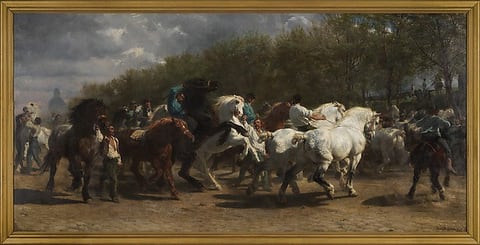
The Horse Fair, by Rosa Bonheur, 1852–55
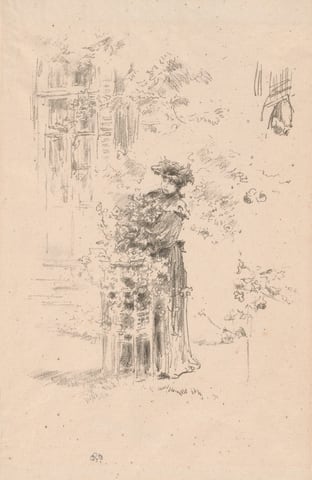
A work made of transfer lithograph in black, with stumping and scraping, on cream laid paper, laid down on a heavy backing sheet.
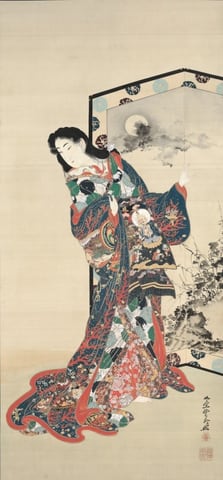
Hell Courtesan, by Kawanabe Kyōsai, 1871–89
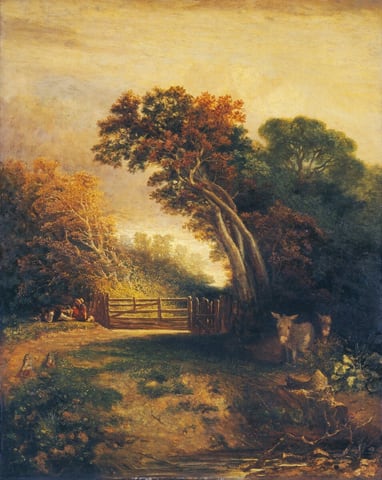
This painting shows a serene pastoral scene with trees, a wooden gate, and foliage extending towards the horizon. Closest to us, there is a low riverbank with some tree branches in the water. Up a grassy dirt hill, two donkeys are visible off to the right, partially hidden by vegetation. On the left, a dirt path leads to the wooden gate. To the left of the gate, two people sit on the grass with a wicker basket between them. The tall trees that rise in the background have leaves in shades of green, yellow, and dark orange. The sky above the scene is yellow with some hints of light blue, and golden light shines down on the landscape.
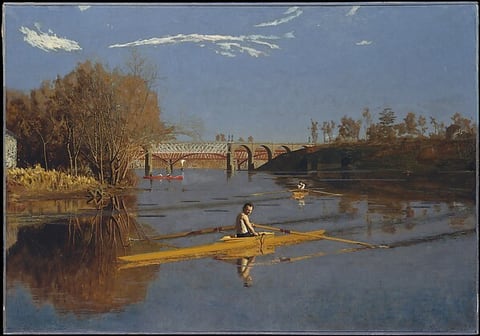
The Champion Single Sculls (Max Schmitt in a Single Scull), by Thomas Eakins, 1871
A work made of oil on canvas.

The works in this room are listed below.

Works in this room

Works made in the 19th century, anywhere in the world.

Section 1, north wall

  1. The Horse Fair, by Rosa Bonheur, 1852–55
    The Horse FairRosa Bonheur, 1852–55Courtesy of The Metropolitan Museum of Art
  2. A work made of transfer lithograph in black, with stumping and scraping, on cream laid paper, laid down on a heavy backing sheet.
    La Belle JardinièreJames McNeill Whistler, 1894Courtesy of the Art Institute of Chicago
  3. Hell Courtesan, by Kawanabe Kyōsai, 1871–89
    Hell CourtesanKawanabe Kyōsai, 1871–89Courtesy of the Cleveland Museum of Art

Section 1, south wall

  1. This painting shows a serene pastoral scene with trees, a wooden gate, and foliage extending towards the horizon. Closest to us, there is a low riverbank with some tree branches in the water. Up a grassy dirt hill, two donkeys are visible off to the right, partially hidden by vegetation. On the left, a dirt path leads to the wooden gate. To the left of the gate, two people sit on the grass with a wicker basket between them. The tall trees that rise in the background have leaves in shades of green, yellow, and dark orange. The sky above the scene is yellow with some hints of light blue, and golden light shines down on the landscape.
    Landscape with Picnickers and Donkeys by a GateJoseph Paul, c. 1830-1880Courtesy National Gallery of Art, Washington
  2. The Champion Single Sculls (Max Schmitt in a Single Scull), by Thomas Eakins, 1871
    The Champion Single Sculls (Max Schmitt in a Single Scull)Thomas Eakins, 1871Courtesy of The Metropolitan Museum of Art
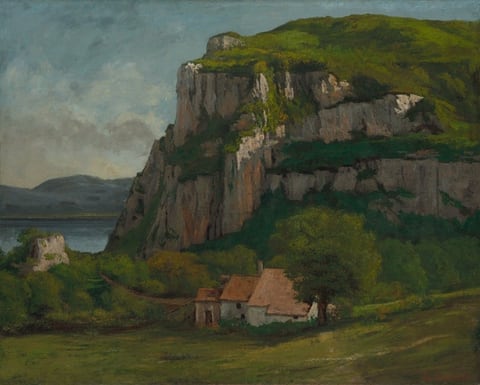
  3. A work made of oil on canvas.
    The Rock of HautepierreGustave Courbet, c. 1869Courtesy of the Art Institute of Chicago

Section 2, south wall
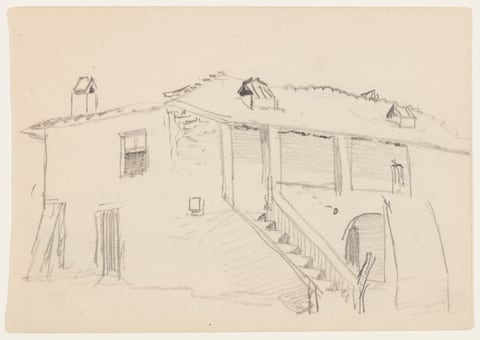
  1. ITALIAN FARMHOUSE
    Italian FarmhouseFrederic Edwin Church, September 1868 - April 1869Courtesy of Cooper Hewitt, Smithsonian Design Museum
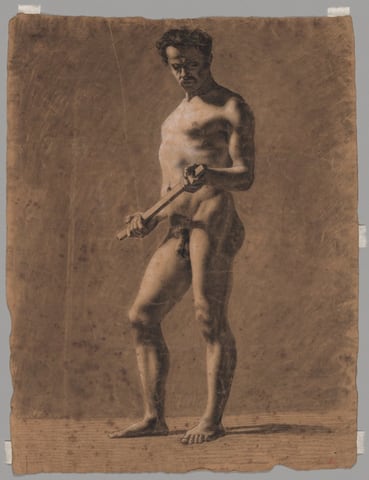
  2. A work made of black chalk and charcoal with stumping, heightened with white chalk (recto), and black chalk and charcoal with stumping (verso), on dark tan laid paper.
    Standing Academic Male Nude (recto); Sketch of Upper Arm (verso)Eugène Delacroix, 1816Courtesy of the Art Institute of Chicago
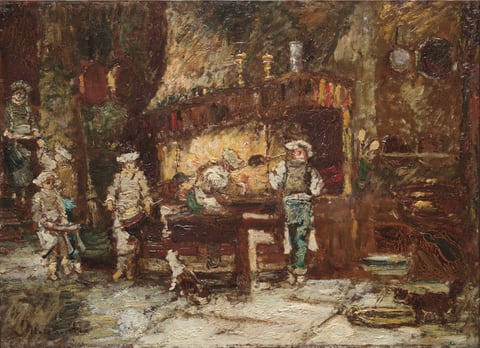
  3. The Kitchen of the Rôtisserie des Deux Paons, by Adolphe Monticelli, c. 1875–1881
    The Kitchen of the Rôtisserie des Deux PaonsAdolphe Monticelli, c. 1875–1881Courtesy of the Cleveland Museum of Art
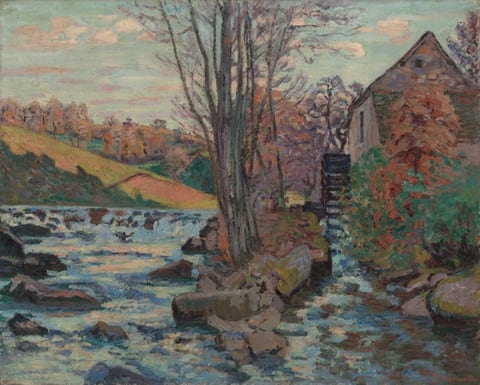
  4. A work made of oil on canvas.
    Mill of Pont MaupuitJean Baptiste Armand Guillaumin, c. 1900Courtesy of the Art Institute of Chicago

Section 2, north wall
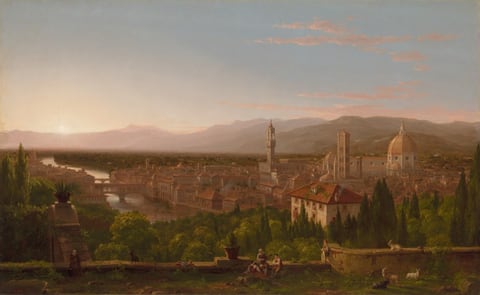
  1. View of Florence, by Thomas Cole, 1837
    View of FlorenceThomas Cole, 1837Courtesy of the Cleveland Museum of Art
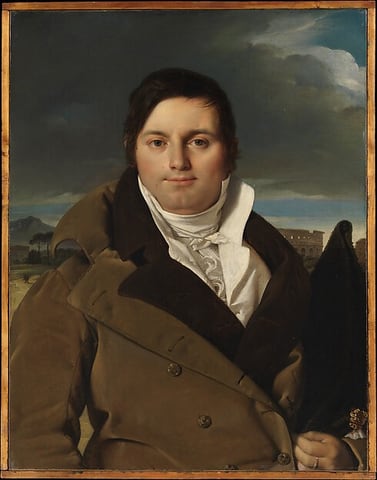
  2. Joseph-Antoine Moltedo (born 1775), by Jean Auguste Dominique Ingres, ca. 1810
    Joseph-Antoine Moltedo (born 1775)Jean Auguste Dominique Ingres, ca. 1810Courtesy of The Metropolitan Museum of Art
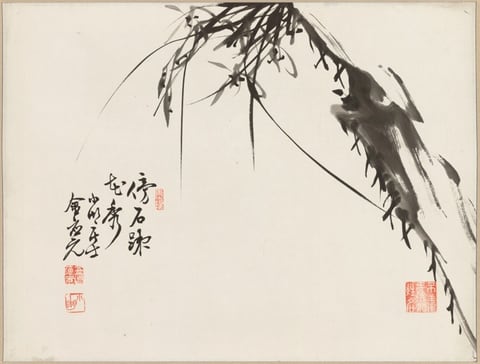
  3. A work made of hanging scroll, ink on paper.
    OrchidsKim Eung-won, Joseon dynasty(1392–1910)Courtesy of the Art Institute of Chicago
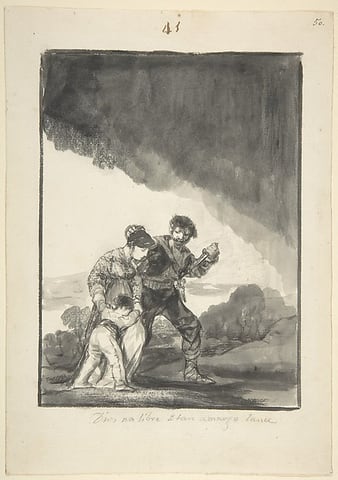
  4. God save us from such a bitter fate; a bandit threatening a woman and a child with a knife, page 41 from the "Black Border Album" (E), by Francisco Goya, ca. 1816–20
    God save us from such a bitter fate; a bandit threatening a woman and a child with a knife, page 41 from the "Black Border Album" (E)Francisco Goya, ca. 1816–20Courtesy of The Metropolitan Museum of Art

Section 3, north wall
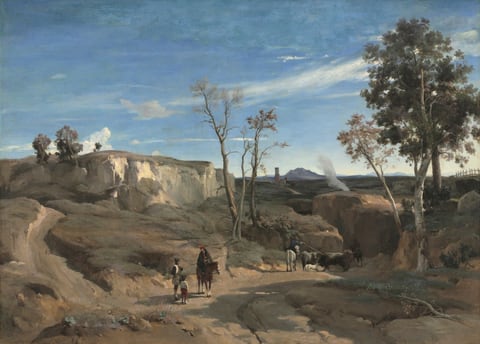
  1. La Cervara, the Roman Campagna, by Jean Baptiste Camille Corot, c. 1830–31
    La Cervara, the Roman CampagnaJean Baptiste Camille Corot, c. 1830–31Courtesy of the Cleveland Museum of Art
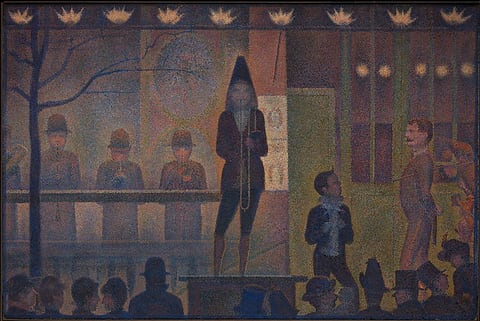
  2. Circus Sideshow (Parade de cirque), by Georges Seurat, 1887–88
    Circus Sideshow (Parade de cirque)Georges Seurat, 1887–88Courtesy of The Metropolitan Museum of Art