19th-century Japan
Works in this room
Works made in Japan in the 19th century.
Section 1, north wall
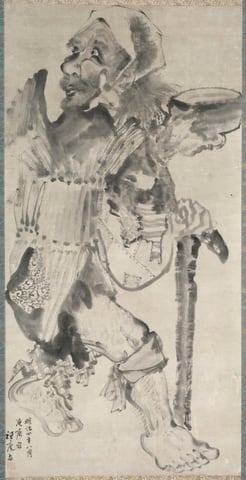
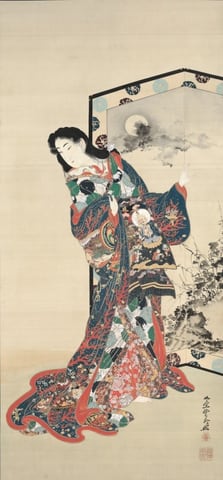
Beggar (Kojiki)Hirafuku Suian, 1871Courtesy of the Cleveland Museum of Art Hell CourtesanKawanabe Kyōsai, 1871–89Courtesy of the Cleveland Museum of Art
Section 1, south wall
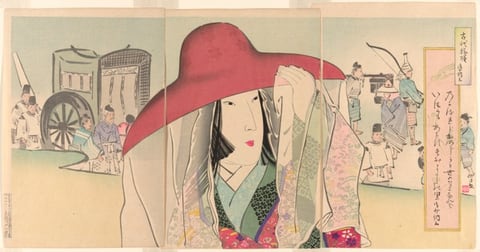
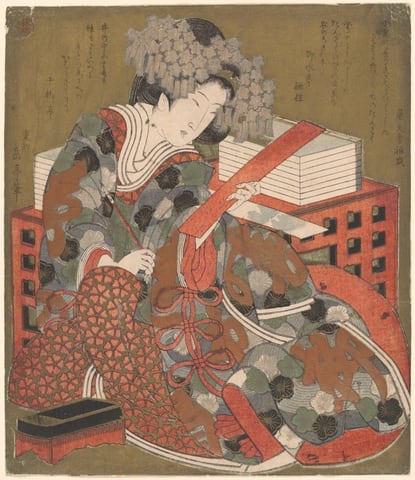
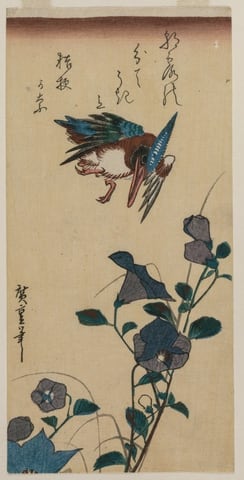
Sei Shonagon, from the series Ancient Patterns (Kodai moyo)Kobayashi Kiyochika, Meiji period (1896–1912), 1896Courtesy of the Art Institute of Chicago Woman About to Write a PoemYashima Gakutei, c. 1824Courtesy of the Art Institute of Chicago Kingfisher and Chinese BellflowersUtagawa Hiroshige, early or mid-1830sCourtesy of the Cleveland Museum of Art
Section 2, south wall
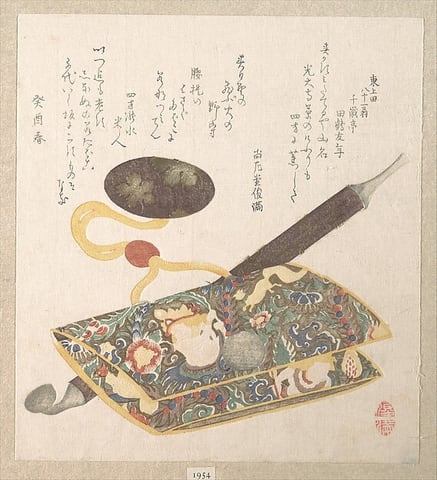
Tobacco Pouch and PipeKubo Shunman, 1813Courtesy of The Metropolitan Museum of Art 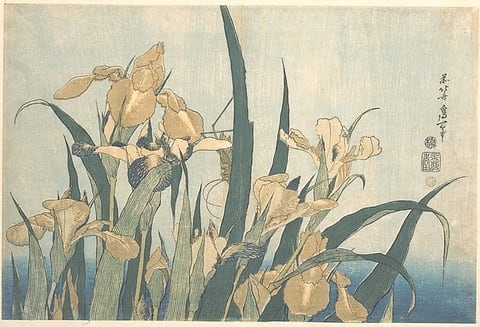
Grasshopper and IrisKatsushika Hokusai, late 1820sCourtesy of The Metropolitan Museum of Art 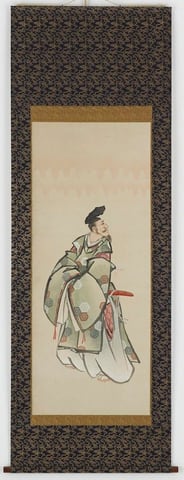
Six Immortals of Poetry: Fun'ya no YasuhideKatsushika Hokusai, ca. 1806-1808Courtesy of the National Museum of Asian Art, Smithsonian Institution
Section 2, north wall
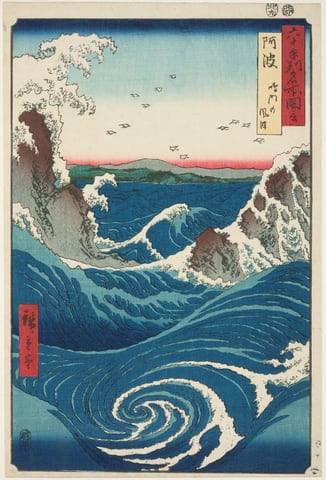
Awa Province: Naruto Whirlpools (Awa, Naruto no fūha), from the series Famous Places in the Sixty-Odd Provinces (Rokujūyoshmeisho zue)Utagawa Hiroshige, 1855Courtesy of the Art Institute of Chicago 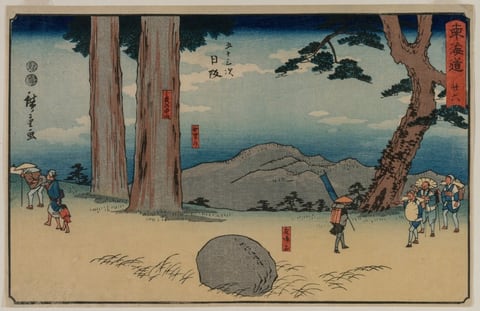
Nissaka: The Night-Weeping Stone at Sayo no Nakayama, from the series The Fifty-Three Stations of the TōkaidōUtagawa Hiroshige, c. 1848–50Courtesy of the Cleveland Museum of Art 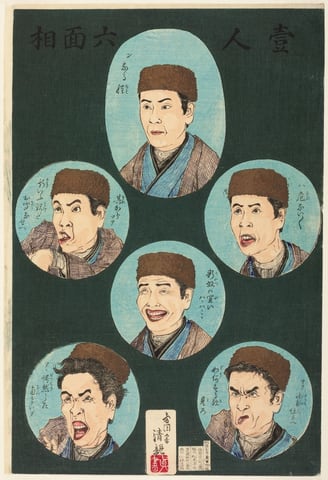
One Person, Six Expressions (Hitori rokumenso)Kobayashi Kiyochika, 1884Courtesy of the Art Institute of Chicago
Section 3, north wall
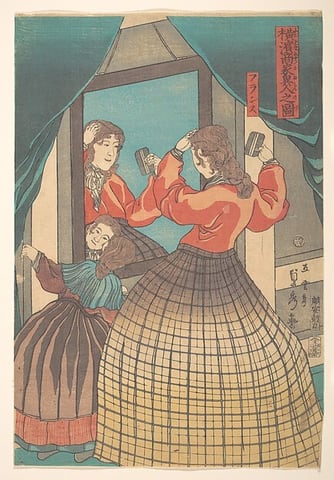
French Woman and Girl, from the series Foreign Merchants in Yokohama (Yokohama shōka ijin no zu)Utagawa (Gountei) Sadahide, 1st month, 1861Courtesy of The Metropolitan Museum of Art 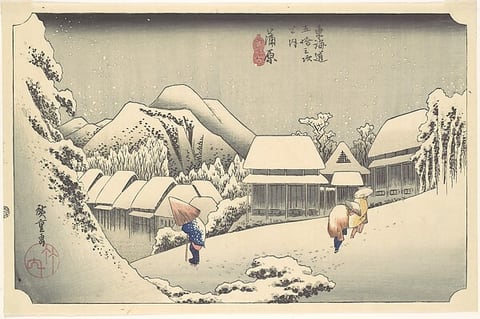
Evening Snow at Kanbara, from the series "Fifty-three Stations of the Tōkaidō"Utagawa Hiroshige, ca. 1833–34Courtesy of The Metropolitan Museum of Art 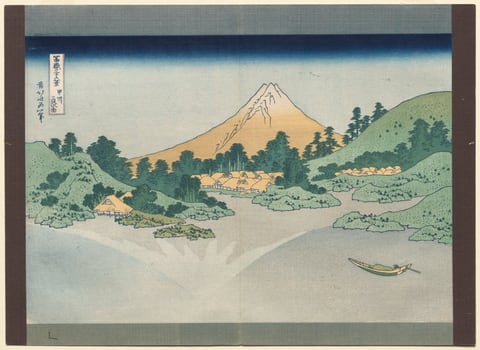
Thirty-Six Views of Mt. Fuji: The Surface of Lake Misaka in Kai ProvinceKatsushika Hokusai, early 1830sCourtesy of the Cleveland Museum of Art
Section 3, south wall
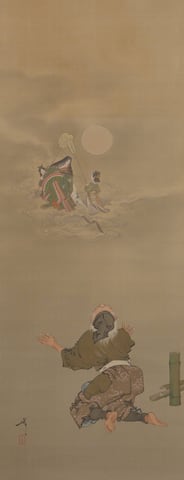
Received Back into the Moon Palace-Taketori (Bamboo Cutter) from the series Twelve Aspects of the MoonTsukioka Yoshitoshi, c. 1885/92Courtesy of the Art Institute of Chicago 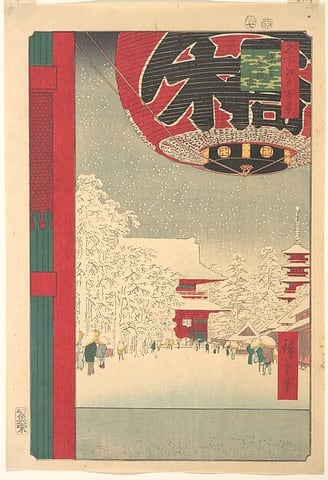
Kinryūsan Temple at Asakusa, from the series "One Hundred Famous Views of Edo"Utagawa Hiroshige, 1856Courtesy of The Metropolitan Museum of Art