Floor plan

Time and place19th-century France

19th-century France

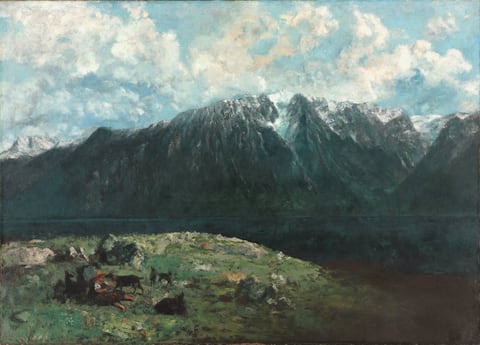
Panoramic View of the Alps, Les Dents du Midi, by Gustave Courbet, 1877
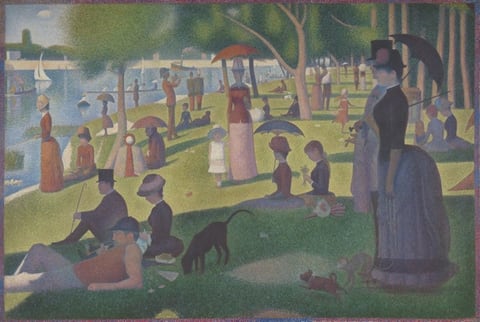
Large painting of people in a crowded park, brushstrokes are dots.
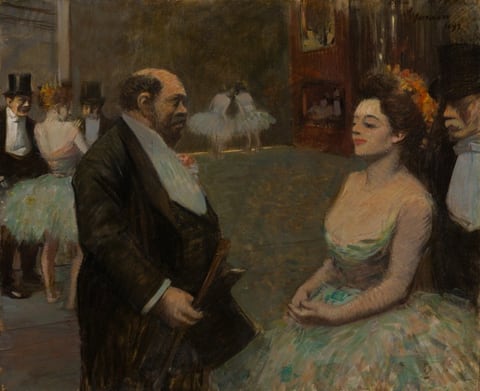
A work made of oil on canvas.
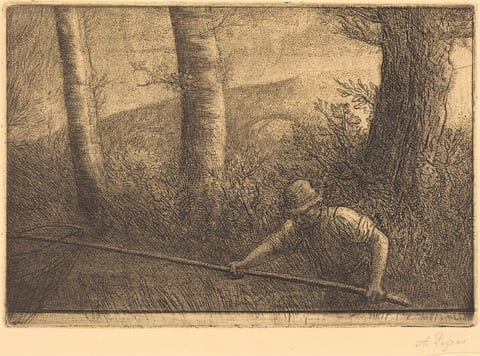
The image shows a man in a forest using a long tool. Tall trees flank him on either side. The ground rises to a hill in the background. The artwork is detailed, with intricate lines showing leaves and foliage. The color scheme is monochromatic, dominated by shades of brown and beige, giving a rustic feel. The scene is filled with trees and foliage, with a distant hill visible.

The works in this room are listed below.

Works in this room

Works made in France in the 19th century.

First room, north wall

  1. Panoramic View of the Alps, Les Dents du Midi, by Gustave Courbet, 1877
    Panoramic View of the Alps, Les Dents du MidiGustave Courbet, 1877Courtesy of the Cleveland Museum of Art
  2. Large painting of people in a crowded park, brushstrokes are dots.
    A Sunday on La Grande Jatte — 1884Georges Seurat, 1884–86, border added 1888–89Courtesy of the Art Institute of Chicago

First room, south wall

  1. A work made of oil on canvas.
    In the WingsJean Louis Forain, 1899Courtesy of the Art Institute of Chicago
  2. The image shows a man in a forest using a long tool. Tall trees flank him on either side. The ground rises to a hill in the background. The artwork is detailed, with intricate lines showing leaves and foliage. The color scheme is monochromatic, dominated by shades of brown and beige, giving a rustic feel. The scene is filled with trees and foliage, with a distant hill visible.
    Fisherman with a Hoop-net (La peche a la truble)Alphonse LegrosCourtesy National Gallery of Art, Washington

Second room, south wall
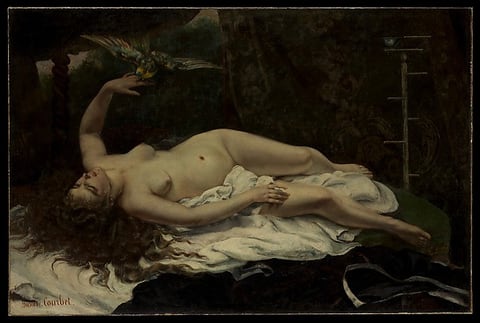
  1. Woman with a Parrot, by Gustave Courbet, 1866
    Woman with a ParrotGustave Courbet, 1866Courtesy of The Metropolitan Museum of Art
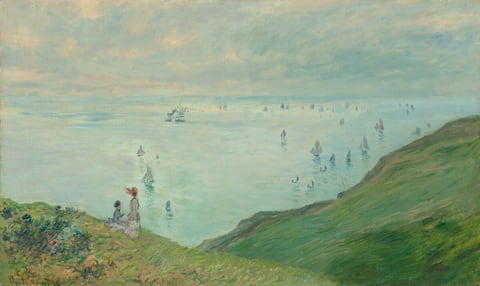
  2. From a high perspective, we look beyond two overlapping, emerald-green hills to a body of powder-blue water dotted with sailboats in this loosely painted horizontal landscape. Closest to us, the hills create a shallow V that spans the lower third of the composition, with the right-hand hill rising to more than halfway up the right edge. The hills are painted with dashes and long strokes mostly in seafoam, shamrock, and celery green, with some swipes of peach, goldenrod yellow, and royal blue. On the hill to our left, one woman sits and the other stands next to her. They wear hats, long-sleeved, fitted jackets, and long skirts in tones of dusky pink and dove gray. A touch of peach on the seated woman, to our left, gives the impression of a pale face. A red veil or scarf at the back of the other woman’s hat is lifted, as if in the wind. The water is painted with blended strokes of pale blue, light turquoise, smoky mauve pink, and touches of soft peach. The horizon comes two-thirds of the way up the composition, and the sky is painted with the same tones of blue, green, and peach to suggest a screen of clouds. Triangles and dashes of slate blue suggest about three dozen sailboats, rowboats, and one steamship in the rippling water. Squiggles of teal and sage green create reflections for some of the boats. The brushstrokes are visible throughout. In some areas, the paint is so thinly applied that the texture of the canvas shows through, especially in the sky. The artist signed the work in the lower left corner: “Claude Monet 82.”
    Cliffs at PourvilleClaude Monet, 1882Courtesy National Gallery of Art, Washington

Second room, north wall
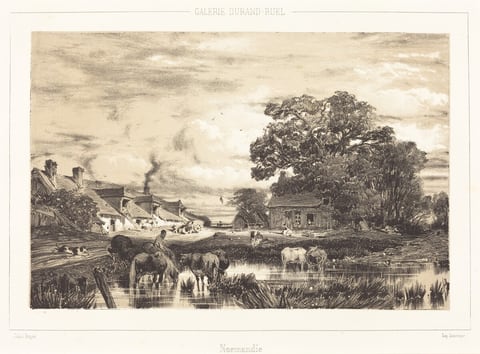
  1. This image shows a rural landscape with a pond in the foreground where cattle are being herded by a person on horseback. There are low buildings with smoking chimneys in the middle ground. Trees on the horizon separate the land from the sky, which is filled with clouds. The painting is detailed with a consistent brushwork, capturing foliage and buildings. The color palette is primarily sepia, giving a vintage and serene feel to the scene.
    View in Normandy (Vue prise en Normandie)Jules Dupré, 1835Courtesy National Gallery of Art, Washington
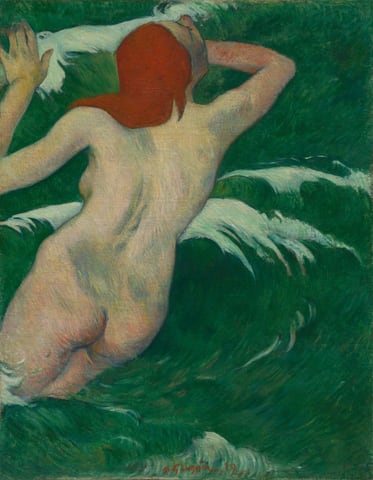
  2. In the Waves (Dans les Vagues), by Paul Gauguin, 1889
    In the Waves (Dans les Vagues)Paul Gauguin, 1889Courtesy of the Cleveland Museum of Art
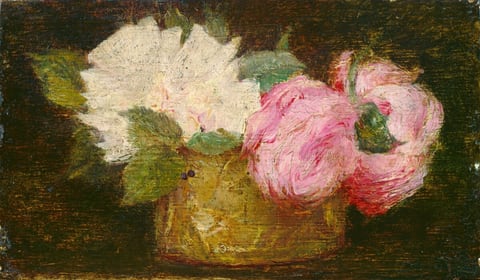
  3. Roses in a Vase, 1880/1900
    Roses in a VaseUnrecorded French maker, 1880/1900Courtesy National Gallery of Art, Washington
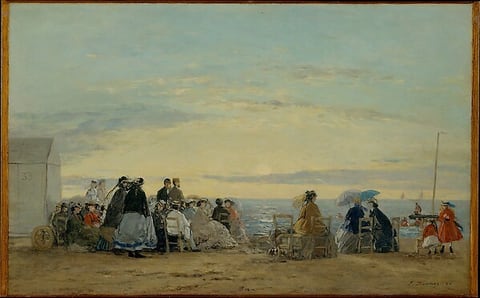
  4. On the Beach, Sunset, by Eugène Boudin, 1865
    On the Beach, SunsetEugène Boudin, 1865Courtesy of The Metropolitan Museum of Art

Third room, north wall
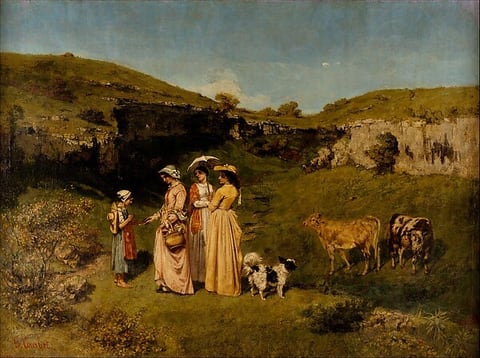
  1. Young Ladies of the Village, by Gustave Courbet, 1851–52
    Young Ladies of the VillageGustave Courbet, 1851–52Courtesy of The Metropolitan Museum of Art
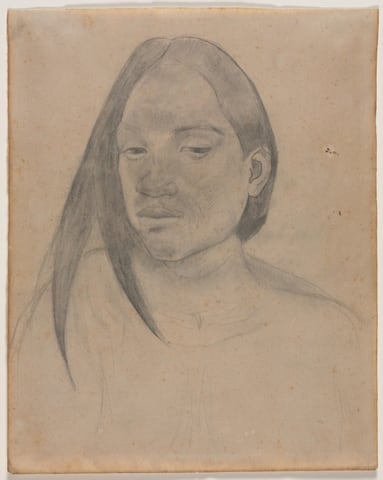
  2. Head of a Tahitian Woman, by Paul Gauguin, 1891
    Head of a Tahitian WomanPaul Gauguin, 1891Courtesy of the Cleveland Museum of Art
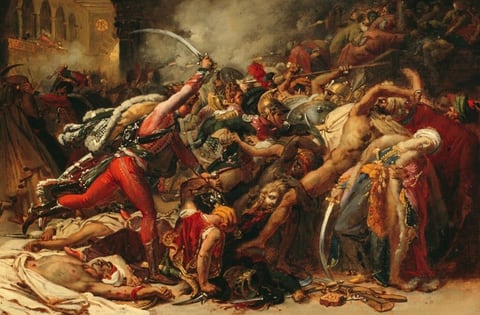
  3. A work made of oil and ink on paper, laid down on canvas.
    Sketch for The Revolt of CairoAnne-Louis Girodet de Roussy-Trioson, c. 1810Courtesy of the Art Institute of Chicago

Third room, south wall
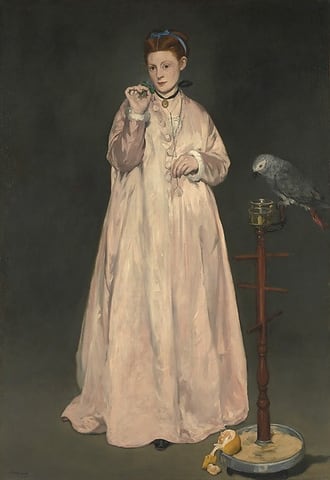
  1. Young Lady in 1866, by Édouard Manet, 1866
    Young Lady in 1866Édouard Manet, 1866Courtesy of The Metropolitan Museum of Art
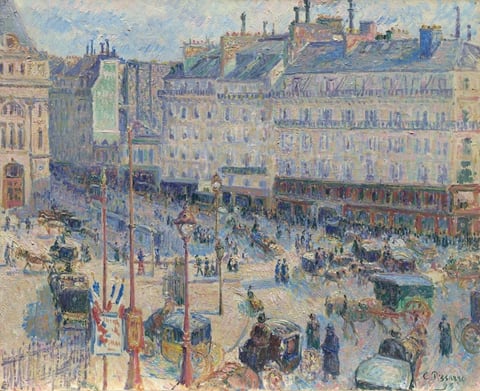
  2. A work made of oil on canvas.
    The Place du Havre, ParisCamille Pissarro, 1893Courtesy of the Art Institute of Chicago
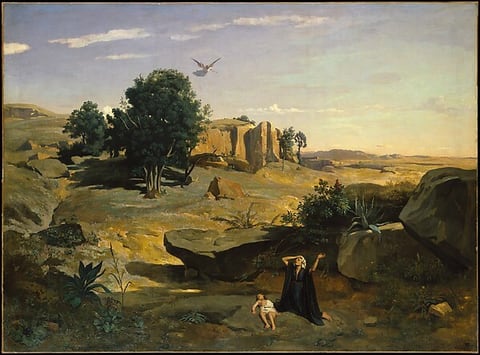
  3. Hagar in the Wilderness, by Jean Baptiste Camille Corot, 1835
    Hagar in the WildernessJean Baptiste Camille Corot, 1835Courtesy of The Metropolitan Museum of Art