Floor plan

Time and placeThe 18th century

The 18th century

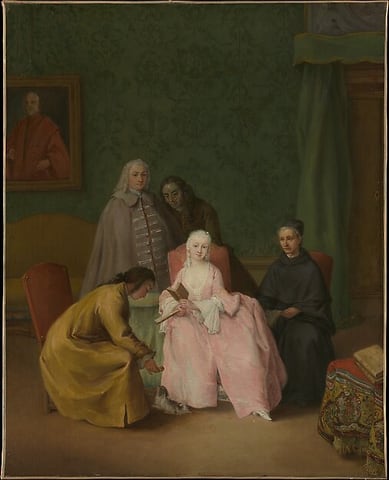
The Visit, by Pietro Longhi, 1746
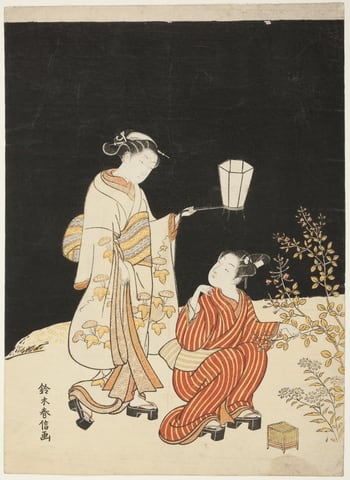
A work made of color woodblock print; chūban.
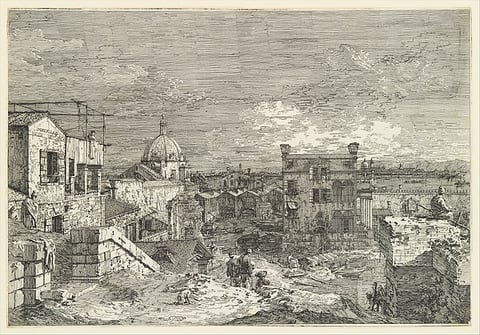
Imaginary View of Venice, houses at left with figures on terraces, a domed church at center in the background, boats and boat-sheds below, and a seated man observing from a wall at right in the foreground, from "Views" (Vedute altre prese da i luoghi altre ideate da Antonio Canal), by Canaletto, 1741
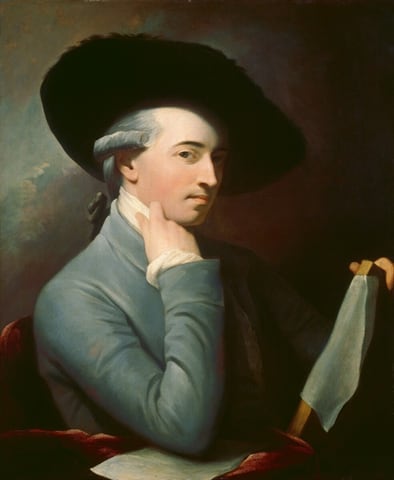
Shown from about the ribcage up, a cleanshaven man with pale skin sits with his elbow resting on the arm of his chair so the back of those fingers brush his chin in this vertical portrait painting. His body and face are angled to our right almost in profile so he looks at us from the corners of his brown eyes under dark, arched eyebrows. He has a straight nose, and his pale coral-pink lips are closed. His nickel-gray hair is curled along his ears and pulled back with an olive-green bow at the nape of his neck. His large hat is pushed back over his forehead, away from us, so its wide brim creates a dark circle around his face. The lapels of his steel-blue, tight-fitting jacket are folded back over a high, white collar. The edge of the white shirt also shows at the cuff of his right hand. The elbow closer to us rests on what might be a piece of light gray paper or piece of fabric, over a cranberry-red cloth or the arm of the upholstered chair. His left hand, farther from us, is propped on a wood frame or board, to which a small, white, square cloth appears to be affixed or draped. The light falls strongly from our upper left so his profile is brightly lit against the dark shadows on the far side of his face. The background darkens from light, slate blue to our left to coffee brown to our right.
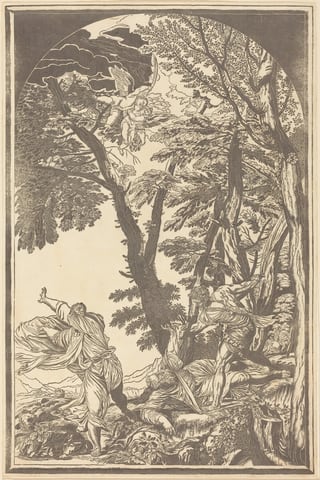
This drawing depicts multiple figures in a forest setting. An angelic figure hovers at the top with wings outstretched. The forest below is filled with intricately detailed trees. Figures on the ground are in dynamic poses, one showing surprise or fear, and another reaching upwards. The composition is detailed with flowing garments and textured foliage, evoking tension and animation.
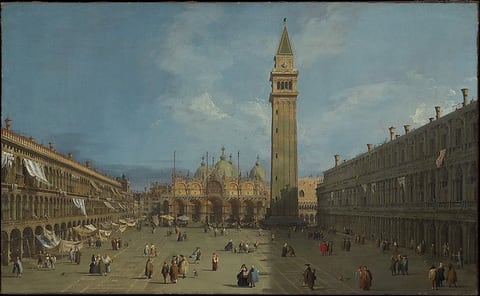
Piazza San Marco, by Canaletto, late 1720s
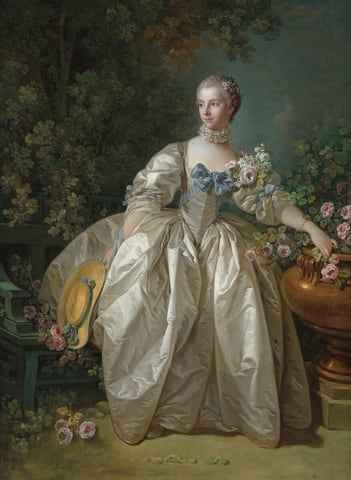
A young woman with light skin stands in a garden, wearing a voluminous, full-length, silvery, shimmering gown in this vertical portrait painting. Her body faces us, as she looks into the distance to our left. She has rosy cheeks, gray-green eyes under gently arched, light brown brows, and her coral-pink, thin, closed lips curve in a slight smile. Her ash-brown hair is pulled back and adorned with tiny shell-pink and azure-blue flowers along the left side top of head, to our right. A pleated lace ruffle encircles her smooth neck. Her gown is parchment white where the light glints off the stiff fabric and is silvery gray in the shadows, creating a silk-like sheen. The dress is cut low across the chest, fits tightly around her narrow waist, and has puffy sleeves tied at the elbows with topaz-blue bows. Another blue bow is tied at her chest, and the ends wrap around her back along her waist. A corsage at her left shoulder, to our right, is a profusion of white flowers around a pale pink rose. In her other hand, to our left, she holds a straw hat with a shallow crown and a wide brim, trimmed with sky-blue ribbon. The arm holding the hat is nearly engulfed in the deep folds of her full skirt. She holds a pink rose in her other hand, which rests on the lip of a shiny, copper-colored urn filled with pink flowers and delicate green leaves. On that wrist she wears a bracelet with four strands of white pearls holding a cameo. She stands on a pale, dirt ground. A teal-blue bench in the lower left corner of the painting is tucked into sage-green shrubbery. Sprigs of pink roses are strewn across the seat and on the ground. The woman is framed to either side with olive and celery-green trees and vegetation, which blend into the hazy distance beyond her head.

The works in this room are listed below.

Works in this room

Works made in the 18th century, anywhere in the world.

First room, north wall

  1. The Visit, by Pietro Longhi, 1746
    The VisitPietro Longhi, 1746Courtesy of The Metropolitan Museum of Art
  2. A work made of color woodblock print; chūban.
    Searching for FirefliesSuzuki Harunobu, 1768Courtesy of the Art Institute of Chicago
  3. Imaginary View of Venice, houses at left with figures on terraces, a domed church at center in the background, boats and boat-sheds below, and a seated man observing from a wall at right in the foreground, from "Views" (Vedute altre prese da i luoghi altre ideate da Antonio Canal), by Canaletto, 1741
    Imaginary View of Venice, houses at left with figures on terraces, a domed church at center in the background, boats and boat-sheds below, and a seated man observing from a wall at right in the foreground, from "Views" (Vedute altre prese da i luoghi altre ideate da Antonio Canal)Canaletto, 1741Courtesy of The Metropolitan Museum of Art
  4. Shown from about the ribcage up, a cleanshaven man with pale skin sits with his elbow resting on the arm of his chair so the back of those fingers brush his chin in this vertical portrait painting. His body and face are angled to our right almost in profile so he looks at us from the corners of his brown eyes under dark, arched eyebrows. He has a straight nose, and his pale coral-pink lips are closed. His nickel-gray hair is curled along his ears and pulled back with an olive-green bow at the nape of his neck. His large hat is pushed back over his forehead, away from us, so its wide brim creates a dark circle around his face. The lapels of his steel-blue, tight-fitting jacket are folded back over a high, white collar. The edge of the white shirt also shows at the cuff of his right hand. The elbow closer to us rests on what might be a piece of light gray paper or piece of fabric, over a cranberry-red cloth or the arm of the upholstered chair. His left hand, farther from us, is propped on a wood frame or board, to which a small, white, square cloth appears to be affixed or draped. The light falls strongly from our upper left so his profile is brightly lit against the dark shadows on the far side of his face. The background darkens from light, slate blue to our left to coffee brown to our right.
    Benjamin WestUnrecorded maker, c. 1776Courtesy National Gallery of Art, Washington

First room, south wall

  1. This drawing depicts multiple figures in a forest setting. An angelic figure hovers at the top with wings outstretched. The forest below is filled with intricately detailed trees. Figures on the ground are in dynamic poses, one showing surprise or fear, and another reaching upwards. The composition is detailed with flowing garments and textured foliage, evoking tension and animation.
    The Death of Saint Peter MartyrJohn Baptist Jackson, 1739Courtesy National Gallery of Art, Washington
  2. Piazza San Marco, by Canaletto, late 1720s
    Piazza San MarcoCanaletto, late 1720sCourtesy of The Metropolitan Museum of Art
  3. A young woman with light skin stands in a garden, wearing a voluminous, full-length, silvery, shimmering gown in this vertical portrait painting. Her body faces us, as she looks into the distance to our left. She has rosy cheeks, gray-green eyes under gently arched, light brown brows, and her coral-pink, thin, closed lips curve in a slight smile. Her ash-brown hair is pulled back and adorned with tiny shell-pink and azure-blue flowers along the left side top of head, to our right. A pleated lace ruffle encircles her smooth neck. Her gown is parchment white where the light glints off the stiff fabric and is silvery gray in the shadows, creating a silk-like sheen. The dress is cut low across the chest, fits tightly around her narrow waist, and has puffy sleeves tied at the elbows with topaz-blue bows. Another blue bow is tied at her chest, and the ends wrap around her back along her waist. A corsage at her left shoulder, to our right, is a profusion of white flowers around a pale pink rose. In her other hand, to our left, she holds a straw hat with a shallow crown and a wide brim, trimmed with sky-blue ribbon. The arm holding the hat is nearly engulfed in the deep folds of her full skirt. She holds a pink rose in her other hand, which rests on the lip of a shiny, copper-colored urn filled with pink flowers and delicate green leaves. On that wrist she wears a bracelet with four strands of white pearls holding a cameo. She stands on a pale, dirt ground. A teal-blue bench in the lower left corner of the painting is tucked into sage-green shrubbery. Sprigs of pink roses are strewn across the seat and on the ground. The woman is framed to either side with olive and celery-green trees and vegetation, which blend into the hazy distance beyond her head.
    Madame BergeretFrançois Boucher, possibly 1766Courtesy National Gallery of Art, Washington

Second room, south wall
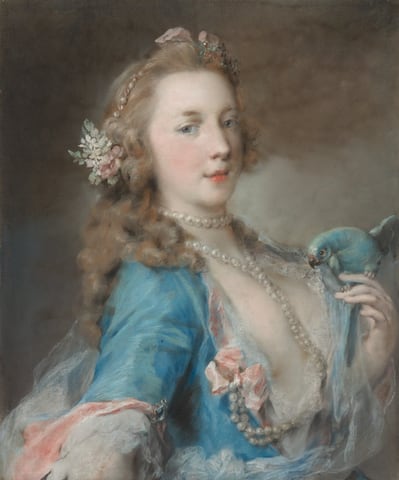
  1. A pastel drawing of woman in blue and pink dress with blue parrot.
    A Young Lady with a ParrotRosalba Carriera, c. 1730Courtesy of the Art Institute of Chicago
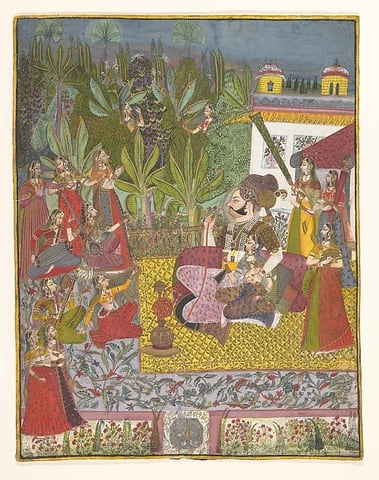
  2. Maharaja Bijay Singh in His Harem, ca. 1770
    Maharaja Bijay Singh in His HaremUnrecorded Indian maker, ca. 1770Courtesy of The Metropolitan Museum of Art
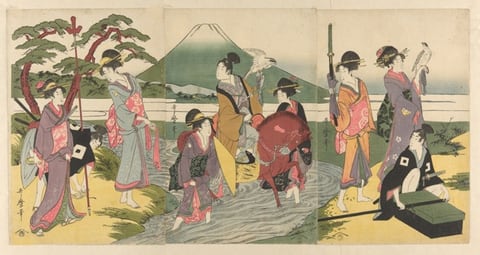
  3. A work made of color woodblock print; oban triptych.
    Young man and his party crossing a stream before Mt. FujiKitagawa Utamaro, c. 1798/1800Courtesy of the Art Institute of Chicago
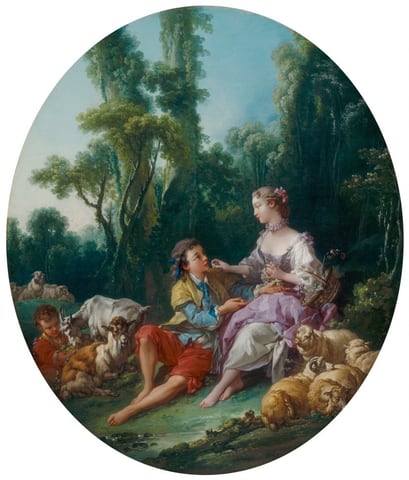
  4. A work made of oil on canvas.
    Are They Thinking about the Grape? (Pensent-ils au raisin?)François Boucher, 1747Courtesy of the Art Institute of Chicago

Second room, north wall
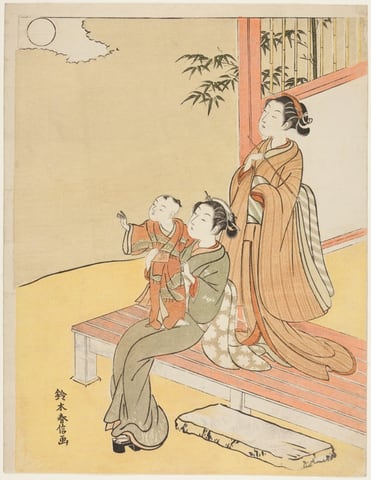
  1. A work made of color woodblock print; chuban.
    Viewing the MoonSuzuki Harunobu, c. 1767/68Courtesy of the Art Institute of Chicago
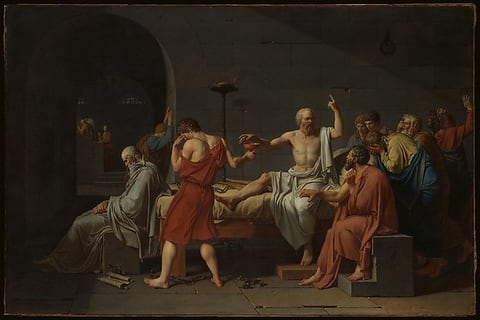
  2. The Death of Socrates, by Jacques-Louis David, 1787
    The Death of SocratesJacques-Louis David, 1787Courtesy of The Metropolitan Museum of Art
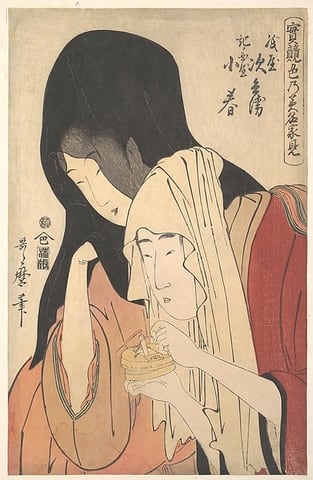
  3. Jihei of Kamiya Eloping with the Geisha Koharu of Kinokuniya, from the series “True Feelings Compared: The Founts of Love” (Jitsu kurabe iro no Minakami), by Kitagawa Utamaro, ca. 1798–99
    Jihei of Kamiya Eloping with the Geisha Koharu of Kinokuniya, from the series “True Feelings Compared: The Founts of Love” (Jitsu kurabe iro no Minakami)Kitagawa Utamaro, ca. 1798–99Courtesy of The Metropolitan Museum of Art

Third room, north wall
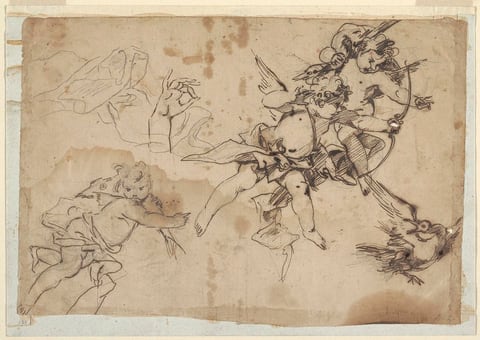
  1. STUDY FOR A PAINTING ON THEME OF CALLISTO
    Study for a Painting on Theme of CallistoFilippo Falciatore, ca. 1750Courtesy of Cooper Hewitt, Smithsonian Design Museum
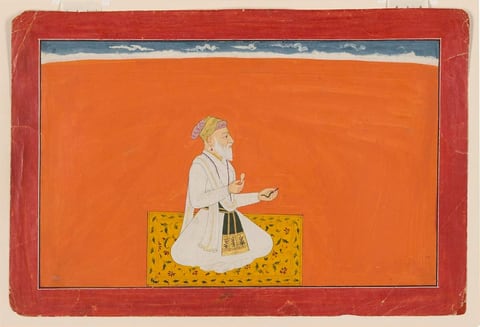
  2. Painting
    The sage-physician Dhanvantari, folio from the “Sixth” Bhagavata Purana series, also known as the “small” Guler-Basohli seriesManaku, ca. 1735-1740Courtesy of the National Museum of Asian Art, Smithsonian Institution