18th-century Italy
Works in this room
Works made in Italy in the 18th century.
First room, north wall
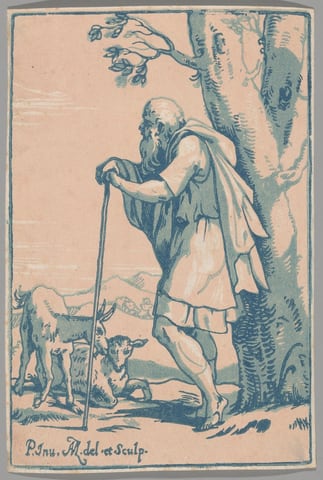
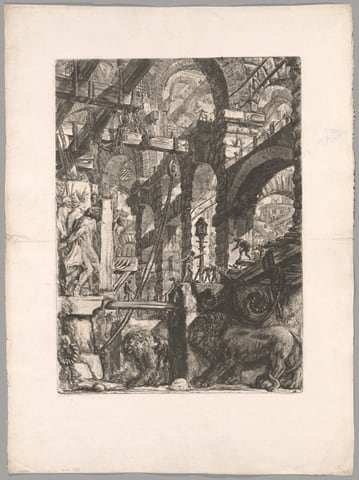
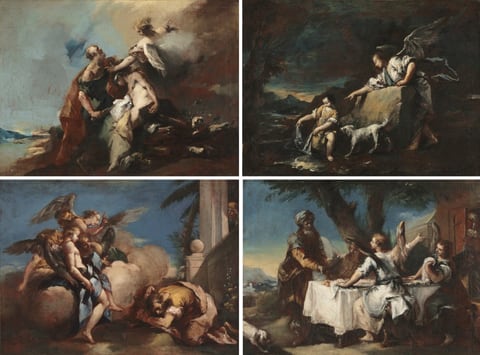
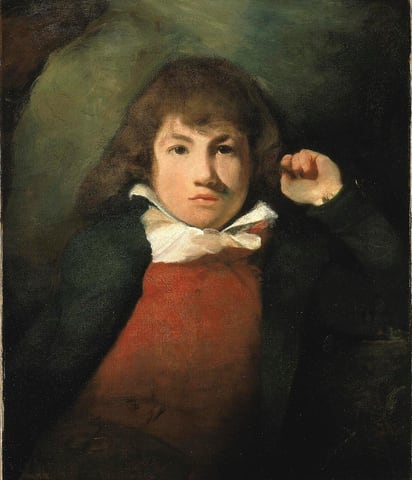
The Old ShepherdConte Antonio Maria Zanetti, the Elder, 1722Courtesy of the Art Institute of Chicago The Lion Bas-Reliefs, plate 5 from Imaginary PrisonsGiovanni Battista Piranesi, 1761Courtesy of the Art Institute of Chicago The Sacrifice of Isaac, Tobias and the Angel, The Angels Appearing to Abraham, Abraham Welcoming the Three Angels (painting series)Francesco Guardi, 1750sCourtesy of the Cleveland Museum of Art Portrait of a BoyUnrecorded Italian maker, ca. 1800Courtesy of the Smithsonian American Art Museum
First room, south wall
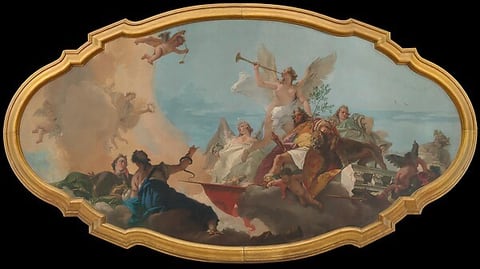
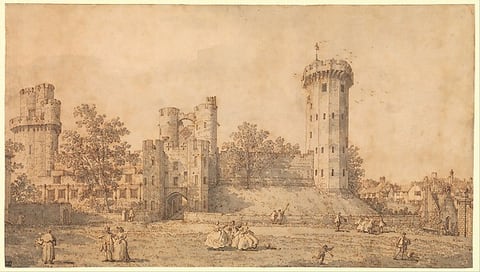
The Glorification of the Barbaro FamilyGiovanni Battista Tiepolo, ca. 1750Courtesy of The Metropolitan Museum of Art Warwick Castle: The East FrontCanaletto, 1752Courtesy of The Metropolitan Museum of Art
Second room, south wall
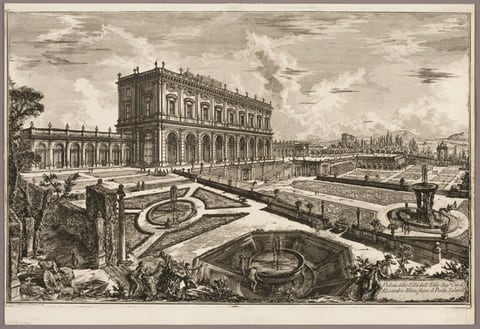
View of the Villa of His Eminence Cardinal Alessandro Albani, outside Porta Salaria, from Views of RomeGiovanni Battista Piranesi, 1769, published 1800–07Courtesy of the Art Institute of Chicago 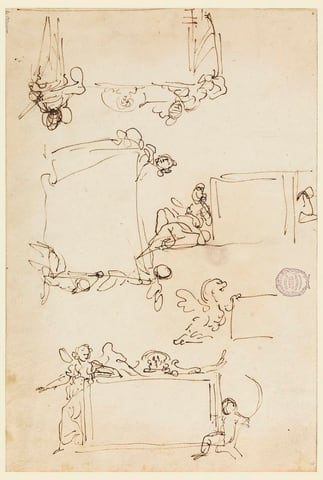
Sketches for a tabletCarlo Marchionni, ca. 1750Courtesy of Cooper Hewitt, Smithsonian Design Museum 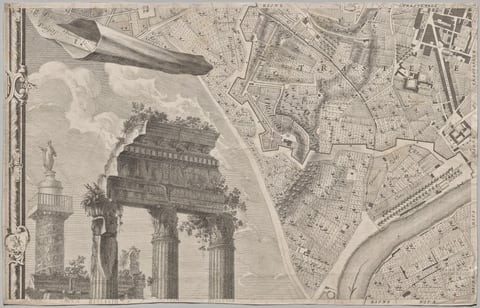
Nuova pianta di Roma data in luce da Giambattista Nolli l’anno MDCCXLVII, known as La Pianta Grande di RomaGiovanni Battista Nolli, 1748Courtesy of the Cleveland Museum of Art
Second room, north wall
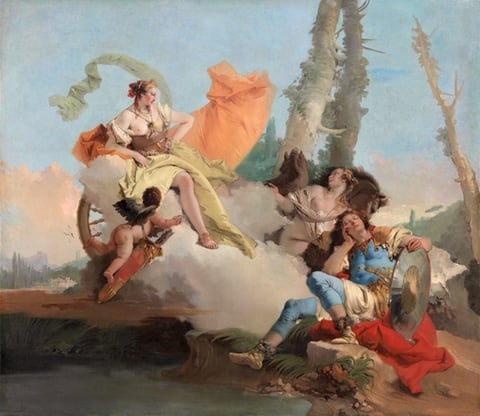
Armida Encounters the Sleeping RinaldoGiovanni Battista Tiepolo, c. 1742–45Courtesy of the Art Institute of Chicago 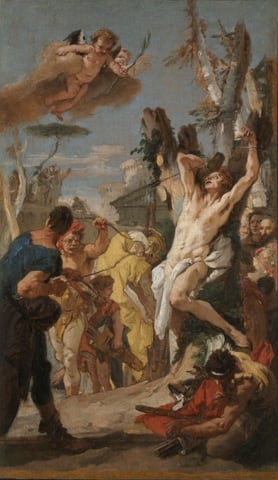
Study for "The Martyrdom of Saint Sebastian" (for the Augustinian monastery at Diessen, Germany)Giovanni Battista Tiepolo, 1739Courtesy of the Cleveland Museum of Art 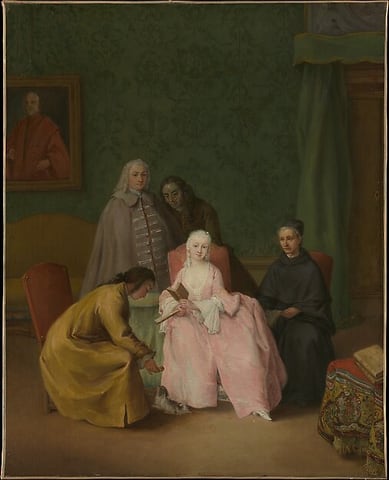
The VisitPietro Longhi, 1746Courtesy of The Metropolitan Museum of Art
Third room, north wall
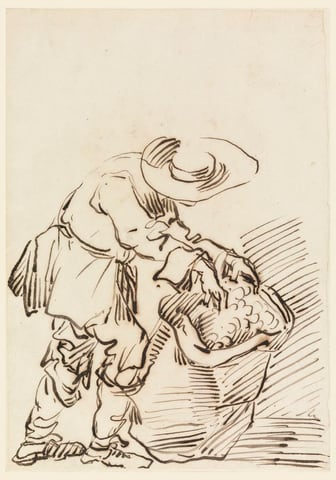
Working PeasantCarlo Marchionni, 1728–78Courtesy of Cooper Hewitt, Smithsonian Design Museum 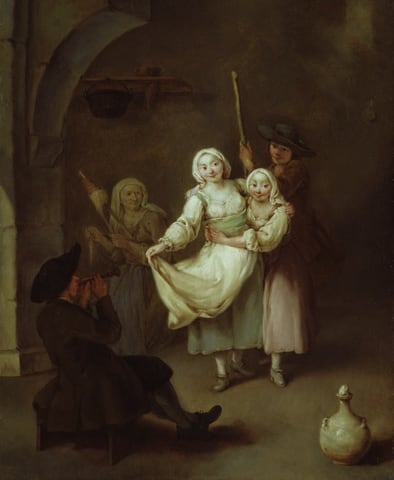
The DancePietro Longhi, c. 1750Courtesy of the Art Institute of Chicago 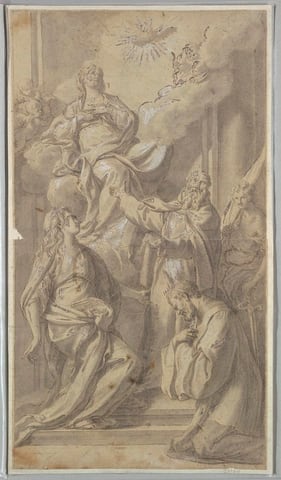
Madonna and SaintsSebastiano Conca, ca. 1730Courtesy of Cooper Hewitt, Smithsonian Design Museum 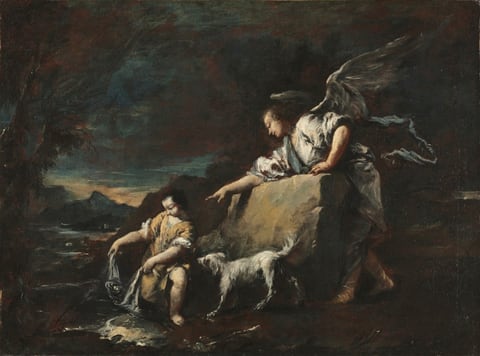
Tobias and the AngelFrancesco Guardi, 1750sCourtesy of the Cleveland Museum of Art