Floor plan

Time and place18th-century Britain
18th-century Britain
A work made of varnished gouache, over black and red chalks, on cream laid paper, laid down on canvas, stretched on a wooden stretcher and varnished again.
Angel of the Revelation (Book of Revelation, chapter 10), by William Blake, ca. 1803–5
A work made of engraving in black ink with opaque and translucent watercolor on cream laid paper.
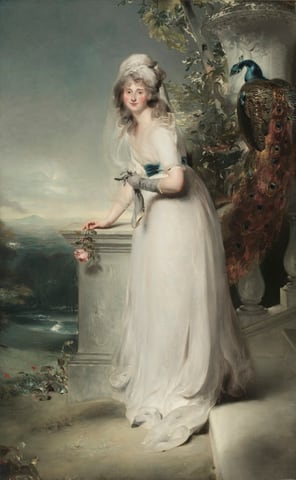
Portrait of Catherine Grey, Lady Manners, by Thomas Lawrence, 1794
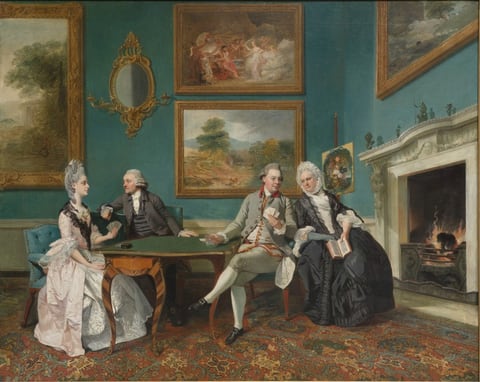
The Dutton Family in the Drawing Room of Sherborne Park, Gloucestershire, by Johann Zoffany, c. 1772
A work made of etching on ivory laid paper.

The works in this room are listed below.

Works in this room

Works made in Britain in the 18th century.

First room, north wall

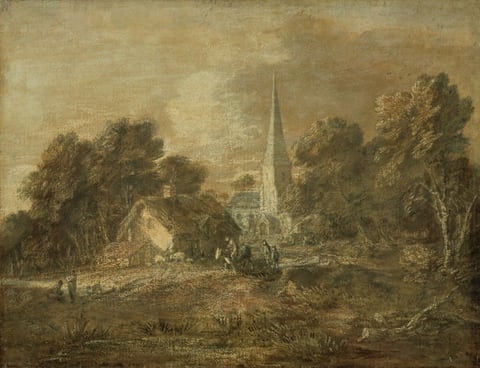
  1. A work made of varnished gouache, over black and red chalks, on cream laid paper, laid down on canvas, stretched on a wooden stretcher and varnished again.
    Wooded Landscape with Village SceneThomas Gainsborough, early 1770s (not later than 1772)Courtesy of the Art Institute of Chicago
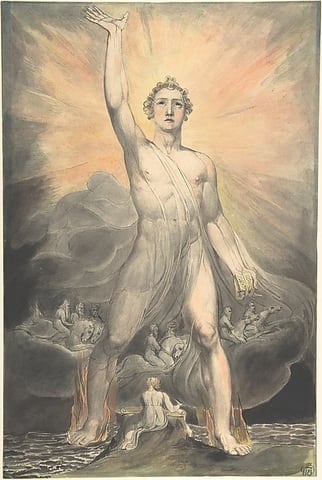
  2. Angel of the Revelation (Book of Revelation, chapter 10), by William Blake, ca. 1803–5
    Angel of the Revelation (Book of Revelation, chapter 10)William Blake, ca. 1803–5Courtesy of The Metropolitan Museum of Art
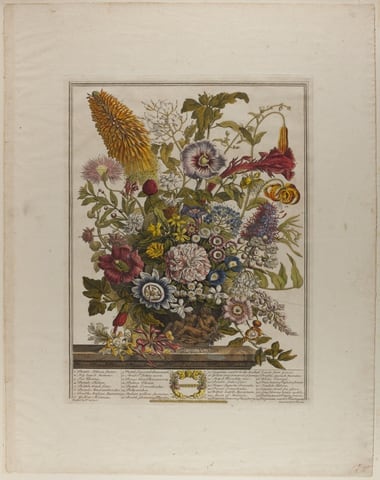
  3. A work made of engraving in black ink with opaque and translucent watercolor on cream laid paper.
    August, from Twelve Months of FlowersHenry Fletcher, n.d.Courtesy of the Art Institute of Chicago
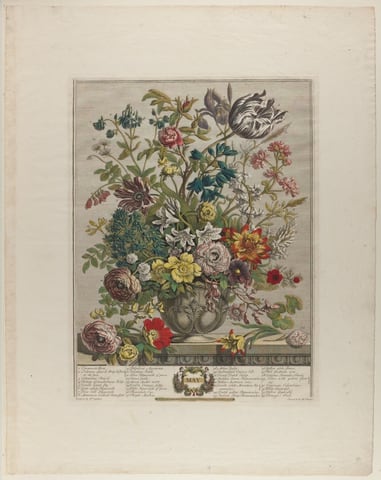
  4. A work made of engraving in black ink with opaque and translucent watercolor on cream laid paper.
    May, from Twelve Months of FlowersHenry Fletcher, n.d.Courtesy of the Art Institute of Chicago

First room, south wall

  1. Portrait of Catherine Grey, Lady Manners, by Thomas Lawrence, 1794
    Portrait of Catherine Grey, Lady MannersThomas Lawrence, 1794Courtesy of the Cleveland Museum of Art
  2. The Dutton Family in the Drawing Room of Sherborne Park, Gloucestershire, by Johann Zoffany, c. 1772
    The Dutton Family in the Drawing Room of Sherborne Park, GloucestershireJohann Zoffany, c. 1772Courtesy of the Cleveland Museum of Art
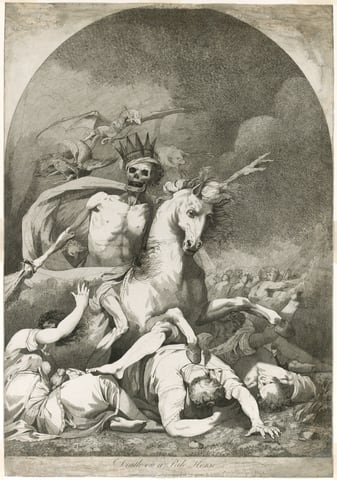
  3. A work made of etching on ivory laid paper.
    Death on a Pale HorseJoseph Haynes, 1784, after the drawing of 1775Courtesy of the Art Institute of Chicago

Second room, south wall
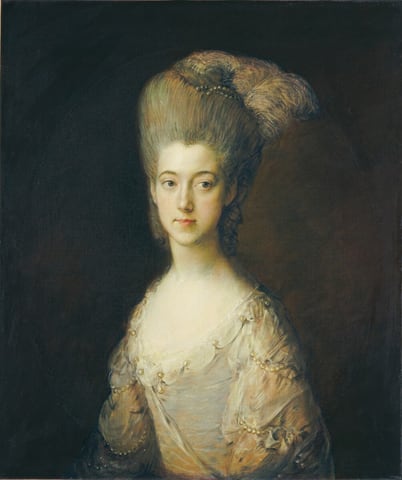
  1. Shown from the waist up, a young, pale-skinned woman with her gray hair piled high atop her head is lit starkly against a dark background in this vertical portrait painting. The woman’s shoulders are angled to our left. Her face is square to us, but she looks off to our right from the corners of her eyes, which are gray rimmed with golden brown around the pupils. She has a thin face, smooth cheeks, a bow-shaped pink mouth, and a narrow chin. Her hair is mostly swept up high under a bank of pearl-white feathers and some sparkling ornaments. A few ringlets hang down the back of her neck. The bodice of her white dress scoops low across her chest and sits just above her sloping shoulders. The dress is adorned with pearls on the sleeves and around the neckline, and the fabric shimmers from silvery white to pale gold. The background is earth-brown around her face and deepens to almost black in the corners.
    Mrs. Paul Cobb MethuenThomas Gainsborough, c. 1776/1777Courtesy National Gallery of Art, Washington
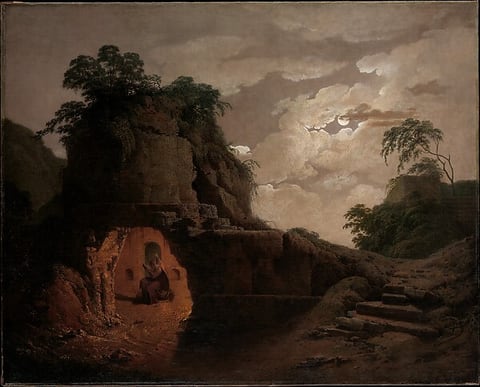
  2. Virgil's Tomb by Moonlight, with Silius Italicus Declaiming, by Joseph Wright of Derby, 1779
    Virgil's Tomb by Moonlight, with Silius Italicus DeclaimingJoseph Wright of Derby, 1779Courtesy of The Metropolitan Museum of Art
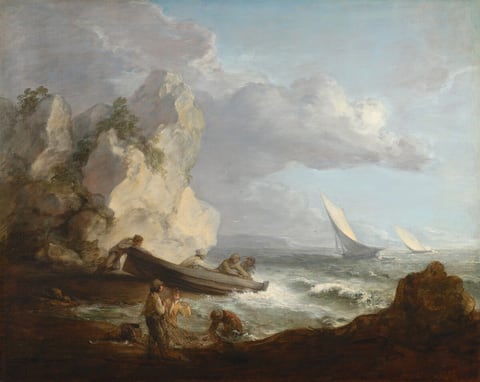
  3. From a rocky shoreline, we look on several light-skinned people working by the sea with a boat and a net in this freely painted, almost square seascape. The scene is framed by a silhouette of low boulders along the lower right corner, and a towering cream-white rock rising two-thirds of the way up the composition to our left. Scrubby, celery-green vegetation grows on the rocky outcropping. Near the center, close to the towering white rocks, three people sit, reaching for something near one end of a boat while a fourth person braces against the rock, presumably to push the boat out to the sea. Closer to us, three people on the shore work with a net. Two stand with the net hooked over their shoulders, and a third person crouches in the water with head down. The people all wear simple shirts and pants in shades of tan, mustard yellow, burnt orange, and pale blue. All but two wear hats. The sea meets the shore with frothy white foam and cresting, low waves. The sea beyond fades from pale sage green to arctic blue along the horizon, which comes about a third of the way up the composition. Two sail boats tilt against the wind in the distance. Pale, smoky lavender-purple clouds drift across the ice-blue sky.
    Seashore with FishermenThomas Gainsborough, c. 1781/1782Courtesy National Gallery of Art, Washington

Second room, north wall
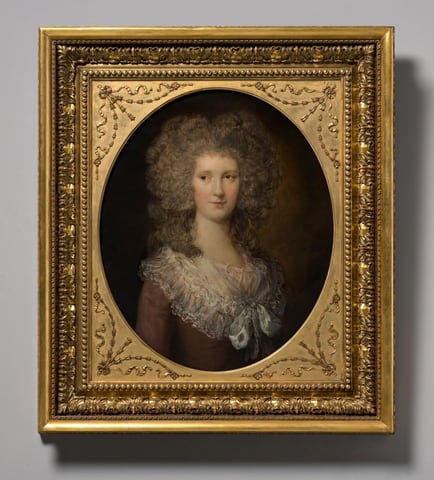
  1. Portrait of Mary Anne Jolliffe, by Gainsborough Dupont, after 1788
    Portrait of Mary Anne JolliffeGainsborough Dupont, after 1788Courtesy of the Cleveland Museum of Art
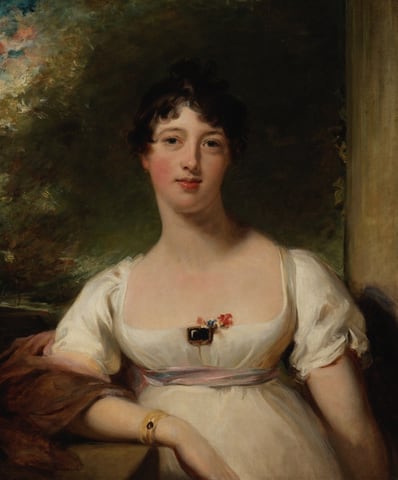
  2. A work made of oil on canvas.
    Anna Maria Dashwood, later Marchioness of ElyThomas Lawrence, c. 1805Courtesy of the Art Institute of Chicago
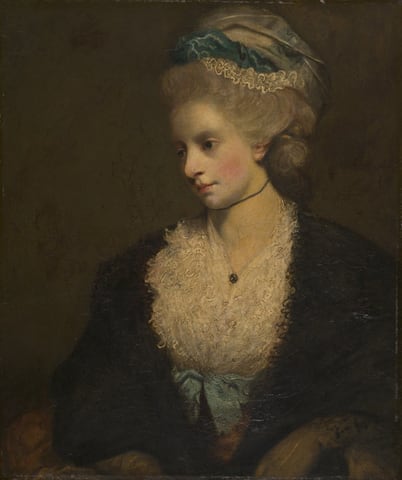
  3. A work made of oil on canvas.
    Theophilia GwatkinJoshua Reynolds, 1776–81Courtesy of the Art Institute of Chicago

Third room, north wall
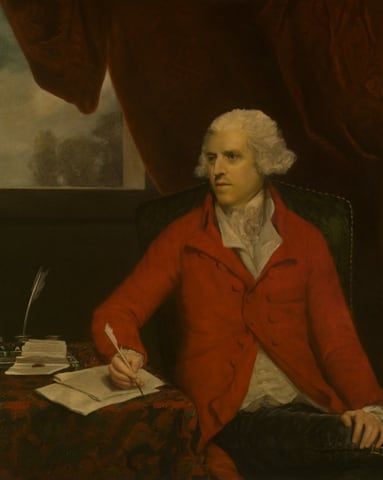
  1. A work made of oil on canvas.
    Sir Thomas Rumbold, Bt.Joshua Reynolds, 1788Courtesy of the Art Institute of Chicago
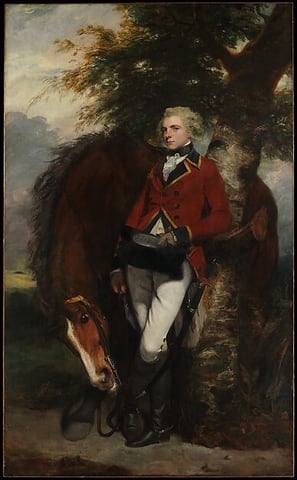
  2. Captain George K. H. Coussmaker (1759–1801), by Joshua Reynolds, 1782
    Captain George K. H. Coussmaker (1759–1801)Joshua Reynolds, 1782Courtesy of The Metropolitan Museum of Art
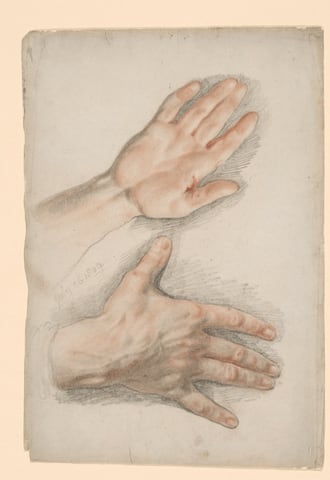
  3. A work made of red and black chalk on gray wove paper.
    Two Studies of a Right HandThomas Lawrence, July 26, 1800Courtesy of the Art Institute of Chicago