Floor plan

Time and placeThe 17th century

The 17th century

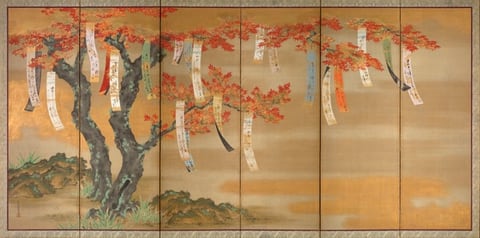
Papers with Japanese text hang from a tree bearing red and gold leaves.
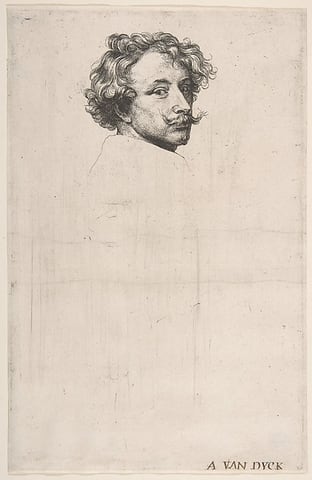
Self-Portrait, from "The Iconography", by Anthony van Dyck, ca. 1640
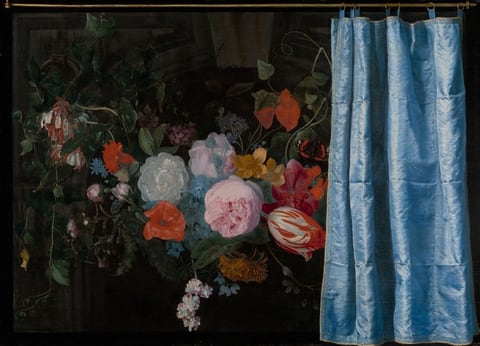
A work made of oil on panel.
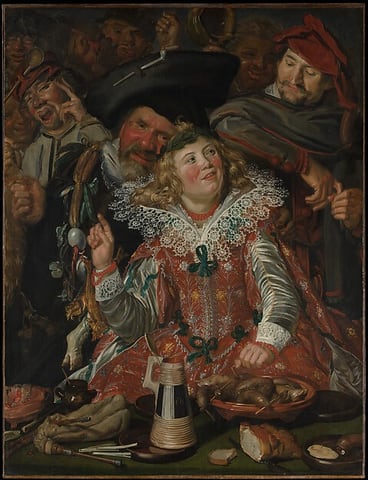
Merrymakers at Shrovetide, by Frans Hals, ca. 1616–17
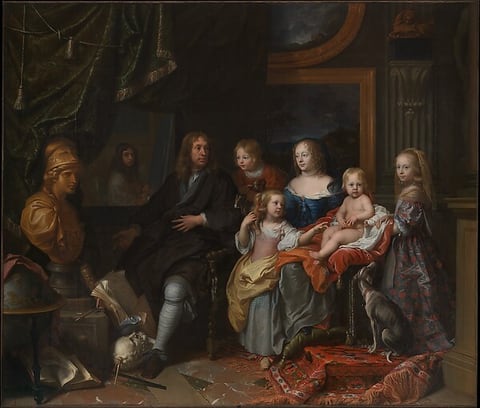
The Jabach Family, by Charles Le Brun, ca. 1660
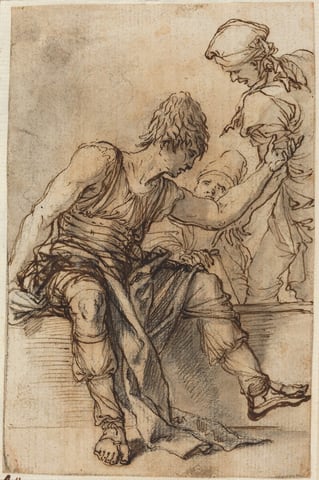
The image shows a drawing of three figures. The central figure is seated, leaning slightly forward with one arm outstretched towards the standing figures. They have short, slightly messy hair, traditional clothing, and muscular limbs. The standing figures on the right are partially obscured but appear to interact with the seated figure. One of them is extending their arm towards the seated figure. The individuals wear layered clothing, with one wearing a head covering. The background is simple, emphasizing the interaction between the figures. The drawing style is classical or historical, using ink and wash for texture and depth.

The works in this room are listed below.

Works in this room

Works made in the 17th century, anywhere in the world.

Section 1, north wall

  1. Papers with Japanese text hang from a tree bearing red and gold leaves.
    Autumn Maples with Poem SlipsTosa Mitsuoki, c. 1675Courtesy of the Art Institute of Chicago
  2. Self-Portrait, from "The Iconography", by Anthony van Dyck, ca. 1640
    Self-Portrait, from "The Iconography"Anthony van Dyck, ca. 1640Courtesy of The Metropolitan Museum of Art
  3. A work made of oil on panel.
    Trompe-l'Oeil Still Life with a Flower Garland and a CurtainAdriaen van der Spelt, 1658Courtesy of the Art Institute of Chicago

Section 1, south wall

  1. Merrymakers at Shrovetide, by Frans Hals, ca. 1616–17
    Merrymakers at ShrovetideFrans Hals, ca. 1616–17Courtesy of The Metropolitan Museum of Art
  2. The Jabach Family, by Charles Le Brun, ca. 1660
    The Jabach FamilyCharles Le Brun, ca. 1660Courtesy of The Metropolitan Museum of Art
  3. The image shows a drawing of three figures. The central figure is seated, leaning slightly forward with one arm outstretched towards the standing figures. They have short, slightly messy hair, traditional clothing, and muscular limbs. The standing figures on the right are partially obscured but appear to interact with the seated figure. One of them is extending their arm towards the seated figure. The individuals wear layered clothing, with one wearing a head covering. The background is simple, emphasizing the interaction between the figures. The drawing style is classical or historical, using ink and wash for texture and depth.
    Youth Sitting on a Wall in Conversation with Two MenSalvator Rosa, c. 1656/1657Courtesy National Gallery of Art, Washington

Section 2, south wall
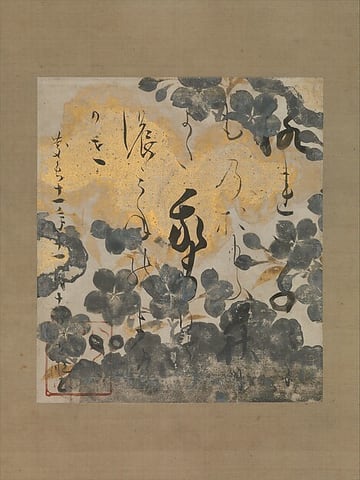
  1. Poem by Kamo no Chōmei with Underpainting of Cherry Blossoms, by Hon'ami Kōetsu, 1606
    Poem by Kamo no Chōmei with Underpainting of Cherry BlossomsHon'ami Kōetsu, 1606Courtesy of The Metropolitan Museum of Art
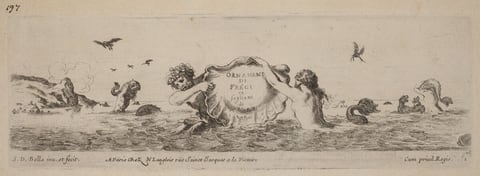
  2. This is a drawing of mythical sea creatures in a marine landscape. The central figures are depicted as mythical beings, possibly mermen, with human torsos and fish-like tails, partially submerged in water. One figure prominently holds a large seashell with text written on it. Around them are various other marine creatures and features such as a distant rocky shore, birds flying in the sky, and waves creating a dynamic setting. The drawing is detailed in line work.
    Title Page for "Ornamenti di fregi e fogliani"Stefano della Bella, probably 1648Courtesy National Gallery of Art, Washington
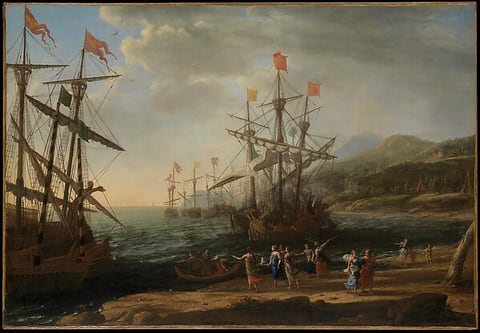
  3. The Trojan Women Setting Fire to Their Fleet, by Claude Lorrain (Claude Gellée), ca. 1643
    The Trojan Women Setting Fire to Their FleetClaude Lorrain (Claude Gellée), ca. 1643Courtesy of The Metropolitan Museum of Art

Section 2, north wall
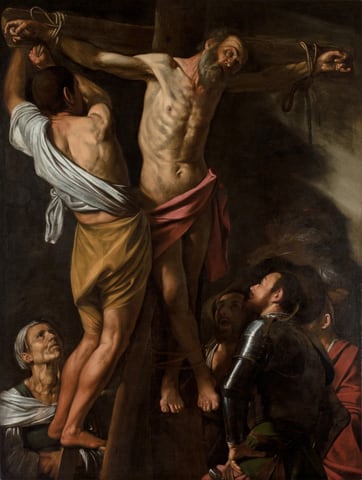
  1. The Crucifixion of Saint Andrew, by Caravaggio, 1606–7
    The Crucifixion of Saint AndrewCaravaggio, 1606–7Courtesy of the Cleveland Museum of Art
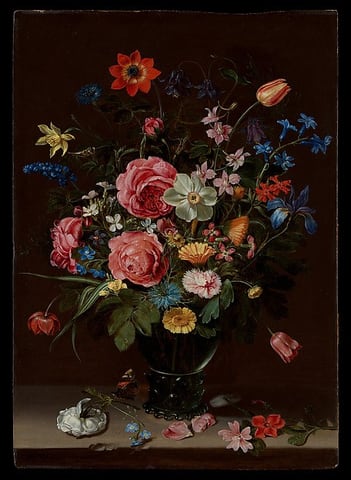
  2. A Bouquet of Flowers, by Clara Peeters, ca. 1612
    A Bouquet of FlowersClara Peeters, ca. 1612Courtesy of The Metropolitan Museum of Art
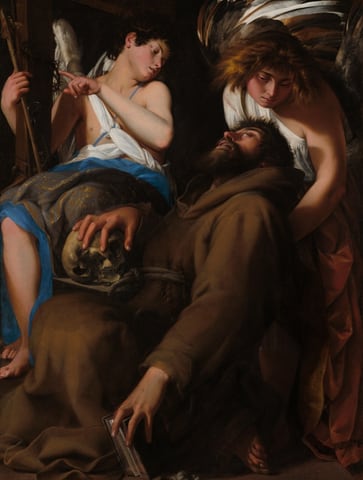
  3. A work made of oil on canvas.
    The Ecstasy of Saint FrancisGiovanni Baglione, 1601Courtesy of the Art Institute of Chicago

Section 3, north wall
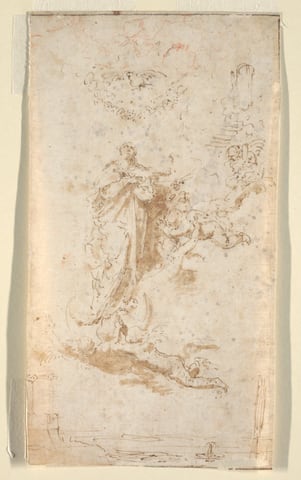
  1. THE IMMACULATE CONCEPTION
    The Immaculate ConceptionJusepe de Ribera (called Lo Spagnoletto), ca. 1640Courtesy of Cooper Hewitt, Smithsonian Design Museum
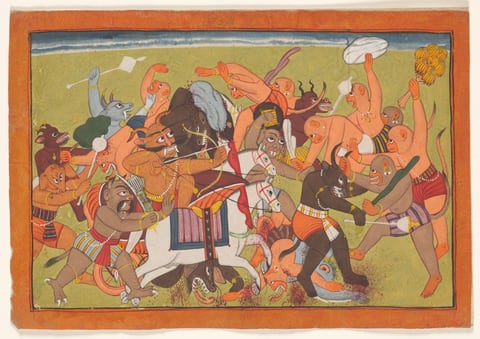
  2. Battle between monkeys and demons, from the “Shangri” Ramayana, c. 1700
    Battle between monkeys and demons, from the “Shangri” RamayanaUnrecorded Indian maker, c. 1700Courtesy of the Cleveland Museum of Art
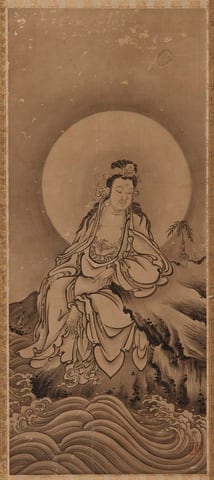
  3. Hanging scrolls (pair)
    KwannonUnrecorded Japanese maker, 1615-1868Courtesy of the National Museum of Asian Art, Smithsonian Institution
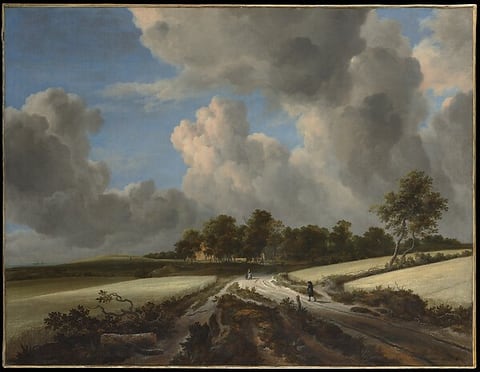
  4. Wheat Fields, by Jacob van Ruisdael, ca. 1670
    Wheat FieldsJacob van Ruisdael, ca. 1670Courtesy of The Metropolitan Museum of Art