Floor plan

Time and place17th-century Netherlands
17th-century Netherlands
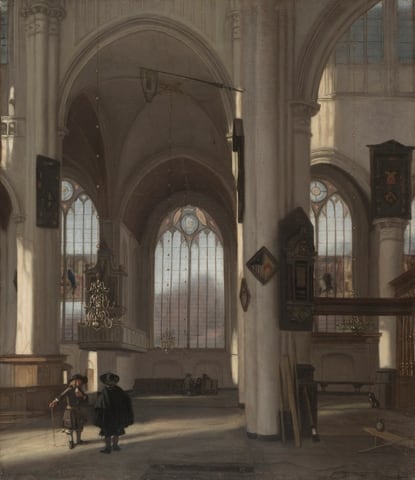
Interior of a Church, by Emanuel de Witte, c. 1680
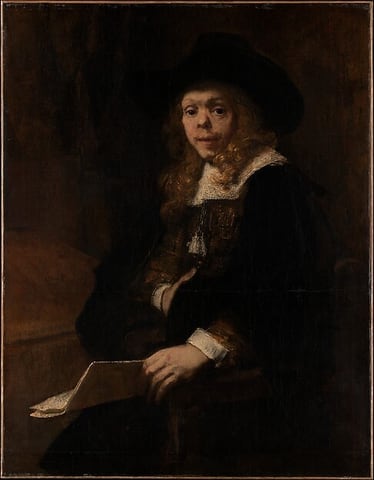
Portrait of Gerard de Lairesse, by Rembrandt van Rijn, 1665–67
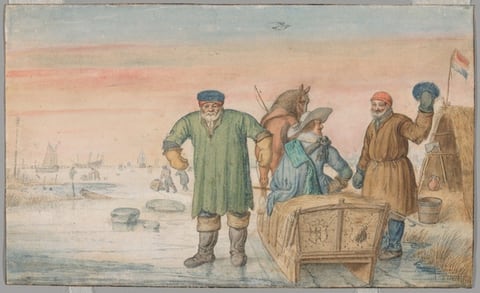
A work made of opaque and translucent watercolors, with pen and brown ink, over graphite, on cream laid paper.
A Young Man with a Chain, by Rembrandt van Rijn, c. 1629 or 1632
A work made of oil on canvas.
Cow, Bull and Calf, by Karel Dujardin
A work made of oil on panel.

The works in this room are listed below.

Works in this room

Works made in the Netherlands in the 17th century.

First room, north wall

  1. Interior of a Church, by Emanuel de Witte, c. 1680
    Interior of a ChurchEmanuel de Witte, c. 1680Courtesy of the Cleveland Museum of Art
  2. Portrait of Gerard de Lairesse, by Rembrandt van Rijn, 1665–67
    Portrait of Gerard de LairesseRembrandt van Rijn, 1665–67Courtesy of The Metropolitan Museum of Art
  3. A work made of opaque and translucent watercolors, with pen and brown ink, over graphite, on cream laid paper.
    Two Old Men beside a Sled Bearing the Coats of Arms of Amsterdam and UtrechtHendric Avercamp, 1620/33Courtesy of the Art Institute of Chicago
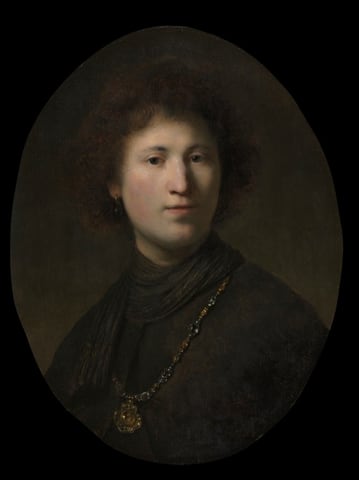
  4. A Young Man with a Chain, by Rembrandt van Rijn, c. 1629 or 1632
    A Young Man with a ChainRembrandt van Rijn, c. 1629 or 1632Courtesy of the Cleveland Museum of Art

First room, south wall

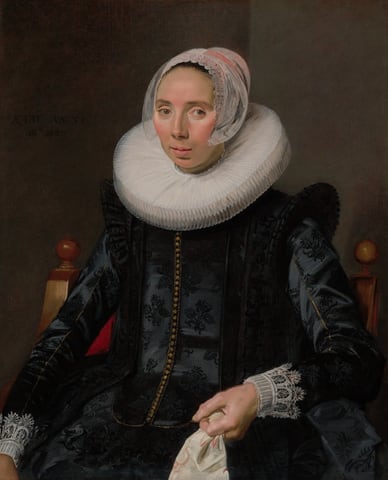
  1. A work made of oil on canvas.
    Portrait of a LadyFrans Hals, 1627Courtesy of the Art Institute of Chicago
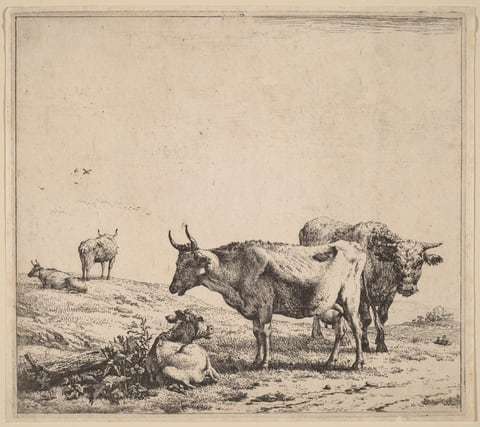
  2. Cow, Bull and Calf, by Karel Dujardin
    Cow, Bull and CalfKarel DujardinCourtesy National Gallery of Art, Washington
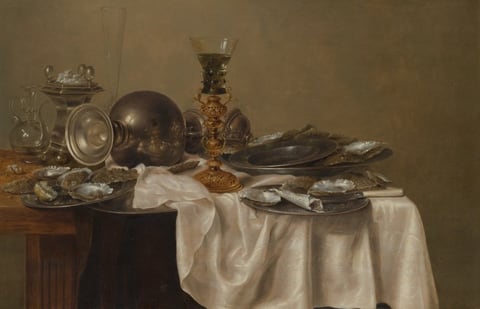
  3. A work made of oil on panel.
    Breakfast Still LifeWillem Claesz. Heda, 1647Courtesy of the Art Institute of Chicago
  4. A work made of oil on panel.
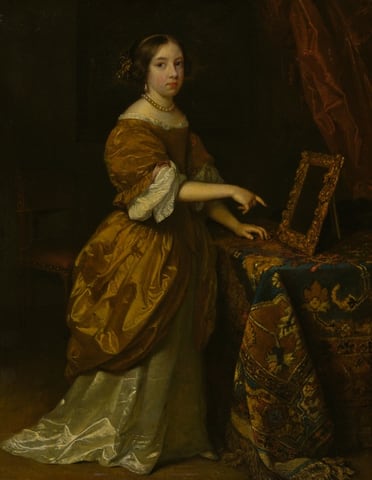
    Girl Standing before a MirrorCaspar Netscher, 1668Courtesy of the Art Institute of Chicago

Second room, south wall
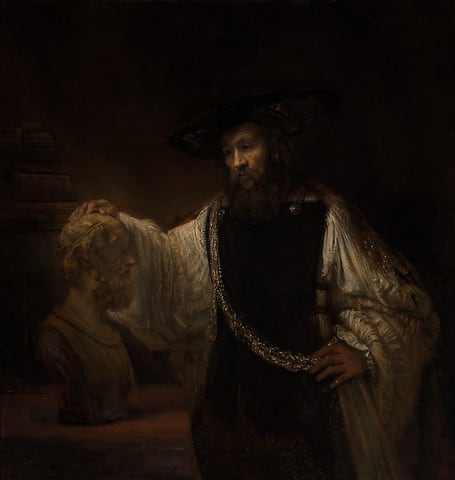
  1. Aristotle with a Bust of Homer, by Rembrandt van Rijn, 1653
    Aristotle with a Bust of HomerRembrandt van Rijn, 1653Courtesy of The Metropolitan Museum of Art
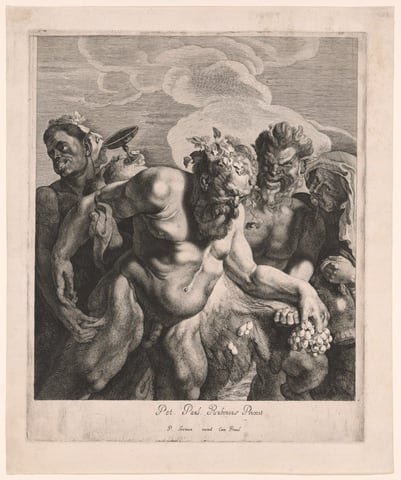
  2. A work made of engraving in black on cream laid paper.
    Drunken SilenusJonas Suyderhoef, 1642Courtesy of the Art Institute of Chicago
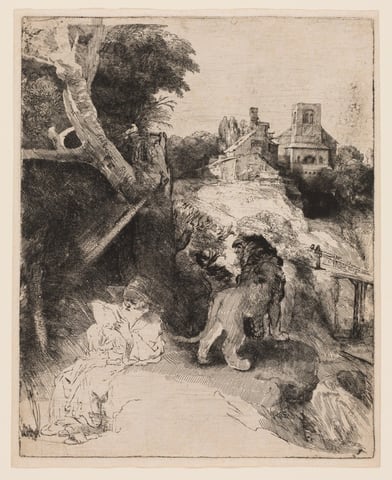
  3. A work made of etching, burin, and drypoint on ivory laid paper.
    Saint Jerome Reading in an Italian LandscapeRembrandt van Rijn, c. 1653Courtesy of the Art Institute of Chicago
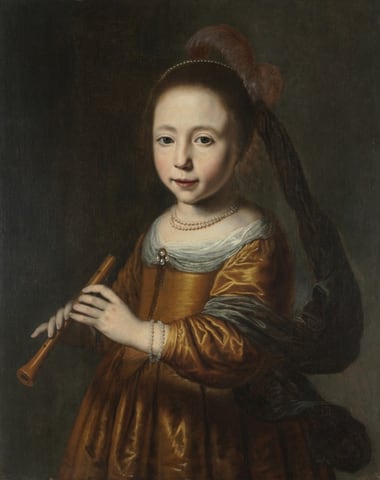
  4. Portrait of Elizabeth Spiegel, by Dirck Dircksz. Santvoort, 1639
    Portrait of Elizabeth SpiegelDirck Dircksz. Santvoort, 1639Courtesy of the Cleveland Museum of Art

Second room, north wall
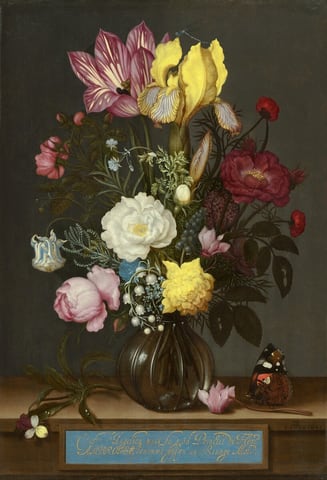
  1. Gathered in a round glass vase, a tall bouquet of flowers in shades of light and deep pink, sunshine yellow, and white with pine-green leaves nearly fills this vertical still life painting. Shown against an gray background, the vase sits on a narrow ledge, perhaps made of wood. A label with looping, cursive French text painted in gold against a baby blue background is affixed to the front of the ledge, along the bottom edge of the composition. The text reads, “C'est l'Angelicq main du grad Peinctre de Flore AMBROISE, renommé jusqu' au Rivage Moré.” A few of the flowers draw the eye, including a tulip and iris at the top of the bouquet. To our left, the tulip is mauve pink with cream-colored streaks, and one petal folds down to reveal the stamen inside. Next to it, a damselfly, an insect like a delicate dragonfly, rests on the vibrant yellow iris. The petals curling down from the iris are veined in muted burgundy red. Flowers filling in the bouquet below include a shell-pink cyclamen, a white gardenia, a closed blue and white striped columbine, a slate-blue grape hyacinth, lily of the valley, pale blue forget-me-nots, and a pink peony interspersed with leaves and greenery. The round glass vase has a narrow opening. A sprig of viola rests to our left of the vase on the ledge, and an orange, black, white, and brown butterfly perches on the stem of a pink cyclamen laying to our right of the vase. The artist signed the painting with a monogram and dated it in dark paint to our right on the face of the ledge: “AB 1621.”
    Bouquet of Flowers in a Glass VaseAmbrosius Bosschaert, 1621Courtesy National Gallery of Art, Washington
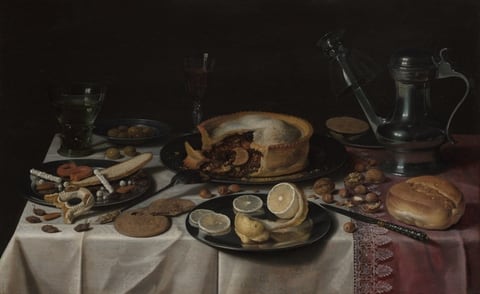
  2. A work made of oil on panel.
    Still LifePieter Claesz, c. 1625Courtesy of the Art Institute of Chicago
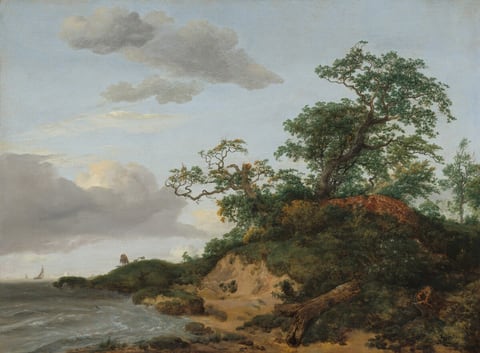
  3. Water laps at a curving shoreline in front of a steep sandy dune carpeted in grass, shrubs, and trees in this horizontal landscape painting. The dune takes up the lower right quadrant of the composition. A few broken tree trunks are overgrown with vines and plants across the top and down the sloping side of the dune facing us. A red brick wall cuts through the vegetation up the side of the dune and disappears into the shrubbery at the top. The twisting branches and canopies of three large trees reach into the upper right quadrant of the composition. The vegetation stops abruptly along the sheer edge of the dune where it faces the water. The land curves like a backward capital letter C so it almost reaches the left edge of the painting along the horizon, which comes a quarter of the way up the composition. A cow and three more animals, perhaps sheep or more cows, graze or lie on a grassy mound in the distance, and sailboats line the horizon in the deep distance. White ripples swirl in the steel-blue water. The artist signed and dated the lower center, “J Ruisdael . 1648.”
    Dunes by the SeaJacob van Ruisdael, 1648Courtesy National Gallery of Art, Washington
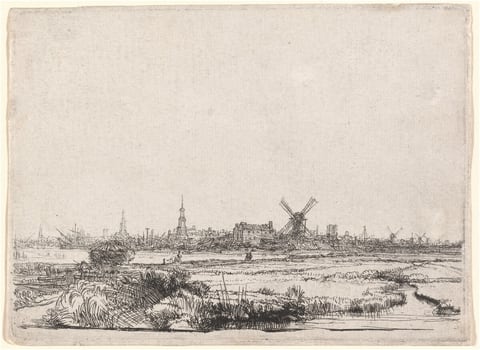
  4. View of Amsterdam from the Northwest, by Rembrandt van Rijn, c. 1640
    View of Amsterdam from the NorthwestRembrandt van Rijn, c. 1640Courtesy National Gallery of Art, Washington