Floor plan

Time and placeThe 16th century

The 16th century

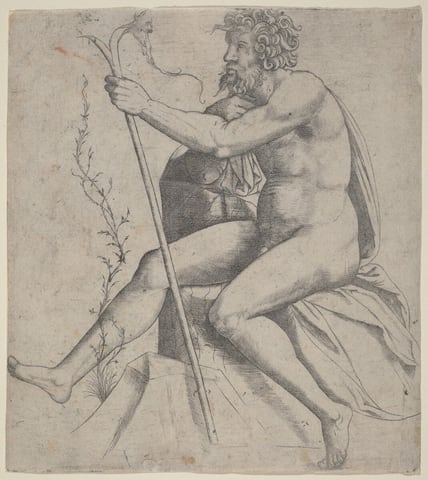
The image shows a man seated with a slight forward tilt. He is muscular, with one leg bent and the other extended. His head is turned to the left in profile, revealing his facial features, which include a large nose, full beard, and curly hair. He appears naked except for a fabric drape over his shoulders. In his left hand, he holds a staff, and there is a plant with twisting vines near him. The background is a shaded rocky surface with no other details.
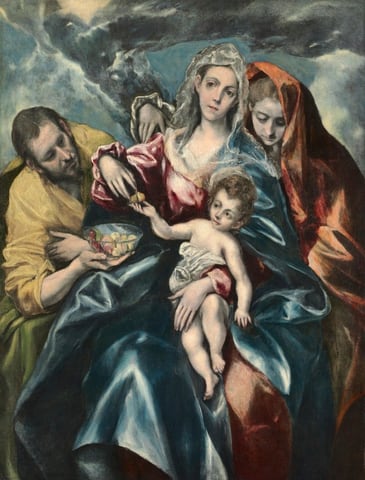
The Holy Family with Mary Magdalen, by El Greco, c. 1590–95
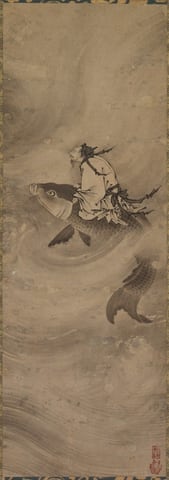
Immortal Riding on a Carp, c. 1600
A work made of engraving in black on ivory laid paper.
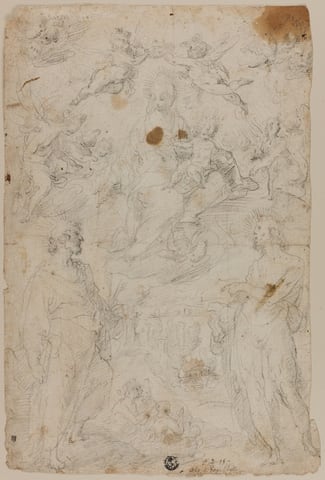
A work made of black chalk (recto), and black chalk and pen and black ink (verso), on ivory laid paper.
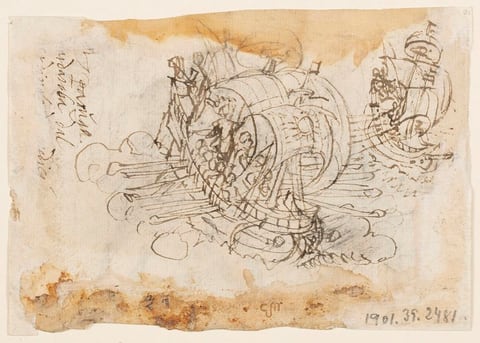
TWO GALLEYS AT SEA
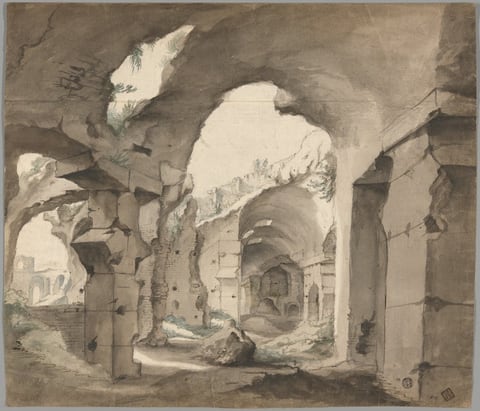
A work made of pen and brown ink and brush and black and green washes, over black chalk, on cream laid paper.
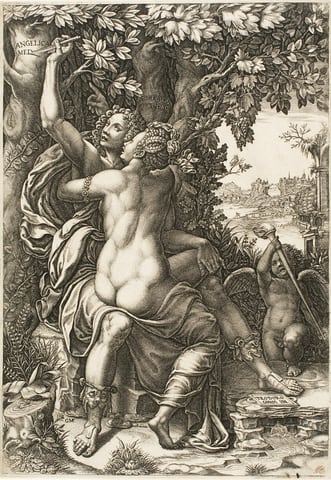
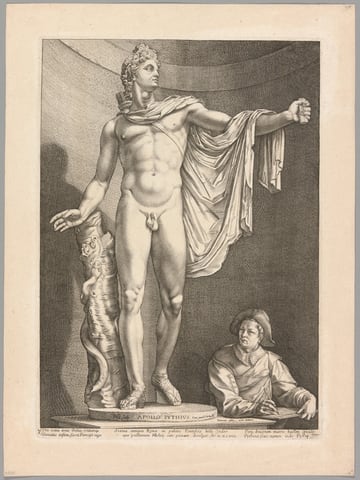
A work made of engraving in black on cream laid paper.

The works in this room are listed below.

Works in this room

Works made in the 16th century, anywhere in the world.

First room, north wall

  1. The image shows a man seated with a slight forward tilt. He is muscular, with one leg bent and the other extended. His head is turned to the left in profile, revealing his facial features, which include a large nose, full beard, and curly hair. He appears naked except for a fabric drape over his shoulders. In his left hand, he holds a staff, and there is a plant with twisting vines near him. The background is a shaded rocky surface with no other details.
    Man Seated Holding a Forked StaffGiovanni Antonio da Brescia, c. 1514/1515Courtesy National Gallery of Art, Washington
  2. The Holy Family with Mary Magdalen, by El Greco, c. 1590–95
    The Holy Family with Mary MagdalenEl Greco, c. 1590–95Courtesy of the Cleveland Museum of Art
  3. Immortal Riding on a Carp, c. 1600
    Immortal Riding on a CarpUnrecorded Japanese maker, c. 1600Courtesy of the Cleveland Museum of Art
  4. A work made of engraving in black on ivory laid paper.
    Angelica and MedoroGiorgio Ghisi, c. 1570Courtesy of the Art Institute of Chicago

First room, south wall

  1. A work made of black chalk (recto), and black chalk and pen and black ink (verso), on ivory laid paper.
    Virgin and Child with Saints Peter and John the Baptist (recto); Saint John the Baptist (verso)Pietro d' Asaro, n.d.Courtesy of the Art Institute of Chicago
  2. TWO GALLEYS AT SEA
    Two Galleys at SeaJan van der Straet, called Stradanus, ca. 1587 – 1590Courtesy of Cooper Hewitt, Smithsonian Design Museum
  3. A work made of pen and brown ink and brush and black and green washes, over black chalk, on cream laid paper.
    Interior View of the ColiseumLodewijk Toeput, c. 1580Courtesy of the Art Institute of Chicago
  4. A work made of engraving in black on cream laid paper.
    The Apollo Belvedere, plate 3 from Three Famous Antique SculpturesHendrick Goltzius, c. 1592, printed c. 1617Courtesy of the Art Institute of Chicago

Second room, south wall
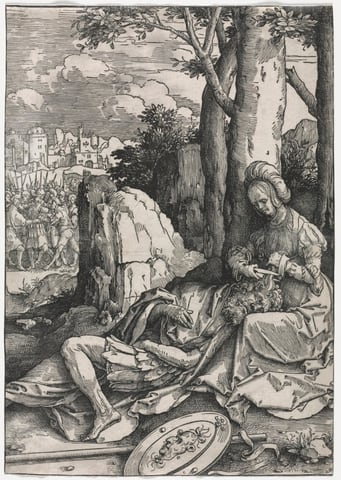
  1. The Power of Women: Samson and Delilah, by Lucas van Leyden, c. 1512
    The Power of Women: Samson and DelilahLucas van Leyden, c. 1512Courtesy of the Cleveland Museum of Art
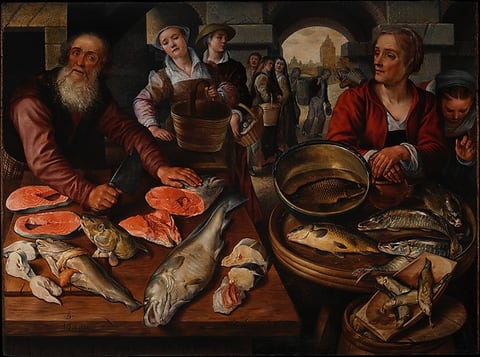
  2. Fish Market, by Joachim Beuckelaer, 1568
    Fish MarketJoachim Beuckelaer, 1568Courtesy of The Metropolitan Museum of Art
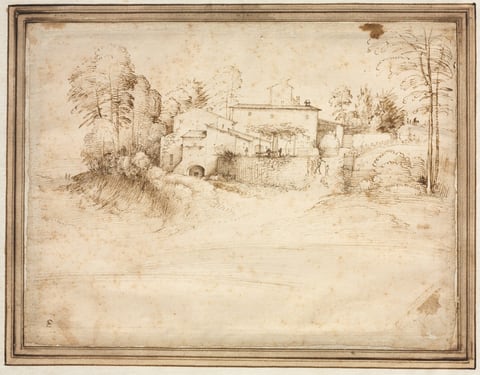
  3. Farmhouse on the Slope of a Hill, by Fra Bartolommeo, c. 1508
    Farmhouse on the Slope of a HillFra Bartolommeo, c. 1508Courtesy of the Cleveland Museum of Art

Second room, north wall
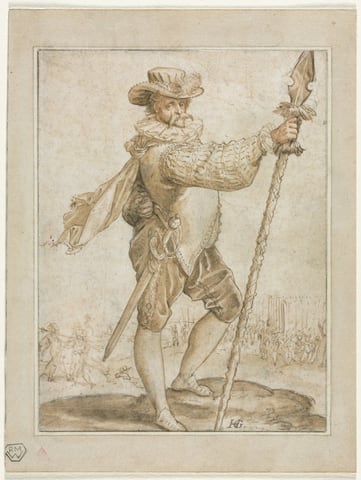
  1. Standing Officer Holding a Boar's Spear, by Hendrick Goltzius, 1586
    Standing Officer Holding a Boar's SpearHendrick Goltzius, 1586Courtesy of the Cleveland Museum of Art
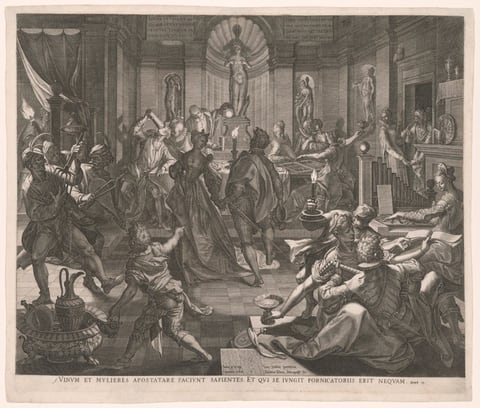
  2. A work made of engraving in black on cream laid paper.
    The Carnival (or the Prodigal Son)Jan Sadeler, I, 1588Courtesy of the Art Institute of Chicago
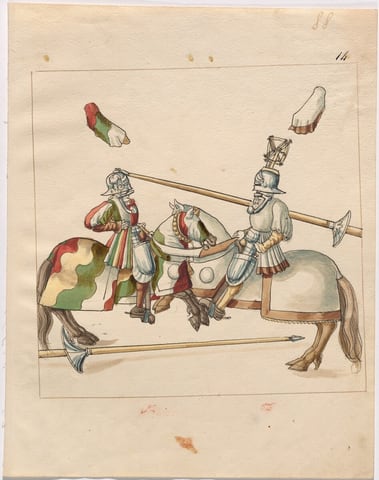
  3. This is a drawing of two armored knights on horseback during a joust. It depicts two horses with riders clad in full armor, including helmets with decorative details. Each knight holds a lance, poised as if they are about to engage in a jousting match. The horses are also adorned in armor, with a colorful caparison draped over them. On the ground, there are lances and a halberd seen in the foreground. There are also disembodied arms and hands illustrated in the composition, adding an abstract element. The style is illustrative, capturing the medieval theme of chivalric tournaments.
    Mock Joust of War with Flying Shields and Without BevorsUnrecorded German maker, c.1512-1515Courtesy National Gallery of Art, Washington

Third room, north wall
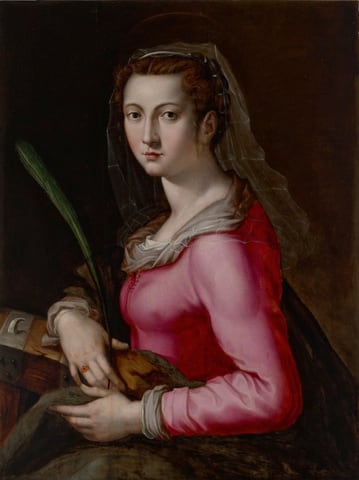
  1. Portrait of a Woman as Saint Catherine, by Pier Francesco Foschi, c. 1560
    Portrait of a Woman as Saint CatherinePier Francesco Foschi, c. 1560Courtesy of the Cleveland Museum of Art
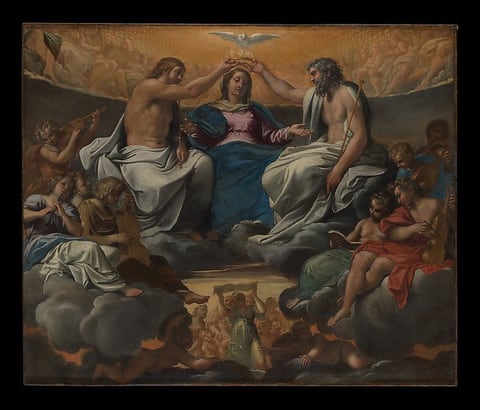
  2. The Coronation of the Virgin, by Annibale Carracci, after 1595
    The Coronation of the VirginAnnibale Carracci, after 1595Courtesy of The Metropolitan Museum of Art