Floor plan

Time and place16th-century Germany
16th-century Germany
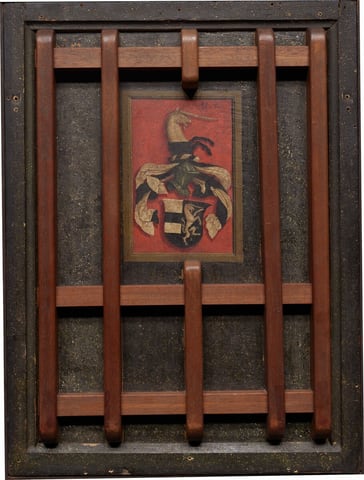
This is a painting depicting a heraldic coat of arms. The image features a detailed coat of arms with a central shield, adorned with black and gold sections, and additional decorative elements above it. There is a figure resembling a unicorn emerging from the crest. The background is a deep red hue. The artwork is displayed within a wooden frame with crossbars. This style is associated with displaying family crests and lineage.
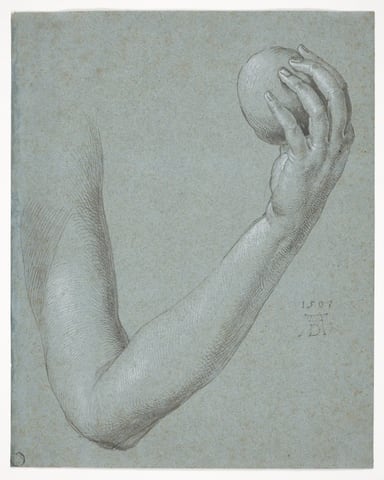
Arm of Eve, by Albrecht Dürer, 1507
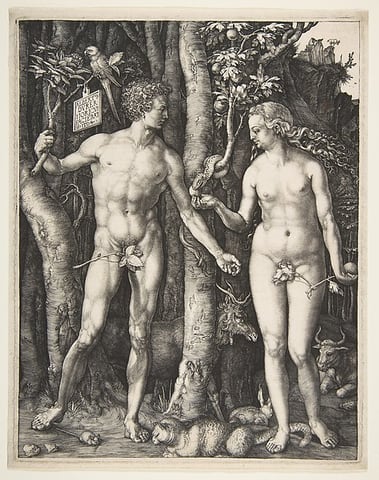
Adam and Eve, by Albrecht Dürer, 1504
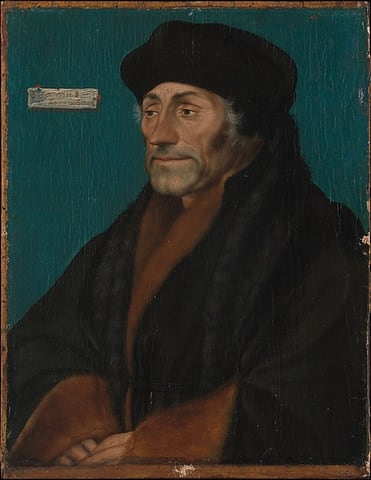
Erasmus of Rotterdam, by Hans Holbein the Younger, ca. 1532
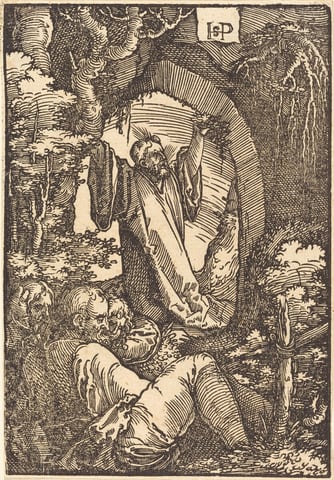
The image shows a central person standing with both arms raised. They have a long beard, aged appearance, long hair, and wear a robe. Three other individuals are around them, reclining or lying on the ground. The setting is an outdoor scene with detailed trees and vegetation. There are initials "I.SP" in the top right corner.
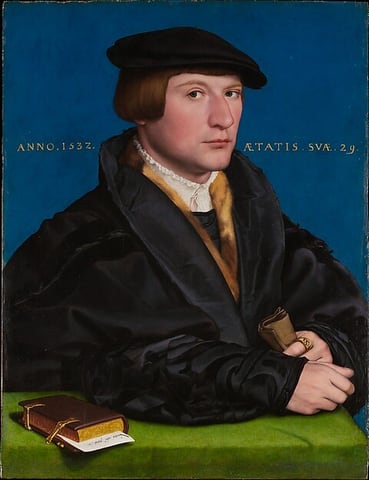
Hermann von Wedigh III (died 1560), by Hans Holbein the Younger, 1532
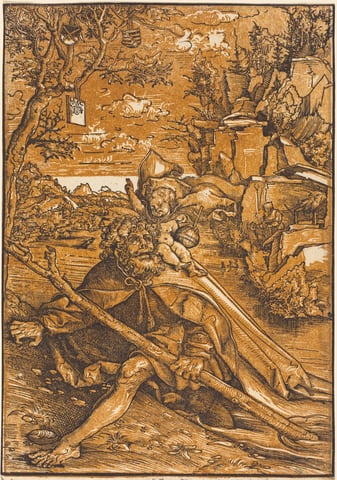
This is a drawing of a wilderness setting by a river. The scene features rocky cliffs, lush vegetation, a large bearded figure holding a staff, and a small cherubic figure beside them. In the background, there is a village against a mountainous backdrop. The drawing has rich texture and intricate details, with a contrast of dark lines and lighter hues.
The Judgment of Paris, by Lucas Cranach the Elder, ca. 1528

The works in this room are listed below.

Works in this room

Works made in Germany in the 16th century.

First room, north wall

  1. This is a painting depicting a heraldic coat of arms. The image features a detailed coat of arms with a central shield, adorned with black and gold sections, and additional decorative elements above it. There is a figure resembling a unicorn emerging from the crest. The background is a deep red hue. The artwork is displayed within a wooden frame with crossbars. This style is associated with displaying family crests and lineage.
    Hans Roth [reverse]Bernhard Strigel, 1527Courtesy National Gallery of Art, Washington
  2. Arm of Eve, by Albrecht Dürer, 1507
    Arm of EveAlbrecht Dürer, 1507Courtesy of the Cleveland Museum of Art
  3. Adam and Eve, by Albrecht Dürer, 1504
    Adam and EveAlbrecht Dürer, 1504Courtesy of The Metropolitan Museum of Art
  4. Erasmus of Rotterdam, by Hans Holbein the Younger, ca. 1532
    Erasmus of RotterdamHans Holbein the Younger, ca. 1532Courtesy of The Metropolitan Museum of Art

First room, south wall

  1. The image shows a central person standing with both arms raised. They have a long beard, aged appearance, long hair, and wear a robe. Three other individuals are around them, reclining or lying on the ground. The setting is an outdoor scene with detailed trees and vegetation. There are initials "I.SP" in the top right corner.
    The Agony in the GardenSebald Beham, 1522Courtesy National Gallery of Art, Washington
  2. Hermann von Wedigh III (died 1560), by Hans Holbein the Younger, 1532
    Hermann von Wedigh III (died 1560)Hans Holbein the Younger, 1532Courtesy of The Metropolitan Museum of Art
  3. This is a drawing of a wilderness setting by a river. The scene features rocky cliffs, lush vegetation, a large bearded figure holding a staff, and a small cherubic figure beside them. In the background, there is a village against a mountainous backdrop. The drawing has rich texture and intricate details, with a contrast of dark lines and lighter hues.
    Saint ChristopherLucas Cranach the Elder, 1506Courtesy National Gallery of Art, Washington
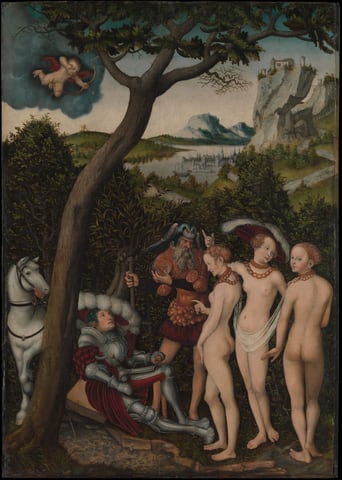
  4. The Judgment of Paris, by Lucas Cranach the Elder, ca. 1528
    The Judgment of ParisLucas Cranach the Elder, ca. 1528Courtesy of The Metropolitan Museum of Art

Second room, south wall
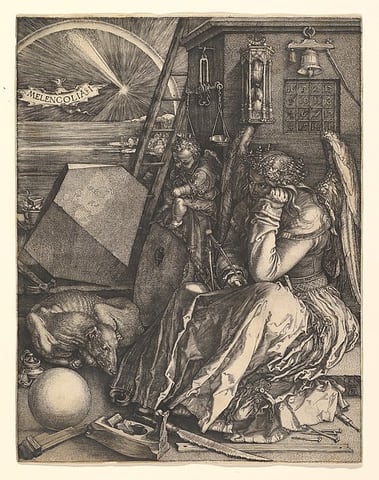
  1. Melencolia I, by Albrecht Dürer, 1514
    Melencolia IAlbrecht Dürer, 1514Courtesy of The Metropolitan Museum of Art
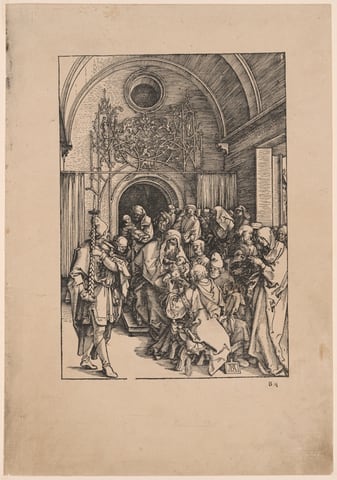
  2. A work made of woodcut in black on tan laid paper.
    The Circumcision of Christ, from The Life of the VirginAlbrecht Dürer, c. 1505, published 1511Courtesy of the Art Institute of Chicago
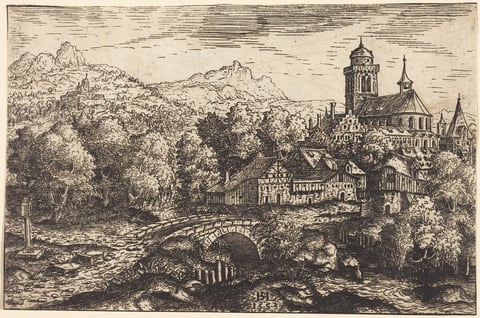
  3. The image features a landscape view of a medieval village scene. It includes a stone bridge over a river, buildings, a church with a tower, trees, hills, mountains, and cloudy sky. The image is depicted in intricate detail using a monochromatic palette, focusing on contrasts of light and shadow.
    Mountainous Landscape with a VillageHanns Lautensack, 1553Courtesy National Gallery of Art, Washington
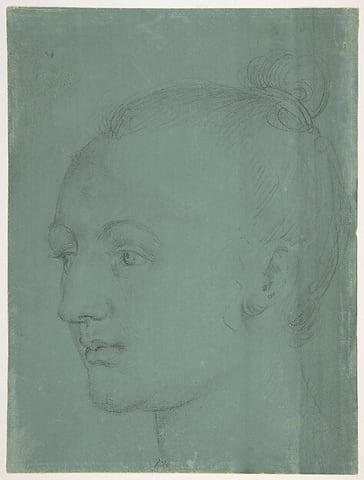
  4. Head of a Young Woman, by Albrecht Dürer, 1522
    Head of a Young WomanAlbrecht Dürer, 1522Courtesy of The Metropolitan Museum of Art

Second room, north wall
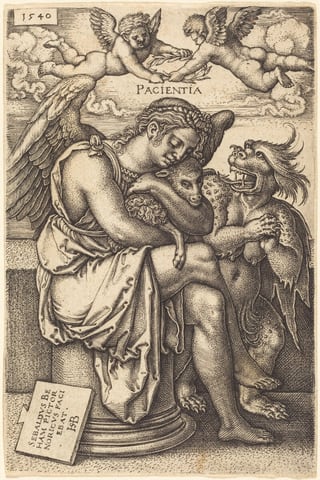
  1. This is a drawing of a winged figure with a sheep, accompanied by a mythical creature and cherubs. The central figure is holding the sheep tenderly. On the left, two cherubs are flying with a laurel branch, under the word "PACIENTIA." On the right is a mythical creature with dragon-like features. Below the scene, a plaque with an inscription is placed against the pedestal. The artwork is detailed with lines, cross-hatching, and shading, accentuating textures and forms.
    Pacientia (Patience)Sebald Beham, 1540Courtesy National Gallery of Art, Washington
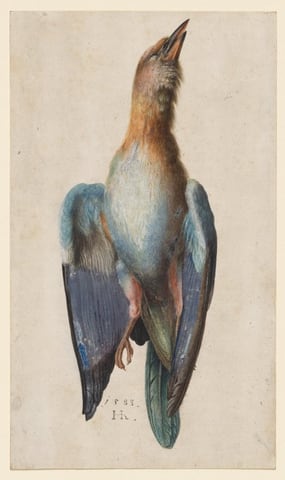
  2. Dead Blue Roller, by Hans Hoffmann, 1583
    Dead Blue RollerHans Hoffmann, 1583Courtesy of the Cleveland Museum of Art
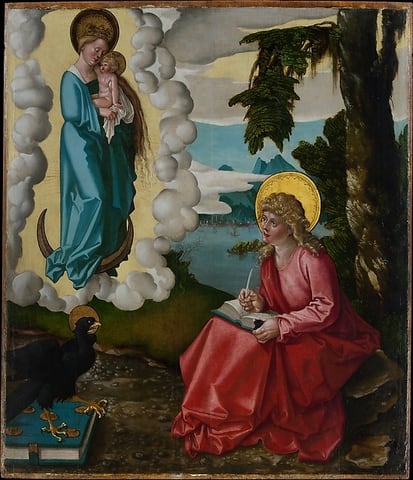
  3. Saint John on Patmos, by Hans Baldung (called Hans Baldung Grien), ca. 1511
    Saint John on PatmosHans Baldung (called Hans Baldung Grien), ca. 1511Courtesy of The Metropolitan Museum of Art
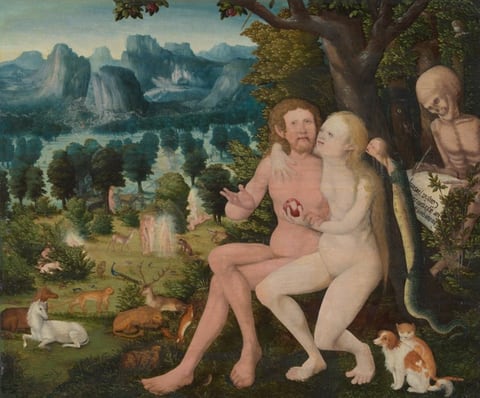
  4. A work made of oil on panel.
    The Fall of Man with Scenes of the CreationAugustus Cordus, 1544Courtesy of the Art Institute of Chicago