Floor plan

Time and placeThe 15th century

The 15th century

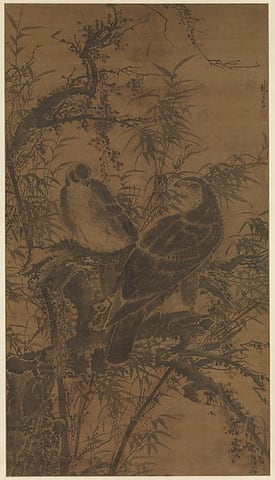
Two hawks in a thicket, by Lin Liang, mid- 15th century
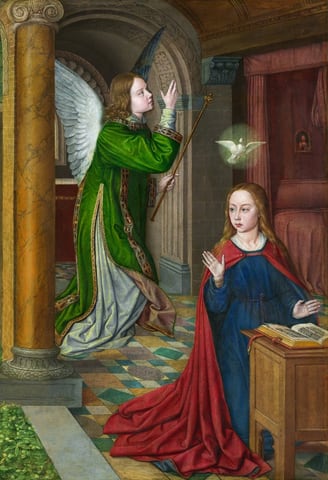
Painting of the Annunciation, dove flying above Mary with angel.
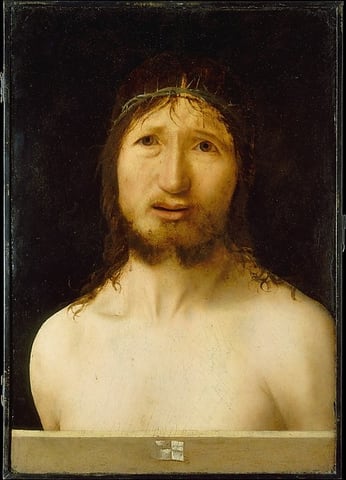
Christ Crowned with Thorns, by Antonello da Messina (Antonello di Giovanni d'Antonio)
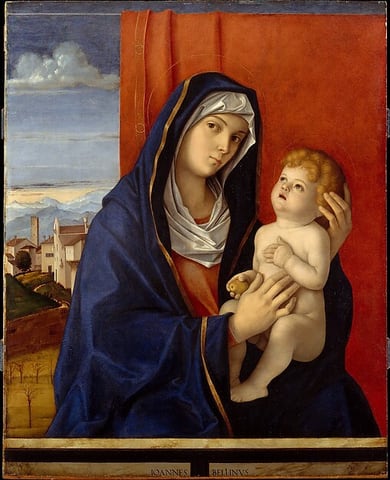
Madonna and Child, by Giovanni Bellini, late 1480s
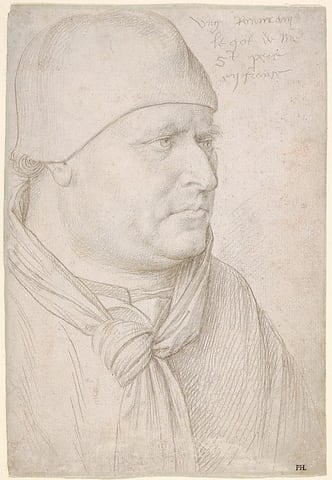
Portrait of Alain de Coëtivy (1407–1474), by Jean Fouquet, ca. 1451–55
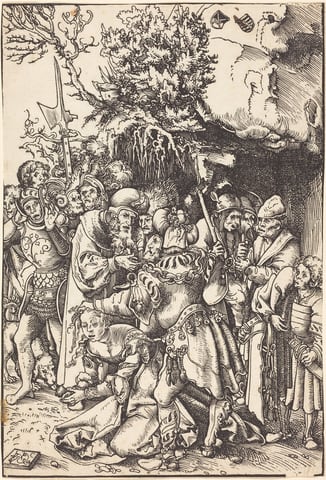
This is a drawing of a group of medieval figures and a tree. The image depicts a dense gathering of figures, all wearing elaborate period costumes, including helmets, robes, and armor. Their expressions vary. At the top, a leafy tree dominates the background alongside swirling clouds. The foreground hints at an interaction among the individuals, possibly a scene of discourse or judgment. Several personal items and tools are on the ground. The attention to detail and the use of line to create intricate patterns and textures are notable features of this work. This is in the style of Albrecht Dürer.
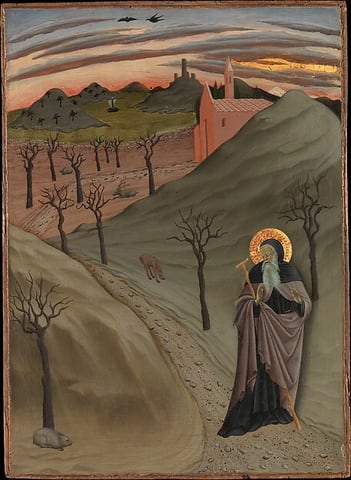
Saint Anthony the Abbot in the Wilderness, by Sano di Pietro (Ansano di Pietro di Mencio), ca. 1440

The works in this room are listed below.

Works in this room

Works made in the 15th century, anywhere in the world.

First room, north wall

  1. Two hawks in a thicket, by Lin Liang, mid- 15th century
    Two hawks in a thicketLin Liang, mid- 15th centuryCourtesy of The Metropolitan Museum of Art
  2. Painting of the Annunciation, dove flying above Mary with angel.
    The AnnunciationJean Hey (called Master of Moulins), 1490–95Courtesy of the Art Institute of Chicago
  3. Christ Crowned with Thorns, by Antonello da Messina (Antonello di Giovanni d'Antonio)
    Christ Crowned with ThornsAntonello da Messina (Antonello di Giovanni d'Antonio)Courtesy of The Metropolitan Museum of Art

First room, south wall

  1. Madonna and Child, by Giovanni Bellini, late 1480s
    Madonna and ChildGiovanni Bellini, late 1480sCourtesy of The Metropolitan Museum of Art
  2. Portrait of Alain de Coëtivy (1407–1474), by Jean Fouquet, ca. 1451–55
    Portrait of Alain de Coëtivy (1407–1474)Jean Fouquet, ca. 1451–55Courtesy of The Metropolitan Museum of Art
  3. This is a drawing of a group of medieval figures and a tree. The image depicts a dense gathering of figures, all wearing elaborate period costumes, including helmets, robes, and armor. Their expressions vary. At the top, a leafy tree dominates the background alongside swirling clouds. The foreground hints at an interaction among the individuals, possibly a scene of discourse or judgment. Several personal items and tools are on the ground. The attention to detail and the use of line to create intricate patterns and textures are notable features of this work. This is in the style of Albrecht Dürer.
    The Martyrdom of Saint BarbaraLucas Cranach the ElderCourtesy National Gallery of Art, Washington
  4. Saint Anthony the Abbot in the Wilderness, by Sano di Pietro (Ansano di Pietro di Mencio), ca. 1440
    Saint Anthony the Abbot in the WildernessSano di Pietro (Ansano di Pietro di Mencio), ca. 1440Courtesy of The Metropolitan Museum of Art

Second room, south wall
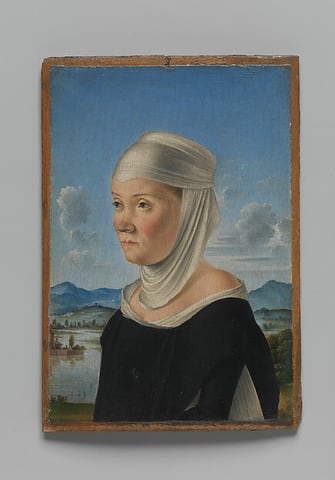
  1. Portrait of a Woman, Possibly a Nun of San Secondo; (verso) Scene in Grisaille, by Jacometto (Jacometto Veneziano), ca. 1485–95
    Portrait of a Woman, Possibly a Nun of San Secondo; (verso) Scene in GrisailleJacometto (Jacometto Veneziano), ca. 1485–95Courtesy of The Metropolitan Museum of Art
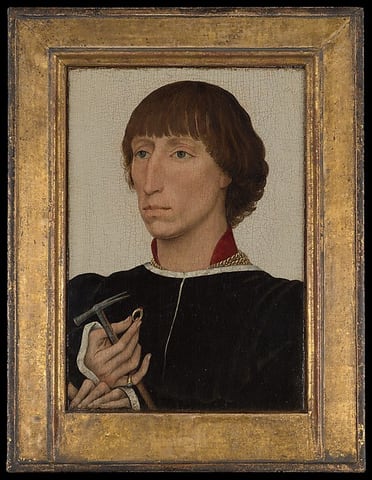
  2. Francesco d'Este (born ca. 1429, died after 1486), by Rogier van der Weyden, ca. 1460
    Francesco d'Este (born ca. 1429, died after 1486)Rogier van der Weyden, ca. 1460Courtesy of The Metropolitan Museum of Art
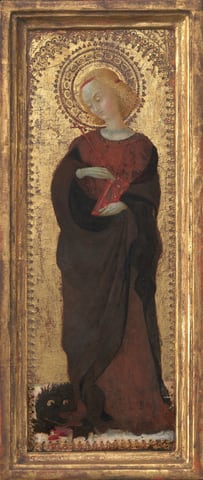
  3. This painting shows a person standing, their body turned to us, with their head looking downward to the left. The person has pale skin, round, rosy cheeks, and wavy yellow hair surrounded by a golden halo with intricate patterns. They are wearing a dark robe over a dark red dress or tunic and holding a long, thin red cross in one hand, while the other hand holds a closed red book. At their feet lies a black dog-like animal with wide yellow eyes. The scene is set against a golden textured background within a gilded border.
    Saint MargaretSassetta, c. 1435Courtesy National Gallery of Art, Washington
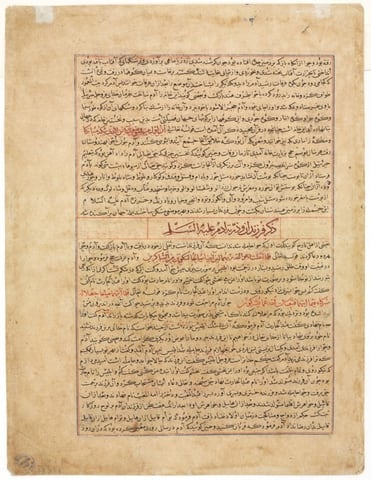
  4. Text Page, Persian Prose (recto) from a Manuscript of the Majma' al-Tavarikh (A Compendium of Histories) by Hafiz-i Abru:, c. 1425
    Text Page, Persian Prose (recto) from a Manuscript of the Majma' al-Tavarikh (A Compendium of Histories) by Hafiz-i Abru:Unrecorded Persian maker, c. 1425Courtesy of the Cleveland Museum of Art

Second room, north wall
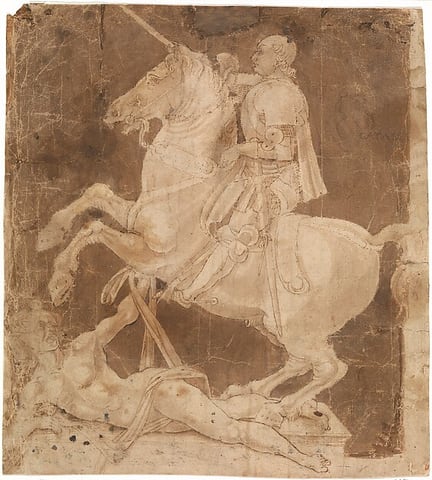
  1. Study for the Equestrian Monument to Francesco Sforza, by Antonio Pollaiuolo, early to mid 1480s
    Study for the Equestrian Monument to Francesco SforzaAntonio Pollaiuolo, early to mid 1480sCourtesy of The Metropolitan Museum of Art
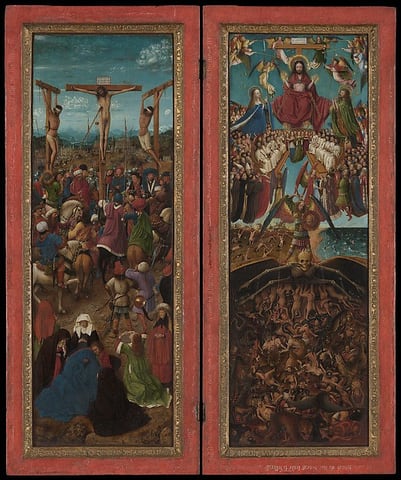
  2. The Crucifixion; The Last Judgment, by Jan van Eyck, ca. 1436–38
    The Crucifixion; The Last JudgmentJan van Eyck, ca. 1436–38Courtesy of The Metropolitan Museum of Art
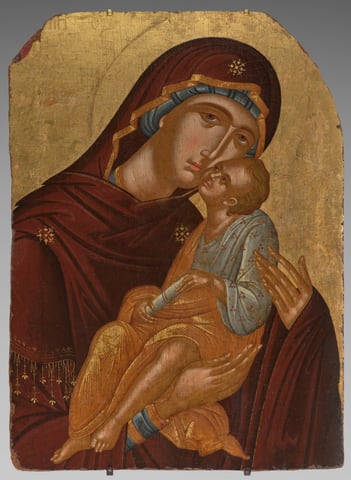
  3. Icon of the Mother of God and Infant Christ (Virgin Eleousa), by Angelos Akotantos, c. 1425–50
    Icon of the Mother of God and Infant Christ (Virgin Eleousa)Angelos Akotantos, c. 1425–50Courtesy of the Cleveland Museum of Art

Third room, north wall
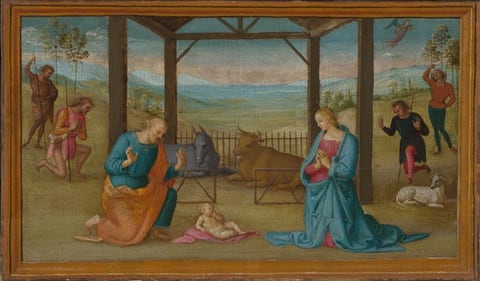
  1. A work made of tempera on panel, transferred to canvas.
    The NativityPerugino, 1500–05Courtesy of the Art Institute of Chicago
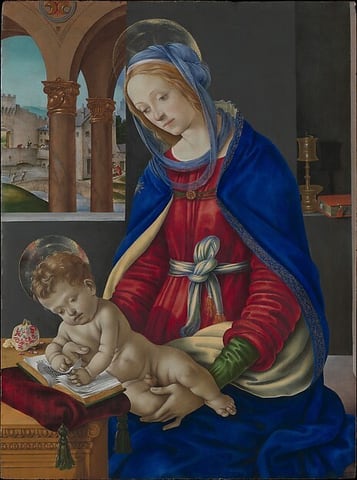
  2. Madonna and Child, by Filippino Lippi, ca. 1483–84
    Madonna and ChildFilippino Lippi, ca. 1483–84Courtesy of The Metropolitan Museum of Art