Baroque and Rococo

Works in this room
Drama, movement and deep shadow in the 1600s, then the light, playful decoration of eighteenth-century Europe.
First room, north wall
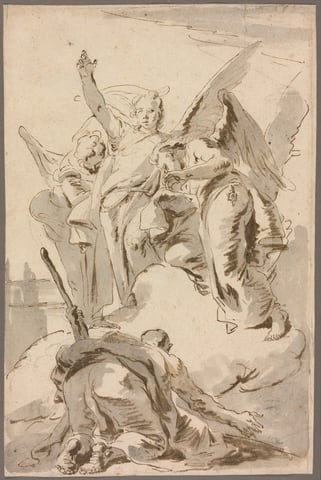
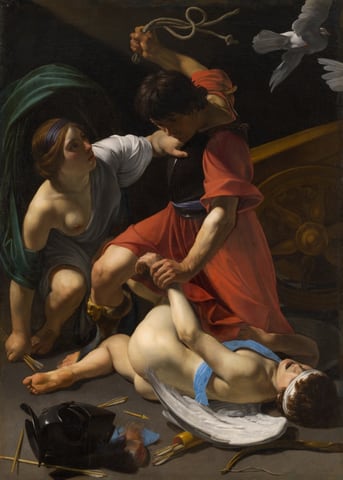
Three Angels Appearing to AbrahamGiovanni Battista Tiepolo, c. 1726Courtesy of the Art Institute of Chicago Cupid ChastisedBartolomeo Manfredi, 1613Courtesy of the Art Institute of Chicago The Supper at EmmausGiovanni Battista Piazzetta, c. 1720Courtesy of the Cleveland Museum of Art
First room, south wall
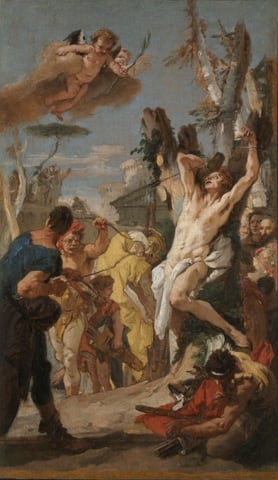
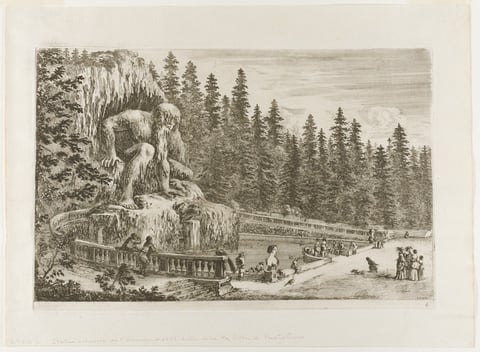
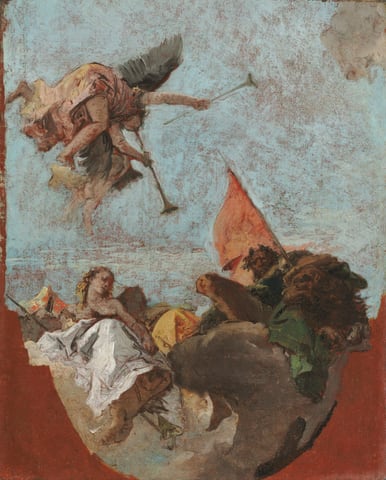
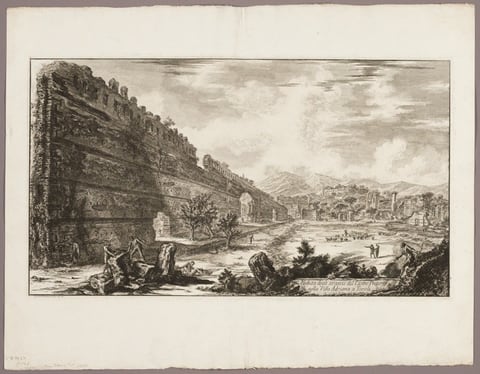
Study for "The Martyrdom of Saint Sebastian" (for the Augustinian monastery at Diessen, Germany)Giovanni Battista Tiepolo, 1739Courtesy of the Cleveland Museum of Art The Colossal Statue of the Apennines, from Views of Villa di PratolinoStefano della Bella, c. 1653Courtesy of the Art Institute of Chicago Sketch for a CeilingGiovanni Battista Tiepolo, 1750sCourtesy of the Cleveland Museum of Art View of the Remains of the Praetorian Fort [the Poecile], Hadrian's Villa, Tivoli, from Views of RomeGiovanni Battista Piranesi, 1770Courtesy of the Art Institute of Chicago
Second room, south wall
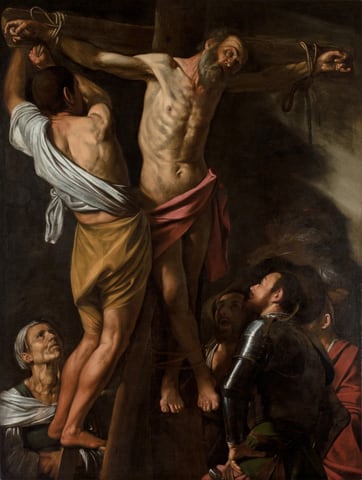
The Crucifixion of Saint AndrewCaravaggio, 1606–7Courtesy of the Cleveland Museum of Art 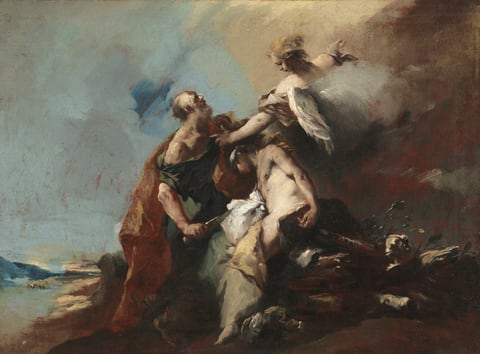
The Sacrifice of IsaacFrancesco Guardi, 1750sCourtesy of the Cleveland Museum of Art 
Jacopo ButeraFrancesco Solimena, c. 1695Courtesy of the Art Institute of Chicago
Second room, north wall
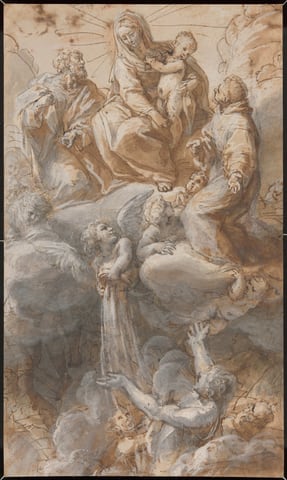
The Virgin and Saint Joseph with Saint Anthony of Padua Seated in the Heavens Interceding for the Souls in Purgatory, While an Angel Pours Fluid from a Vase onto the Crowd Below (recto and verso)Pietro Antonio di Pietri, 1690/1710Courtesy of the Art Institute of Chicago 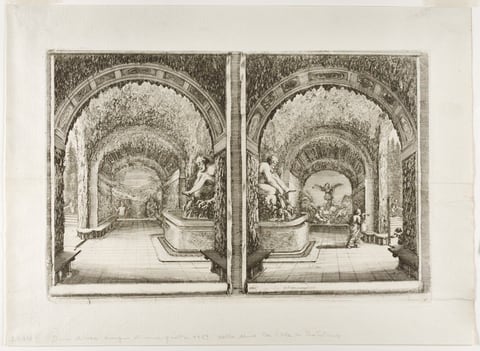
The Grotto of Pan and FameStefano della Bella, 1653/55Courtesy of the Art Institute of Chicago 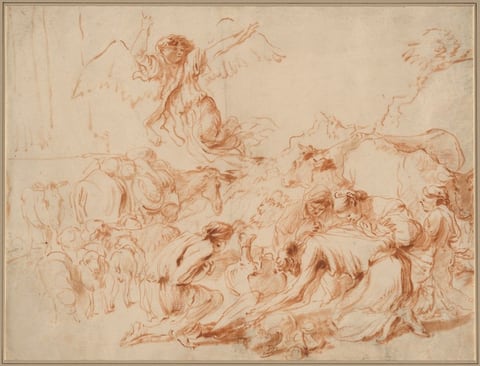
The Angel Departing from the Family of Tobit (?)Giovanni Benedetto Castiglione, c. 1655Courtesy of the Art Institute of Chicago 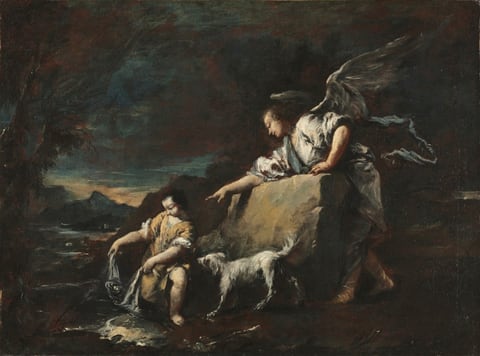
Tobias and the AngelFrancesco Guardi, 1750sCourtesy of the Cleveland Museum of Art
Third room, north wall
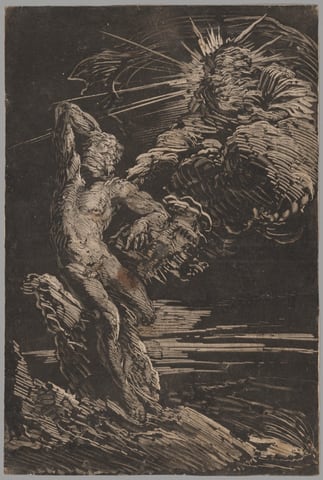
The Creation of AdamGiovanni Benedetto Castiglione, c. 1645/50Courtesy of the Art Institute of Chicago 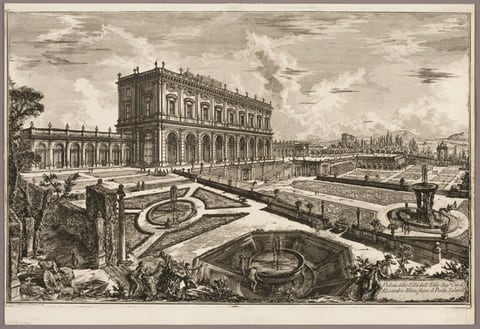
View of the Villa of His Eminence Cardinal Alessandro Albani, outside Porta Salaria, from Views of RomeGiovanni Battista Piranesi, 1769, published 1800–07Courtesy of the Art Institute of Chicago