Baroque and Rococo
Works in this room
Drama, movement and deep shadow in the 1600s, then the light, playful decoration of eighteenth-century Europe.
First room, north wall
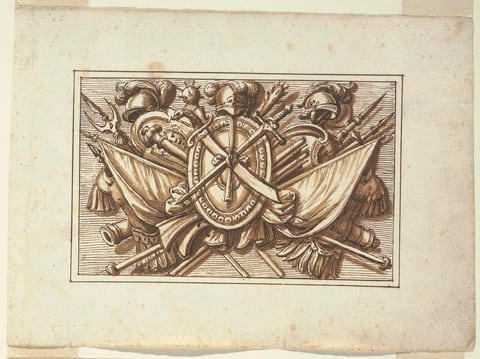
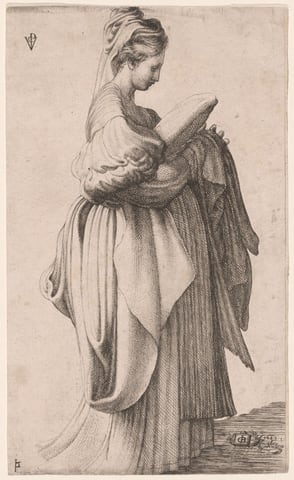
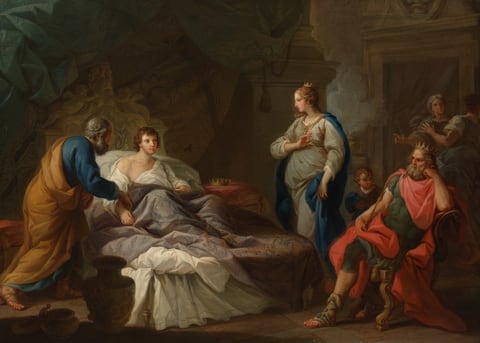
One set of trophies of weapons of war as a decoration for horizontal panels. Intended to be engravedFrancesco Bedeschini, Italian, 1675-1699Courtesy of Cooper Hewitt, Smithsonian Design Museum A Young Woman Holding a CushionMonogrammist VCP, 1643Courtesy of the Art Institute of Chicago Antiochus Yearning for StratoniceStefano Pozzi, c. 1740Courtesy of the Art Institute of Chicago
First room, south wall
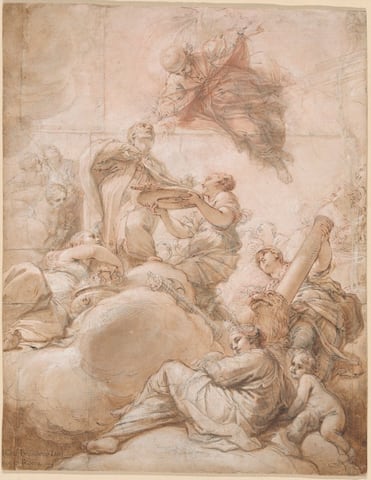
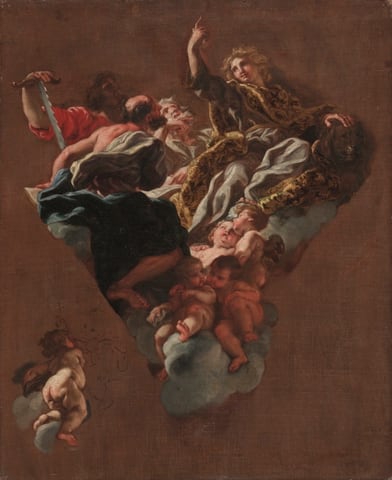
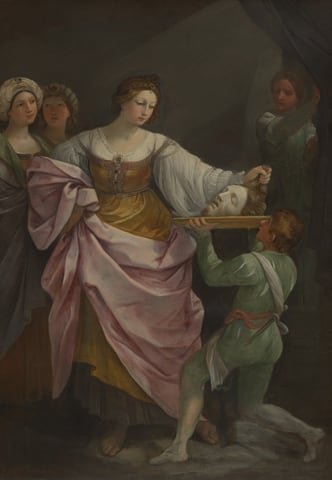
Allegory of the Elevation of Cardinal Deacon Oddone Colonna to the Papal Chair as Pope Martin VBenedetto Luti, 1700Courtesy of the Art Institute of Chicago Sketch for "The Four Prophets of Israel" (for Il Gesù, Rome)Giovanni Battista Gaulli, c. 1675–1677Courtesy of the Cleveland Museum of Art Salome with the Head of Saint John the BaptistGuido Reni, c. 1639–42Courtesy of the Art Institute of Chicago
Second room, south wall
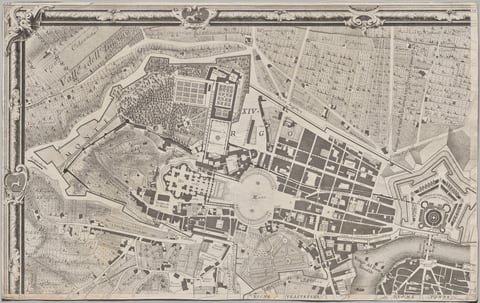
Nuova pianta di Roma data in luce da Giambattista Nolli l’anno MDCCXLVII, known as La Pianta Grande di RomaGiovanni Battista Nolli, 1748Courtesy of the Cleveland Museum of Art 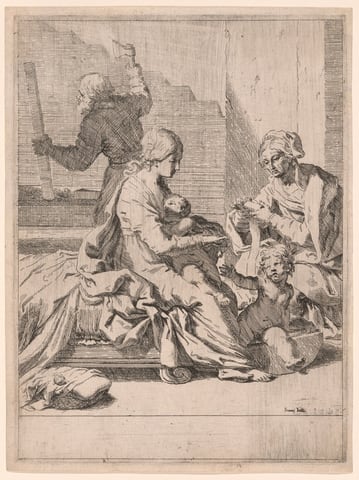
Holy Family with Saint Elizabeth and Saint John the BaptistElisabetta Sirani, 1650/60Courtesy of the Art Institute of Chicago 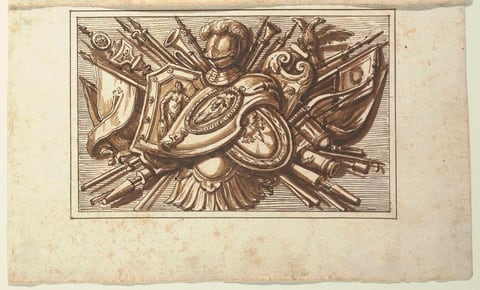
One of a set of trophies of weapons of war as a decoration of a horizontal panelFrancesco Bedeschini, Italian, 1675-1699Courtesy of Cooper Hewitt, Smithsonian Design Museum
Second room, north wall
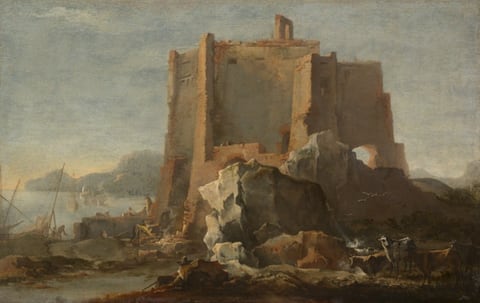
Landscape with Rock and FortressDomenico Gargiuli (Micco Spadaro), c. 1645Courtesy of the Art Institute of Chicago 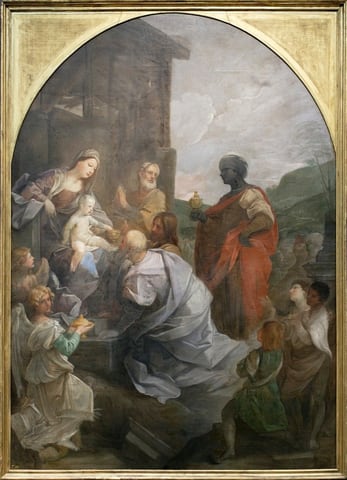
Adoration of the MagiGuido Reni, 1642Courtesy of the Cleveland Museum of Art 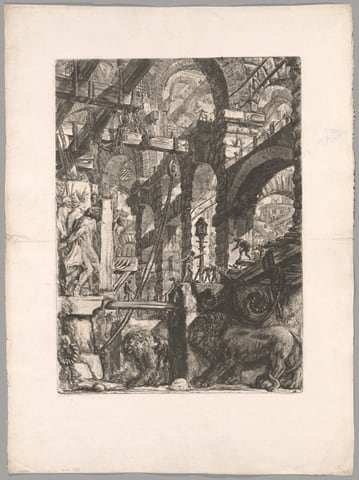
The Lion Bas-Reliefs, plate 5 from Imaginary PrisonsGiovanni Battista Piranesi, 1761Courtesy of the Art Institute of Chicago
Third room, north wall
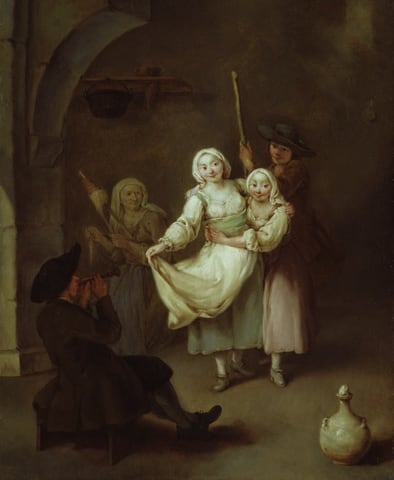
The DancePietro Longhi, c. 1750Courtesy of the Art Institute of Chicago 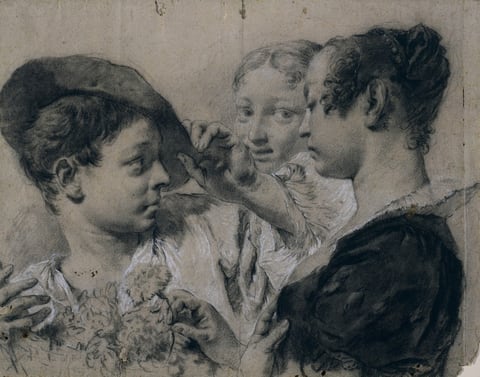
A Young Woman Buying a Pink from a Young ManGiovanni Battista Piazzetta, c. 1740Courtesy of the Cleveland Museum of Art 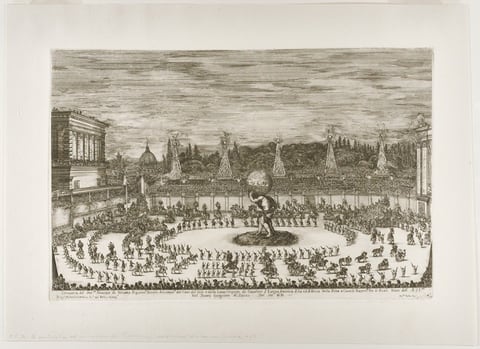
Equestrian Ballet in the Amphitheater of the Boboli GardensStefano della Bella, 1661Courtesy of the Art Institute of Chicago 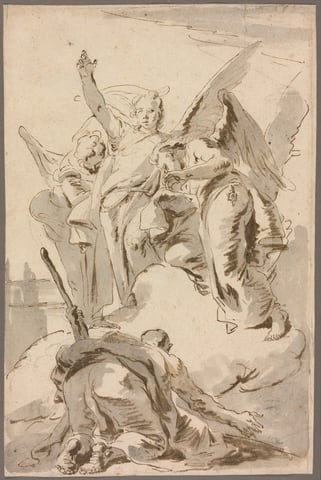
Three Angels Appearing to AbrahamGiovanni Battista Tiepolo, c. 1726Courtesy of the Art Institute of Chicago