Unrecorded makers of India
Works in this room
Works whose makers the museums don't name, made in India.
First room, north wall
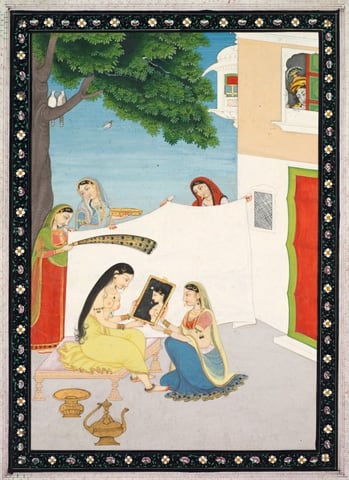
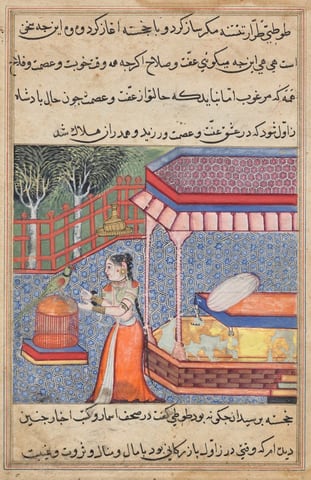
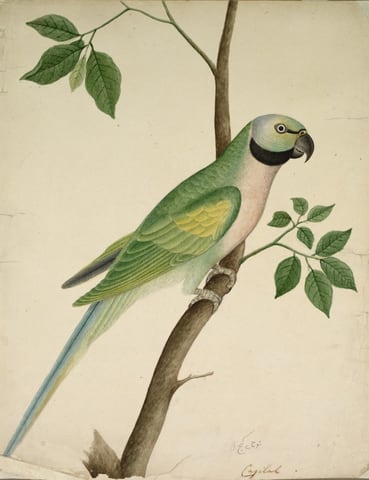
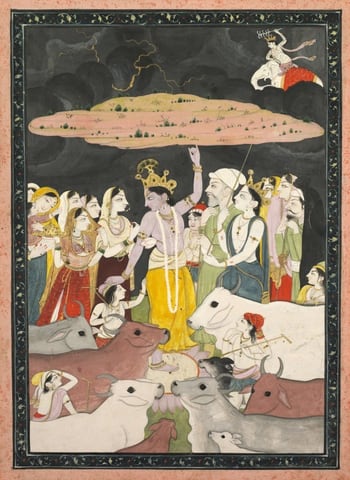
Toilette of RadhaUnrecorded Indian maker, c. 1810–20Courtesy of the Cleveland Museum of Art The parrot addresses Khujasta at the beginning of the thirty-sixth night, from a Tuti-nama (Tales of a Parrot)Unrecorded Indian maker, c. 1560Courtesy of the Cleveland Museum of Art Green ParrotUnrecorded Indian maker, c. 1820Courtesy of the Cleveland Museum of Art Krishna Lifting Mount GovardhanUnrecorded Indian maker, c. 1780–90Courtesy of the Cleveland Museum of Art
First room, south wall
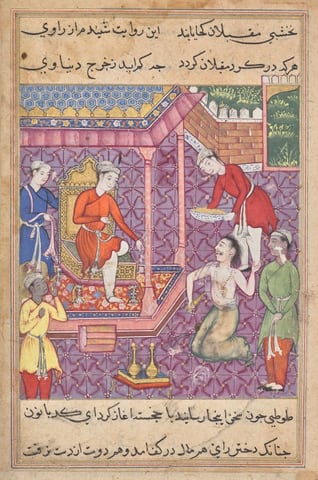
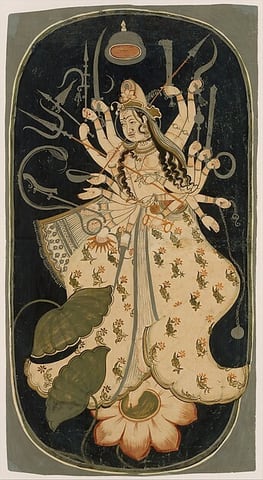
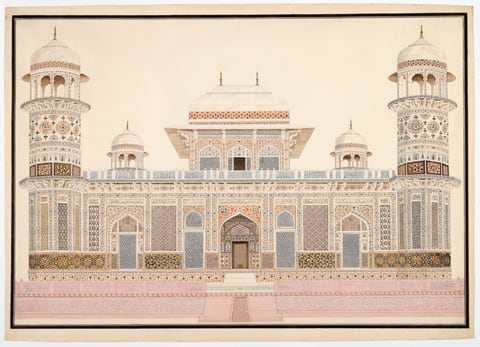
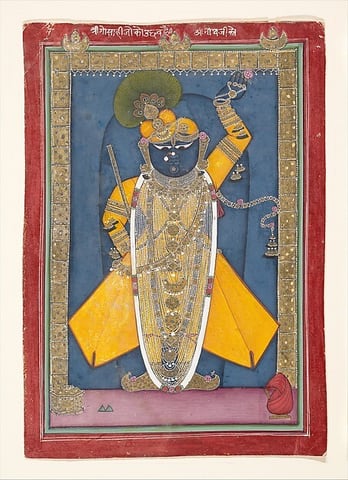
The magician disguised as a Brahman returns to claim his “daughter-in-law,” from a Tuti-nama (Tales of a Parrot): Thirty-fifth NightUnrecorded Indian maker, c. 1560Courtesy of the Cleveland Museum of Art Mahadevi, the Great GoddessUnrecorded Indian maker, ca. 1725Courtesy of The Metropolitan Museum of Art I'timad-ud-Daula's Tomb at AgraUnrecorded Indian maker, c. 1820Courtesy of the Art Institute of Chicago Krishna in the Form of Shri NathjiUnrecorded Indian maker, ca. 1840Courtesy of The Metropolitan Museum of Art
Second room, south wall
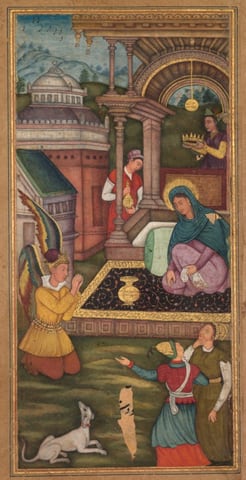
The Annunciation (folio 15 recto), from a Mirror of Holiness (Mir’at al-quds) of Father Jerome XavierUnrecorded Indian maker, 1602–4Courtesy of the Cleveland Museum of Art 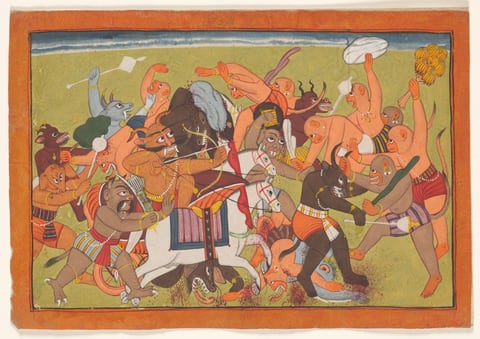
Battle between monkeys and demons, from the “Shangri” RamayanaUnrecorded Indian maker, c. 1700Courtesy of the Cleveland Museum of Art 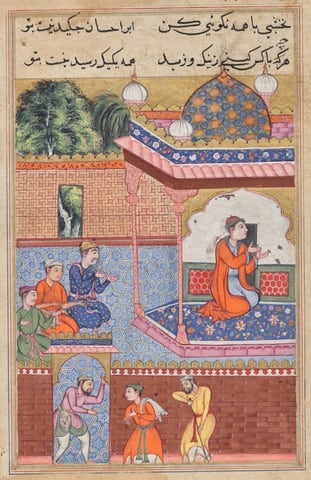
Kaiwan, Latif, and Sharif arrive at a house of worship, where they seek help from Khurshid who has become a mystical healer, from a Tuti-Nama (Tales of a Parrot): Thirty-second NightUnrecorded Indian maker, c. 1560Courtesy of the Cleveland Museum of Art 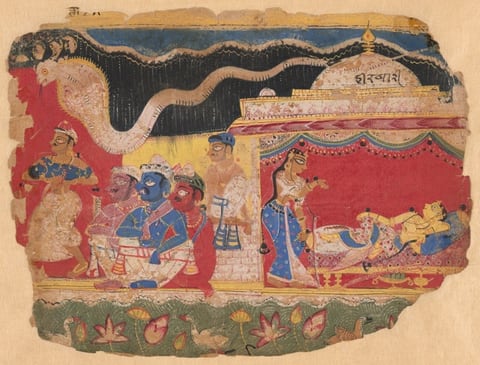
The Infant Krishna Spirited Away by Vasudev, from a copy of the Dispersed Bhagavat PuranaUnrecorded Indian maker, c. 1520–1530Courtesy of the Art Institute of Chicago
Second room, north wall
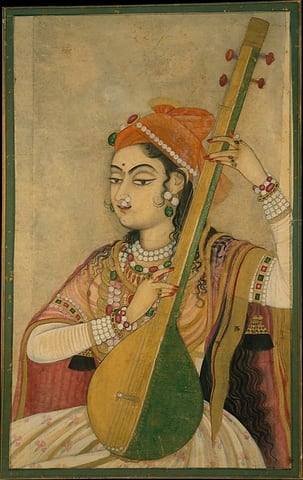
A Lady Playing the TanpuraUnrecorded Indian maker, ca. 1735Courtesy of The Metropolitan Museum of Art 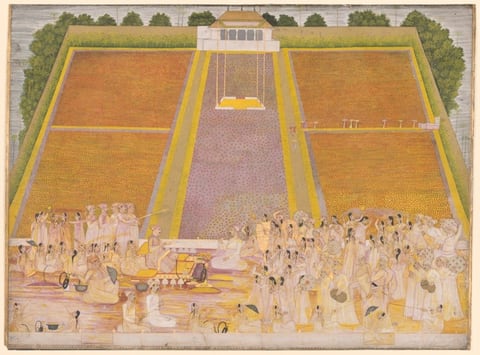
Holi Festival in a Walled Garden with CelebrantsUnrecorded Indian maker, c. 1764Courtesy of the Art Institute of Chicago 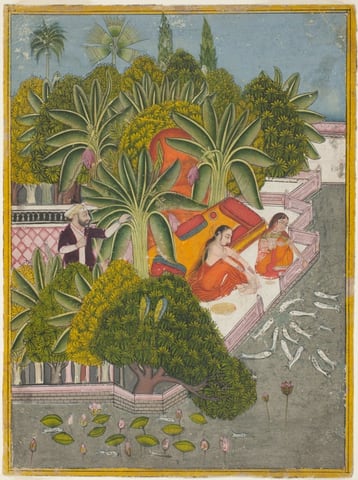
Royal Women Feeding FishUnrecorded Indian maker, c. 1740Courtesy of the Art Institute of Chicago 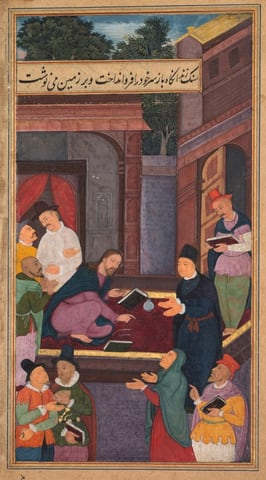
Jesus writes on the ground (folio 130 verso), from a Mirror of Holiness (Mir’at al-quds) of Father Jerome XavierUnrecorded Indian maker, 1602–4Courtesy of the Cleveland Museum of Art